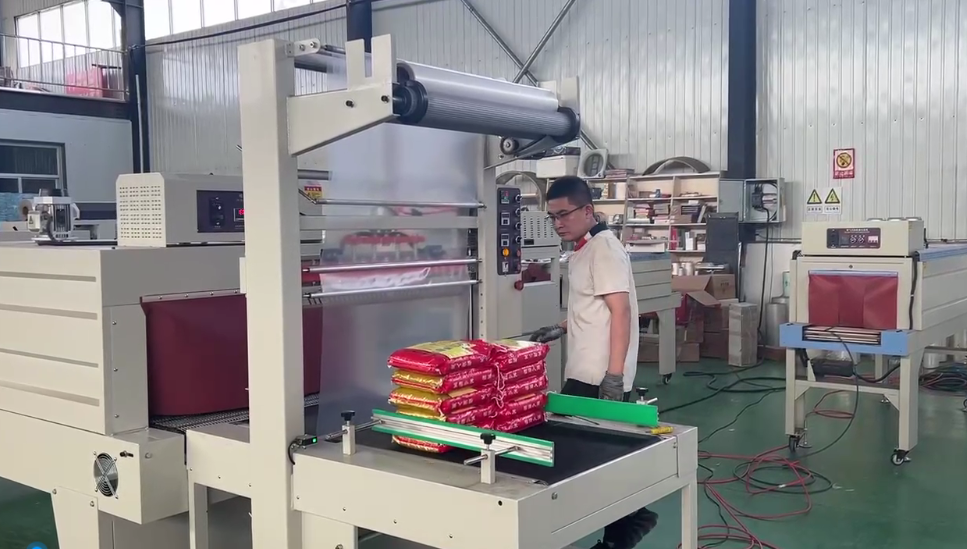
Box Shrink Wrap Machine: Solutions for Industry

Summary: Advanced box shrink wrap machines integrate precise thermal control and automated sealing to reduce labor costs by 40%. These systems ensure ISO-compliant product protection while maximizing throughput for diverse industrial packaging lines.

Operational Mechanics: Sealing and Thermal Shrinking

Modern box shrink wrap machines utilize continuous motion side sealers and precision heat tunnels to encase products in tight polymer films. This dual-stage process eliminates air pockets, ensures tamper evidence, and protects contents from moisture and dust without manual intervention.

The core function relies on two distinct stages: side sealing and heat shrinking. This combination ensures boxes are encased in a tight, protective layer. It safeguards contents from environmental contaminants like dust and moisture. It also offers clear tamper evidence for security.

  1. Product Infeed and Film Application: Boxes feed via conveyor into the wrapping zone. A roll of shrink film dispenses precisely around the product. Polyolefin (POF) is common due to clarity and strength. This material choice aligns with sustainability initiatives.

  2. Side Sealing: Continuous motion side sealers create a longitudinal seal along the box side. This happens as the item moves, unlike traditional L-bar sealers. Cross seals apply to the front and back. This method boosts throughput for high-volume lines significantly.

  3. Shrink Tunnel Passage: The loosely wrapped box enters a heat shrink tunnel. Controlled circulation of hot air causes the polymer film to shrink. Precise temperature management achieves a taut, wrinkle-free finish. This prevents damage to the product or film.

Expert Pro Tip: Always verify the conveyor mesh type. Stainless steel mesh offers better heat distribution than solid belt conveyors, reducing cold spots in the shrink tunnel.

Technological Advancements and Performance Metrics

Integration of PLC-based controls allows precise adjustments of sealing temperature and conveyor speed. These systems handle thinner gauge films driven by sustainability goals without compromising seal integrity or shrink quality.

Modern box shrink wrap machine systems incorporate features designed to maximize efficiency. They adapt to diverse packaging needs automatically.

  • Automation & Control: PLC-based controls allow precise adjustments. Operators adjust sealing temperature, dwell time, and conveyor speed. Parameters store as recipes for different product sizes. Integration with upstream automation is now standard.

  • Material Compatibility: Advanced machines handle a wider range of film types. They process thinner gauge films driven by sustainability initiatives. Seal integrity remains high despite reduced material usage.

  • Energy Efficiency: Innovations in heat tunnel insulation reduce energy consumption. Airflow design and heating element technology contribute to savings. Computational fluid dynamics (CFD) modeling optimizes these aspects.

  • Sealing Technology: Enhancements in sealing blade materials ensure consistent seals. Non-stick coatings prevent film adhesion at high speeds. This minimizes downtime and material waste.

ROI Insight: Upgrading to a variable frequency drive (VFD) system can reduce energy consumption by 15%. The formula for annual savings is $S = (P{old} – P{new}) \times H \times C$, where $H$ is operating hours and $C$ is energy cost.

Key System Parameters for Selection

Choosing the appropriate shrink wrapping equipment requires evaluating production speed, package size range, and power requirements. Matching these specs to your line prevents bottlenecks and ensures compliance with safety standards like CE and UL.

Selecting the right equipment demands rigorous evaluation. You must match machine capabilities to your specific output goals.

Parameter Specification Range Impact on Operations
Production Speed 10 – 60+ Packs Per Minute (PPM) Determines line throughput and labor requirements.
Package Size Range Min: 50x50x50mm / Max: 600x400x400mm Defines versatility for different product SKUs.
Sealing Dimensions End seal bar: 10mm / Side seal: Adjustable Affects seal strength and film consumption rates.
Film Specifications POF, PVC, PE / Width: 200-600mm Dictates material cost and environmental compliance.
Power Requirements 220V/380V, 50/60Hz, 10-20kW Influences installation costs and facility load.
Air Requirements 0.6-0.8 MPa, 100-200 L/min Necessary for pneumatic sealing and cutting mechanisms.
  • Production Speed: Measured in packs per minute (PPM). Semi-automatic systems run at ~10-20 PPM. High-speed automated lines reach 60+ PPM.

  • Package Size Range: Check maximum and minimum length, width, and height. Ensure clearance for future product expansions.

  • Sealing Dimensions: Verify width of the end seal bar. Check maximum height of the side seal mechanism.

  • Film Specifications: Confirm compatible film types (e.g., Polyolefin, PVC, PE). Check center-folded roll width and maximum roll diameter.

  • Operational Footprint: Measure physical space required for the machine. Include necessary clearances for maintenance access.

  • Power and Air Requirements: Verify electrical voltage, phase, and amperage. Check compressed air needs (PSI/CFM).

Expert Pro Tip: Request a factory acceptance test (FAT) video using your actual product. This verifies performance before shipment and avoids costly retrofitting.

Diverse Industrial Applications and Compliance

Box shrink wrap machines are indispensable across food, pharmaceutical, and consumer goods sectors. They ensure compliance with ISO 9001 quality standards and provide tamper-evident sealing required by FDA regulations.

These machines serve numerous sectors with specific needs. Each industry demands unique protection levels.

  • Food and Beverage: Bundling multi-packs provides stability. Tamper evidence protects containers during transit. Moisture resistance extends shelf life significantly.

  • Pharmaceuticals and Cosmetics: Ensures product integrity against contamination. Security seals prevent unauthorized access. Shelf appeal drives consumer confidence in retail.

  • Consumer Goods: Packaging electronics protects against static and dust. Toys and household items gain retail display readiness. Unitization simplifies inventory management.

  • Printing and Publishing: Protects books and magazines from damage. Paper products remain dry during storage. Bulk bundling reduces handling time for distributors.

  • Contract Packaging (Co-Packing): Offers versatile solutions for varied client needs. Quick changeover features support short production runs. Flexibility attracts diverse contractual partners.

Compliance is non-negotiable. Equipment must meet CE safety standards for European markets. UL certification is required for North American electrical safety. ISO 9001 processes ensure consistent manufacturing quality. OSHA guidelines protect operators from heat and moving parts.

Summary of Benefits and Economic Impact

Implementing advanced box shrink wrap technology yields superior product protection and enhanced visual appeal. Automation reduces labor costs while increasing throughput, delivering a typical ROI within 12 to 18 months.

Integrating robust engineering offers a reliable solution. It suits demanding packaging environments effectively.

  • Superior Product Protection: Shields against dirt, moisture, and handling damage. Reduces return rates due to transit damage.

  • Enhanced Visual Appeal: Creates a glossy, professional finish. Attractive packaging influences consumer purchasing decisions.

  • Tamper Evidence: Provides clear indication if a package has been opened. Critical for security in pharmaceutical and food sectors.

  • Unitization and Bundling: Efficiently groups items for sale. Simplifies distribution and warehouse stacking.

  • Increased Operational Efficiency: Automation reduces labor costs significantly. Increases throughput without adding headcount.

  • Versatility: Adaptable to various product sizes and film types. Reduces need for multiple dedicated machines.

The economic impact is measurable. Labor reduction directly improves margins. Material waste reduction lowers variable costs.

$$ \text{ROI} = \frac{\text{Net Profit}}{\text{Cost of Investment}} \times 100 $$

Typical industrial setups see a break-even point within 1.5 years. This assumes a 2-shift operation model.

Pre-Purchase Inspection Checklist

Use this checklist to validate potential suppliers. Ensure every box is ticked before signing a contract.

  • [ ] Voltage Compatibility: Does the machine match your facility’s power supply (220V/380V)?

  • [ ] Film Type Support: Can it run the specific micron thickness you require?

  • [ ] Safety Guards: Are all moving parts covered per OSHA standards?

  • [ ] Spare Parts Kit: Does the quote include heating elements and sealing wires?

  • [ ] Warranty Terms: Is there a 12-month warranty on PLC and motors?

  • [ ] Installation Support: Does the supplier offer remote or on-site commissioning?

  • [ ] Throughput Guarantee: Is the PPM rate guaranteed in writing?

  • [ ] Energy Consumption: Is the kW/h rating verified for your cost calculations?

Frequently Asked Questions

What is the difference between an L-Bar Sealer and a Side Sealer?

An L-Bar sealer pauses the product to seal three sides, suitable for lower speeds. A Side Sealer creates a longitudinal seal while the product moves continuously. Side sealers are faster and better for high-volume production lines.

Can the shrink tunnel temperature be adjusted for different films?

Yes. Modern PLC-controlled tunnels allow precise temperature zoning. Operators can adjust settings for POF, PVC, or PE films. This ensures optimal shrinkage without burning the film.

How do I reduce film waste during operation?

Optimize the film roll width to match your product size. Use sensors to detect product presence before sealing. Regular maintenance of sealing wires prevents weak seals that require re-wrapping.

Is operator training required for these machines?

Basic training is required for safety and recipe management. Most systems feature touch-screen interfaces for ease of use. Suppliers typically provide manuals and video guides for staff.

What maintenance is required for the heating elements?

Inspect heating elements monthly for debris buildup. Clean air filters weekly to ensure proper airflow. Replace sealing wires annually or when seal quality degrades.