> **Executive summary**
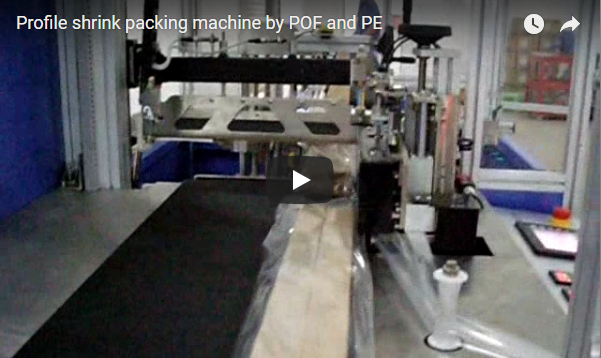
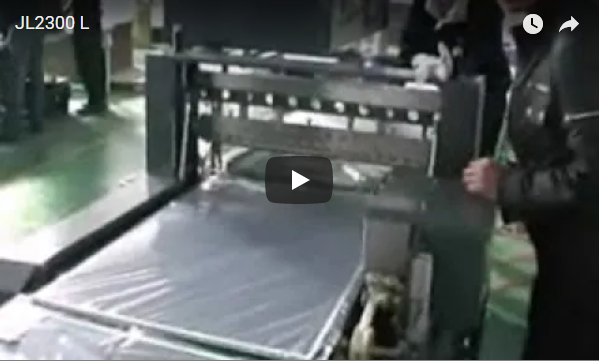
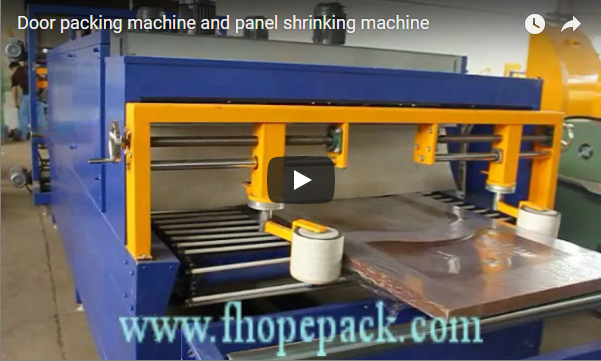
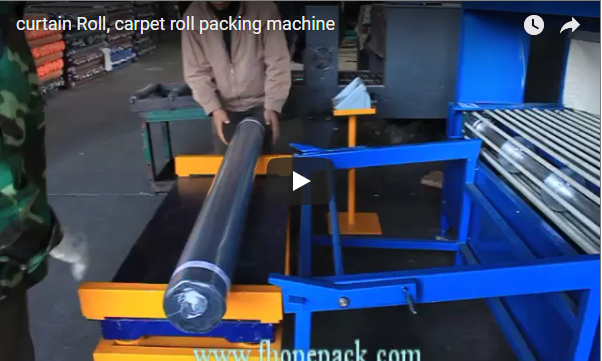
> The video shows a conveyor-fed shrink wrapping line for long cylindrical loads; our equivalent solution is configured per project. Pipes and similar products are enclosed in clear plastic film and leave as sealed bundles that hold together in storage and transit. This page covers the wrap sequence, film path, conveyor handling and the sizing inputs from your layout drawing.
Table of Contents
- What the line in the video does
- How the wrapping station works
- Film delivery and the shrink step
- Handling long loads on conveyors
- Selection checklist for long pipe and tube bundles
- Controls and safety
- Applications for long pipe and tube shrink wrapping
- Engineering FAQ
- Next step
- Related reading
- Sources
What the line in the video does
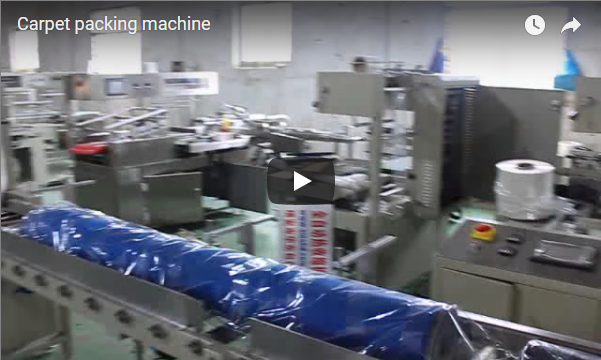
A long, shrink-wrapped cylindrical load is carried on the conveyor belt, with the shrink wrapping machine beside the line. Between loads the belt runs empty, exposing the station layout: a large blue and white machine with a conveyor extending from it. A fresh roll of clear plastic film waits beside the machine, ready to be threaded. Another long, film-wrapped cylinder approaches along the belt.
A wrapped cylinder travels through the wrap zone on rollers and past the control panels, and a white product is wrapped in clear film as it moves through the machine.
Wrapping takes place in the blue and white machine, with film fed down from a large roll above the wrapping zone. The load continues past the control panel on its way out.
A new roll of shrink film is fed along the film path while a partially wrapped product waits on the conveyor.
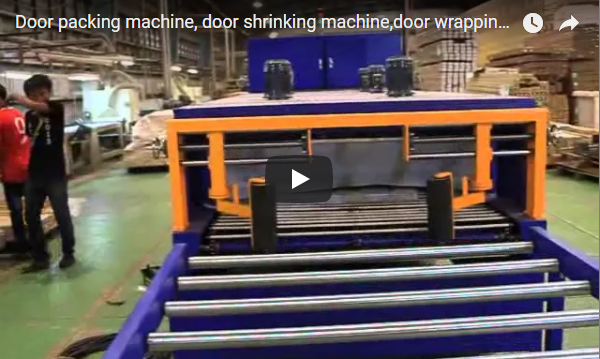
A roller conveyor feeds the infeed, bringing a long, shrink-wrapped product up to the machine.
How the wrapping station works
A line of this type follows a simple sequence. The load enters on the infeed conveyor and reaches the wrapping zone at a controlled pace. A web of shrink film is drawn from the roll and applied around the product as it moves through the machine.
The product passes through the machine, and the film sleeve is wrapped around the bundle prior to heat application.
With the load conveyed rather than carried by hand, operator work is limited to supervising the line and replenishing film. Each load follows the same path through the rollers and receives the same wrap. That consistency is the main reason for workshops running long products in batches to switch from manual covering to a machine line.
Film delivery and the shrink step
The film is supplied on a large roll, visible beside and above the machine, mounted so the web pulls off smoothly. Film width and gauge are matched to the bundle diameter and length, and to how much consolidation the load needs in transit.
In the shrinking stage, heat contracts the loosely applied film so it conforms to the load. The result is a sealed skin that holds the pieces together, keeps out dust and moisture and protects surfaces from scuffing. The wrapped cylinders keep their shape, separated from the rollers by an even layer of film.
Handling long loads on conveyors
Long cylindrical products roll, slide and are heavy for their footprint. Both conveyor styles appear in the video: a belt carries the product steadily through the wrapping zone, while the roller conveyor presents the load to the infeed. Rollers suit rigid, smooth loads; belts suit bundles that need a gentler ride.
Feed speed, guide rails and roller spacing are set for the product range being run. A load supported only at its ends can flex entering the wrapping zone. Supporting the bundle along its length keeps the wrap even.
Selection checklist for long pipe and tube bundles
Before we size a line, we work through these inputs from your drawing:
| Input | Unit | Why it matters |
|---|---|---|
| Pipe or tube diameter | mm | Sets the film width and the wrap path around the bundle |
| Bundle length | mm | Sets conveyor length and support spacing |
| Bundles per hour | pcs/h | Sets conveyor speed and the wrapping cycle target |
| Film type | — | Clear polyethylene shrink film, supplied on rolls |
| Heat source | — | Sized with the shrinking stage for the target line speed |
As an illustrative example with customer inputs, 20 bundles each needing 12 m of film consume 240 m per batch:
| Quantity | Value |
|---|---|
| Film per bundle (illustrative) | 12 m |
| Bundles per batch (illustrative) | 20 bundles |
| Film per batch (illustrative) | 240 m |
A second illustrative example: a line fed at 15 bundles per hour for an 8 h shift handles 120 bundles per shift.
| Quantity | Value |
|---|---|
| Feed rate (illustrative) | 15 bundles/h |
| Shift length (illustrative) | 8 h |
| Output per shift (illustrative) | 120 bundles |
This is an illustrative calculation for sizing only, not a rating of the filmed unit.
Implementation checklist:
- [ ] Diameter range and wall thickness of the products
- [ ] Bundle length, weight and rigidity
- [ ] Required bundles per hour and shift pattern
- [ ] Film preference and roll handling
- [ ] Floor space, conveyor height and line direction
Controls and safety
The station is operated from a control panel mounted on the machine, with the process visible through the wrap zone. Settings for film feed, sealing and shrinking are adjusted there for the product being run.
Before clearing jammed film, rethreading the roll, or freeing a load at the wrap zone, stop the machine and isolate it so it cannot be restarted while hands are at the point of operation. Never reach into the film web, sealing area or rollers while the line is running.
The standards that apply depend on the destination market. For CE markets, ISO 12100 sets the risk-assessment method and EN 415-10 covers packaging machine safety. Other markets follow the corresponding local requirements.
Applications for long pipe and tube shrink wrapping
This style of line suits any long, rigid load that must arrive as a clean, bound bundle: steel and copper tube, plastic pipe, aluminium profiles, extrusions and similar stock lengths. The wrap holds the bundle together so pieces cannot wander in transit, and the sealed film protects finished surfaces from scuffs and dirt.
Because each line is built around the customer's product range, the same process scales from short tubes to lengths spanning most of a workshop bay. The layout drawing is the starting point for sizing the conveyor, wrap zone and film width. The machine families behind this process are summarised on the [shrinking machine page](https://www.fhopepack.com/shrinking-machine/).
Engineering FAQ
Q: Does the film end up tight against the load?
A: Yes. After the web is closed around the bundle, heat is applied and the film contracts, so the finished wrap sits snugly on the surface.
Q: Can the line take products longer than the bundles on screen?
A: Yes. Conveyor length, roller spacing and film width are configured per project to match longer product lengths specified in your layout drawing.
Q: What kind of film does this process use?
A: Clear polyethylene shrink film supplied on large rolls. Roll width and gauge match the product diameter and length, and the web wraps the bundle as it conveys through the station.
Q: Does somebody have to hold the product during wrapping?
A: No. The load travels through the wrap zone on its own; staff work at the control panel or the film roll, away from the moving product.
Q: How does a project usually begin?
A: With the layout drawing. It defines the loads, lengths and throughput targets, and is the basis for the proposal and site survey that follow.
Next step
1. Submit your layout drawing.
2. Receive a proposal within 48 hours.
3. Book a site survey.
Contact: info@fhopepack.com
Related reading
- [Automatic Profile and Panel Bagging and Shrinking Line](https://www.fhopepack.com/videos/automatic-profile-and-panel-bagging-and-shrinking-line/)
- [Bundle Sleeve Shrinking Machine](https://www.fhopepack.com/videos/bundle-sleeve-shrinking-machine/)
Sources
Written by the FHOPE engineering team.
Reference pages: [Automatic Profile and Panel Bagging and Shrinking Line](https://www.fhopepack.com/videos/automatic-profile-and-panel-bagging-and-shrinking-line/), [Bundle Sleeve Shrinking Machine](https://www.fhopepack.com/videos/bundle-sleeve-shrinking-machine/) and the [shrinking machine page](https://www.fhopepack.com/shrinking-machine/).
Last reviewed: 2026-10-07