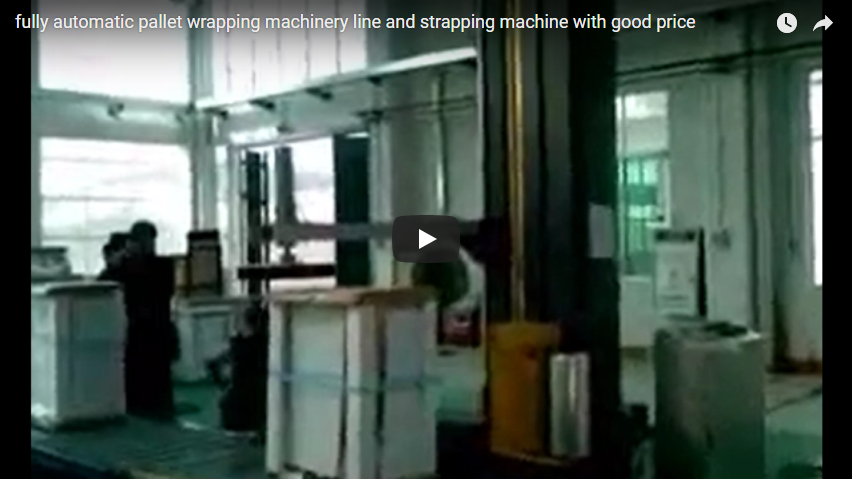
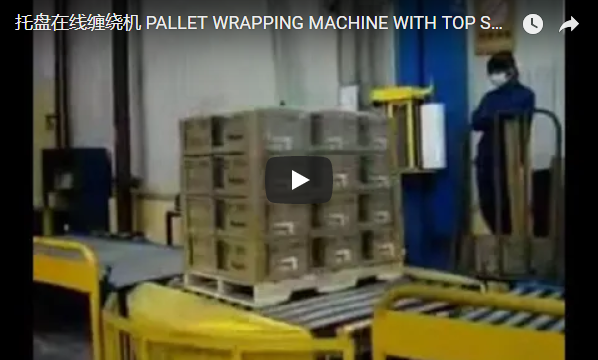
Pallet Wrapper With Top sheet Dispensor

Executive summary This video shows a FHOPE pallet wrapper wrapping a large block-shaped load: a turntable rotates the pallet while a carriage and gantry-style beam dispense stretch film, followed by a top-sheet sealing and cutting stage. The footage covers loading, spiral wrapping, top sealing/cutting, and completion — but no rated power, load capacity, cycle time, or safety certifications are shown. Read on for a step-by-step breakdown of what is visible, what is not, and what to verify before buying.

Why this machine matters

If you ship palletized goods, you already know the pain of manual wrapping: inconsistent tension, wasted film, and an operator walking circles around every load. A pallet wrapper with a top sheet dispenser solves two problems at once. It wraps the sides of the load with controlled stretch film tension, and it adds — and seals — a protective film layer on top of the pallet. That top layer is what keeps dust, moisture, and spills out of an otherwise open load.

The video on this page shows exactly that combination in operation. Everything described below comes from the footage itself, frame by frame.

The machine in action, step by step

Based on the sampled frames, the wrapping sequence runs roughly like this:

Stage Approx. time in video What happens
Loading / standby ~0–20s A large block-shaped load sits on the turntable. An operator stands beside the machine, observing.
Beam descent ~24–36s The yellow overhead beam lowers vertically toward the top of the load.
Side wrapping ~40–92s Film is stretched and applied to the load as the turntable rotates slowly. The film covers all four sides as the load turns.
Top sheet dispensing ~48–56s A film roll is fed out automatically and spread across the top of the load.
Top sealing and cutting ~96–112s A mechanical arm with a cutting/sealing head moves over the load top, seals and cuts the film; excess film tail drops at the pallet edge.
Finished load ~112–128s The wrapped, sealed load waits on or near the platform for unloading.

Two details are worth noting. First, the load rotates with the turntable at a slow, steady pace — the film is applied uniformly to every face. Second, the top sealing/cutting arm appears as a separate mechanism on the right side of the machine, moving into position only after the side wrapping is complete. This is the “top sheet dispenser” portion of the machine doing its job.

Direct observation notes

The following is a plain, factual account kept close to what the footage shows, with only grammar-level editing:

  • A vertical wrapping machine wraps a large block-shaped load on a rotating platform. The load is covered in translucent stretch film and is roughly rectangular.
  • The machine’s main frame is painted white/painted steel; the upright columns and crossbeam are yellow-painted steel; the turntable is dark gray metal with a non-slip surface.
  • A male operator in a white T-shirt and dark shorts stands to the right of the machine, hands on hips, observing at the start; he later walks left and leaves the frame.
  • The yellow beam lowers from above and covers the top of the load; film is stretched and applied to the load surface while the turntable rotates slowly (roughly 15–20 degrees every 4 seconds, per frame comparison).
  • A film roll feed section shows a large roll of dark stretch film being automatically fed along rollers, with the beam assembly moving forward to spread film over the top of the load.
  • The load is a light gray/white block (possibly stacked cartons or industrial equipment), estimated roughly 1.2–1.8 m tall and about 1.0–1.4 m wide based on comparison with the operator’s height.
  • Later frames show a yellow gantry structure closed around the load, film continuing to wrap as the pallet rotates, then a right-side mechanical arm with a cutting/sealing head moving over the load top, performing the seal-and-cut, and film tails hanging at the pallet edge.
  • In the final frames, the wrapped load stands still; the film surface appears tighter and flatter; the arm has retracted slightly; some torn film fragments are on the floor.
  • Watermarks reading “FHOPEGROUP — PACKAGING SOLUTION FOR YOU” appear in the upper-left corner throughout; a vertical sign on the right column reads “缠绕机” (wrapping machine). Other on-screen text is unreadable.

Machine structure at a glance

Component What is visible Apparent function
Turntable Round rotating platform, dark gray, non-slip surface Rotates the pallet so film covers all sides
Overhead beam / gantry Yellow steel beam, vertical travel, multi-hole structure for film guides Carries the film carriage; moves up/down during wrapping
Film roll carriage Vertical film roll holder on the side column Feeds stretch film continuously
Top sealing/cutting arm Separate arm with cutting/sealing head on the right Seals and cuts the top sheet after wrapping
Control panel Panel with buttons/indicators on the column; LED lights on a control cabinet Starts and manages the cycle (details not legible)
Control cabinet Gray box at the rear with ventilation holes Houses drive and control electronics

What the video shows (with time references)

  • Around t≈0–20s a vertical stretch wrapper begins film-wrapping a large block-shaped workpiece on a turntable; a male operator in a white T-shirt stands watching, and the FHOPE watermark appears repeatedly.
  • Around t≈24–36s the yellow crossbeam lowers to start the wrap cycle; the beam underside shows a row of circular openings.
  • Around t≈40–44s the beam has fully descended over the workpiece and the film is being stretched and applied to the load surface.
  • Around t≈48–56s the film unwind section is shown: a large dark stretch-film roll feeds automatically over rollers while the beam travels, laying film across the load; no operator is seen in this stage.

What the video does not show

The footage is useful, but it is not a specification sheet. The following are not observable in the video and must be confirmed with the manufacturer:

  • Rated power, voltage, and motor speeds
  • Maximum load weight and turntable capacity
  • Total cycle time per pallet
  • Film specifications (thickness, width, pre-stretch percentage)
  • Machine model number and dimensions
  • Safety certifications (CE, UL, ISO or similar)
  • Throughput rate (pallets per hour)
  • Control system details (PLC type, HMI brand)
  • Maintenance schedule and fault diagnostics

None of these numbers appear in the video, so none are quoted here. Ask FHOPE directly for the technical data sheet before comparing machines.

Safety observations

It is fair to point out what the footage shows — and does not show — about safety:

  • No fixed perimeter fencing or light curtains are visible around the machine.
  • Operators stand close to the moving turntable and beam during parts of the cycle.
  • No clearly visible emergency stop button appears in any frame, though one may exist outside the camera’s view.
  • No warning labels beyond the column sign were identifiable.

This does not necessarily reflect the machine’s full safety configuration — safety features may be installed but out of frame. Still, when you inquire, ask specifically about light curtains, emergency stop placement, and interlocks between the turntable and the sealing arm. The beam descent and rotating table create pinch points that deserve explicit protection in any installation.

Who this machine suits

Based on the load type visible in the video, this kind of wrapper fits:

  • Warehouses and distribution centers wrapping mixed carton loads for shipping
  • Manufacturers of boxed goods, appliances, or building materials needing dust- and moisture-sealed pallets
  • Operations where the top of the load must be protected — the top sheet dispenser is the differentiator versus a standard wrapper

It is less clearly suited to very large or irregularly shaped loads; the video only shows regular rectangular blocks, and the machine’s maximum dimensions are not shown (verify with the manufacturer).

Benefits you can reasonably infer

These are inferences, clearly labeled as such, not measured claims:

  • Consistency: machine-applied film with controlled tension wraps more uniformly than hand wrapping.
  • Less film waste: controlled dispensing typically reduces over-application compared to manual work.
  • Full enclosure including the top: the top sheet plus spiral side wrap gives five-sided coverage — something manual wrapping rarely achieves reliably.
  • Reduced labor: operators load and unload; the machine handles the wrapping, sealing, and cutting.

What to verify before you buy

Use this checklist in your inquiry:

  1. Maximum and minimum pallet size and load weight the machine accepts
  2. Whether top film cutting and sealing is automatic on every cycle (as it appears in the video)
  3. Film carriage: pre-stretch ratio, roll capacity, and how easy roll changes are
  4. Cycle time for a representative load, and pallets per hour
  5. Safety package: light curtains, e-stops, interlocks, compliance with your local regulations
  6. Fault alarms for film break or empty roll, and diagnostic interfaces
  7. Whether irregular or overhanging loads can be accommodated
  8. Spare parts availability and service support in your region

FAQ

Does the machine wrap and seal the top of the pallet automatically? The video shows a sealing/cutting arm moving over the load top and performing a seal-and-cut after side wrapping, so yes — that function is visible. Cycle details and sealing method should be confirmed with the manufacturer.

What size loads can it handle? The load in the video appears to be roughly 1.2–1.8 m tall and about 1.0–1.4 m wide, but these are visual estimates. Exact capacity limits — check with the manufacturer.

Is it fully automatic? The wrapping, film dispensing, top sealing, and cutting all run mechanically in the footage. Loading/unloading appears manual, and operators are present near the machine during the cycle. The exact level of automation — check with the manufacturer.

What film does it use? A stretch film roll is visible, but thickness, width, and pre-stretch specs are not shown. Check with the manufacturer for compatible film specifications.

Does it include safety guarding? No fencing or light curtains are visible in the video. Ask about the available safety options and local compliance requirements before ordering.

Related reading

Next step

If you are evaluating a pallet wrapper with a top sheet dispenser, the fastest path forward is to send FHOPE your pallet dimensions, load weight, and required throughput. The team can confirm specifications, cycle times, and safety options that this video cannot show. Visit the contact page to request a quotation or arrange a demonstration.

Source and method

This article is based solely on the video embedded above. The footage was analyzed frame-by-frame using a vision model on sampled frames; the video contains background music only, with no narration or speech, so no transcription was used. All factual descriptions come from what is visible in the frames; all evaluative statements are labeled as inferences. Specifications not visible in the footage are deliberately omitted and marked for verification with the manufacturer.