Executive summary
Loads change pallets for hygiene, export and damage, and the change is a source of strain when it is done by hand. A pallet changer machine transfers a loaded pallet onto a different pallet, a slip sheet, or the same pallet repaired, without manual re-stacking. We build pallet changers for food, pharma, logistics and manufacturing. Load range and transfer type are confirmed per project.
Table of Contents
- Why loads change pallets
- How a pallet changer works
- Changer types: transfer and inverter
- Hygiene in the change
- Export and interplant rules
- Specifying a changer
- Typical configuration
- What the video shows
- Selection checklist
- Operation and safety
- Engineering FAQ
- Next step
- Related reading
- Sources and standards
Why loads change pallets
The pallet a load arrives on is rarely the pallet it should leave on. Wood warehouse pallets give way to hygienic plastic pallets, shipping pallets replace in-house ones, and broken or unsuitable pallets must come out from under a stack without tilting it.
Doing the swap by hand means re-stacking heavy goods, which is slow and risks both the load and the crew. A pallet changer takes over the change, so the load moves to the right pallet without manual restacking, confirmed per project.
How a pallet changer works
A pallet changer is an automated or semi-automated system that transfers a loaded pallet’s contents onto a different pallet or slip sheet. The load is engaged and supported, the change is made under controlled clamps or plates, and the load settles on the new pallet in its original orientation. Because the sequence runs under control rather than under a crew, the transfer is repeatable and the chance of a dropped or shifted load is taken out of the operator’s hands.
Changer types: transfer and inverter
Changers come in two families. A transfer type slides the load horizontally onto another pallet, keeping the load flat throughout. An inverter type turns the load to exchange the pallet beneath it, and is used where the load must reach the bottom or where a full turn suits the flow. The choice follows the load and the job: gentle horizontal transfer for fragile stacks, inversion where the flow already turns loads. Each type is selected and confirmed per project.
Hygiene in the change
Food, beverage and pharmaceutical plants must keep the load away from contamination, and the pallet is part of that discipline. Moving product from wood to sanitized plastic pallets without hands on the goods is what hygienic transfer means, and an automated changer does exactly that, so the change never breaks the clean path. For audit-sensitive plants this turns the pallet swap from a hygiene risk into a controlled process.
Export and interplant rules
Export and interplant flows add their own requirements. Some destinations require wood-free pallets, for example under phytosanitary rules, so loads transfer from wood to plastic or treated pallets before dispatch. The changer also supports internal pallet pools, keeping expensive pallets in the plant instead of shipping out with the load. These flows are specified together with the load data, confirmed per project.
Specifying a changer
Selection runs on load and flow data. Load weight, footprint and stack height set the capacity, the pallet and slip-sheet types set the handling surfaces, and throughput sets the cycle requirement. The automation level follows the plant: semi-automatic to start and fully automatic as the line grows. Every figure is confirmed per project on the actual products, so the changer serves the lane it is installed in rather than a catalog rating.
Typical configuration
Figures below list functional design boundaries rather than numeric values, and are confirmed per project.
| Parameter | Typical range, confirmed per project |
|---|---|
| Type | transfer or inverter |
| Load | weight, footprint, stack height |
| Pallet | source and destination types |
| Slip sheet | where used |
| Automation | semi or fully automatic |
| Electrical supply | 380 V three phase 50 Hz, or 220 V single phase for light machines, selected per project |
What the video shows
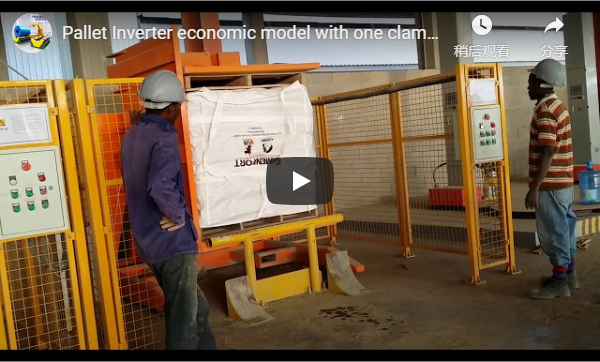
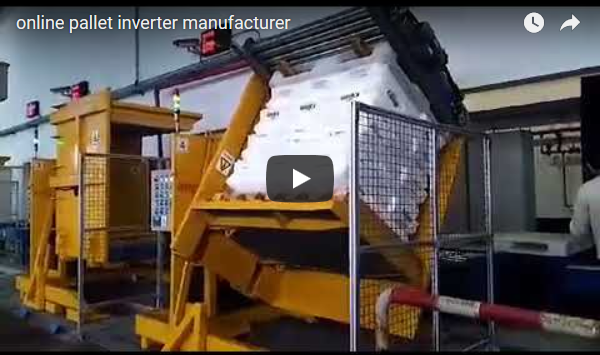
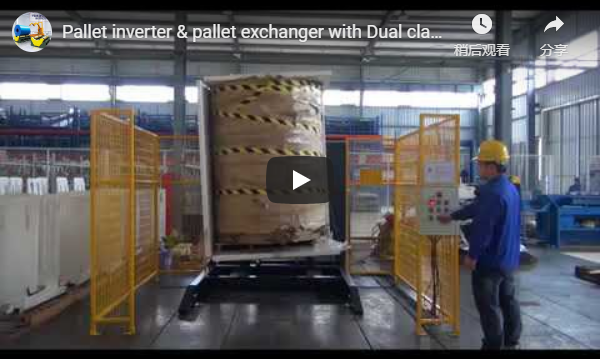
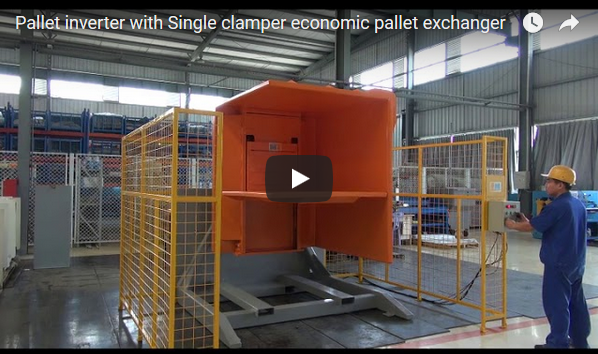
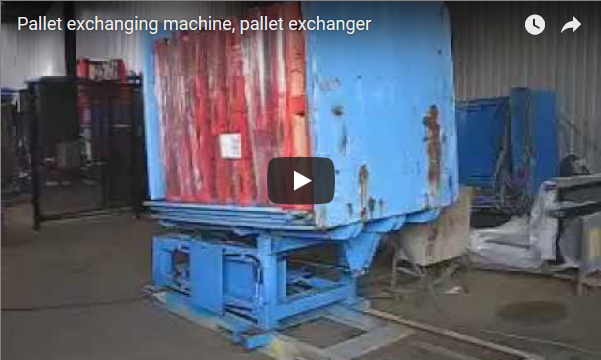
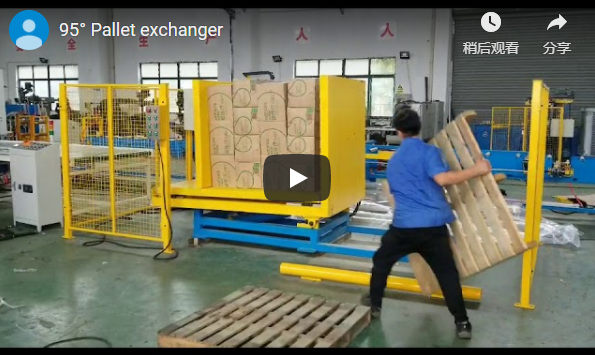
Our footage shows a pallet changer machine transferring a load between pallets. It is a general demonstration, so your load range and transfer type are confirmed with us per project.
Selection checklist
| Question | Confirm per project |
|---|---|
| Load range | weight, footprint, height |
| Change type | transfer or inverter |
| Pallets | types both sides |
| Hygiene | food or pharma rules |
| Export | wood-free requirements |
| Electrical supply | voltage, phase and frequency on site |
Operation and safety
Run automatic cycles from the panel, or operate semi-automatically step by step. Keep clear of the clamping and transfer zone while it runs, with guarding and emergency stops at the operator position. Routine checks cover the clamping edges, transfer deck, drives and sensors, per the machine manual. Check clamp pressure against the load before long runs, since a changer only protects the load while the clamp is set correctly.
Engineering FAQ
Q: What is a pallet changer machine? A: An automated or semi-automated system that transfers a loaded pallet onto a different pallet or slip sheet without manual re-stacking.
Q: Transfer or inverter, which is right? A: Choose horizontal transfer for fragile or unturnable stacks that must stay level. Choose an inverter where the flow accommodates a full turn or needs bottom access, confirmed per project.
Q: How does it help hygiene? A: It moves product from wood to sanitized pallets without hands on the goods, keeping a clean path.
Q: Does it help with export? A: Yes, where rules require wood-free pallets, the changer makes the switch before dispatch.
Q: How is the changer sized? A: From load weight, footprint, height, pallet types and throughput, confirmed per project.
Next step
- Email us at info@fhopepack.com with your load data, pallet types and volumes.
- We send a pallet changer proposal and a layout drawing within 48 hours.
- We arrange a site survey to confirm load range and pallet flow.
Related reading
- Pallet transfer changing machine: complete guide
- Pallet Turnover, Plywood Turner Machine: technology and best practices
- FHOPE online pallet inverter: operation and applications
- FHOPE packing machinery product lines
Sources and standards
- ISO 12100:2010 Safety of machinery, general principles for design and risk assessment
- EN 415-10:2014 Safety of packaging machines, general requirements
- EN ISO 13849-1:2023 Safety of machinery, safety-related parts of control systems
FHOPE pallet changer machine demonstration video. Reviewed as a general demonstration; load range confirmed per project.
Last reviewed: 2026-10-10