🛠️ Technical Standards & Compliance Framework
Automated steel coil packaging systems must satisfy overlapping product specifications, machinery directives, and material handling benchmarks to guarantee load stability, operator safety, and export readiness. Compliance is achieved through strict adherence to ISO 1496-1:2013 for coil tolerances, ASTM A572/A572M-18 for alloy-specific corrosion protocols, and CE marking under EU Machinery Regulation 2023/1230 for integrated safety interlocks.
The regulatory environment for heavy-gauge coil handling does not rely on a single packaging certification. Instead, plant engineers must align equipment performance with ISO 1496-1:2013, which governs technical delivery conditions, dimensional tolerances, and surface protection requirements for steel coils. This standard directly dictates strap placement geometry and wrap coverage density, ensuring that circumferential and radial strapping configurations maintain structural integrity during dynamic transport loads. Concurrently, ASTM A572/A572M-18 establishes baseline metallurgical properties for high-strength low-alloy steels, which indirectly mandates specific vapor corrosion inhibitor (VCI) application rates and edge protector thicknesses to prevent micro-fracture propagation during humidity exposure. Machinery safety falls under CE marking protocols, requiring harmonized electromagnetic compatibility (EMC) and validated emergency-stop circuits per ISO 13849-1 performance level D or higher. Plant managers must recognize that ISO 1496-1:2013 functions strictly as a product specification, not a machine certification; therefore, compliance verification relies on supplier declarations of conformity rather than third-party ISO audits.
| Standard / Directive | Technical Scope | Packaging Line Application |
|---|---|---|
| ISO 1496-1:2013 | Coil mass, dimensional tolerances, surface condition | Defines circumferential/radial strap spacing and wrap overlap minimums |
| ASTM A572/A572M-18 | High-strength low-alloy structural steel properties | Dictates VCI film permeability rates and coated fabric cushioning specs |
| CE Marking (EU 2023/1230) | Machinery safety, EMC, noise emission limits | Requires PLC-controlled guarding, dual-channel E-stop circuits, and ISO 13849-1 PL d validation |
| ISO 1496-1:2013 Annex A | Handling and storage conditions | Establishes baseline tension parameters to prevent telescoping and edge damage |
🏗️ System Configuration & Operational Parameters
Precision strapping and multi-layer wrapping architectures eliminate manual handling variables by deploying closed-loop tension control and automated film application, directly mitigating coil damage, reducing product loss, and standardizing load stability across variable transport routes while ensuring repeatable cycle times.
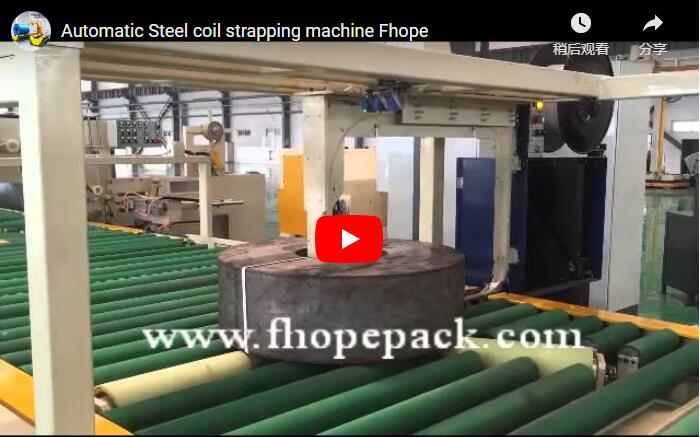
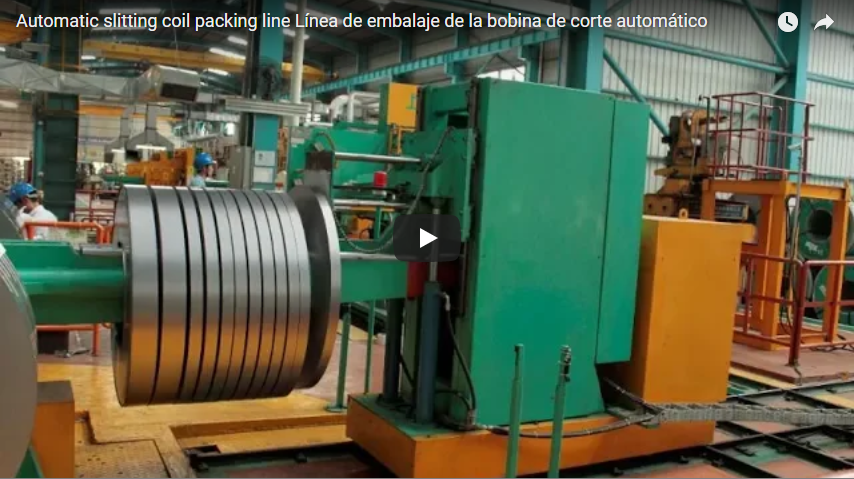
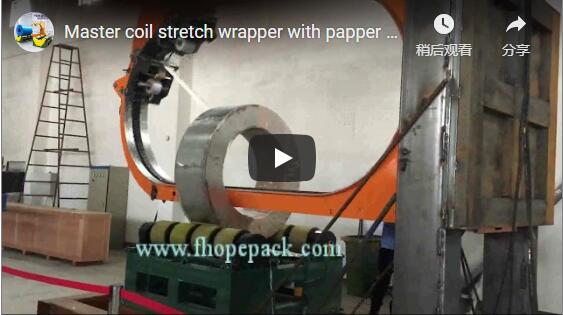
Modern automated packaging lines deploy two primary mechanical functions: strapping and wrapping, each governed by strict operational parameters. Strapping systems secure heavy coils using high-tension steel or engineered plastic bands, applied either circumferentially around the coil body or radially through the central eye. The number of strapping layers is dynamically calculated based on coil weight and projected transport duration, with industry estimates suggesting 3 to 6 radial straps for loads exceeding 2 tonnes to prevent telescoping. Tension control is the critical failure point; hydraulic or pneumatic tensioners must maintain ±5% repeatability to avoid strap fracture or coil surface indentation. Wrapping systems complement this by applying multi-layer stretch film, VCI papers, and reinforced edge protectors. These materials provide abrasion prevention, moisture barriers, and corrosion resistance tailored to factory humidity profiles. Orbital and eye stretch wrappers synchronize with conveyor indexing to maintain consistent film tension and overlap, typically requiring a 50% minimum overlap for full environmental sealing. When integrated into a continuous production flow, these systems replace subjective operator judgment with programmable logic controller (PLC) sequences, ensuring repeatable load integrity regardless of shift handover or personnel turnover.
🔗 Related: Explore more solutions
📈 Financial Modeling & Maintenance Workflows
Capital expenditure for automated coil packaging infrastructure ranges from $10,000 to $50,000+ for dedicated strapping units and $20,000 to over $100,000 for integrated orbital or VCI wrapping stations, with full-line pricing typically inclusive of mechanical integration, electrical commissioning, and baseline operator training.
The financial architecture of automated packaging lines requires rigorous ROI modeling that accounts for labor displacement, damage reduction, and maintenance overhead. Industry estimates indicate that fully automated lines processing 50–80 coils per shift reduce per-unit labor costs by 60–70% and decrease damage-related returns by 40–50%, directly elevating Overall Equipment Effectiveness (OEE). These metrics are derived from typical North American and EU manufacturing benchmarks; actual savings should be verified against site-specific wage structures and historical spoilage data. Maintenance workflows must be explicitly linked to shift scheduling to prevent unplanned downtime. PLC-driven tensioners and film dispensers require scheduled calibration every 6 months or after 10,000 operational cycles. Wear components, including strapping-head seals, film-cutting knives, and orbital guide rollers, typically require replacement every 5–8 years, with estimated component costs ranging from $3,000 to $8,000 per station. Annual maintenance expenditure generally falls between 5% and 8% of the initial capital outlay. To mitigate downtime risk, facilities should implement predictive maintenance protocols that cross-reference PLC fault logs with production schedules, ensuring spare parts inventory aligns with peak shift windows. Unplanned downtime from PLC or tensioner failures typically accounts for 2–4% of total shift hours; implementing a spare-parts contract and predictive maintenance schedule reduces this to <1%. Compliance audits must also be synchronized with these maintenance cycles, as documented calibration records directly support CE technical files and ISO 1496-1:2013 delivery condition verification.
🛡️ Procurement Validation & Lifecycle Management
Vendor evaluation must prioritize closed-loop tension repeatability, VCI material compatibility, and ISO 13849-1 PL d safety validation, while lifecycle planning should distinguish between partial retrofitting and full-line replacement based on existing infrastructure age, throughput requirements, and shift scheduling constraints.
Procurement decisions for coil packaging equipment require strict technical validation against operational baselines. Buyers must request documented evidence that strapping heads achieve ±5% tension repeatability under variable load conditions and that orbital wrappers maintain consistent film tension across varying coil diameters. VCI film compatibility must be verified against ASTM A572/A572M-18 corrosion benchmarks, ensuring permeability rates match local storage humidity. Safety architecture must comply with CE marking requirements, specifically ISO 13849-1 PL d validation for all interlocked guarding and emergency-stop circuits. For facilities considering retrofitting legacy manual lines, partial automation—such as adding PLC-controlled conveyors or single-station strappers—may cost 60–80% of a new integrated line. However, retrofitting radial strapping and synchronized eye-wrapping stations often compromises cycle time and tension consistency. Lifecycle analysis typically favors full-line replacement when existing infrastructure exceeds 8 years of service, particularly if the current system lacks modular expansion capabilities. Companies planning installations post-2026 must also verify compliance with the EU Machinery Regulation 2023/1230, which introduces enhanced cybersecurity and software validation mandates for automated control systems. Practical implementation requires scheduling pre-compliance walkthroughs 12–18 months before target commissioning dates, allowing sufficient lead time for technical file documentation, operator training, and shift-schedule integration.
🔗 See Also: Related equipment
⚙️ Technical FAQ & Implementation Directives
Automated coil packaging systems operate within defined technical boundaries that require periodic calibration, documented compliance verification, and strategic lifecycle planning to maintain load stability, regulatory adherence, and operational efficiency across multi-shift production environments while systematically minimizing unplanned downtime.
Q: Does ISO 1496-1:2013 require third-party certification for packaging machinery?
A: No. ISO 1496-1:2013 is a product specification governing steel coil dimensions, mass tolerances, and surface protection conditions. It does not mandate machine certification. However, major automotive and construction steel suppliers typically require a supplier declaration of conformity to verify that packaging parameters align with delivery conditions.
Q: What is the operational lifespan of an automated coil packaging line?
A: Under standard operating conditions (8–16 hours/day, 5 days/week), structural and mechanical components typically achieve a 10–15 year service life. High-wear elements, including strapping seals, film-cutting mechanisms, and orbital drive belts, require replacement every 5–8 years. Actual lifespan depends heavily on maintenance adherence and ambient environmental factors.
Q: How should facilities manage compliance documentation for export shipments?
A: Export-bound shipments require a CE Declaration of Conformity and a complete technical file maintained on-site. This documentation must include PLC safety validation reports, tension calibration logs, and material safety data sheets for VCI films and edge protectors. Non-compliance can trigger customs delays or market surveillance penalties, which industry estimates suggest may reach up to 4% of annual EU-bound revenue for repeated violations.
Q: What is the recommended calibration frequency for strapping tension systems?
A: Tension calibration should be performed every 6 months or after 10,000 operational cycles, whichever occurs first. Facilities should utilize portable tension meters calibrated to ISO 17025 standards and log results directly into the maintenance management system (CMMS) to align with shift scheduling and predictive maintenance workflows.