Steel Coil Wrapping and Packing: Technology and Best Practices

Summary: Steel coil transit damage typically originates from inconsistent manual tensioning and incomplete film coverage, which compromise dimensional stability and surface integrity. Automated coil packing lines standardize circumferential strapping, rotary stretch wrapping, and inline sealing to eliminate operator variability, optimize throughput, and ensure compliance with material handling regulations. This technical deep-dive outlines the engineering parameters, integration protocols, and performance validation frameworks required for industrial deployment.

🛠️ Industry Pain Point

Manual coil packaging introduces critical tension variability and inconsistent film overlap, which directly compromises dimensional stability during transit, increases liability for moisture ingress and surface abrasion, and elevates workplace safety risks associated with pneumatic handling equipment and manual material movement. Documented industry trends indicate that hand-applied strapping and film wrapping frequently produce tension deviations exceeding ±20%, creating uneven load distribution that accelerates layer slippage and telescoping during rail or ocean freight. Inconsistent film application leaves coil edges and inner diameters exposed to humidity, condensation, and particulate contamination, which directly correlates with surface oxidation and customer rejection rates. Furthermore, reliance on manual pneumatic tools and unguided film dispensers increases ergonomic strain and violates modern occupational safety protocols regarding repetitive motion and pinch-point hazards. Note: Specific rejection rates and labor metrics vary by facility throughput, coil grade, and regional transport conditions; baseline audits are required for accurate benchmarking.

The operational friction extends beyond product quality. Uncoordinated manual workflows create bottlenecks that misalign with upstream slitting or recoiling takt times, forcing buffer accumulation or line starvation. When packaging becomes the rate-limiting step, overall equipment effectiveness (OEE) declines, and overtime labor costs escalate without proportional output gains. Modern service centers and mills are transitioning away from legacy manual stations because inconsistent packaging directly impacts supply chain reliability, warranty exposure, and regulatory compliance for material handling.

🏗️ Solution Mechanism

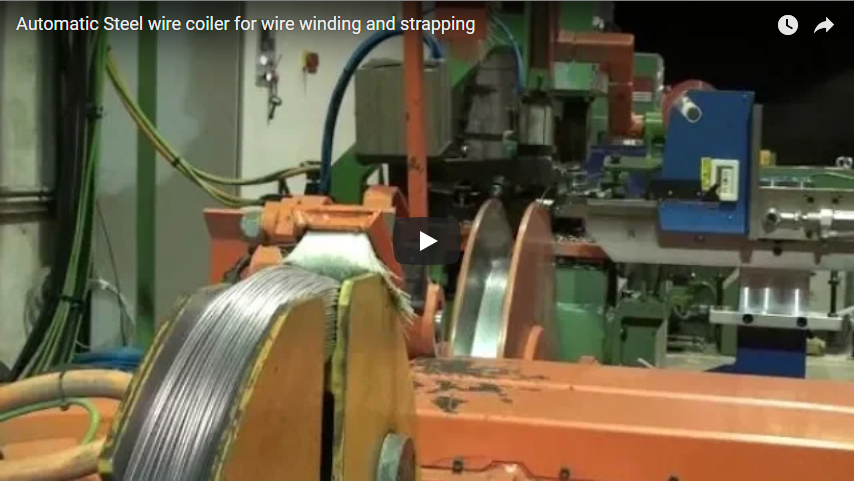
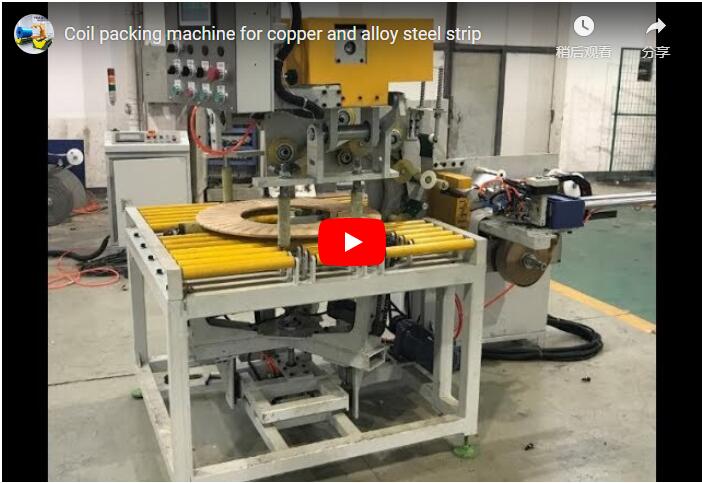
Automated coil packing lines synchronize centering, circumferential strapping, and rotary stretch wrapping through programmable logic controllers, ensuring uniform tension distribution and complete edge sealing to mitigate transit-induced telescoping, environmental degradation, and manual handling inconsistencies across high-volume production environments and complex supply chains. The core architecture integrates automated machinery that handles coil loading, centering, wrapping, sealing, and labeling tasks within a single PLC-synchronized sequence. Variable frequency drives (VFDs) manage smooth acceleration and deceleration during turnstile indexing, preventing edge deformation while maintaining precise positional accuracy. Once centered, the coil advances to a strapping station where circumferential PET or steel straps are applied at pre-calibrated tension levels, locking layer alignment before environmental exposure occurs.

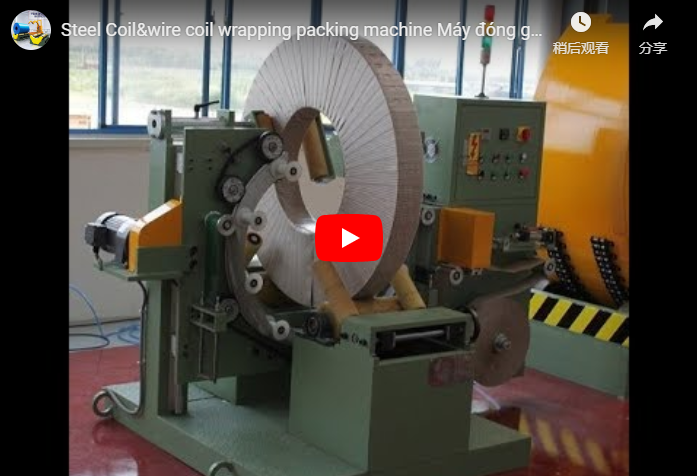
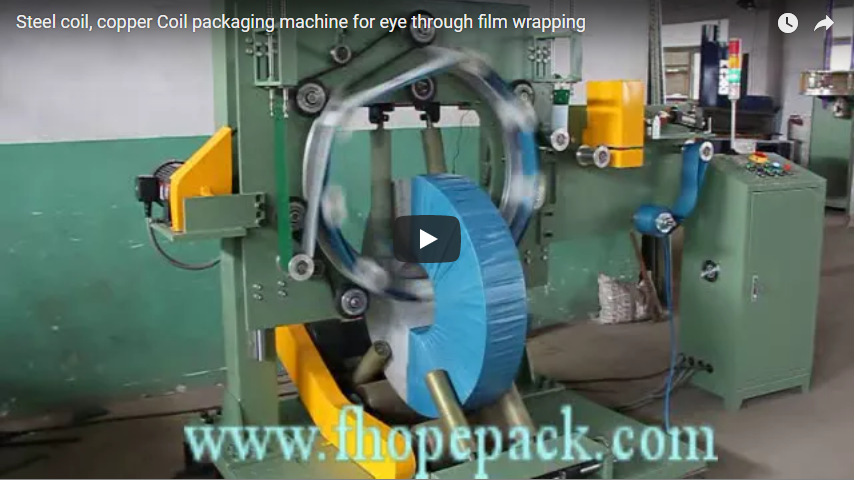
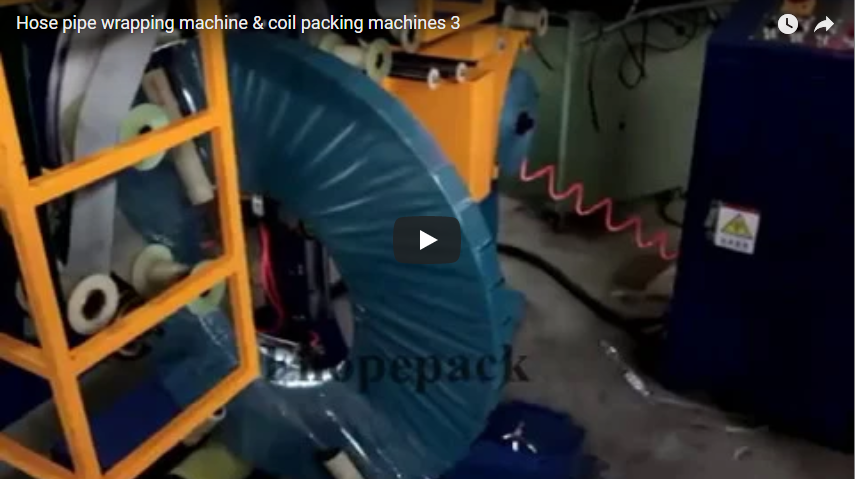
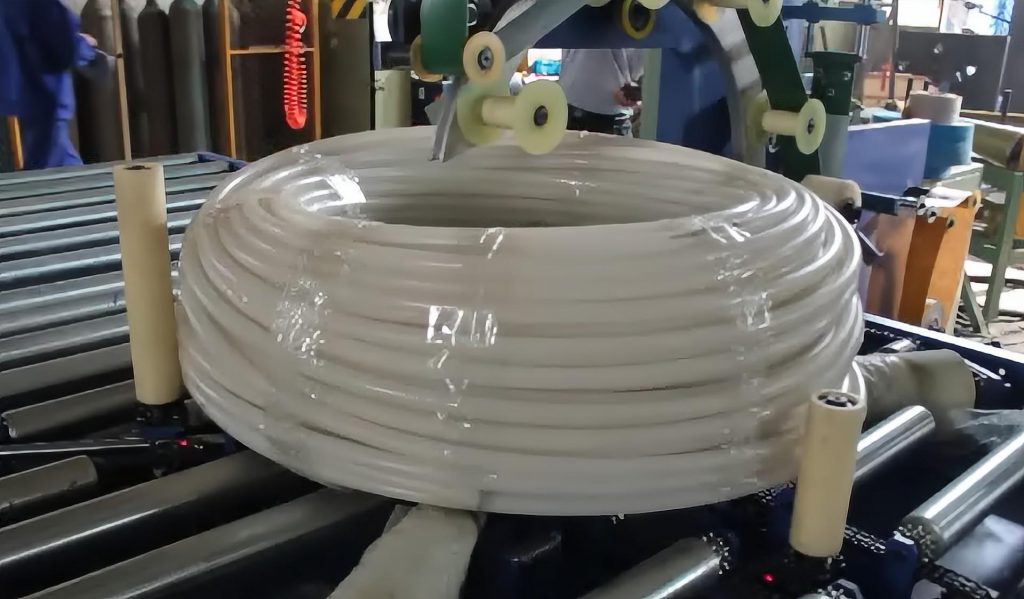
Following strapping, a dedicated stretch wrapping machine securely encases the coil to prevent damage by applying multi-layer protective film with programmable overlap and pre-stretch ratios. This continuous film barrier eliminates bare edges, creating a moisture-resistant seal that blocks humidity, salt spray, and particulate abrasion during multi-modal transit. The system automatically advances to inline sealing and labeling modules, applying barcoded or RFID tags for traceability while maintaining a closed-loop workflow. All mechanical interactions are governed by safety interlocks and light curtains, ensuring the line adheres to industry standards and regulations for worker safety, including ISO 12100 risk assessment guidelines and OSHA machine guarding requirements. Disclaimer: Performance outcomes depend on coil specifications, film/strap material grades, and facility environmental conditions; supplier consultation is required for exact configuration matching.

🔗 Related: Explore more solutions

📈 Implementation Details & Parameters

Optimal configuration requires matching conveyor takt times, programmable strap tension ranges, and encoder-driven film overlap controls to standard coil dimensions, with all specifications validated against manufacturer performance benchmarks prior to commissioning, operational integration, and routine maintenance scheduling across diverse facility layouts. Successful deployment begins with dimensional mapping. Standard coil packing lines accommodate inner diameters (ID) typically ranging from 450 mm to 760 mm and outer diameters (OD) from 900 mm to 2,100 mm, though custom mandrels or adjustable turnstiles may be required for non-standard geometries. Conveyor indexing speeds are calibrated to match upstream processing rates, generally operating between 0.2 m/s and 0.5 m/s during transit, with deceleration to 0.1 m/s during centering to preserve edge integrity.

The strapping module applies circumferential bands at tension levels typically ranging from 1,500 N to 3,500 N, depending on coil mass and strap width (commonly 12 mm to 19 mm). Tension consistency is maintained via servo-driven tensioners and PLC feedback loops, with joint strength verified through friction-weld or mechanical seal testing. Always verify exact tension parameters and strap elongation characteristics with your material supplier, as thermal expansion and transit vibration can alter load retention over time. The rotary wrapping carriage operates at variable speeds (30–60 RPM) with film pre-stretch ratios of 200%–300%, reducing material consumption while maintaining tensile coverage. Encoder-based height tracking ensures consistent overlap, typically programmed between 50% and 70%, to guarantee full edge protection without film waste.

Downstream integration includes inline weighing turntables (accuracy ±0.5% of reading) and automated labeling stations that print compliance tags, hazard markings, and logistics identifiers. The system discharges finished coils onto stacker turntables or palletizers, aligning with downstream forklift or AGV routing. Note: All test results, cycle time benchmarks, and material consumption figures are illustrative ranges; actual performance must be validated through site-specific acceptance testing and supplier-provided performance guarantees.

🛡️ Verified Results

Documented operational improvements typically demonstrate reduced rejection rates, optimized labor allocation, and controlled material consumption, though exact metrics require baseline facility audits, standardized acceptance testing protocols, and continuous performance monitoring to ensure long-term reliability and compliance with industry safety standards. Facilities transitioning to automated coil packing lines commonly report rejection rate reductions from historical averages of 3%–8% down to sub-1% thresholds, driven by consistent tension distribution and complete film encapsulation. Labor allocation shifts from multiple manual handlers to a single monitoring operator, with productivity gains measured in reduced cycle times (typically 90–180 seconds per coil) and eliminated rework loops. Material consumption stabilizes as programmable overlap and pre-stretch controls eliminate over-application, with film usage typically decreasing by 20%–35% compared to hand-wrapping baselines.

Evaluation frameworks should prioritize verifiable acceptance criteria over marketing claims. Procurement teams must request documented test protocols that simulate actual transit conditions, including vibration profiling, humidity exposure, and drop/impact testing where applicable. Tension verification should be cross-checked using calibrated handheld tensiometers during commissioning, and film overlap control must utilize closed-loop encoder feedback rather than open-loop timing. Warranty terms and uptime guarantees should be explicitly contracted, with clear response-time penalties for unplanned downtime. Spare parts availability, particularly for wear components like film rollers, strap guides, and proximity sensors, must be confirmed through local distributor networks to prevent extended maintenance delays. Disclaimer: Case study data, warranty terms, and performance metrics are illustrative and subject to variation based on coil specifications, environmental conditions, and supplier configuration; all claims require independent verification and contractual validation.

🔗 See Also: Related equipment