Executive summary
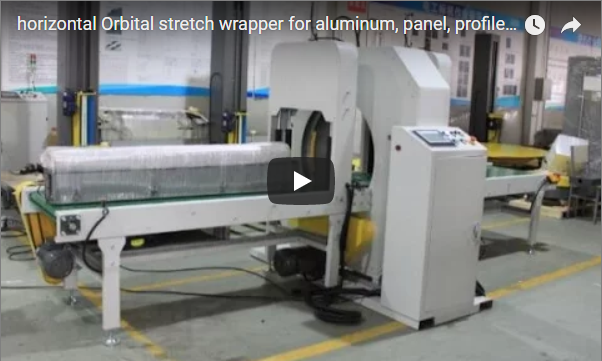
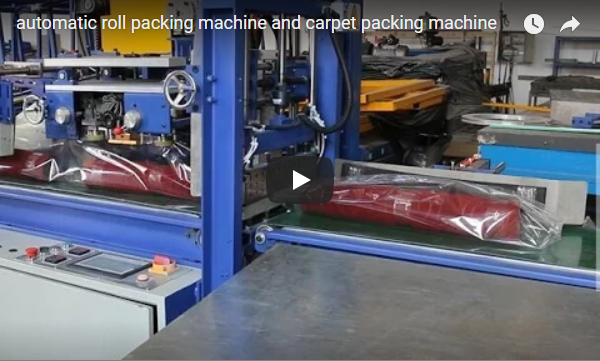
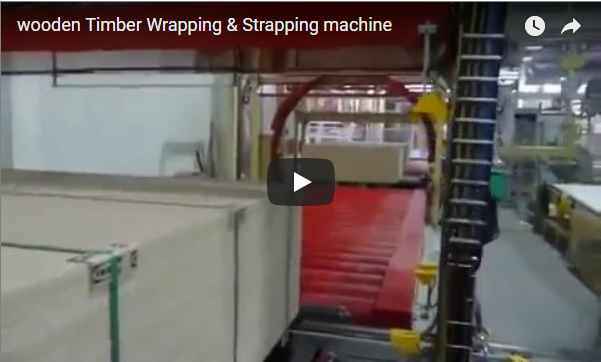
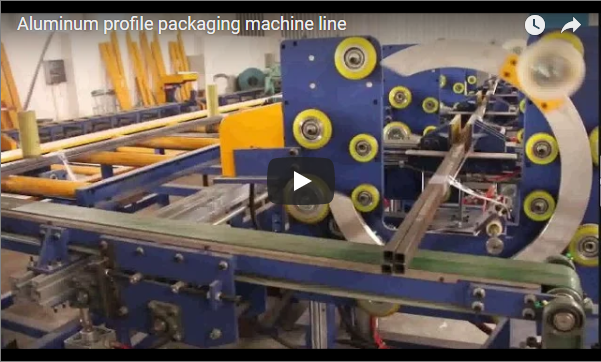
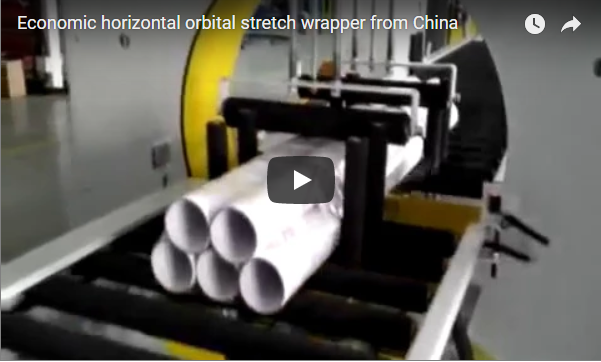
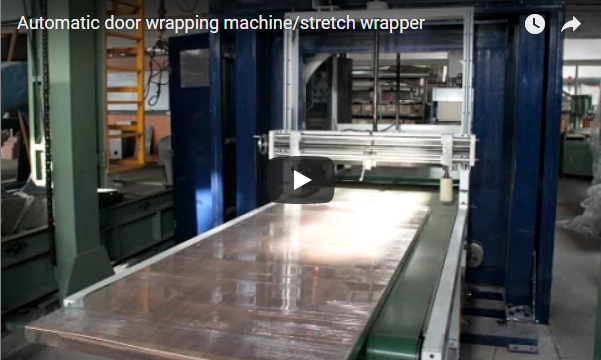
Eliminate manual handling and prevent load shifting on awkward, compressible, or long products with automated horizontal ring wrapping. Operating at ring speeds up to 100 rpm with 20 to 35 s cycle times, FHOPE horizontal orbital wrappers secure stationary cargo under uniform film tension on the conveyor line. The accompanying video demonstrates a complete automated cycle.
Table of Contents
- Automated Horizontal Wrapping Cycle and Throughput
- Why Ring-Wrap Large Objects
- How a Horizontal Wrapper Works
- Wrapping Cover and Film Budget
- Specifications
- Selection Checklist
- Controls and Safety
- Engineering FAQ
- Next Step
- Related Reading
- Sources
Automated Horizontal Wrapping Cycle and Throughput
Horizontal ring wrapping secures products that are vulnerable to shifting or awkward to rotate—including compressible hose coils, cable bundles, and boxed goods—by orbiting stretch film around a stationary load on the conveyor.
The load is fed in on the infeed conveyor and held in place while the ring carriage orbits the film around it. A blade cuts and seals the wrap at the end of the cycle. The split between infeed, in-position hold and orbital wrap is covered below in How a Horizontal Wrapper Works.
Why Ring-Wrap Large Objects
Horizontal ring wrapping suits objects that are awkward to rotate: long, heavy or flexible products such as hose and pipe coils, cable coils, extrusions, bundles and boxed finished goods. The load stays on the conveyor while the film carriage orbits it, so even compressible coils are handled gently and consistently. Coil parameters apply strictly to eye-to-the-wall coil variants; boxed loads and rigid bundles are evaluated on total conveyor footprint, with the envelope selected per project.
Because every FHOPE unit is custom built, our coil wrapping models are specified for ranges rather than a fixed rating. A coil ID from 250 to 650 mm and an OD from 450 to 800 mm are typical, with width from 120 to 280 mm. Coil weight runs from 5 to 30 kg. Each unit is engineered to the customer’s coil-envelope drawings.
How a Horizontal Wrapper Works
The conveyor carries the load into the wrapping ring, which holds the film roll and rotates around the load while the film advances. Tension keeps the wrap tight, the controller sets overlap and pass count, and a blade cuts and seals the film at the end of the cycle.
On our models the wrapping speed is rated at 20 to 35 s per piece and the ring can turn at up to 100 rpm. An automatic film feed option runs at up to 200 m/min to shorten the cycle.
Wrapping Cover and Film Budget
Three worked checks give confidence before commissioning. All examples are illustrative and use assumed inputs; every line is set against the submitted coil drawing.
Illustrative full-cover check: for a coil OD of 0.8 m wrapped with a band 0.5 m wide at 50% overlap, the pass-count formula returns 10.05 ring passes. The controller rounds this up for full cover.
Illustrative film budget: stretch film is quoted by areal density, typically 18 to 20 g/m². A 1000 m roll of film 0.5 m wide at a typical 25 µm gauge, with an LLDPE density of 920 kg/m³, works out to a film mass of 11.5 kg. This is raw un-stretched roll weight before mechanical or power pre-stretch tensioning, and a practical input when quoting film stock.
Illustrative output check: for an output of 144 pieces per hour, cycle time = 3600/144 = 25 s per piece.
Specifications
The values below are catalogue ranges for our coil wrapping models. Coil ID, OD, width and weight apply to coil-load variants; boxed or palletised loads are sized against the outer envelope you send us, so their dimensions are confirmed per project. Equipment is customised, so every unit is configured per project.
| Parameter | Range |
|---|---|
| Coil ID | 250 to 650 mm |
| Coil OD | 450 to 800 mm |
| Coil width | 120 to 280 mm |
| Coil weight | 5 to 30 kg |
| Wrapping speed | 20 to 35 s per piece |
| Max ring speed | 100 rpm |
| Film feed (option) | 200 m/min |
Selection Checklist
- Confirm the load envelope: overall length, coil ID, coil OD, width and weight.
- Choose film band width and overlap for the required cover.
- Match the wrap cycle to the conveyor takt and film-feed speed.
- Agree guarding, interlock positions and power isolation with the integrator.
Controls and Safety
The wrapper is built to run automatically with guarding and stop-for-access logic. Before clearing a film jam or entering the wrap zone, stop the cycle and isolate the power supply. Never reach into the ring while it is rotating. Guard doors and light curtains interrupt the motion when the area is opened.
The standards that apply depend on the destination market. For CE markets, ISO 12100 sets the risk-assessment method and EN 415-10 covers the general safety requirements of packaging machines. Guarding, interlock placement and control layout are engineered to the specific line layout.
Engineering FAQ
Q: What loads fit a horizontal ring wrapper? A: Boxed finished goods, hose and pipe coils, cable coils and other long or flexible bundles. Our models cover coil IDs of 250 to 650 mm, ODs of 450 to 800 mm, widths of 120 to 280 mm and weights of 5 to 30 kg, tuned per project.
Q: How fast is the wrap part of the cycle? A: The wrap is rated at 20 to 35 s per piece with a ring speed up to 100 rpm. Real throughput depends on the project cycle and the conveyor handling time in and out of the ring.
Q: How many passes give full film cover? A: The controller sets the pass count from the entered band width and overlap. At 0.8 m OD with a 0.5 m band and 50% overlap, the calculation requires 10.05 passes, which the PLC rounds up to 11 passes for complete coverage.
Q: Which standards do these machines follow? A: For CE markets, ISO 12100 defines the risk assessment and EN 415-10 covers general safety requirements for packaging machines. Final declarations are handled with the project documentation.
Q: Can the unit tie into an existing line? A: Yes. The wrapper mounts over roller conveyors and the automatic film feed option is specified up to 200 m/min; infeed, outfeed and guarding are arranged per project.
Next Step
- Submit your layout drawing with dimensions and output.
- Receive a proposal within 48 hours.
- Book a site survey.
Questions? Email info@fhopepack.com.
Related Reading
- Cable Coiling & Binding Machine
- Hose Winding and Wrapping Machine: Coil First, Then Film Wrap
- Economic Cable Coil Packing Machine: FPCA Specs, Wrap Time and Overlap Setup
- HDPE Pipe Coil and Hose Wrapping Machine: Eye-Through Ring Wrapping Explained
- Cable Coil Packing Machine for Small-ID Wire Coils
- Automatic Pipe Coiling and Wrapping Machine for Hose and Plastic Tubes
Sources
- Hose Coil Packing Machinery FPH-200
- Automatic Cable Coiling and Wrapping Machine
- ISO 12100
- EN 415-10
- FHOPE engineering team
Last reviewed: 2026-10-07