Executive summary
A pallet changing and inverting machine lets one operator lift a wrapped load clear of its pallet, tilt it to the horizontal and hold it. A fresh pallet can then be placed underneath, or the load handed off. The load is handled once instead of being re-stacked by hand, which cuts labour and keeps the pack intact. Load size, tilt angle and lift height are confirmed per project.
Table of Contents
- Why change and invert pallets
- What the machine does
- How the pallet changer works
- Cycle time and control
- What the footage shows
- Typical configuration
- Selection checklist
- Operation and safety
- Engineering FAQ
- Next step
- Related reading
- Sources and standards
Why change and invert pallets
Palletised loads are changed when a damaged pallet is replaced, a different footprint is needed, or the load must sit on a new base for the next step. Inverting helps when the top must become the bottom, for stacking or presentation.
Doing the lift, tilt and hold at one machine means the load is handled once, not re-stacked by hand. Load size and tilt angle are confirmed per project.
What the machine does
The machine is a self-powered pallet changer built around a wheeled base, a vertical mast and a clamping platform. An operator drives the clamping platform against the load, lifts it clear of the pallet, tilts it to the horizontal and holds it for the next step.
A replacement pallet can be set underneath before the load is lowered again. Load size, lift height and tilt angle are confirmed per project.
How the pallet changer works
The clamping platform at the front of the machine carries the load against the lift carriage, and the platform pivots so the load moves through the required changeover angle. On this page that is a pivot to the horizontal; full inversion can be configured per project. The whole carriage runs up and down the mast to raise the load clear of its pallet.
An integrated control handle at the operator position carries a joystick for lift and tilt, with a stop button within reach. The platform width and mast height are arranged for the load range per project.
Cycle time and control
The operator drives the machine up to the load, raises the clamping platform against the face of the load and lifts it clear of the pallet. The load is then tilted back to the horizontal, held aloft, and raised or lowered to the working height.
At that point a fresh pallet can be placed underneath, or the load handed off for the next step. All movements are driven from the control handle, and the lift, tilt and hold angles are confirmed per project.
What the footage shows
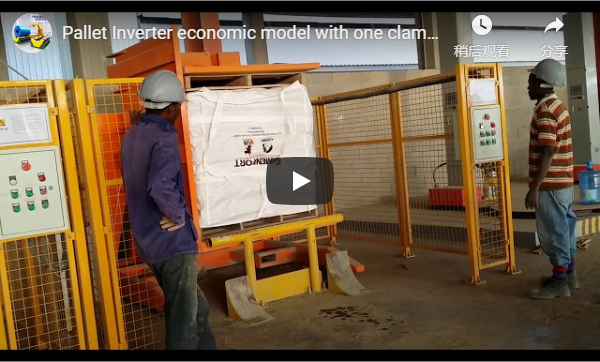
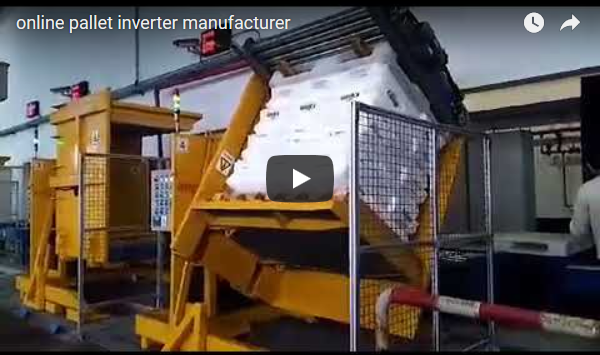
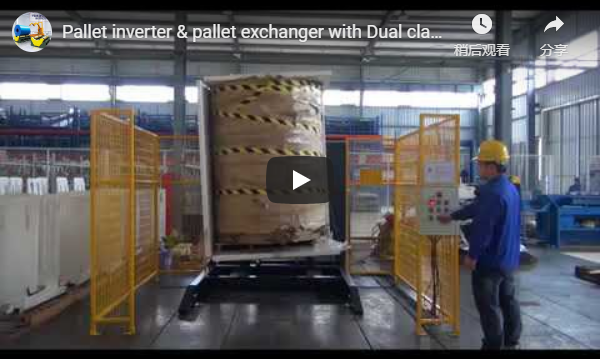
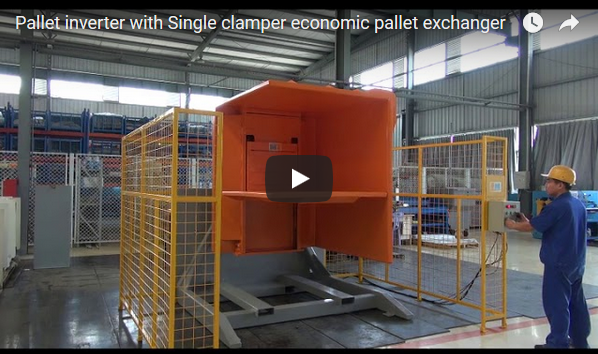
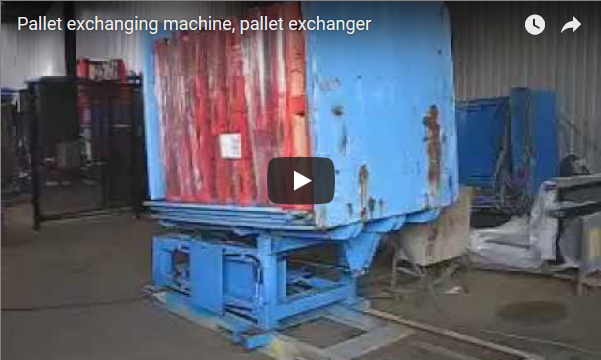
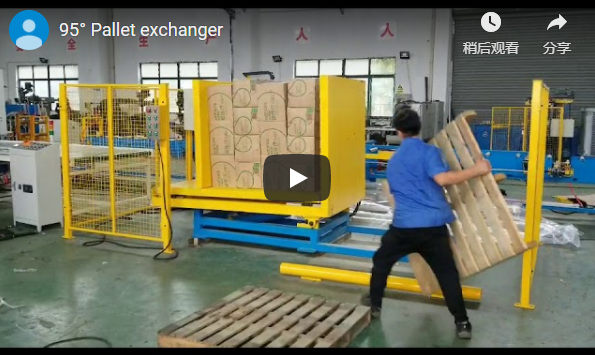
Our footage shows an operator standing behind the machine with the control handle, moving the clamping platform against a tall wrapped load on a wooden pallet. The platform lifts the load, tilts it back to the horizontal, holds it steady, and then raises it clear of the pallet. It is a general demonstration, so your load size, tilt angle and lift height are confirmed with us per project.
Typical configuration
Figures below list functional design boundaries rather than numeric values, and are confirmed per project.
| Parameter | Typical range, confirmed per project |
|---|---|
| Load | wrapped palletised loads on wooden pallets |
| Process | lift clear of the pallet, tilt to the horizontal, hold |
| Transfer | replacement pallet set underneath, or load handed off |
| Control | control handle with joystick and stop button |
| Drive | wheeled base, moved by the operator |
| Guarding | guarding and signage arranged per project |
| Cycle | lift, tilt and hold staged from the handle |
| Mount | mobile, on the warehouse floor |
| Electrical supply | 380 V three phase 50 Hz, or 220 V single phase for light machines, selected per project |
Selection checklist
| Question | Confirm per project |
|---|---|
| Load range | size, weight, centre of gravity |
| Tilt | angle, hold position |
| Lift | height, mast travel |
| Control | handle layout, stop button position |
| Site | aisle width, floor condition |
| Electrical supply | voltage, phase and frequency on site |
Operation and safety
Drive the machine squarely up to the load, raise the clamping platform against the load face, and lift the load clear before tilting. Keep personnel clear of the raised load and the tilt path, and use the stop button if the load shifts.
Routine checks cover the mast, the platform and the lift carriage, per the machine manual. Confirm the load is strapped before lifting.
Engineering FAQ
Q: What does this machine do? A: It lifts a wrapped load clear of its pallet, tilts it to the horizontal and holds it, so a pallet can be changed by a quick single move.
Q: Can one operator run it? A: Yes, one operator drives the machine by the control handle and stages the lift, tilt and hold step by step.
Q: How does it hold the load while tilting? A: The clamping platform keeps the load against the carriage throughout, so it stays steady by a controlled tilt motion.
Q: Does the load stay wrapped? A: The load is handled as a wrapped unit, when the film and strapping are confirmed per project before lifting.
Q: What does it suit? A: MDF boards, EPS panels and other palletised loads that need a stable pallet change, when a clean single-move transfer is required.
Next step
- Email us at info@fhopepack.com with your load size and weight.
- We send a pallet changing proposal within 48 hours.
- We confirm the tilt angle, lift height and platform width for your loads.
Related reading
- Pallet changing and inverting video
- Partial film wrapping and packing by orbital wrapper
- Pipe Coil Wrapping and Strapping: Solutions for Industry
- FHOPE packing machinery product lines
Sources and standards
- ISO 12100:2010 Safety of machinery, general principles for design and risk assessment
- EN 415-10:2014 Safety of packaging machines, general requirements
- EN ISO 13849-1:2023 Safety of machinery, safety-related parts of control systems
FHOPE pallet changing and inverting machine demonstration video. Reviewed as a general demonstration; load size, tilt angle and lift height confirmed per project.
Last reviewed: 2026-10-12