Executive summary
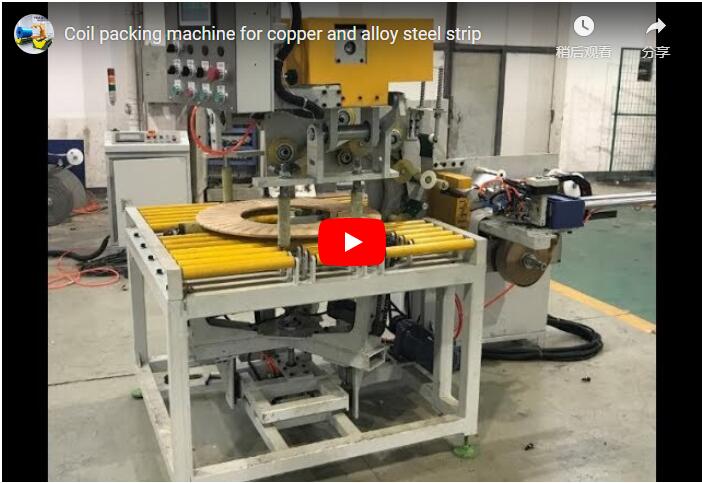
Coil packaging solutions for industry combine a tilting pick-up arm, a roller conveyor and a wrapping station in one line. The footage shows a large steel coil taken from vertical, laid flat on the conveyor, and carried to a station where a wrapping arm covers it with stretch film. The wrapped coil then moves to the stacking area, ready for transport. Coil size, film and cycle are confirmed per project.
Table of Contents
- Why a coil packaging line
- What the line does
- Tilting pick-up and conveyor
- Wrapping and stacking layout
- What the footage shows
- Typical configuration
- Selection checklist
- Operation and safety
- Engineering FAQ
- Next step
- Related reading
- Sources and standards
Why a coil packaging line
Slit coils leave the line as heavy vertical coils, and each one has to be laid flat, wrapped and stacked before it can ship. Doing the whole sequence by hand is slow and exposes people to the coil at every step. Coil size and output are confirmed per project.
What the line does
The line takes the coil from a pick-up position, tilts it from vertical to horizontal, carries it on a roller conveyor to a wrapping station, and then moves the wrapped coil on for stacking. Each leg of the sequence runs in one continuous flow. Line length and layout are confirmed per project.
Tilting pick-up and conveyor
A gripping arm with rollers takes the vertical coil and slowly tilts it back, so the coil settles flat on the roller conveyor. The conveyor then moves the flat coil to the wrapping station. Coil width and conveyor speed are confirmed per project.
Wrapping and stacking layout
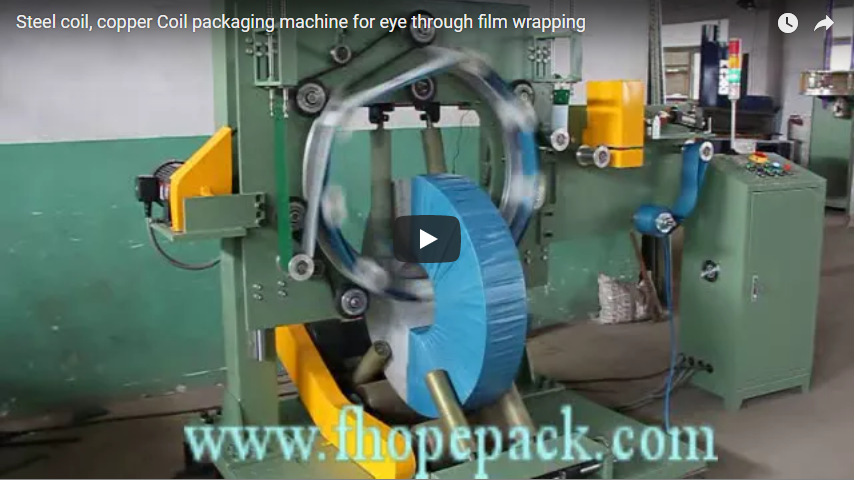
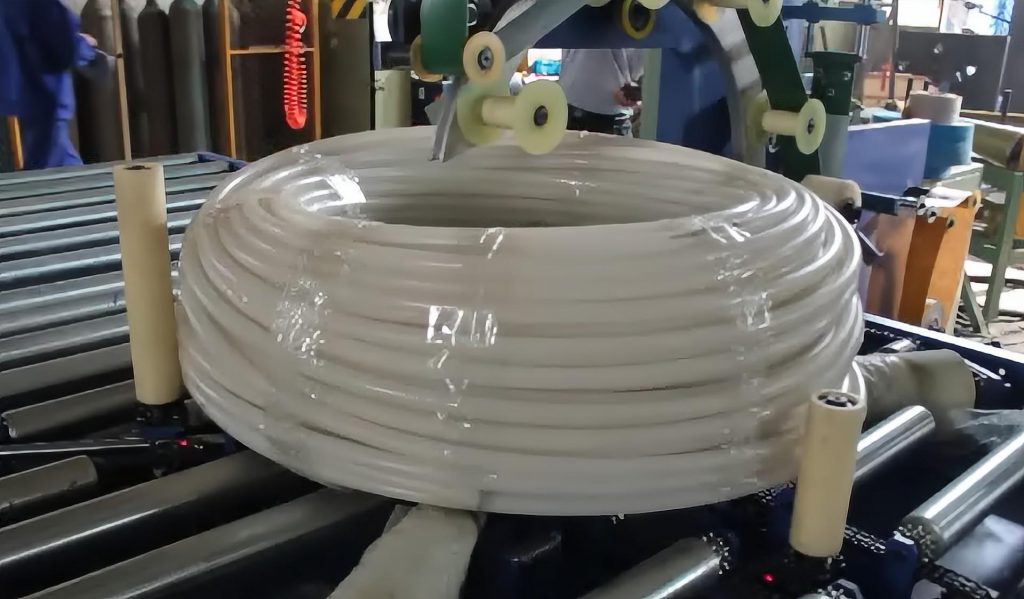
At the wrapping station, a wrapping arm lays stretch film around the rotating coil until it is covered, and the wrapped coil then moves to the stacking area. Coils are set on pallets in neat rows and taken away for transport. Film type and stacking pattern are confirmed per project.
What the footage shows
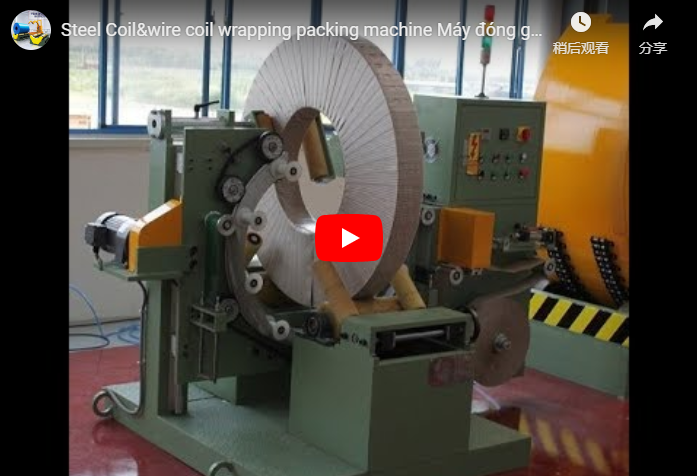
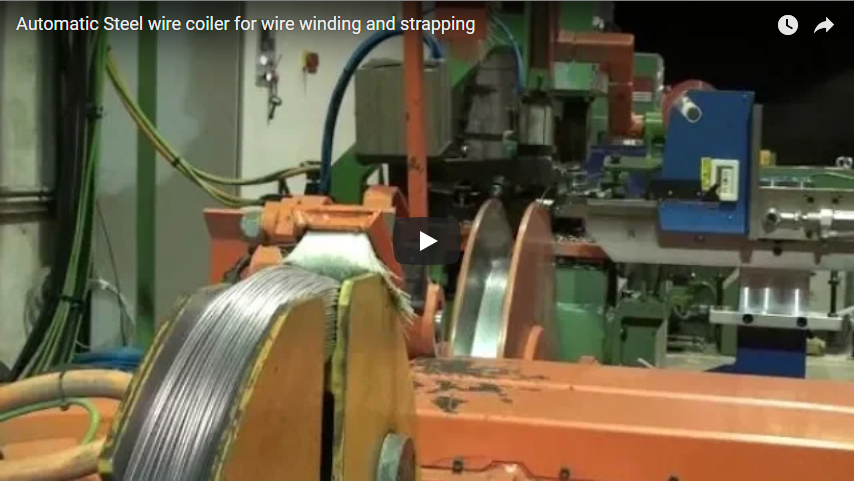
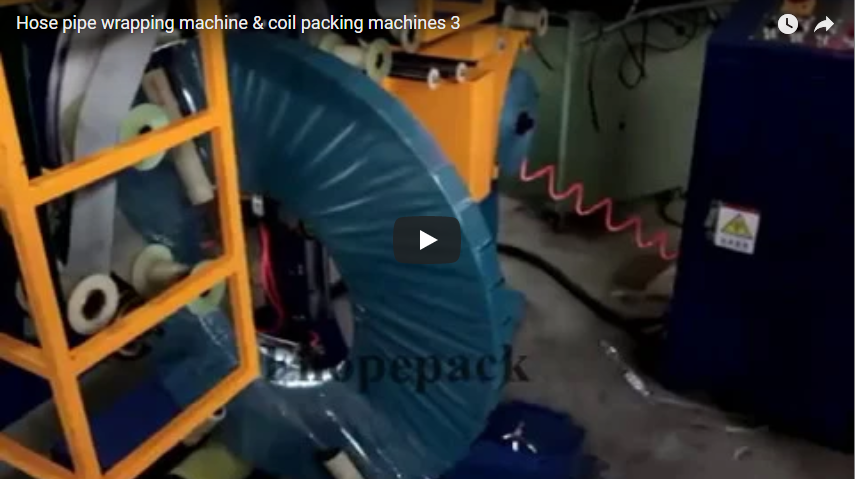
Our footage shows the full sequence: a steel coil tilted flat, carried on the conveyor, wrapped with stretch film, and moved toward stacking. It is a general demonstration, so your coil size, film and cycle are confirmed with us per project.
Typical configuration
Figures below list functional design boundaries rather than numeric values, and are confirmed per project.
| Parameter | Typical range, confirmed per project |
|---|---|
| Coil | slit coils handled flat on the line |
| Transfer | tilting pick-up arm onto a roller conveyor |
| Wrapping | wrapping arm with stretch film |
| Stacking | wrapped coils set on pallets |
| Control | panel-operated cycle on site |
| Electrical supply | 380 V three phase 50 Hz, or 220 V single phase for light machines, selected per project |
Selection checklist
| Question | Confirm per project |
|---|---|
| Coil | size, weight and bore |
| Transfer | pick-up height and fall direction |
| Wrapping | film width and wrap layers |
| Stacking | pallet size and rows per layer |
| Site | floor space and line access |
| Electrical supply | voltage, phase and frequency on site |
Operation and safety
Operators load the pick-up area and monitor the line from the panel while the sequence runs on its own. Keep people clear of the tilting arm, the conveyor and the wrapping station while the line moves, and keep the load inside the rated capacity. Routine checks cover the arm rollers, the conveyor and the wrapping head, per the machine manual.
Engineering FAQ
Q: What does this coil packaging line do? A: It tilts a steel coil flat, carries it by roller conveyor, wraps it with stretch film, and moves it on to stacking.
Q: Why tilt the coil before wrapping? A: Slit coils are wound on edge, and a flat coil is easier to wrap by the wrapping arm and more stable when stacked.
Q: Is the whole sequence automatic? A: Pick-up, tilt, conveying and wrapping run as one automated flow, and the cycle starts from the panel when the operator is ready.
Q: Can the line handle different coil sizes? A: The line is sized to your coil range when the project is reviewed, so the pick-up arm and conveyor are set for your coils.
Q: What do I confirm before ordering? A: Coil size and weight, film choice, and the site supply; we then confirm the line layout through a review of your floor plan.
Next step
- Email us at info@fhopepack.com with your coil sizes and weights.
- We send a coil packaging line proposal within 48 hours.
- We confirm the line layout and film choice for your coils.
Related reading
- Steel coil tilter with customized service
- Coil tilter and coil upender
- Vertical stretch wrapping machine for big size coil
- FHOPE packing machinery product lines
Sources and standards
- ISO 12100:2010 Safety of machinery, general principles for design and risk assessment
- EN 415-10:2014 Safety of packaging machines, general requirements
- EN ISO 13849-1:2023 Safety of machinery, safety-related parts of control systems
FHOPE fully automatic coil packaging line demonstration video. Reviewed as a general demonstration; coil size, film and cycle confirmed per project.
Last reviewed: 2026-10-11