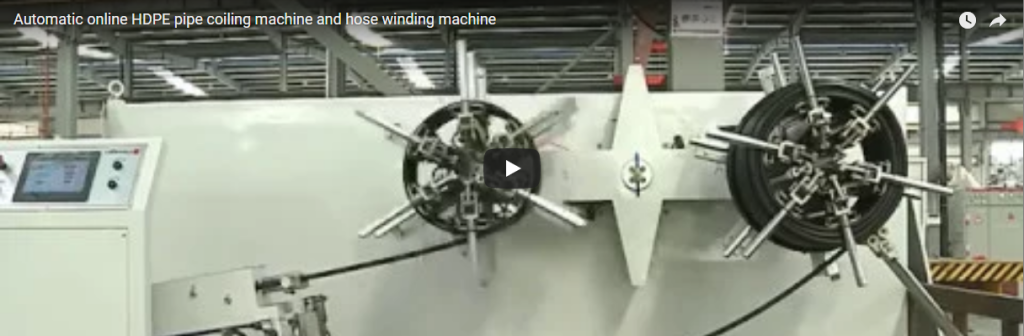
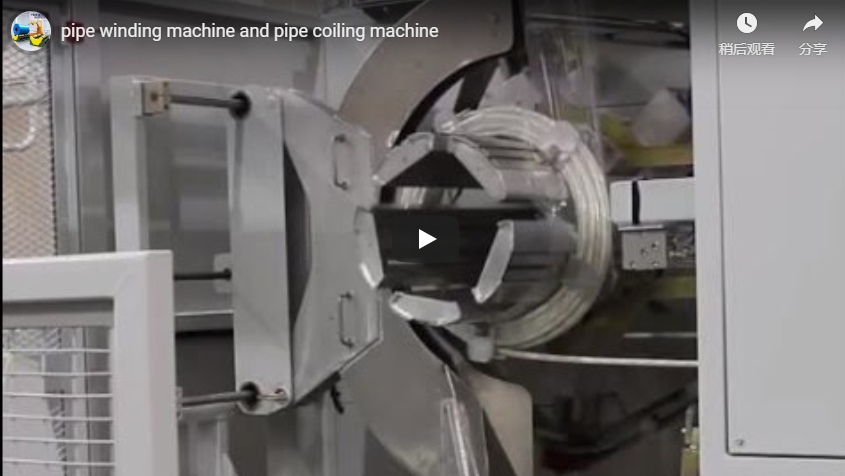
Executive summary The best practice in hose coiling is to take the coil size out of the operator’s hands.
An automatic hose coil making machine measures the hose as it feeds, winds it onto a mandrel in even layers, cuts it at the target length and wraps the coil for dispatch. So the coil comes out consistent, and this guide covers the technology and the practices that keep quality repeatable. Hose sizes and wrap are confirmed per project.
Table of Contents
- The pain point
- The six-step cycle
- Measured and controlled
- Even layers
- Cut and wrap
- Repeatability as practice
- Typical configuration
- What the video shows
- Selection checklist
- Controls and safety
- Engineering FAQ
- Next step
- Related reading
- Sources and standards
The pain point
Manual coiling has three predictable failures. Coil dimensions drift between operators and shifts, so one coil packs differently from the next. Output is limited by how fast a person can wind. And repetitive bending and twisting take a physical toll that shows up as downtime and turnover.
An off-length cut or a loose winding pattern ruins one whole coil, and on a manual line the only quality control is the operator’s attention that day.
The six-step cycle
The machine replaces hand measurement, winding, cutting and ejection with one synchronized sequence of six steps. The hose is guided into the machine and its length is measured on the way in. The head takes it and winds while the traverse lays it in even layers. The cutter works at the measured target, and the coil is wrapped in line. So the coil is produced to the same plan each cycle.
Measured and controlled
A measuring device tracks the product as it feeds, and the controller uses that count to run the wind and the cut. Electronic tension control keeps the winding even as the coil grows, so a hose that starts tight does not loosen partway through.
Even layers
The coiling head rotates while a traverse guide lays the hose side by side in even layers. The inner diameter comes from the head, and the width comes from how the traverse builds the layers, which is what gives the coil its stable, even shape.
Cut and wrap
At the measured target the machine cuts the hose, and the completed coil receives its protective wrap in the same sequence. The wrap keeps the coil together through handling, and because it happens in line the coil is not staged separately.
Repeatability as practice
The practices that keep quality high are institutional, not heroic. Set the product recipe once at the panel and recall it per run. Calibrate the measuring device on a schedule. Keep the traverse and tension settings where the product plan says on the same page. Run test coils when a new hose size starts.
Typical configuration
Figures below list functional design boundaries rather than numeric values, and are confirmed per project.
| Parameter | Typical range, confirmed per project |
|---|---|
| Product | hose diameter and type |
| Measurement | length tracking on the infeed |
| Winding | head and traverse, even layers |
| Cut and wrap | at measured target, in-line |
| Control | PLC with tension and recipes |
| Electrical supply | 380 V three phase 50 Hz, or 220 V single phase for light machines, selected per project to the plant supply |
What the video shows
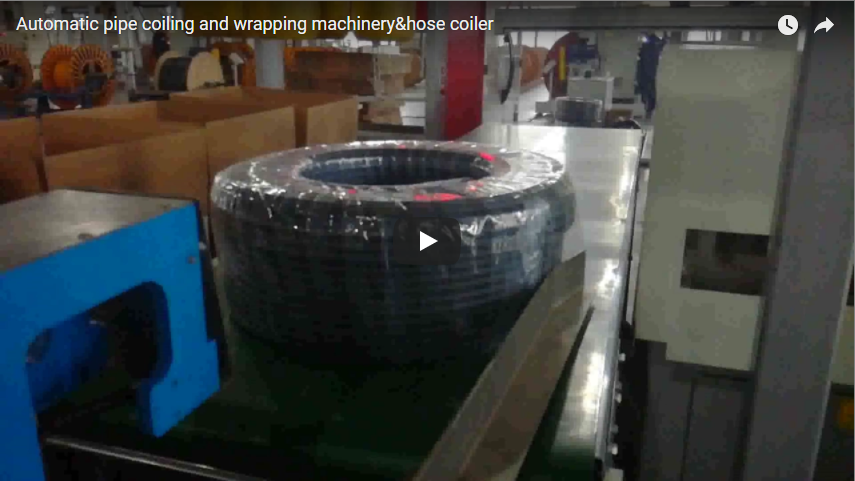
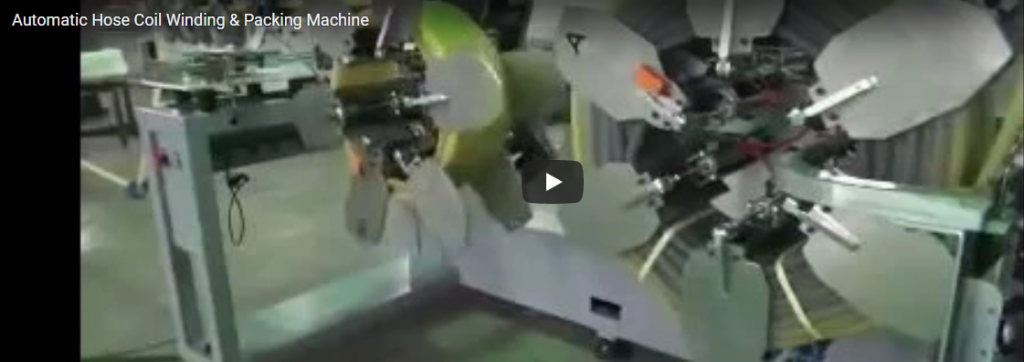
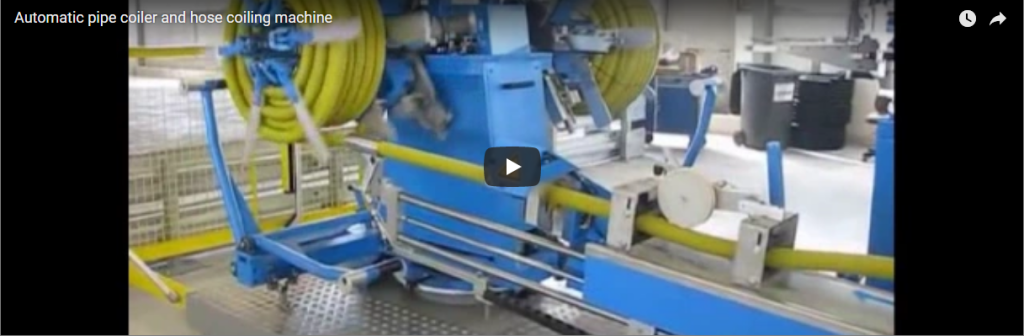
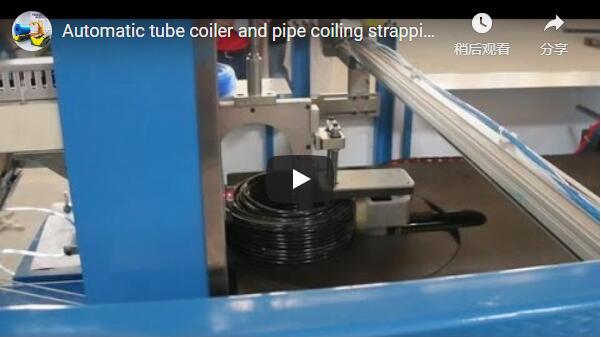
The line demonstrates continuous infeed measurement paired with synchronized traversing and in-line film wrapping. Hose size, coil and wrap for your plant are confirmed with us per project.
Selection checklist
| Question | Confirm per project |
|---|---|
| Hose range | infeed and mandrel envelope |
| Coil plan | inner diameter, width, layers |
| Length accuracy | measurement standard you need |
| Wrap | film and pattern on the coil |
| Output | machine cycle fit |
| Electrical supply | voltage, phase and frequency on site |
Controls and safety
The machine runs from a control panel with an emergency stop at the operator position and guarding around the winding head and wrap zones. Keep hands clear while the line runs. Routine checks cover the measuring device, traverse, head, cutter and wrap carriage, per the machine manual.
Engineering FAQ
Q: What makes coil size repeatable? A: Length is measured on the infeed and the wind and cut follow that count, so the coil matches the plan every cycle.
Q: How are layers kept even? A: A traverse guide lays the hose side by side while the head turns, building width consistently.
Q: Should I calibrate anything on a schedule? A: Yes. The measuring device and tension settings are checked on a schedule, and a new hose size starts with a test coil.
Q: Can it wrap the coil too? A: Yes. The coil is wrapped in the same sequence, so it leaves the machine complete.
Q: What hoses can it run? A: Flexible extrusion products such as PVC, rubber and corrugated hoses within the confirmed bend-radius and diameter envelopes, with tooling per project.
Next step
- Email us at info@fhopepack.com with your hose sizes, coil targets and volumes.
- We send a hose coil machine proposal and a layout drawing within 48 hours.
- We arrange a site survey to confirm services and floor space.
Related reading
- Automatic coiler for hose and pipe with wrapping machine
- Automatic wire coiler and strapping machine
- Tube bagging machine
- FHOPE packing machinery product lines
Sources and standards
- ISO 12100:2010 — Safety of machinery. General principles for design, risk assessment and risk reduction
- EN 415-10:2014 — Safety of packaging machines. General requirements
- EN ISO 13849-1:2023 — Safety of machinery. Safety-related parts of control systems
- FHOPE automatic hose coil making machine demonstration video. Reviewed as a general demonstration; hose size, coil and wrap confirmed per project.
Last reviewed: 2026-10-10