Summary: Secure your steel coils with automated precision. Our automatic steel coil strapping machine prevents telescoping, ensures ISO-compliant safety, and boosts throughput with PLC-controlled tensioning for heavy-duty industrial applications.
🏗️ Enhancing Steel Coil Handling: The Role of Automated Strapping Technology
In steel processing and distribution, safe coil handling is critical. Damage during transit leads to material loss, production delays, and safety hazards. An automatic steel coil strapping machine solves these issues by delivering consistent, high-integrity binding for coils of varying sizes. This technology is essential for steel service centers, mills, and fabricators aiming to optimize logistics and protect inventory value.
⚙️ Operational Principles and Core Technology
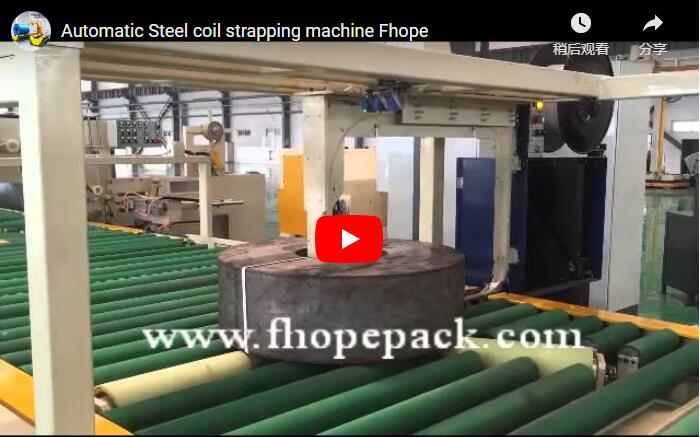
This automatic steel coil strapping machine is engineered to securely unitize steel coils for safe handling, storage, and transport. Integrating modern packaging automation principles, it utilizes advanced strap feeding and tensioning controls to ensure reliability.
The automated process follows a precise sequence:
-
Coil Positioning: Coils are loaded onto a robust turntable or conveyor. Optional centering devices align coils with irregular dimensions automatically.
-
Strap Feeding: A sophisticated system guides high-tensile steel strapping (or heavy-duty PET) around the circumference or through the eye. Servo-controlled guiding arms ensure accurate placement.
-
Automated Tensioning: A high-force tensioning head applies controlled, pre-set tension via electric or hydraulic mechanisms. Consistent tension is vital to prevent coil telescoping during transit. Parameters are programmable via HMI.
-
Sealing/Joining: Strap ends are joined using notch sealing or seal-less friction-weld joints. Friction-weld technology offers joint efficiency exceeding 80% of the strap’s break strength.
-
Cutting: Straps are cut flush automatically, eliminating hazardous sharp edges.
-
Indexing/Rotation: For multiple straps, the coil indexes to the next position, ensuring uniform spacing.
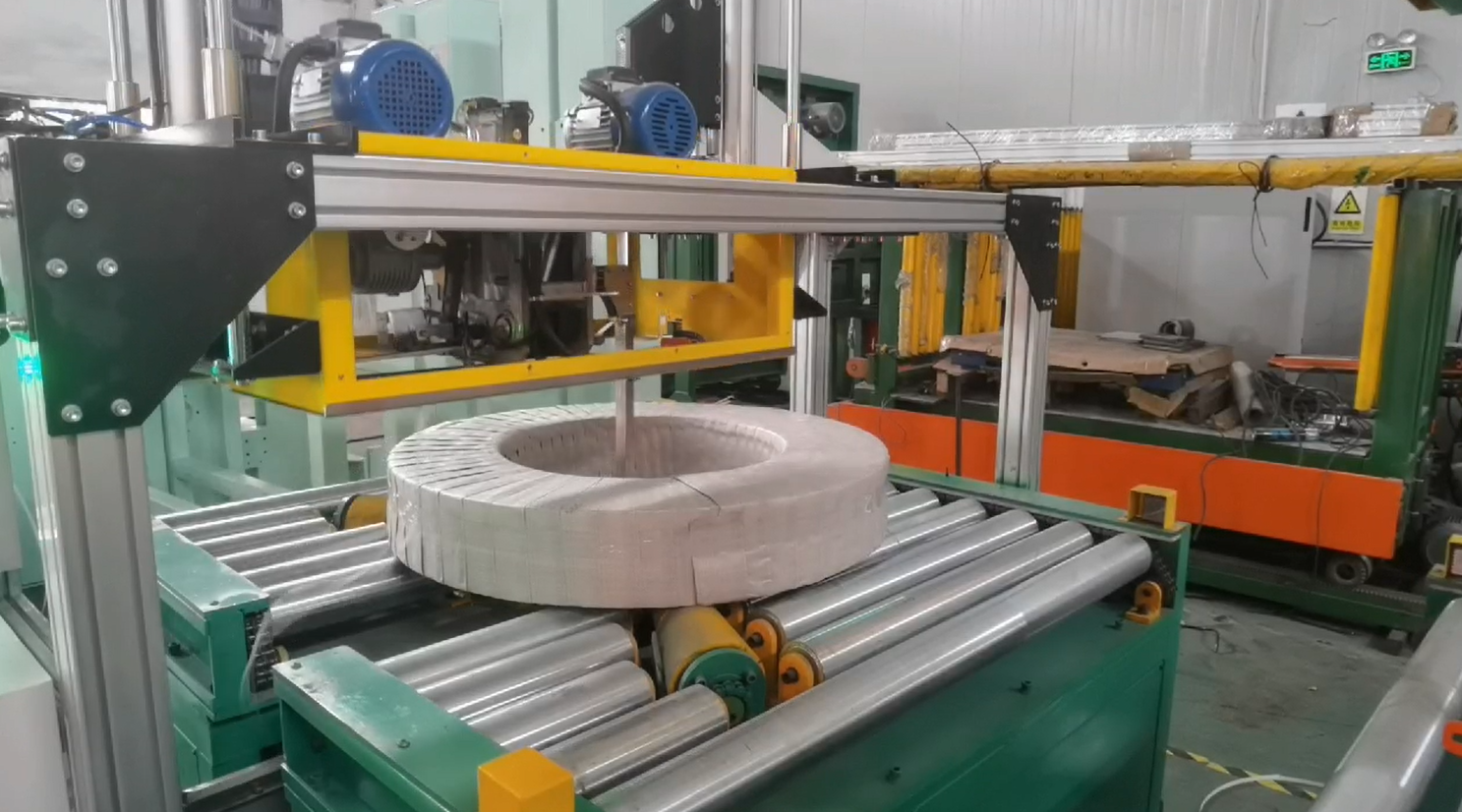
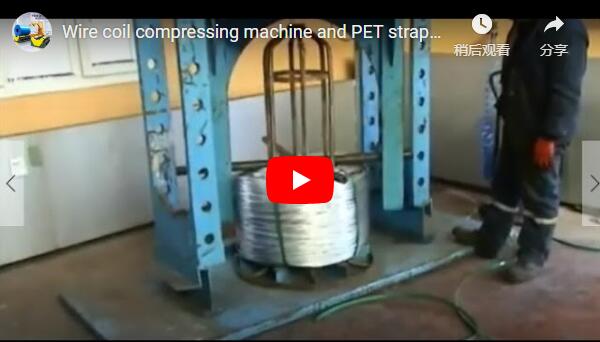
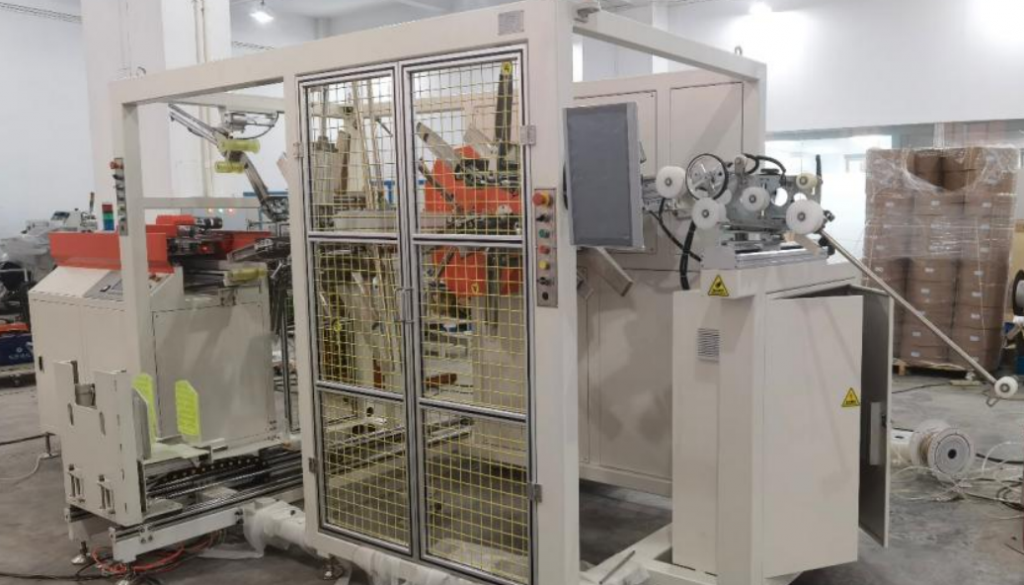
steel coil strapping machinery
The entire sequence is managed by a Programmable Logic Controller (PLC), coordinating motors and sensors for seamless operation. Diagnostics are accessible via the HMI touch screen.
📊 Key Specifications and Features
Industrial automatic steel coil strapping machines are built for heavy-duty performance. Below are typical capabilities:
| Feature | Specification / Capability |
|---|---|
| Coil Diameter Range | 450 mm (18″) ID to 1800 mm (72″) OD |
| Coil Weight Capacity | Up to 5 Metric Tons (Customizable for higher loads) |
| Strapping Material | High-tensile steel (0.8mm–1.2mm gauge, 19mm–32mm width) or Heavy-duty PET |
| Control System | PLC-based (Siemens, Allen-Bradley) with HMI |
| Tension Control | Electronically/Hydraulically adjustable; programmable via HMI |
| Safety Standards | ISO 13849 compliant (Light curtains, E-Stops, Interlocks) |
| Optional Enhancements | Weighing systems, Edge protector application, Data logging |
🛡️ Benefits for Metal Processing Operations
Adopting automated strapping offers tangible advantages for operations seeking process improvement:
-
🛡️ Enhanced Safety: Reduces manual handling risks associated with tensioning and cutting steel straps. Securely strapped coils are safer to lift.
-
📈 Improved Product Integrity: Precise tension prevents coil telescoping or clock-springing, reducing costly material damage and customer claims.
-
⚙️ Increased Throughput: Automation drastically reduces cycle time per coil compared to manual methods, boosting plant productivity.
-
👷 Labor Optimization: Frees personnel from strenuous repetitive tasks for value-added activities.
-
✅ Operational Consistency: Eliminates manual variability, ensuring every coil meets the same high quality standard.
-
♻️ Reduced Material Waste: Precise feeding and cutting minimize strap wastage.
💡 Expert Pro Tip: For cold-rolled or galvanized coils, always utilize edge protectors before strapping. This prevents the high-tensile strap from biting into the coil edges, which can cause surface defects and lead to customer rejections.
🔗 Integration and Customization
Modern strapping systems are designed for integration into larger automated coil packing lines. They interface seamlessly with conveyors, coil upenders, downenders, and Warehouse Management Systems (WMS). Customization allows tailoring configurations for specific coil types (slit, cold rolled, hot rolled, galvanized, aluminum) and plant layouts.
🎯 Conclusion: A Strategic Investment in Efficiency and Safety
Investing in an automatic steel coil strapping machine is a strategic move towards operational efficiency and safety. By automating this critical process, manufacturers achieve significant productivity improvements and reduce costs associated with damage and injuries. The rugged construction and PLC-controlled flexibility make these machines optimal for high-volume operations.
🚀 Ready to Upgrade? For more information on steel coil packing machines and strapping solutions, contact our engineering team here for a free consultation.
❓ FAQ: Automatic Steel Coil Strapping
Q: Can this machine handle both steel and PET strapping? A: Yes, most industrial models are adaptable. They are primarily designed for high-tensile steel strapping but can be configured for heavy-duty PET strapping depending on the tensioning head selected.
Q: How does the machine prevent coil damage during tensioning? A: The system uses electronically or hydraulically adjustable tension settings. This ensures optimal security without applying excessive force that could damage coil edges or deform the shape.
Q: Is the machine compatible with existing conveyor lines? A: Absolutely. These systems are designed for integration with existing conveyors, upenders, and warehouse management systems (WMS) for centralized control.
Q: What safety standards does the strapping machine comply with? A: Our machines incorporate safety interlocks, light curtains, and emergency stop systems compliant with industrial safety standards such as ISO 13849.