How to Define Your Aluminum Coil Packing Project's Success Criteria
Introduction:
Defining clear success criteria is fundamental when planning any aluminum coil packing operation. Whether relying on manual processes or utilizing advanced automated packing systems, establishing measurable goals ensures both optimal coil protection and operational packaging efficiency. Effective criteria guide the selection of appropriate materials and methods, safeguarding valuable aluminum coils against damage during handling, transit, and storage. This guide outlines the essential factors—from project timelines and material specifications to quality control protocols—needed to define and achieve success in your aluminum coil packing project.
1. Establish a Realistic Timeline and Scope
Defining the project's timeline and scope is the crucial first step. Success hinges on accurately assessing the resources and time required based on operational scale and complexity.
- Operational Scale: Are you packing small, custom batches or managing high-volume, continuous production? The volume dictates workforce allocation, potential shift scheduling, and the necessity for automated equipment integration.
- Packaging Method: Manual packing offers flexibility for varied coil sizes and specifications but can be labor-intensive. Automated coil packing systems significantly increase throughput but require initial investment and setup.
- Material Choices: The type of packaging materials—such as protective stretch film, corrosion-inhibiting VCI film, or robust strapping like PET or steel belts—directly influences the time required for each packing cycle. Steel strapping, for instance, offers high tensile strength suitable for heavy coils but may require specialized equipment.
Key Planning Questions:
- What is the non-negotiable deadline for project completion or shipment?
- What is the required daily throughput (number of coils packed) to meet demand?
- How will potential fluctuations in production volume be managed?
- What are the specific handling and storage conditions the packed coils will encounter?
Actionable Advice:
- Conduct Time Studies: Perform trial runs packing representative coils using the intended materials and methods (manual or automated). This provides baseline data for cycle times, allowing for realistic throughput targets and resource planning.
- Evaluate Automation: For high-volume scenarios, assess the ROI of automated systems, particularly those capable of applying durable steel belts or multi-layer wrapping, which can reduce labor costs and improve consistency.
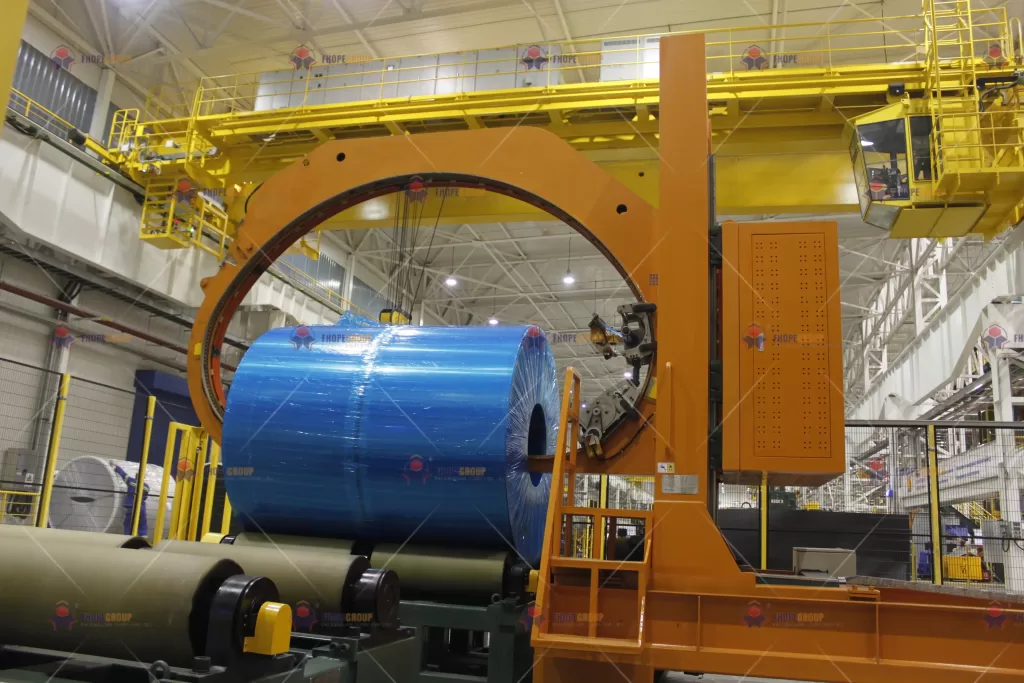 Automated steel coil packing line wrapping a coil in protective film.
2. Define and Measure Packaging Quality
Once the timeline is set, defining measurable quality standards is paramount. For aluminum coil packing, quality translates directly to damage prevention. Success means coils arrive free from scratches, dents, edge damage, and corrosion. The choice of protective materials is critical here.
- VCI Film (Vapor Corrosion Inhibitor): Essential for preventing corrosion, especially during long-term storage or sea freight where moisture and salinity are concerns. VCI film releases compounds that form a protective molecular layer on the aluminum surface. Learn more about VCI technology at [link to material science resource or VCI explanation].
- Stretch Film: Provides a tight, conforming wrap that protects against surface abrasion, dust, and minor impacts. It's effective for securing coils and providing basic surface protection, often used in conjunction with other materials.
- Strapping (PET/Steel): Secures the coil and packaging materials, preventing movement during handling and transport. The choice between PET (lighter, corrosion-resistant) and steel (higher strength) depends on coil weight and transport conditions.
Establishing Quality Metrics:
Define objective criteria for acceptable packaging. How will you identify and address common defects?
- Strapping Issues: Incorrect tension (too loose or too tight), improper placement, or insufficient number of straps.
- Wrapping Defects: Tears, gaps, insufficient overlap in film application, leaving coil surfaces exposed.
- Edge Protection: Inadequate or improperly applied edge protectors leading to potential damage.
Example Scenario: For high-value architectural aluminum coils, even minor surface imperfections are unacceptable. Quality control must be rigorous, potentially involving 100% inspection post-packaging, ensuring each coil meets stringent surface finish standards.

Recommendation:
- Develop Inspection Checklists: Create detailed checklists outlining critical quality points (e.g., film layer count, strap tension, seal integrity, VCI presence). Use these consistently during QC inspections.
- Implement Visual Standards: Provide visual examples of acceptable and unacceptable packaging outcomes for training and reference.
3. Implement Service-Level Agreements (SLAs)
Service-Level Agreements (SLAs) formalize the expectations for both packaging speed and quality, aligning the packing operation with broader business objectives. SLAs create accountability whether using internal teams or third-party logistics providers.
Key SLA Components:
- Throughput Target: Specify the minimum number of coils to be packed per shift or day.
- Quality Compliance Rate: Define the acceptable percentage of packages that must pass QC inspection (e.g., 99.5% compliance).
- Error Rectification Time: Set standards for how quickly packaging errors must be identified and corrected.
- Material Consumption: Monitor and set targets for efficient use of materials like film and strapping to control costs.
Advice:
- Calibration Phase: Begin with a calibration period where initial performance is closely monitored. Use this data to refine SLA targets, making them challenging yet achievable under typical operating conditions.
- Regular Review: Schedule periodic reviews of SLA performance with the packing team to discuss challenges, identify bottlenecks, and adjust targets as needed.
4. Develop a Comprehensive Quality Strategy
A robust quality strategy extends beyond individual SLAs to ensure consistent high standards over the long term. It involves continuous monitoring, feedback mechanisms, and proactive improvement efforts. Technology can play a significant role here.
- Leverage Technology: Modern automated packing systems can incorporate sensors, vision systems, or integrated weighing scales to monitor quality in real-time.
- Example: A wrapping machine sensor detects insufficient film stretch and automatically adjusts tension, or a vision system flags improperly placed edge protectors.
- Feedback Loops: Establish clear channels for feedback from QC inspectors, warehouse handlers, transport personnel, and importantly, end customers regarding packaging integrity upon arrival.
- Root Cause Analysis: Implement a system for analyzing the root causes of recurring packaging defects and develop corrective action plans. Explore resources on quality management systems like ISO 9001 for structured approaches [link to ISO or quality management resource].
Recommendation:
- Continuous Improvement Culture: Foster a mindset where identifying potential improvements to the packing process is encouraged at all levels.
- Regular Audits: Conduct periodic internal audits of the entire packing process, from material receiving to final QC, ensuring adherence to established procedures and standards.
5. Prioritize Customer Satisfaction
Ultimately, the success of your aluminum coil packing project is validated by customer satisfaction. Coils arriving at their destination undamaged, on time, and in packaging that is effective yet reasonably easy to handle are key indicators of a successful operation.
- Damage-Free Delivery: This is the primary goal. Effective packaging directly minimizes costly customer complaints, product returns, damage claims, and reputational harm.
- Ease of Unpacking: While protection is paramount, consider the end-user experience. Packaging should be removable without excessive effort or specialized tools, and disposal should be straightforward. Stretch film, for instance, is often preferred for its relative ease of removal compared to heavily banded packages.
- Clear Labeling and Identification: Ensure packages are clearly labeled with handling instructions, product identification, and any required safety information, contributing to a smooth receiving process for the customer.
Measuring Success:
- Track Damage Claims: Monitor the frequency and type of damage reported by customers that can be attributed to packaging failures. A consistently low rate is a strong positive indicator.
- Solicit Feedback: Actively seek customer feedback specifically on packaging performance and ease of handling through surveys or direct communication.
Conclusion
Defining clear, measurable success criteria for your aluminum coil packing project is not just procedural—it's strategic. By meticulously planning timelines and scope, setting rigorous quality standards, implementing performance-driven SLAs, adopting a long-term quality strategy, and focusing intently on customer satisfaction, you create a framework for excellence. These criteria guide decisions on materials like VCI film or stretch film, justify investments in automated packing systems, and ensure consistent coil protection. Ultimately, a well-defined project leads to optimized operations, reduced costs, enhanced product integrity, and stronger customer relationships in the competitive aluminum market.