Executive summary
Engineered wood bundles are long, straight and heavy, and wrapping them by hand drifts in quality and takes people away from the line. A polywood packing line wraps each bundle automatically: bundles enter on a conveyor, support blocks are placed automatically, an orbital wrapper applies stretch film around the stationary bundle, and finished bundles accumulate for pickup. We build polywood packing lines for wood-processing plants. Bundle range and cycle are confirmed per project.
Table of Contents
- What a polywood packing line does
- Infeed and block placement
- Orbital wrapping on a stationary bundle
- Outfeed and accumulation
- Control and recipes
- Orbital versus pallet wrapping
- Typical configuration
- What the video shows
- Selection checklist
- Operation and safety
- Engineering FAQ
- Next step
- Related reading
- Sources and standards
What a polywood packing line does
A polywood packing line is an automated system that wraps engineered wood bundles in stretch film for storage and export. The line runs bundles from the upstream process through four connected stages: infeed, support-block placement, orbital wrapping and outfeed accumulation.
Because every stage runs under one control sequence, the wrap quality is the same at the end of a shift as at the start. That consistency is what engineered wood needs before it sits in a yard or ships on a container.
Infeed and block placement
Bundles enter the line on an infeed conveyor that takes them from the upstream sanding or cutting process at a variable speed, so the wrapping stage is never starved. Before wrapping, a block feeder places support blocks under each bundle automatically, lifting and spacing the bundle so the film ring can move underneath it. Automatic block placement removes the manual step that slows handling and varies the bundle position, and the block spacing follows the bundle length, confirmed per project.
Orbital wrapping on a stationary bundle
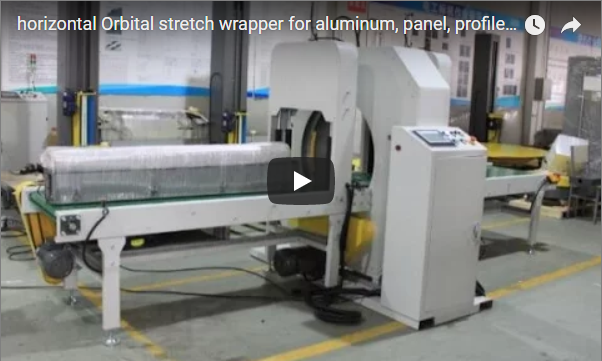
The wrap is done by an orbital wrapper, which rotates a film carriage around the stationary bundle. Because the bundle itself does not move, the film applies in a full pattern while long engineered-wood panels keep their alignment. The ring passes around the bundle, laying film from end to end over the full length and the support blocks.
Keeping the product still during wrapping avoids the shifting and misalignment that damage long panels. The film is cut and clamped automatically at the end of each pass, so the tail is finished before the bundle moves on.
Outfeed and accumulation
After wrapping, the completed bundle moves to an outfeed accumulation conveyor, which buffers wrapped bundles for forklift pickup. Bundling the output in one buffer means the line keeps running even when the forklift is elsewhere, and staff pick up finished bundles instead of standing beside the wrapper. Conveyor length and buffer capacity follow the plant’s dispatch rhythm, confirmed per project.
Control and recipes
One programmable controller runs the whole sequence and stores recipes for different bundle sizes. Changing the product means recalling a recipe, which sets conveyor speed, block position, film overlap and wrap count without mechanical re-setting. The same control that runs the sequence also holds the diagnostics, so a fault on the line points to the station instead of a search. Recipe-based control is how a line serving many bundle sizes stays productive.
Orbital versus pallet wrapping
An orbital wrapper rotates the film around a stationary product, while a traditional pallet wrapper rotates the pallet and the load together. For long or irregular shapes like engineered-wood bundles, orbital wrapping gives full coverage without rotating the product, which is exactly what panels that shift under rotation need. Pallet wrappers remain the right choice for stable stacked loads on a pallet. For polywood lines the orbital design holds uniform tension and coverage across the full bundle length.
Typical configuration
Figures below list functional design boundaries rather than numeric values, and are confirmed per project.
| Parameter | Typical range, confirmed per project |
|---|---|
| Bundle | length, width, stack height |
| Infeed | variable-speed conveyor |
| Blocks | automatic placement and spacing |
| Wrap | orbital ring, full coverage |
| Outfeed | accumulation buffer |
| Electrical supply | 380 V three phase 50 Hz, or 220 V single phase for light machines, selected per project |
What the video shows
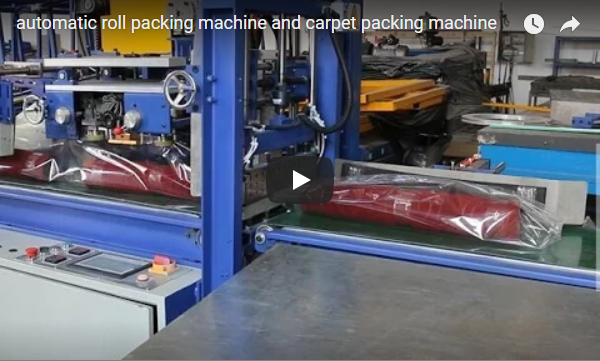
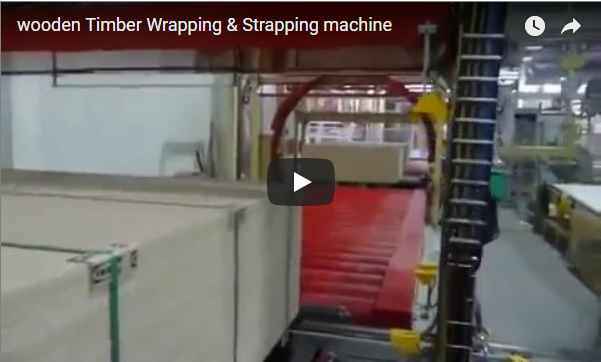
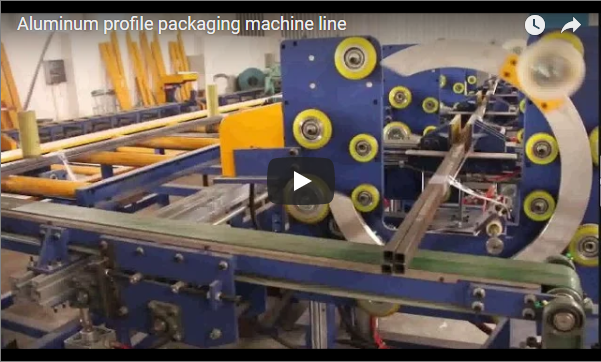
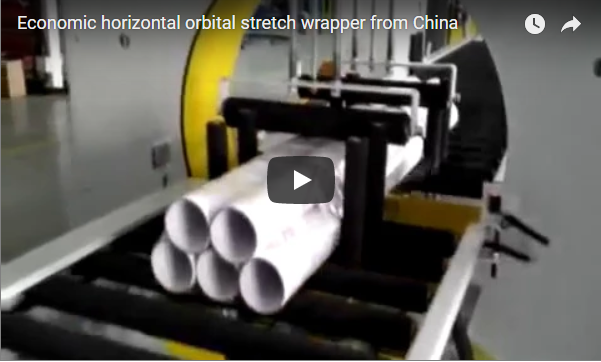
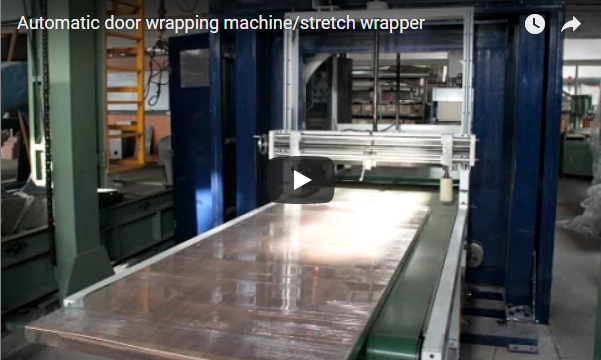
Our footage shows a polywood packing line wrapping an engineered wood bundle through the orbital stage. It is a general demonstration, so your bundle range and cycle are confirmed with us per project.
Selection checklist
| Question | Confirm per project |
|---|---|
| Bundle range | length, width, height |
| Infeed | upstream conveyor fit |
| Blocks | spacing and type |
| Wrap | overlap and count |
| Outfeed | buffer length |
| Electrical supply | voltage, phase and frequency on site |
Operation and safety
Run the line from the panel and the sequence conveys, blocks, wraps and buffers each bundle automatically. Keep clear of the infeed, block feeder and orbital ring while it runs, with guarding and emergency stops at the operator position. Routine checks cover the conveyor, block feeder, film carriage, cut mechanism and sensors, per the machine manual. Check the film supply before each shift so wrapping never stops mid-run.
Engineering FAQ
Q: What does a polywood packing line do? A: It conveys engineered wood bundles, places support blocks, wraps them with orbital film and buffers them for pickup.
Q: Why place blocks automatically? A: Automatic block placement lifts and spaces each bundle so the film ring can run underneath without manual work.
Q: Why keep the bundle stationary? A: Orbital wrapping keeps long panels aligned instead of shifting them, which rotating the load would do.
Q: How are bundle sizes changed? A: Recipes store conveyor, block, overlap and wrap settings per bundle size, recalled from the panel.
Q: How does it slot into the plant? A: Infeed connects to upstream sanding and cutting lines, and outfeed buffers for forklift pickup, confirmed per project.
Next step
- Email us at info@fhopepack.com with your bundle sizes, film and volumes.
- We send a polywood line proposal and a layout drawing within 48 hours.
- We arrange a site survey to confirm bundle range and plant layout.
Related reading
- Automatic bundle making and packing machine
- Orbital stretch wrapping machine for extra-long panels
- Wood strip packing machine
- FHOPE packing machinery product lines
Sources and standards
- ISO 12100:2010 Safety of machinery, general principles for design and risk assessment
- EN 415-10:2014 Safety of packaging machines, general requirements
- EN ISO 13849-1:2023 Safety of machinery, safety-related parts of control systems
FHOPE polywood packing line demonstration video. Reviewed as a general demonstration; bundle range confirmed per project.
Last reviewed: 2026-10-10