Optimizing Steel Coil Packaging: How Automation Meets Rising Demand

In today's demanding industrial environment, steel producers face relentless pressure to satisfy escalating global demand. Key sectors like construction, automotive manufacturing, and infrastructure development rely heavily on a consistent supply of steel coils. Consequently, the need for high-quality, efficiently packaged coils is paramount. Automated steel coil packing lines represent a crucial technological advancement, empowering companies to boost throughput, manage labor costs effectively, and guarantee the safe, secure shipment of their products.
This article examines how automated steel coil packaging solutions enable manufacturers to navigate increased demand while upholding stringent standards for productivity, packaging quality, and workplace safety. We will explore the operational mechanics of these systems, detail their significant benefits, discuss technological integration, and consider the future trajectory of automation within the steel packaging sector.
1. The Escalating Need for Steel Coil Packaging Efficiency
The global steel market has seen substantial growth, fueled by large-scale infrastructure initiatives, a dynamic automotive sector, and rising consumer goods production. This surge places considerable pressure on steel manufacturers to increase production volumes while controlling operational expenditures.
Traditional manual packaging of steel coils often falls short in this high-demand environment. Manual methods are typically:
- Labor-intensive: Requiring significant personnel allocation.
- Time-consuming: Creating potential bottlenecks in the production flow.
- Prone to inconsistency: Leading to variable packaging quality, potential product damage during transit, and costly logistical delays.
As companies strive for operational excellence, implementing automated steel coil packing lines transitions from a potential upgrade to a strategic necessity. Automation streamlines the entire packaging workflow, enabling manufacturers to meet higher production targets without compromising the integrity of the final packaged product. These systems reduce dependency on manual labor and significantly enhance the overall efficiency and reliability of the packaging process.
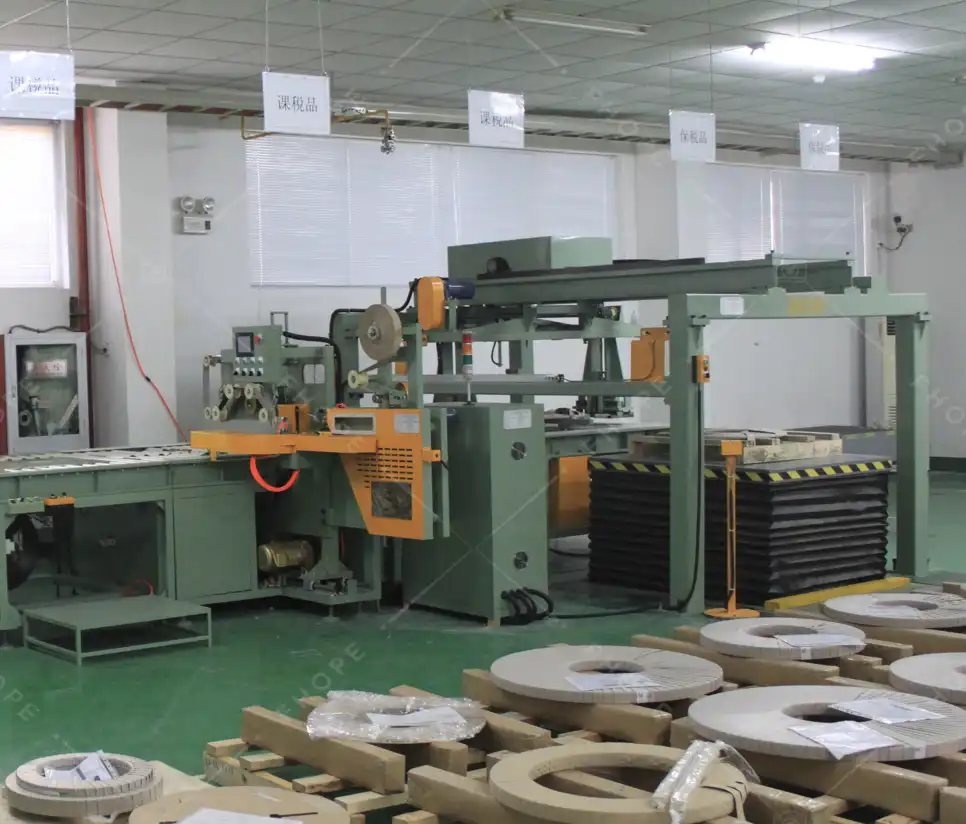
2. Operational Workflow of Automated Steel Coil Packing Lines
Automated steel coil packing lines are integrated systems engineered to manage the packaging cycle with minimal human oversight. This ensures each coil is consistently wrapped, strapped, and prepared for storage or shipment. A typical automated process includes the following stages:
- 1. Coil Introduction: Steel coils are transferred onto the line via automated conveyors, turnstiles, or integrated handling systems, often loaded initially by forklift or crane depending on coil dimensions and weight.
- 2. Protective Wrapping: The system automatically applies protective materials, such as stretch film, VCI (Volatile Corrosion Inhibitor) paper, or plastic sheeting. This shields the coil from environmental factors like moisture, dust, and corrosion during transport and warehousing. The wrapping process parameters (e.g., overlap, tension) are precisely controlled for optimal protection.
- 3. Circumferential and/or Eye Strapping: High-tensile steel or PET (plastic) straps are automatically applied around the coil's circumference and/or through the eye, securing the coil structure and the protective wrapping. Strapping patterns and tension levels are programmable based on coil specifications.
- 4. Weighing and Labeling: Integrated scales capture the precise weight of the packaged coil. Automated labeling systems apply tags or direct prints with essential data, such as coil ID, weight, dimensions, grade, customer information, and destination, facilitating accurate inventory management and logistics tracking.
- 5. Stacking and Palletizing (Optional): Depending on the system configuration and downstream requirements, packed coils might be automatically stacked or placed onto pallets.
- 6. Discharge: The fully packaged and labeled coil is transferred off the line, ready for warehousing or direct loading onto trucks or railcars.
These automated systems guarantee exceptional consistency in packaging quality. This uniformity minimizes the risk of product damage during handling and transit, reducing customer claims and enhancing satisfaction. Automation allows steel manufacturers to adapt fluidly to varying customer demands while maintaining efficient, repeatable, and error-resistant packaging operations.
3. Key Benefits of Automation in High-Demand Steel Coil Packaging
Implementing automated steel coil packing lines delivers substantial advantages, particularly when facing increased production requirements.
3.1 Accelerated Throughput and Cycle Times
A primary benefit of automated packing lines is their capacity to dramatically increase packaging speed. Manual packaging involves multiple steps and workers, often creating a production bottleneck. Automated systems consolidate these tasks, performing wrapping, strapping, and labeling operations significantly faster. This enhanced speed enables manufacturers to meet ambitious production targets and fulfill customer orders more rapidly, crucial in times of peak demand.
3.2 Optimized Labor Utilization and Cost Reduction
Rising steel demand necessitates efficient resource management. Automated packing lines help optimize labor by handling repetitive, physically demanding tasks. This allows skilled workers to be reassigned to more complex, value-added roles within the facility. Automation significantly reduces direct labor costs associated with manual packaging and mitigates indirect costs related to worker fatigue, potential repetitive strain injuries, and associated downtime.
3.3 Enhanced Packaging Quality and Consistency
Automated systems execute packaging operations with high precision and repeatability, ensuring every steel coil meets predefined quality standards. Consistent wrapping tension, accurate strap placement, and secure sealing minimize the risk of product damage during handling and transportation. This reliability reduces costs associated with returns, rework, or material loss. Furthermore, uniformly packaged coils streamline logistics, improving storage density and handling efficiency. Delivering damage-free products with predictable packaging quality strengthens customer trust and loyalty.
3.4 Improved Workplace Safety
Manually handling and packaging heavy steel coils inherently carries safety risks, including potential musculoskeletal injuries from lifting, hazards associated with sharp strapping materials, and risks from tool operation. Automating these processes dramatically reduces direct human exposure to these hazards, fostering a safer work environment. Automated systems incorporate safety features like light curtains, physical guarding, and emergency stops, further minimizing accident potential and aligning with stringent occupational safety regulations.
3.5 Scalability for Future Growth
A significant strength of automated steel coil packing lines lies in their inherent scalability. These systems can often be configured to handle a range of coil sizes and production volumes. This flexibility allows manufacturers to adapt their packaging capacity in response to market fluctuations without proportional increases in labor or footprint. As global steel demand evolves, companies equipped with scalable automation are better positioned to ramp up production efficiently, maintaining a competitive edge.
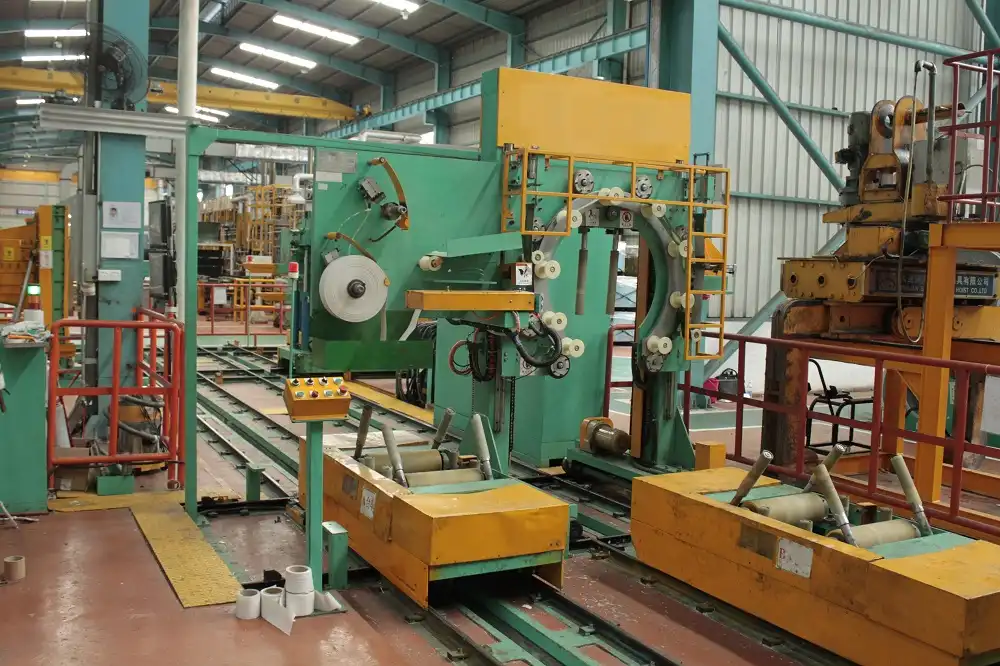
4. Technological Innovations Enhancing Steel Coil Packing Automation
Continuous advancements in technology are refining the efficiency, intelligence, and flexibility of automated steel coil packing lines.
4.1 Integration of Robotics and Advanced Sensors
Modern systems increasingly incorporate robotic arms for tasks like label application, strap feeding, or manipulating packaging materials, enhancing precision and flexibility. Advanced sensors (optical, proximity, laser measurement) provide real-time feedback for positioning coils accurately, detecting edges, measuring dimensions, and confirming successful completion of each packaging step, further reducing errors and optimizing material usage.
4.2 Artificial Intelligence (AI) and Data Analytics
AI and machine learning algorithms are beginning to optimize packing line performance. By analyzing operational data (cycle times, material consumption, sensor readings, error logs), these systems can identify patterns, predict potential maintenance needs (predictive maintenance), and dynamically adjust parameters—like strapping tension or film stretch percentage—for optimal results based on specific coil characteristics or environmental conditions. This leads to continuous improvement and maximized operational equipment effectiveness (OEE).
4.3 IoT Connectivity and System Integration
The Internet of Things (IoT) enables seamless communication between the packing line, other plant systems (like MES or ERP), and remote monitoring platforms. This connectivity allows managers to track key performance indicators (KPIs) in real-time, diagnose issues remotely, and manage production schedules more effectively. Integrated systems ensure smooth data flow, from order receipt to final shipment confirmation, enhancing overall supply chain visibility.
4.4 Focus on Energy Efficiency and Sustainability
Contemporary automated packing lines are designed with sustainability in mind. Features like energy-efficient motors, variable frequency drives (VFDs), regenerative braking systems, and optimized control logic help minimize electricity consumption per coil packaged. Additionally, automation can enable the use of thinner, stronger packaging materials or facilitate easier segregation of waste materials, supporting corporate sustainability initiatives and reducing operational costs.
5. Overcoming Implementation Challenges
While the advantages are compelling, deploying automated packing lines involves considerations that require careful planning.
5.1 Managing Initial Investment
The capital expenditure for automated systems can be substantial. However, a thorough Return on Investment (ROI) analysis typically demonstrates long-term value. Factors to include are:
- Reduced direct labor costs
- Increased throughput capacity
- Minimized product damage and waste
- Improved safety records (reduced insurance/compensation costs)
- Enhanced customer satisfaction
Financing options and phased implementation strategies can help manage the initial outlay.
5.2 Ensuring Seamless Integration
Integrating a new automated line with existing upstream and downstream processes (e.g., coil transport, warehouse management systems) is critical. Choosing experienced automation providers who offer customization and robust integration support is key. Detailed planning, interface testing, and clear communication between the manufacturer and supplier ensure minimal disruption during commissioning.
5.3 Employee Training and Skill Development
Transitioning to automation requires upskilling the workforce. Operators need training on running the new equipment, performing basic troubleshooting, and understanding safety protocols. Maintenance staff require specialized training on the system's mechanical, electrical, and software components. Comprehensive training programs and fostering a culture that embraces technological change are vital for maximizing system uptime and leveraging the full capabilities of the automation.
6. The Future Outlook for Automated Steel Coil Packaging
The trajectory for automated steel coil packaging points towards even greater sophistication and integration. Anticipated developments include:
- Hyper-automation: More extensive use of robotics and AI for complex decision-making and fully autonomous operation.
- Enhanced Customization: Systems capable of handling a wider variety of coil sizes, types, and customer-specific packaging requirements with rapid changeovers.
- Advanced Data Utilization: Deeper integration with cloud platforms for benchmarking performance across multiple sites and leveraging big data for strategic insights.
- Sustainable Packaging Focus: Increased automation compatibility with emerging eco-friendly packaging materials and processes designed to minimize environmental impact.
As steel demand continues its upward trend, manufacturers leveraging advanced automation will be decisively better equipped to adapt to market dynamics, scale operations efficiently, and maintain leadership in a competitive global landscape.
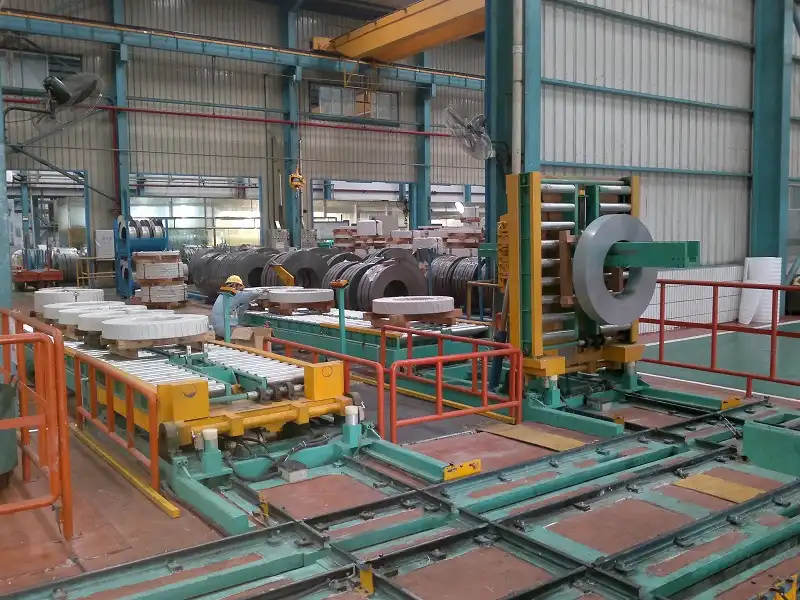
Conclusion: Driving Efficiency Through Packaging Innovation
In industries reliant on steel, efficient and reliable packaging is no longer a secondary consideration but a critical operational imperative. Automated steel coil packing lines provide a powerful solution, enabling companies not only to meet surging demand but also to enhance workplace safety, control operational costs, and deliver consistently high-quality, securely packaged products.
As automation technologies continue to mature, integrating AI, robotics, and IoT, these systems will become even more integral to the steel supply chain. For manufacturers aiming to thrive in a dynamic market, investing in modern steel coil packaging automation is a strategic move towards greater efficiency, scalability, and long-term competitiveness. These advanced lines offer the performance and reliability essential for navigating the complexities of modern steel production and satisfying customer expectations worldwide.
Get Your Best Solution !