From Basic to Advanced: Comparing Automation Levels in Steel Coil Packing Lines
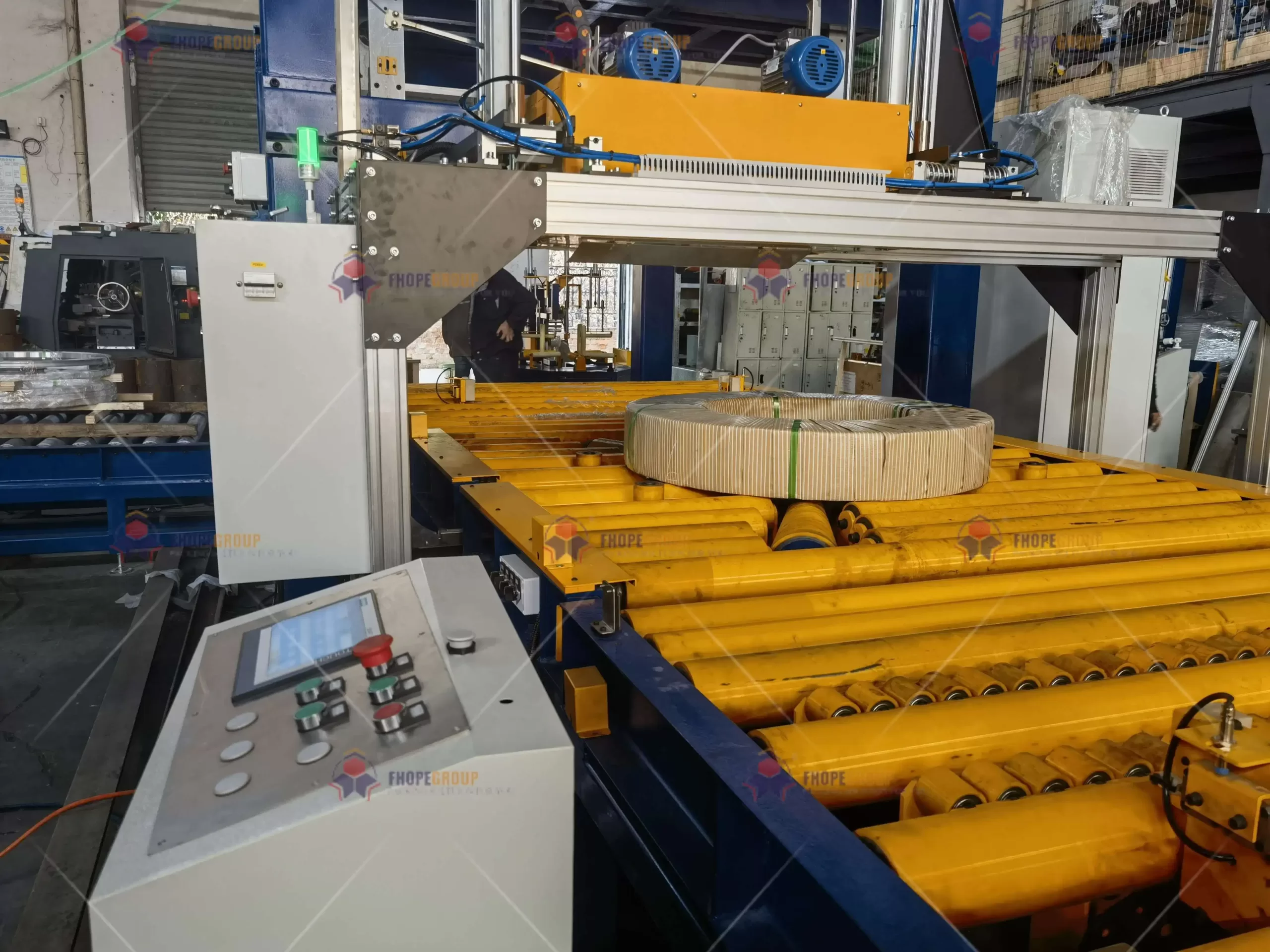
Introduction: Understanding Automation in Steel Coil Packaging
In modern manufacturing, particularly within the steel industry, automation is crucial for enhancing efficiency, improving workplace safety, and managing operational costs effectively. Steel coil packaging, which involves preparing heavy and bulky coils for transport and storage, benefits significantly from automated solutions. As production demands increase and turnaround times shorten, businesses increasingly rely on automation, ranging from basic, operator-assisted systems to highly sophisticated, fully integrated packaging lines.
This article provides a comprehensive comparison of different automation levels available for steel coil packing lines. We will examine the features, advantages, and limitations associated with basic, semi-automated, and advanced (fully automated) systems. This comparison aims to equip manufacturers with the knowledge needed to select the automation level that best aligns with their specific operational requirements, production volume, and strategic goals, whether upgrading existing equipment or investing in new, cutting-edge technology.
1. The Significance of Automation in Steel Coil Packaging
Why is Automation Critical?
Handling and packaging steel coils manually is labor-intensive, slow, and carries inherent safety risks due to the weight and size of the coils. Implementing automation introduces precision, speed, and enhanced safety, leading to a more reliable, efficient, and scalable packaging operation.
- Precision: Automated systems ensure consistent application of wrapping materials and strapping, minimizing variations common in manual processes and protecting coil quality.
- Safety: Automating hazardous tasks, such as lifting, rotating, and strapping heavy coils, significantly reduces the risk of worker injuries.
- Speed: Automated machinery operates faster and more continuously than manual labor, increasing throughput and overall productivity.
Understanding the spectrum of automation features helps manufacturers optimize their packing lines to meet production targets and quality standards more effectively.
2. Basic Automation: Entry-Level Steel Coil Packing Solutions
What Defines Basic Automation?
Basic automation involves the partial mechanization of the packaging process. These systems automate specific, often repetitive tasks like wrapping or conveying, but still depend heavily on human operators for loading, unloading, positioning, and oversight. This level represents the initial step for many manufacturers seeking to modernize their packaging operations without a large initial investment.
Key Features of Basic Automation:
- Semi-Automated Wrapping Machines: Operators typically load and unload coils, while the machine rotates the coil or the film carriage to apply stretch film or other protective layers. Manual adjustments are often required.
- Manual or Powered Strapping Tools: While powered hand tools might assist in tensioning and sealing straps, operators are responsible for placing the straps correctly around the coil.
- Basic Conveyor Systems: Simple roller or chain conveyors might move coils between stations, reducing manual transport but often requiring manual initiation or guidance.
Benefits of Basic Automation:
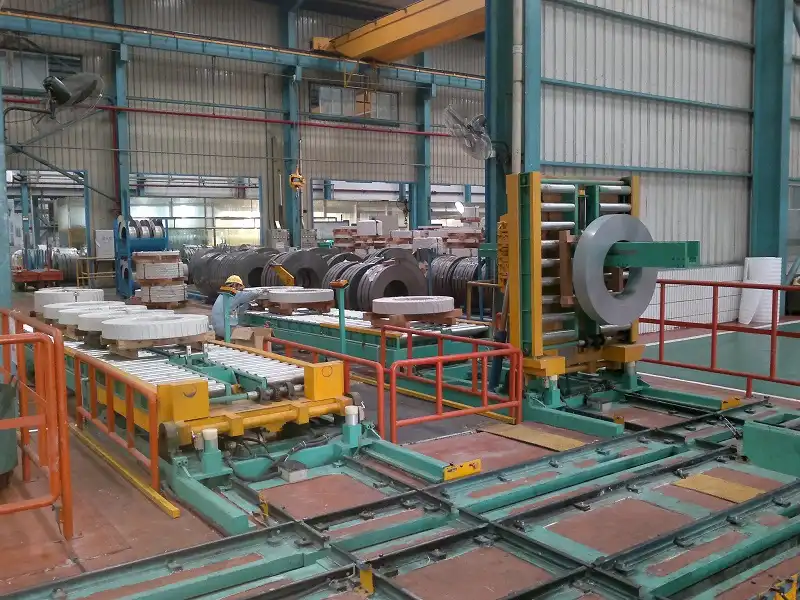
- Lower Initial Cost: Compared to more advanced systems, basic automation requires a smaller capital investment, making it accessible for smaller operations or those with limited budgets.
- Reduced Physical Strain: Automating some physically demanding tasks lessens the burden on workers, contributing to improved ergonomics and safety.
- Incremental Upgrade Path: Basic systems can sometimes serve as a foundation, allowing businesses to add more automation features gradually as needs evolve and budgets permit.
Limitations of Basic Automation:
- Significant Manual Labor Dependence: Overall efficiency and speed gains are limited by the reliance on manual intervention for many process steps.
- Potential for Inconsistency: Packaging quality can vary depending on operator skill and attentiveness, especially during high-volume runs or shift changes.
- Limited Process Monitoring: These systems typically lack sophisticated sensors or data logging capabilities, making process optimization and troubleshooting more challenging.
3. Mid-Level Automation: Enhancing Efficiency with Semi-Automated Systems
The Step Up: Understanding Semi-Automated Systems
Mid-level, or semi-automated systems, provide a greater degree of automation, handling more complex sequences autonomously while still allowing operator input for setup, adjustments, and troubleshooting. These systems offer a practical balance for manufacturers needing higher efficiency and consistency than basic systems provide, but who are not yet prepared for full automation.
Key Features of Semi-Automated Systems:
- Automated Wrapping Cycles: Systems can automatically apply protective wrapping materials (e.g., stretch film, VCI paper) according to pre-set parameters once the coil is positioned.
- Automated Strapping Machines: These machines automatically feed, tension, seal, and cut straps (steel or PET) at predetermined locations on the coil (radial or circumferential). Operator intervention might be needed for loading coils or changing strap coils.
- Integrated Conveying and Positioning: More sophisticated conveyors automatically transfer coils between stations (e.g., weighing, wrapping, strapping), often including centering or rotating mechanisms.
- Programmable Logic Controllers (PLCs): Operators can select recipes, adjust parameters (like wrapping tension, number of strap cycles, conveyor speed) via a Human-Machine Interface (HMI).
Benefits of Semi-Automated Systems:
- Improved Operational Efficiency: Automating key tasks like wrapping and strapping significantly reduces cycle times compared to basic systems.
- Enhanced Packaging Consistency: Automated control over wrapping tension and strap placement ensures uniform packaging quality, reducing the risk of damage during handling and transport.
- Reduced Manual Handling: Taking over more physically demanding tasks further improves worker safety and reduces labor requirements per coil.
Limitations of Semi-Automated Systems:
- Continued Need for Operator Oversight: Operators are still required for supervision, material replenishment (film/straps), recipe selection, and intervention if issues arise.
- Moderate Investment Required: The cost is higher than basic systems, requiring careful justification based on projected ROI.
- Limited Data Integration: While operational data (cycle counts, basic faults) may be available, advanced analytics, remote monitoring, or integration with plant-wide systems are often limited.
4. Advanced Automation: Fully Automated Steel Coil Packing Lines
The Pinnacle: Fully Automated Systems
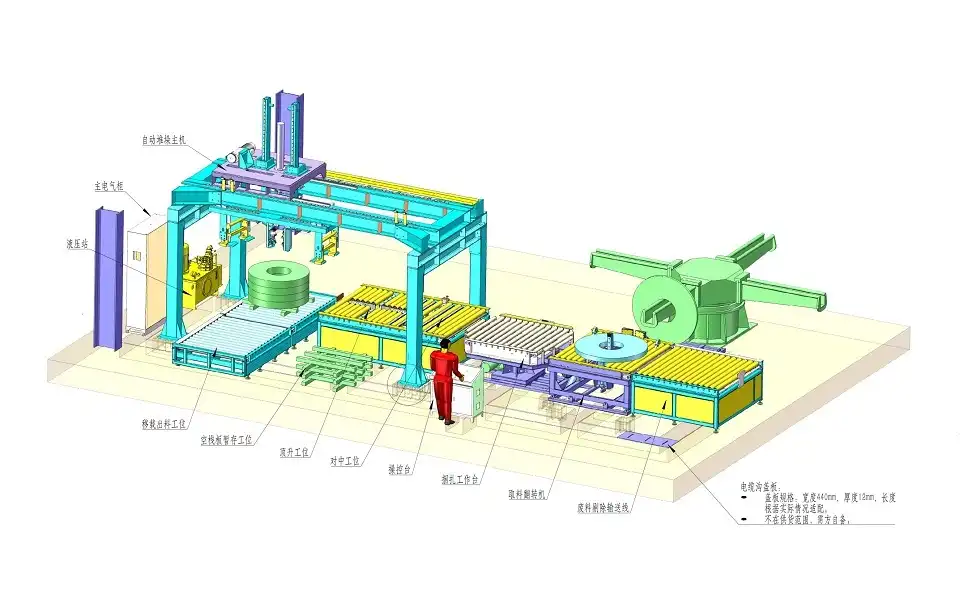
Key Features of Fully Automated Systems:
- Robotic Handling and Operations: Industrial robots are often employed for tasks requiring high precision or flexibility, such as picking and placing dunnage, applying edge protectors, or complex strapping patterns.
- Fully Integrated Material Handling: Automated Guided Vehicles (AGVs) or integrated robotic transfer systems manage coil movement throughout the line, including loading onto and unloading from the system.
- Automated Coil Identification and Recipe Selection: Systems use barcode scanners, RFID readers, or vision systems to identify incoming coils and automatically select the correct packaging recipe from a database.
- Advanced Monitoring, Diagnostics, and Data Analytics: Comprehensive sensor networks monitor machine health, material consumption, and process parameters in real-time. Data is logged and analyzed for performance tracking, quality control, and predictive maintenance. Integration with MES (Manufacturing Execution Systems) or ERP (Enterprise Resource Planning) systems is common.
Benefits of Fully Automated Systems:
- Maximum Throughput and Efficiency: Continuous operation at optimized speeds significantly increases packaging capacity and reduces labor cost per unit.
- Superior Safety Environment: Eliminating routine manual interaction with heavy coils and machinery drastically reduces the potential for accidents and injuries.
- Data-Driven Optimization: Real-time data provides actionable insights for continuous improvement, resource management, and proactive maintenance scheduling.
- Predictive Maintenance Capabilities: AI and sensor data analysis can forecast potential equipment failures, allowing maintenance to be scheduled proactively, minimizing costly unplanned downtime.
Limitations of Fully Automated Systems:
- Substantial Initial Investment: The capital expenditure for fully automated lines is significant, requiring detailed financial analysis and justification.
- Complexity in Implementation and Maintenance: Designing, installing, commissioning, and maintaining these complex systems requires specialized expertise and resources.
- Need for Skilled Technical Staff: While requiring fewer operators, these systems demand highly skilled technicians for programming, troubleshooting, and maintenance.
5. Comparing Automation Levels: Key Differentiators
Manual Intervention and Labor Requirements
The core difference across the automation spectrum is the level of required manual intervention:
- Basic: High dependence on operators for multiple tasks.
- Semi-Automated: Operators primarily oversee, adjust settings, and replenish materials.
- Fully Automated: Minimal human interaction needed during routine operation; staff focus on monitoring, maintenance, and exception handling.
Labor Efficiency Impact:
- Basic Systems: Higher labor input per coil, slower process, higher risk of ergonomic injuries.
- Semi-Automated Systems: Reduced labor needs, improved safety, faster cycle times.
- Fully Automated Systems: Lowest labor cost per coil, highest throughput, significantly enhanced safety.
Cost Considerations: Investment vs. Return
- Basic Systems: Lowest initial cost, slowest ROI, potential limitations on throughput.
- Semi-Automated Systems: Moderate initial cost, good ROI through efficiency and safety gains, suitable for many production volumes.
- Fully Automated Systems: Highest initial cost, potentially fastest ROI in high-volume scenarios due to significant long-term savings in labor, waste reduction, and uptime.
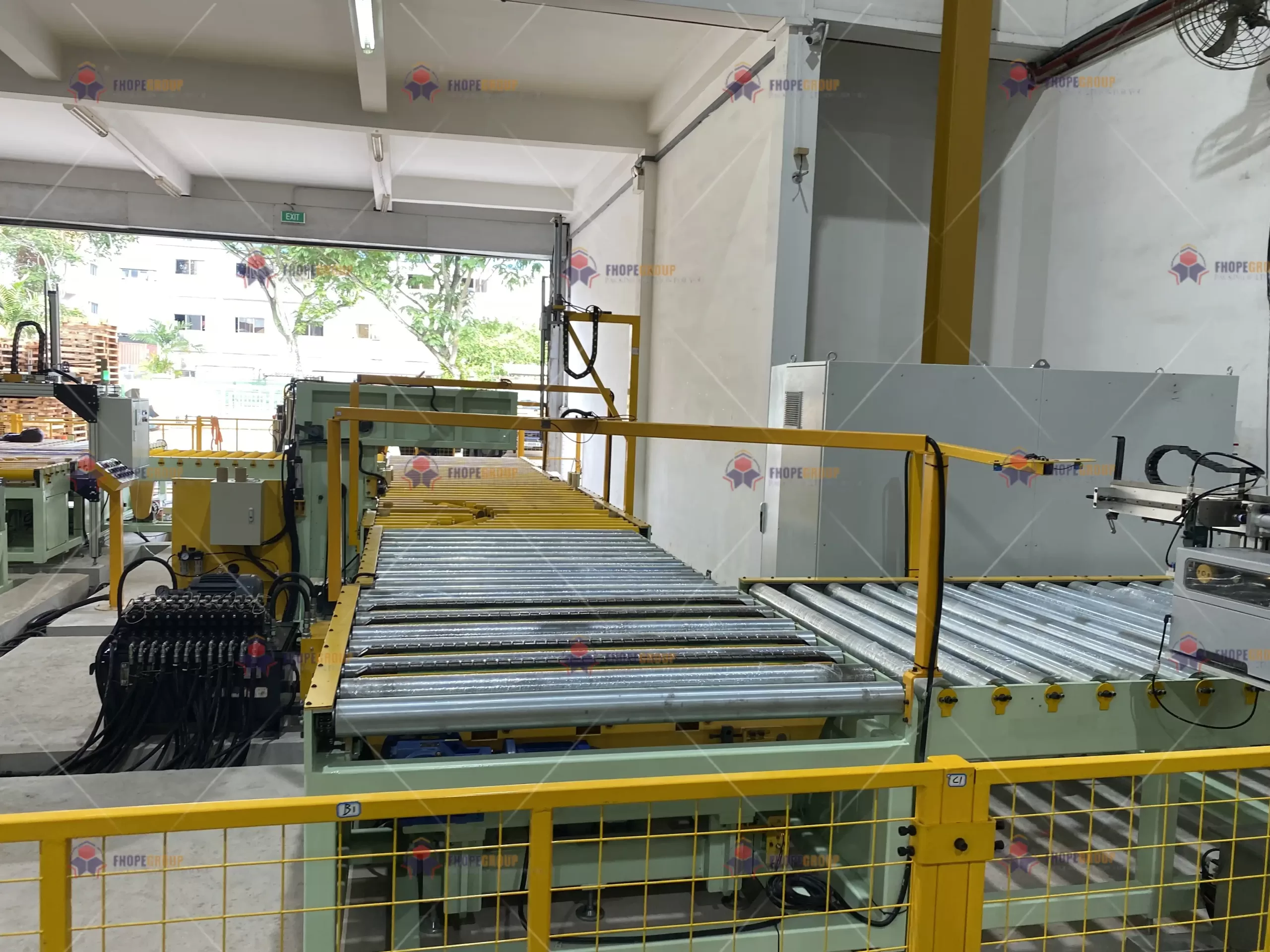
6. Safety Enhancements Across Automation Levels
Reducing Workplace Hazards
Improving worker safety is a primary driver for automation in heavy industries. Handling large steel coils poses significant risks (crushing, straining, repetitive motion injuries). Each step up in automation typically yields safety improvements.
Safety Features by Level:
- Basic Systems: Rely on operator training and manual safety procedures. Risk remains relatively high due to direct handling.
- Semi-Automated Systems: Reduce exposure by automating high-risk tasks like lifting, wrapping, and strapping. Incorporate basic machine guarding and emergency stops.
- Fully Automated Systems: Offer the highest level of safety by physically separating operators from routine coil handling. These systems employ comprehensive safety measures like light curtains, safety fences, area scanners, and redundant controls, designed to meet stringent safety standards (e.g., compliance with OSHA guidelines on control of hazardous energy and machine guarding).
Machine Safety Protocols
Advanced systems integrate safety PLCs and monitoring to ensure safe operation, including controlled stops, safe speed monitoring, and interlocking guards that prevent access to hazardous areas during operation.
7. Production Throughput: Speed and Efficiency Gains Compared
Impact on Processing Speed
Automation level directly correlates with the potential speed and consistency of the packaging line:
- Basic Systems: Throughput limited by manual task speed and operator fatigue. Prone to bottlenecks.
- Semi-Automated Systems: Faster cycle times due to automated wrapping/strapping, but overall speed can be limited by manual loading/unloading or adjustments.
- Fully Automated Systems: Designed for continuous, high-speed operation. Consistent cycle times enable predictable high throughput, ideal for large-scale production.
Downtime Reduction through Automation
Advanced automation excels at minimizing downtime:
- Basic/Semi-Automated: Downtime often relies on reactive maintenance (fixing issues after they occur).
- Fully Automated: Incorporate predictive maintenance analytics, using sensor data to anticipate failures and schedule maintenance proactively. Automated diagnostics also speed up troubleshooting when issues do arise.
8. Data Collection and Analytics: Leveraging Information
The Role of Data in Optimized Packaging
Modern manufacturing thrives on data. The ability to collect, analyze, and act on process information is key to efficiency and quality.
- Basic Systems: Offer minimal or no automated data collection. Relies on manual logs.
- Semi-Automated Systems: May provide basic operational data (e.g., cycle counts, uptime hours) via HMI or simple logging.
- Fully Automated Systems: Equipped with extensive IoT sensors and integrated data analytics platforms. They track parameters like material usage, energy consumption, OEE (Overall Equipment Effectiveness), fault history, and quality metrics. This data enables real-time monitoring, historical analysis, and informed decision-making for continuous improvement.
Predictive Maintenance Example
Fully automated systems analyze vibration patterns, motor currents, and temperature readings. Algorithms can detect deviations indicating potential bearing failure or belt wear, triggering maintenance alerts before a breakdown occurs, thus preventing costly unplanned stops.
9. Scalability: Adapting Automation to Business Growth
System Adaptability
Choosing an automation system requires considering future business needs.
- Basic Systems: Offer limited scalability. Significant production increases often necessitate complete system replacement.
- Semi-Automated Systems: Provide moderate scalability. Capacity might be increased by adding shifts or potentially upgrading specific modules, but limitations exist.
- Fully Automated Systems: Designed with modularity and scalability in mind. Capacity can often be increased by adjusting operating parameters, adding robotic units, or integrating further automation upstream or downstream with less disruption.
Future-Proofing Investment
Fully automated systems are typically built on platforms that can more easily integrate future technological advancements in areas like AI, machine vision, or advanced robotics, protecting the long-term value of the investment.
10. Cost Considerations: Balancing Investment and Return on Investment (ROI)
Upfront Costs vs. Long-Term Value
A critical decision factor is the balance between initial investment and long-term operational savings.
- Basic Systems: Low initial cost, but higher ongoing labor costs and potentially lower throughput limit long-term savings.
- Semi-Automated Systems: Moderate investment, offering a good balance with tangible savings in labor and efficiency, leading to a reasonable ROI timeframe for many operations.
- Fully Automated Systems: High initial investment, but offers the greatest potential for long-term savings through drastically reduced labor costs, minimized waste, maximized uptime (via predictive maintenance), and highest throughput. ROI is typically fastest in high-volume, multi-shift operations.
Calculating the total cost of ownership (TCO) — including initial purchase, installation, training, energy, maintenance, and labor — is essential for comparing the true financial impact of each automation level.
Conclusion: Selecting the Right Automation Level for Your Steel Coil Packing Line
The optimal level of automation for a steel coil packaging operation depends on a careful evaluation of factors like current and projected production volumes, budget constraints, workforce availability and skills, safety priorities, and long-term strategic objectives.
- Basic automation provides a cost-effective starting point for mechanization but retains significant manual elements.
- Semi-automated systems offer a balanced approach, enhancing efficiency and consistency while managing costs.
- Fully automated systems deliver the highest levels of productivity, safety, data integration, and scalability, making them ideal for large-scale, demanding operations seeking maximum efficiency and future readiness through features like robotic handling and predictive maintenance.
By understanding the capabilities and trade-offs of each level, manufacturers can make informed investment decisions that improve productivity, enhance safety, reduce operational costs, and ensure competitiveness in the evolving steel industry landscape.