Streamlining Production: A Guide to Automatic Pipe Coiling and Winding Machines
Continuous extrusion processes for pipes and hoses present a significant material handling challenge: managing long, flexible lengths efficiently and safely. Automatic pipe coiling and winding machines provide a robust solution, integrating seamlessly into production lines to prepare products for storage, transport, or further processing.
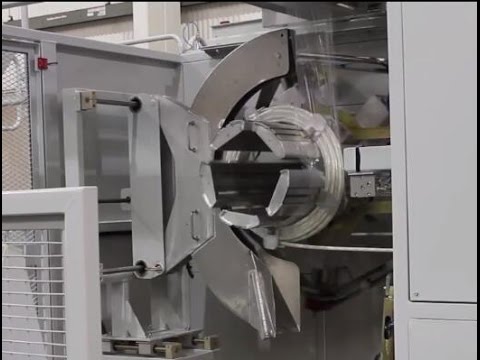
These systems are a type of automatic pipe coiling machine specialized for creating neat coils and often include integrated stretch film wrapping or strapping capabilities. Designed to connect directly to the extruder output, they enable continuous, 24-hour operation.
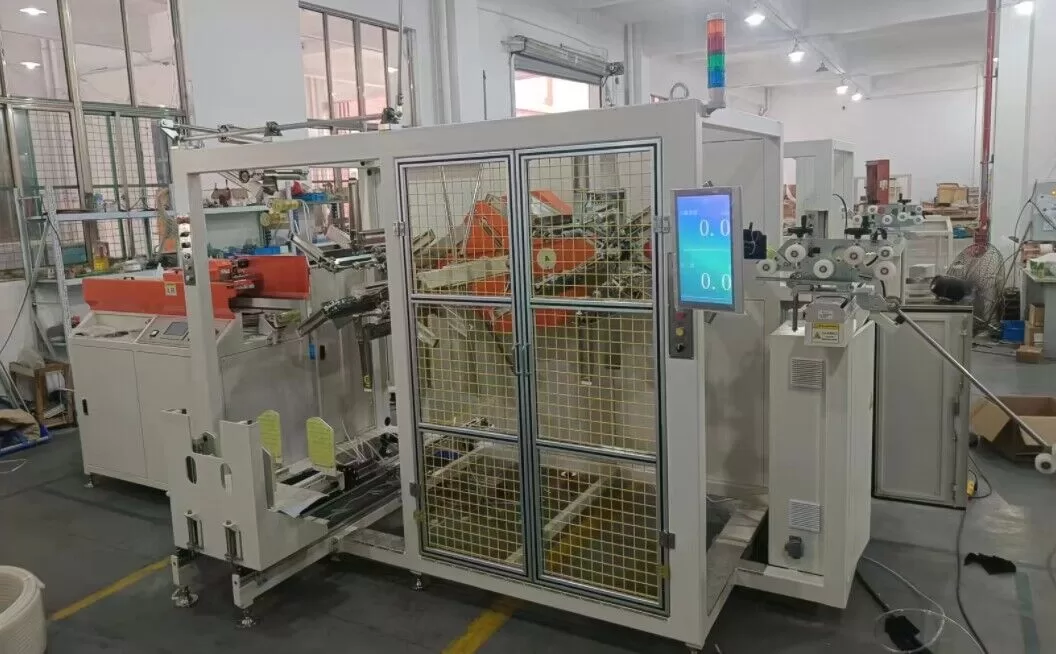
Understanding Automatic Pipe Coiling and Winding Systems
At their core, automatic pipe coiling and winding machines are electromechanical systems designed to take a continuous length of pipe or hose (from materials like PEX, PE-RT, PVC, HDPE, etc.) and form it into a precise, manageable coil. Modern systems often combine coiling with automated strapping or wrapping, creating a finished package ready for shipment or inventory.
Different coiling solutions exist, tailored to specific pipe diameters, materials, rigidity, and required coil specifications (like inner/outer diameter and width).
How Automatic Pipe Coilers Operate: Key Stages
While designs vary, the typical operation involves several key stages:
- Infeed and Synchronization: The pipe or hose enters the machine from the extrusion line, often passing through dancers or accumulators that manage tension and synchronize the coiler speed with the extruder output.
- Guiding and Measurement: Guide rollers direct the pipe accurately. A measuring system (typically an encoder wheel) precisely tracks the pipe length to ensure accurate coil dimensions.
- Coiling Head: This is the heart of the machine. The pipe is fed onto a rotating coiling head or mandrel, which forms the coil layer by layer. The coiling speed, traversing motion (to build coil width), and tension are carefully controlled.
- Cutting: Once the desired length is reached, an automated cutting mechanism cleanly severs the pipe.
- Strapping/Wrapping (Optional): Many systems integrate automatic strapping units (using PP or PET straps) or stretch wrapping modules to secure the coil immediately after cutting.
- Coil Ejection/Transfer: The finished, secured coil is automatically ejected from the coiling head onto a conveyor, tilting table, or robotic handling system for removal. High-speed systems often feature dual coiling heads to allow continuous operation – one head coils while the other ejects.
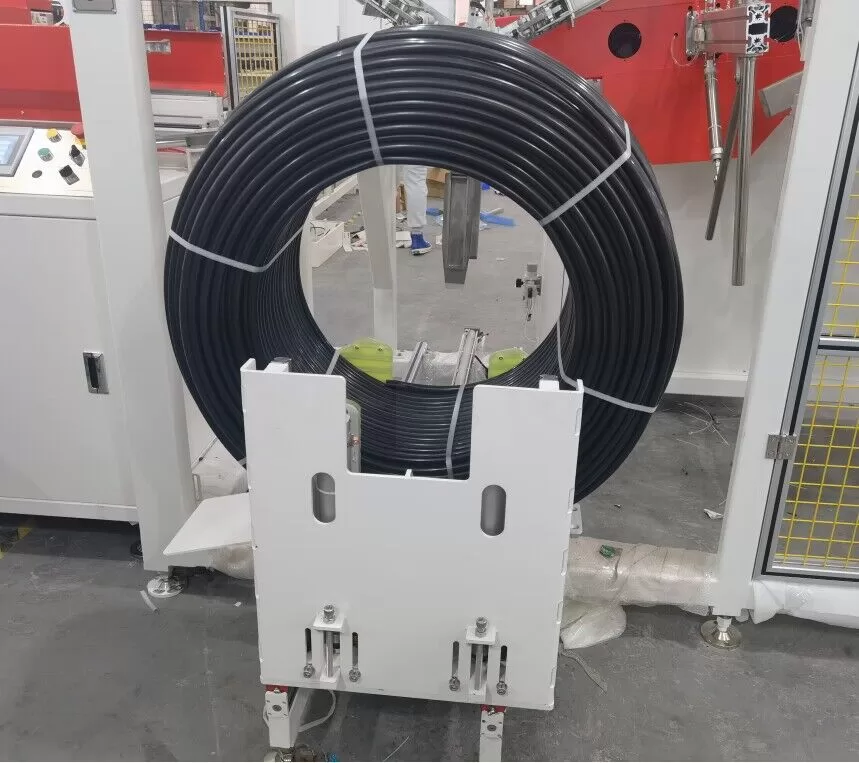
automatic pipe coiling machine, automatic hose coiling machine3 Why Automate Pipe Coiling and Winding?
Integrating automated coiling and winding offers significant operational advantages:
- Enhanced Throughput and Efficiency: These machines match the continuous output of extrusion lines, eliminating manual handling bottlenecks and enabling higher production speeds and 24/7 operation. Cycle times are drastically reduced compared to manual coiling.
- Improved Coil Quality and Consistency: Automation ensures uniform coil dimensions (ID, OD, width), consistent tension, and precise lengths, leading to professional-looking products and reducing material waste from inaccurate cuts or poorly formed coils.
- Increased Operator Safety: Automating the coiling, cutting, and strapping process significantly reduces risks associated with manual handling of long, potentially heavy or unwieldy pipe lengths, minimizing repetitive strain injuries and accidents.
- Labor Optimization: Skilled operators can be redeployed to more complex tasks, reducing the labor required per line for packaging operations.
- Reduced Material Damage: Gentle, controlled handling minimizes the risk of kinking, scratching, or deforming the pipe during the coiling process.
- Seamless Integration: Modern coilers can be integrated with upstream (extrusion control) and downstream systems (palletizing, warehousing) via industrial communication protocols for fully automated production data logging and control.
Selecting the Right Automatic Coiling System
Choosing the appropriate machine depends on several factors:
- Pipe/Hose Specifications: Diameter range, material type (flexibility/rigidity), minimum bend radius.
- Coil Requirements: Target inner/outer diameters, coil width, maximum coil weight, required length accuracy.
- Production Speed: Required coiling speed to match or exceed the extrusion line output (m/min or ft/min).
- Automation Level: Standalone coiler, coiler with integrated strapping/wrapping, dual-head systems for continuous operation.
- Space and Layout: Available footprint and integration requirements with the existing production line.

automatic pipe coiling machine, automatic hose coiling machine9 Conclusion
Automatic pipe coiling and winding machines are essential equipment for modern pipe and hose manufacturing facilities aiming for high efficiency, consistent product quality, and enhanced workplace safety. By automating the labor-intensive process of handling long product lengths, these systems directly contribute to streamlined operations, reduced operational costs, and improved competitiveness. Investing in the right automated coiling solution is a strategic step towards optimizing the entire extrusion and packaging workflow.