Optimizing Hose Packaging: The Role of Automatic Machinery
Handling and packaging hoses—whether for hydraulic, pneumatic, industrial, or construction applications—can be a cumbersome process prone to inconsistencies and inefficiencies when done manually. Automatic hose packing machines provide a robust solution, streamlining operations, enhancing product protection, and improving overall throughput for manufacturers and distributors.
See an example of an automatic hose packing system in action:
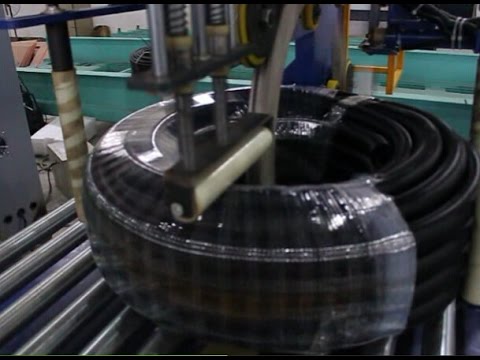
How Automatic Hose Packing Machines Work
These automated systems are engineered to manage the entire hose packaging cycle with minimal operator intervention. The typical workflow involves several key stages:
- Feeding: Hoses are automatically fed into the machine, often from a coiler or directly from the production line.
- Measuring & Cutting (Optional): Some systems incorporate precise measurement tools and automated cutters to segment hoses into desired lengths before packaging.
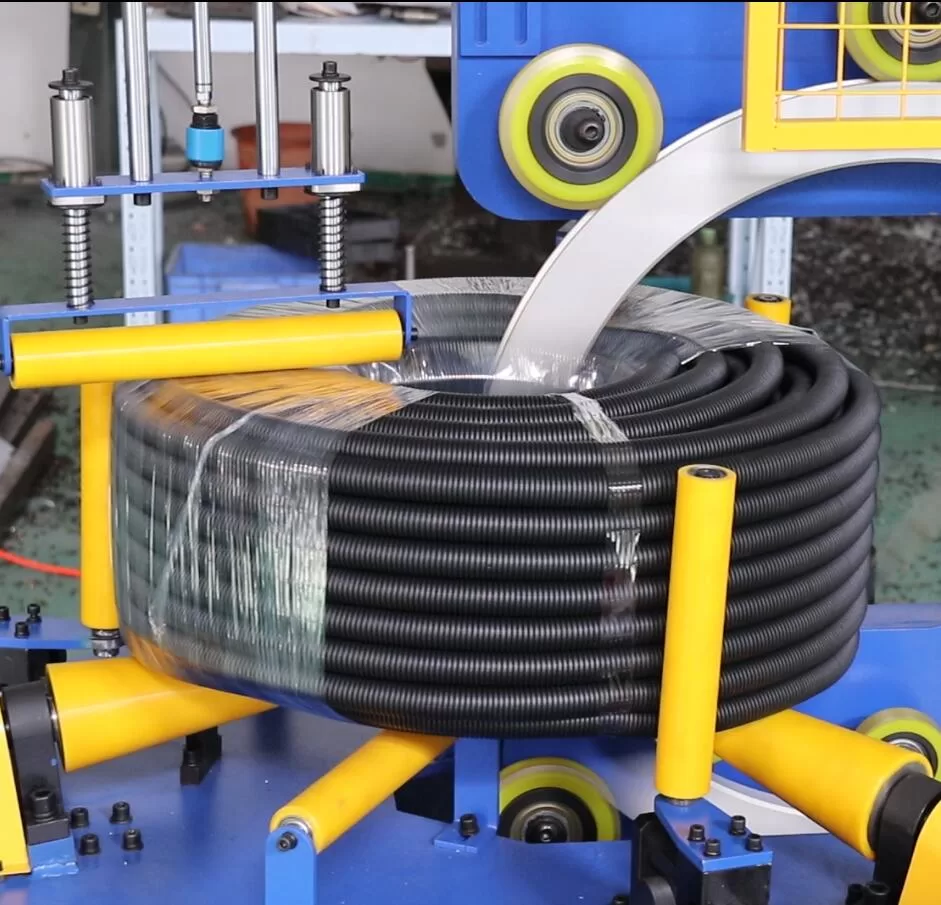
- Wrapping/Packaging: The core of the process involves securely wrapping the hose or hose coil. Common materials include stretch film, plastic wrap, foam, or VCI (Vapor Corrosion Inhibitor) paper for added protection against environmental factors. The wrapping mechanism ensures consistent tension and overlap.
- Securing & Discharge: Once wrapped, the package might be automatically taped, strapped, or labeled before being discharged for palletizing or shipping.
Advanced control systems, typically utilizing Programmable Logic Controllers (PLCs) and Human-Machine Interfaces (HMIs), allow operators to precisely manage parameters like wrapping speed, material tension, overlap percentage, and cycle counts, optimizing material usage and ensuring package integrity.
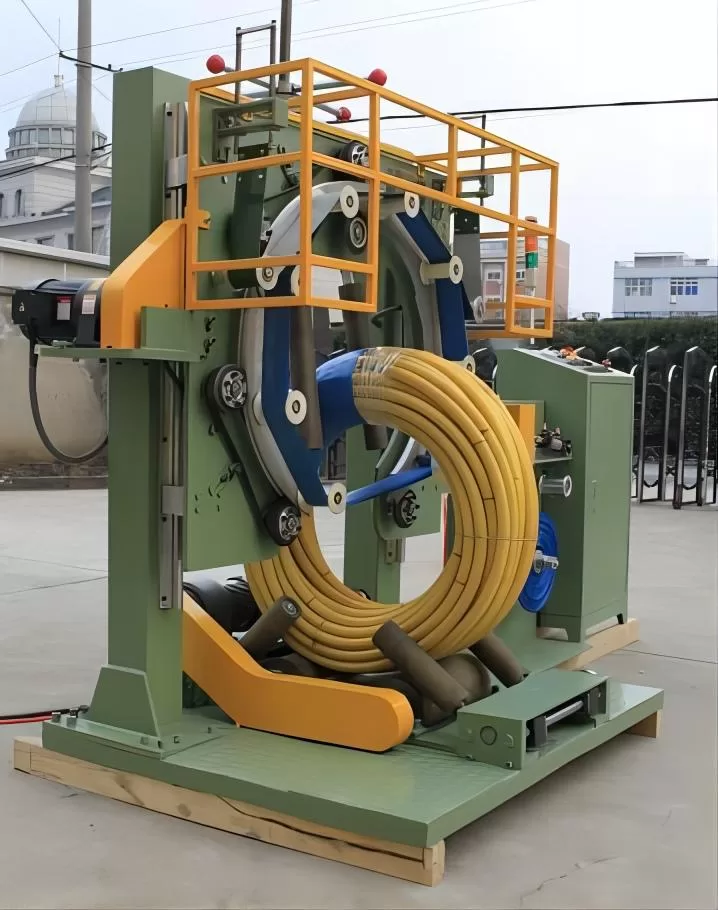
Key Features and Components
While designs vary, common components contributing to the efficiency of these machines include:
- Automated Feed System: Ensures a continuous and smooth supply of hose into the packaging station.
- Wrapping/Packaging Unit: The mechanism (often a rotating ring or wrapping arm) that applies the protective material around the hose or coil.
- Control System (PLC & HMI): The brain of the operation, allowing for precise adjustments, program storage, and operational diagnostics via a user-friendly touchscreen interface.
- Material Delivery System: Holds and dispenses the packaging material (e.g., film rolls) with controlled tension.
- Conveying Systems: Input and output conveyors to seamlessly integrate the machine into a larger production or packaging line.
Significant Benefits of Automation in Hose Packing
Implementing an automatic hose packing machine offers numerous advantages:
- Increased Throughput: Significantly faster cycle times compared to manual methods, boosting overall productivity.
- Consistent Package Quality: Uniform wrapping tension and material application ensure every hose is packed to the same standard, enhancing protection and appearance.
- Reduced Labor Costs: Frees up personnel from repetitive manual tasks, allowing them to focus on higher-value activities.
- Improved Worker Safety: Minimizes manual handling of bulky or heavy hoses, reducing the risk of strains and injuries.
- Optimized Material Usage: Precise control over wrap parameters reduces material waste and lowers packaging costs.
- Enhanced Product Protection: Secure wrapping shields hoses from abrasion, contamination, moisture, and UV exposure during storage and transit.
Typical Technical Specifications
Understanding the general capabilities of these machines is crucial, though specific parameters depend heavily on the chosen model and configuration.
Note: The following specifications represent a typical range. Actual machine capabilities can vary significantly based on model and configuration. Please consult specific manufacturer documentation for exact details.
- Machine Type: Automatic Hose Packing / Wrapping System
- Typical Hose Diameter Capability: 10mm to 100mm (Varies widely by machine design)
- Maximum Hose Length: Often handles continuous feed or pre-coiled lengths.
- Compatible Packaging Materials: Stretch film (LLDPE), plastic wrap, foam, VCI paper, woven belts.
- Typical Cycle Speed: Can range from a few packages per minute to over 20, depending on hose size and wrap requirements.
- Power Requirements: Commonly 440V, 50/60Hz, three-phase (confirm based on region and machine).
- Approximate Machine Footprint: (Example) Length: 5000mm; Width: 2000mm; Height: 2500mm (Highly variable).
- Feed System: Typically automated conveyor or direct integration.
- Control System: PLC with HMI/touchscreen interface.
- Adjustments: Speed, tension, overlap, cycle counts usually adjustable.

hose packing Applications Across Diverse Industries
The efficiency and reliability of automatic hose packing machines make them valuable assets in numerous sectors:
- Construction and Building Supplies: Ensures hoses used for water, concrete, or air are compactly bundled and protected from site conditions, facilitating easier handling and distribution.
- Oil and Gas Industry: Provides secure, protective packaging critical for high-pressure or specialized hoses, meeting stringent safety standards for transport and storage in demanding environments.
- Automotive Manufacturing: Used for packaging coolant hoses, fuel lines, brake lines, and air conditioning hoses, maintaining cleanliness and preventing damage prior to vehicle assembly. Consistent packaging aids in line-side logistics.
- General Manufacturing & Distribution: Any operation producing or distributing significant volumes of industrial, hydraulic, or pneumatic hoses can benefit from automated packaging to improve efficiency and protect products throughout the supply chain.
- Agriculture: Packaging irrigation hoses and hydraulic lines used in farming equipment, protecting them during off-season storage or shipment.
hose coil wrapping machine for sale Selecting the Right Hose Packing Solution
Choosing the appropriate automatic hose packing machine involves considering:
- Hose Types and Dimensions: Diameter range, flexibility, weight, and typical coil sizes.
- Required Throughput: The number of hoses or coils that need to be packed per shift or day.
- Packaging Material Requirements: Type of protection needed (e.g., simple containment, moisture barrier, corrosion inhibition).
- Level of Automation: Standalone machine vs. fully integrated into a production line.
- Budget and Space Constraints.
Conclusion
Automatic machine hose packing represents a significant step forward from manual methods. By automating the process, businesses can achieve greater efficiency, ensure consistent product protection, reduce operational costs, and improve workplace safety. For operations dealing with substantial hose volumes, investing in this technology offers a clear path to optimizing the packaging workflow and safeguarding valuable products.
Explore Specific Machine Models and Further Information:
- More details on: Automatic hose coil packing machine
- Related Machine Types:
- FPH-200 Hose wrapping machine
- FPH-300 Hose wrapping machine
- FPH-400 hose wrapping machine
- FPH-500 hose wrapping machine# Optimizing Hose Packaging: The Role of Automatic Machinery
Handling and packaging hoses—whether for hydraulic, pneumatic, industrial, or construction applications—can be a cumbersome process prone to inconsistencies and inefficiencies when done manually. Automatic hose packing machines provide a robust solution, streamlining operations, enhancing product protection, and improving overall throughput for manufacturers and distributors.