What to Look for When Selecting a Coil Upender: A Comprehensive Buyer’s Guide
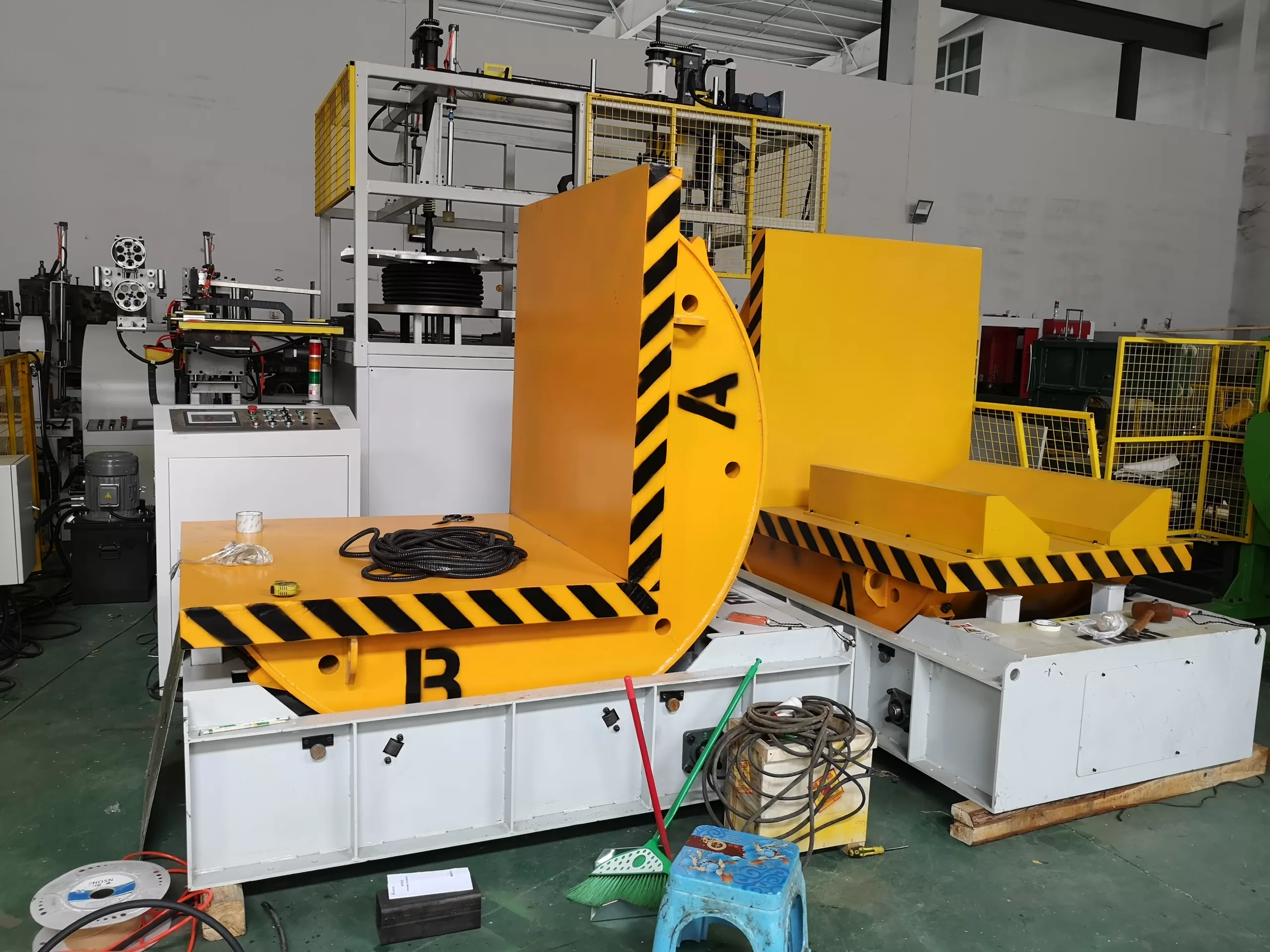
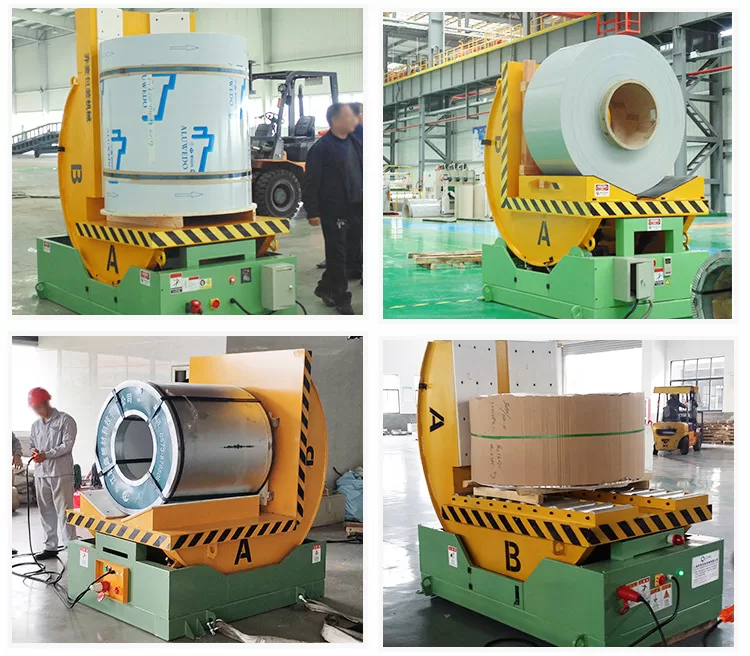
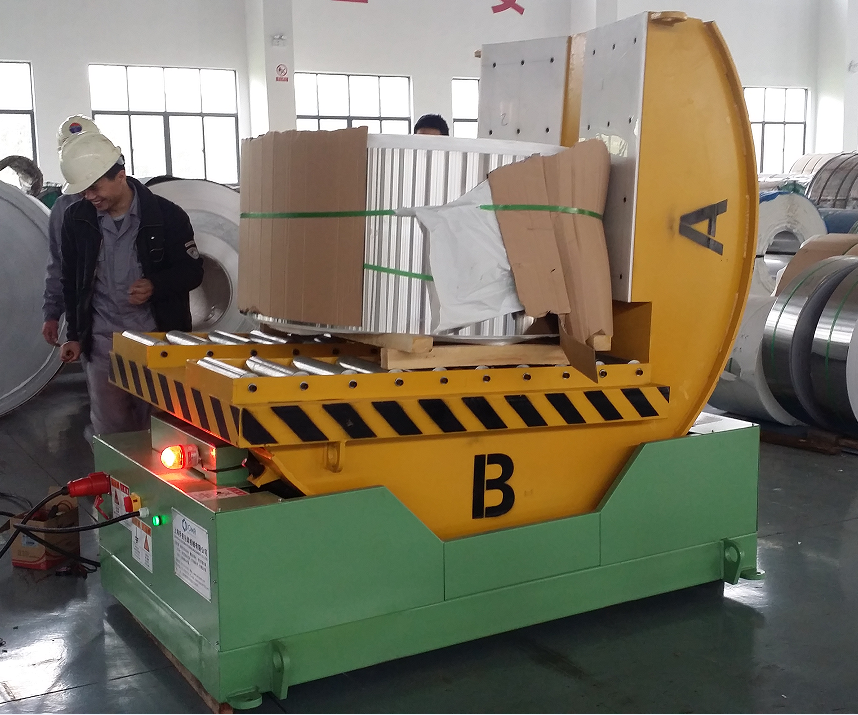
In demanding industrial environments where efficient and safe handling of heavy materials is crucial, coil upenders (also known as coil tilters) serve as indispensable tools. These robust machines are specifically designed to rotate or tilt heavy, bulky coils—often made of steel or aluminum—typically between horizontal and vertical orientations (eye-to-the-sky or eye-to-the-wall). This manipulation significantly simplifies processes like transportation, packaging, storage, and feeding coils into production lines. However, choosing the right coil upender for your specific operational needs involves careful consideration of several factors. This guide provides a detailed walkthrough to help you select a high-quality, reliable coil upender that enhances safety and productivity in your facility.
1. Define Your Specific Coil Handling Requirements
Before exploring machine specifications, thoroughly assess your unique operational context. Understanding your specific needs is the foundation for making an informed decision. Consider these critical questions:
- Coil Specifications: What are the typical and maximum weight, width, outer diameter (OD), and inner diameter (ID) of the coils you handle?
- Operational Frequency: How often will the coil upender be used per shift or day? Is it for continuous operation or intermittent use?
- Coil Variety: Do you handle standardized coil sizes, or do you need flexibility for a wide range of dimensions?
- Material Sensitivity: Are the coils prone to damage (e.g., pre-painted surfaces, soft metals)? Does the handling process require specific protection like non-marring surfaces?
- Facility Layout: What is the available footprint for the machine? Consider ceiling height, access for loading/unloading (e.g., crane, forklift), and integration with existing workflows.
- Operating Environment: Are there specific environmental conditions (e.g., extreme temperatures, corrosive atmosphere) that the equipment must withstand?
Answering these questions clarifies the essential performance characteristics required, guiding you toward suitable models.
2. Verify Load Capacity and Dimensional Compatibility
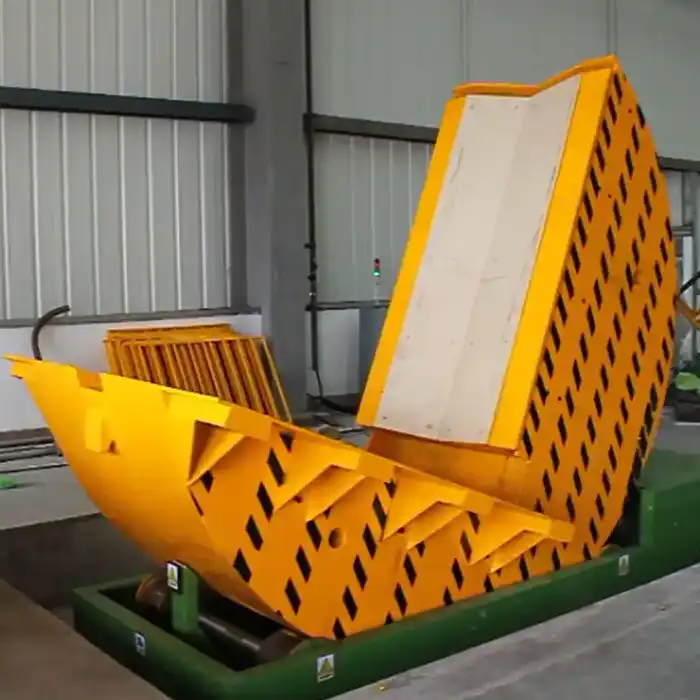
The load capacity is arguably the most critical specification. Coil upenders are rated for a maximum weight they can safely handle. Always select a model with a capacity that comfortably exceeds the heaviest coil you anticipate processing, providing a safety margin and accommodating potential future needs. Overloading can lead to equipment failure and severe safety hazards.
Equally important are the dimensional specifications. The upender's platform, cradles, or V-saddles must properly support the coil's dimensions (width, OD, ID) throughout the tilting cycle. Ensure the contact surfaces are appropriate for your coil material to prevent damage. If you handle various coil sizes, look for adjustable supports or models designed for flexibility.
Key Parameters:
- Maximum Coil Weight (e.g., 5 tons, 10 tons, 30+ tons)
- Maximum Coil Width
- Maximum Coil Outer Diameter (OD)
- Coil Inner Diameter (ID) Range
- Platform/Saddle Dimensions
3. Evaluate Rotation Mechanism, Speed, and Control
Coil upenders primarily utilize two types of rotation mechanisms:
- Hydraulic Systems: Known for smooth, powerful, and highly controlled motion. Ideal for heavy loads and applications requiring precise positioning. They often feature variable speed control but require regular maintenance of hydraulic components (fluid, seals, pumps).
- Electromechanical Systems: Employ electric motors and gear reducers (screw jacks or chain/sprocket drives). Often simpler in design, potentially requiring less maintenance than hydraulics, and can be very durable. They might offer fixed or variable speed options depending on the drive system.
The rotation speed impacts cycle time and overall throughput. Faster rotation can improve efficiency, but it must be balanced with smooth, stable movement to prevent coil damage or instability. Look for models offering adjustable speed control, allowing operators to optimize the cycle for different coil sizes, weights, or specific process requirements. Precise control over acceleration and deceleration is crucial, especially for delicate or heavy loads.
4. Prioritize Safety Features and Regulatory Compliance
Handling multi-ton coils inherently involves risk, making safety features non-negotiable. A reliable coil upender should incorporate multiple safety mechanisms:
- Emergency Stop Buttons: Easily accessible E-stops to halt all motion immediately.
- Overload Protection: Sensors or hydraulic pressure limits to prevent operation if the coil exceeds the rated capacity.
- Limit Switches: To define safe start/end points for the tilting motion and prevent over-travel.
- Mechanical Locks or Holding Brakes: To securely hold the platform in position, especially in case of power loss or hydraulic failure.
- Physical Guarding: Barriers or fencing to restrict access to the operating area during rotation.
- Interlocked Access Gates: Safety gates that stop machine operation if opened.
- Warning Lights and Alarms: Visual and audible signals during operation.
Ensure the equipment complies with relevant safety standards and regulations in your region, such as those set by OSHA (Occupational Safety and Health Administration) in the U.S. or equivalent bodies elsewhere (e.g., CE marking in Europe). Reputable manufacturers provide documentation confirming compliance.
Get Your Best Solution !
5. Assess Automation Level and Control System Interface
Modern coil upenders often incorporate automation features to enhance efficiency, repeatability, and safety while reducing manual intervention. The control system is key to accessing these capabilities:
- Control Interface: Options range from simple push-button controls for basic functions to sophisticated touchscreen Human-Machine Interfaces (HMIs). HMIs often provide diagnostics, cycle monitoring, recipe management (for different coil types), and user-friendly operation.
- Programmable Logic Controllers (PLCs): The "brain" behind automated functions, allowing for precise control over speed, rotation angle (e.g., stopping at exactly 90 degrees), and integration with other systems.
- Remote Control: Pendant or wireless remote controls allow operators to manage the upender from a safe distance with better visibility.
- Integration Capabilities: Consider if the upender needs to communicate with other equipment, such as Automated Guided Vehicles (AGVs), conveyors, or overhead cranes, for seamless material flow.
Choose a control system that matches your operational complexity and workforce skill level. Even basic automation can significantly improve consistency and reduce the potential for human error.
6. Consider Durability, Construction, and Maintenance Needs
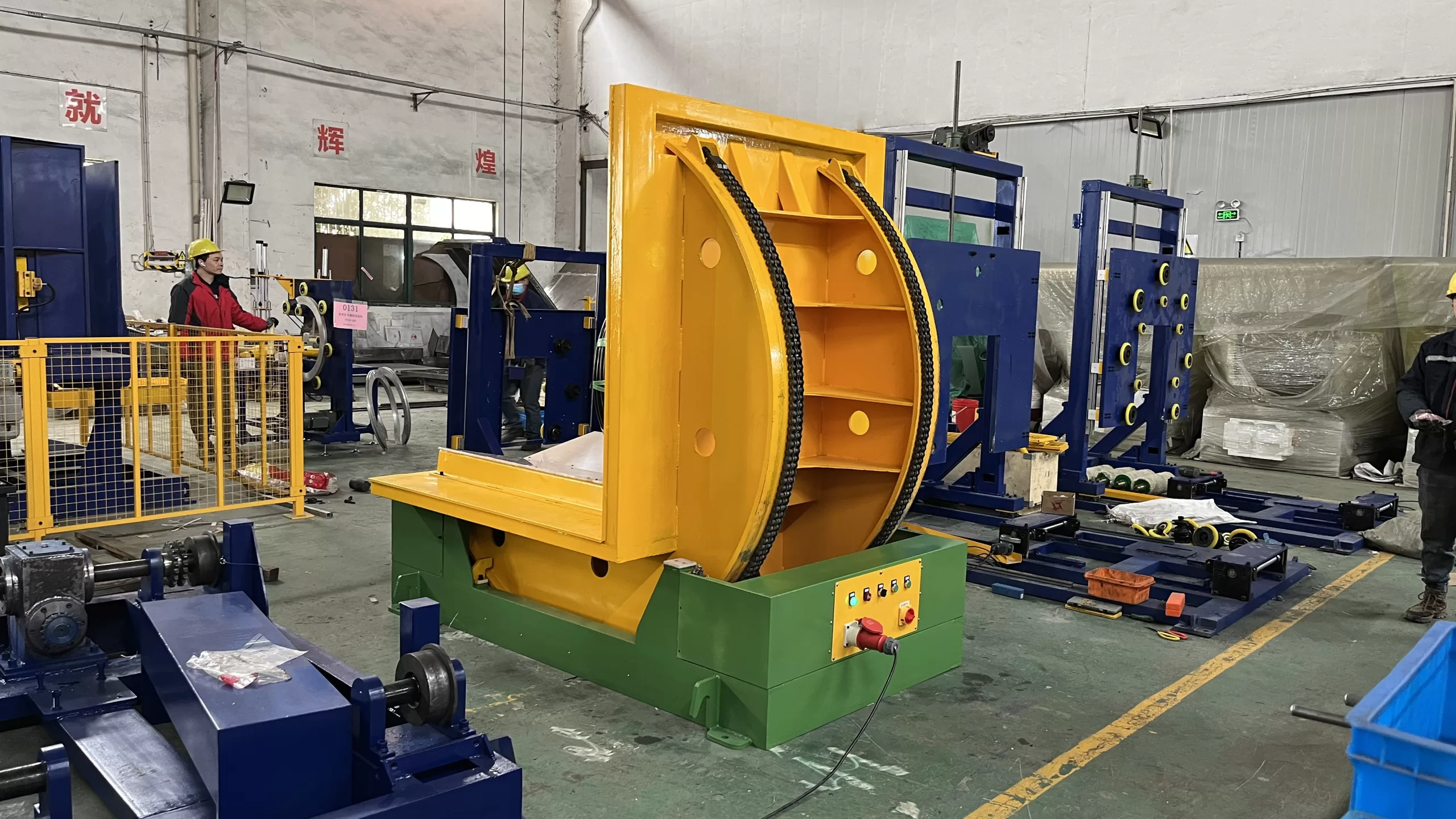
Coil upenders operate in demanding industrial settings and must be built for durability and longevity. Evaluate the machine's construction:
- Frame and Structure: Look for heavy-gauge steel construction, robust welds, and a design engineered to handle the stresses of heavy load rotation.
- Component Quality: Assess the quality of key components like the motor, gearbox, bearings, hydraulic cylinders, hoses, and electrical parts. Reputable manufacturers often use high-quality, industry-standard components.
- Surface Treatment: Ensure adequate painting or coating to protect against corrosion, especially in harsh environments.
Maintenance is crucial for reliable operation. Consider:
- Ease of Access: Are lubrication points, motors, and control panels easily accessible for inspection and maintenance?
- Lubrication Requirements: Does the machine feature automatic lubrication systems or require frequent manual lubrication?
- Availability of Spares: Does the manufacturer offer readily available spare parts and technical support?
- Documentation: Is comprehensive documentation provided, including maintenance schedules and troubleshooting guides?
A well-built machine with a thoughtful design for maintenance will minimize downtime and reduce long-term operating costs.
7. Explore Customization Options and Flexibility
While standard models exist, many applications benefit from customization. Reputable manufacturers often offer options to tailor the coil upender to your specific needs:
- Adjustable Supports/Cradles: To accommodate a wider range of coil diameters or widths.
- Special Platform Surfaces: Non-marring materials (e.g., polyurethane, rubber) to protect sensitive coil surfaces.
- Conveyor Integration: Built-in powered or non-powered conveyors on the loading/unloading platforms.
- Specific Rotation Angles: Custom tilting angles beyond the standard 90 degrees if required.
- Environmental Modifications: Features for outdoor use, high-temperature areas, or cleanroom environments.
Flexibility is key if your production needs change over time or involve diverse coil types. An adaptable machine provides better long-term value than a rigidly designed one. Discuss your unique requirements with potential suppliers to explore available customization possibilities.
8. Balance Cost Against Long-Term Value (TCO)
While the initial purchase price is a significant factor, it's crucial to evaluate the Total Cost of Ownership (TCO). A cheaper machine might save money upfront but could incur higher costs over its lifespan due to:
- Increased downtime from frequent breakdowns.
- Higher maintenance and repair expenses.
- Lower operational efficiency or slower cycle times.
- Potential safety incidents leading to injuries or material damage.
- Shorter equipment lifespan requiring earlier replacement.
Focus on value: Assess the upender's durability, safety features, efficiency gains, ease of maintenance, and the manufacturer's reputation and support. Investing in a high-quality, reliable coil upender from a reputable supplier often yields a better Return on Investment (ROI) through enhanced productivity, improved safety, and reduced operational headaches.
Conclusion: Making an Informed Coil Upender Selection
Choosing the right coil upender is a critical investment that directly impacts operational efficiency, workflow safety, and profitability. By carefully evaluating your specific handling requirements, thoroughly examining machine specifications (capacity, dimensions, rotation mechanism), prioritizing robust safety features, considering automation levels, assessing durability and maintenance needs, and looking beyond the initial price tag to long-term value, you can confidently select a coil upender that serves as a reliable and productive asset for your operation. Take the time to research suppliers, ask detailed questions, and potentially request demonstrations or references to ensure your final choice aligns perfectly with your facility's needs.
Get Your Best Solution !