Revolutionizing Prescription Fulfillment: Inside an Automated Hub-and-Spoke Pharmacy System
The landscape of pharmacy services is constantly evolving, driven by the need for greater efficiency, accuracy, and improved patient outcomes. In the UK, a significant shift involves the "hub-and-spoke" dispensing model, designed to centralize routine tasks and free up pharmacists for patient-facing roles. A pioneering example of this model leverages advanced automation for assembling multi-dose blister packs.
Let's explore the mechanics and benefits of one such system, initially developed by Celesio UK (now part of the PHOENIX Group, a leading healthcare provider supporting the National Health Service) in collaboration with Cornerstone Automation Systems (CASI). This initiative aimed to create a highly efficient, automated prescription assembly line for multi-dose packaging.
Understanding the Hub-and-Spoke Pharmacy Model
The core idea is centralization:
- Hub: A central, high-volume facility equipped with automation (like the Warrington facility discussed here) handles the repetitive task of assembling prescription packages, particularly for patients with stable, repeat prescriptions.
- Spokes: Local community pharmacies (such as the numerous LloydsPharmacy locations) receive these pre-assembled packages daily.
This model aims to shift the labor-intensive task of package assembly away from the local pharmacy, allowing pharmacists and technicians to dedicate more time to crucial patient services, including medication counseling, managing minor ailments, and providing vaccinations.
The Challenge: Manual Assembly of Community Dosage System (CDS) Blister Packs
A key element in improving medication adherence in the UK is the Community Dosage System (CDS) blister card. This multi-dose packaging format typically includes:
- A tray with 28 individual blisters.
- Organization by day (7 days) and dosing time (morning, noon, teatime, night).
- Capacity for multiple different tablets or capsules per blister.
- A cover detailing patient information, drug identification (images/descriptions), and specific dosing instructions.
Manually assembling these packs is complex and time-consuming. "You might have seventeen different medicines, each with a different dosing pattern throughout the week," explains Mark Gillett, formerly Director, Pharmacy Channel for CASI. "So you've got to get it exactly right, with each medicine placed in the correct blister for the correct times and the correct days. That's where it gets challenging."
The traditional manual process involves:
- De-blistering medications from original manufacturer packaging.
- Manually placing the correct pills into the correct blisters.
- Printing and verifying backing cards and labels.
- Sealing the package.
This reliance on manual steps consumes significant staff time and carries inherent risks of human error.
Automating Prescription Assembly: The CASI Solution at Warrington
To overcome these challenges, the Warrington hub implemented an automated assembly line comprised of modular CASI components, designed for high throughput (targeting up to 15 trays per minute).

Key Stages of the Automated Assembly Process:
-
Tray Preparation:
- A paperboard frame, pre-printed with days/times and die-cut to hold the blisters, is precisely placed face down into a carrier fixture. This fixture features 28 slots corresponding to the blister layout.
- The plastic blister component is then placed onto the frame, with the individual blisters nesting into the carrier slots, leaving the open tops accessible for filling.
- A Fanuc LR Mate 200iD robot arm, equipped with specialized end-of-arm tooling (suction cups), executes this pick-and-place operation with speed and precision.
-
Automated Medication Dispensing:
- (While specific details of the dispensing units used in this initial setup are not provided in the original text, typical systems involve automated dispensing cabinets or robotic arms selecting and depositing the correct medications into the designated blisters based on the electronic prescription order.) This is the most complex stage, requiring high accuracy to ensure patient safety. Advanced verification technologies like barcode scanning and machine vision are often employed here. Learn more about medication adherence technologies from the NHS.
-
Sealing and Finishing:
- Once filled, a backing card (often containing printed drug information) is applied and heat-sealed to the blister tray, securing the medications.
- The printed front cover, containing patient-specific details, is attached to complete the CDS pack.
-
Quality Control and Sorting:
- Automated checks (e.g., weight verification, vision systems) are typically integrated to identify potential errors before the packs leave the hub.
- Completed packs are sorted for shipment to the correct spoke pharmacies.

(Conceptual video demonstrating robotic pharmaceutical dispensing principles)
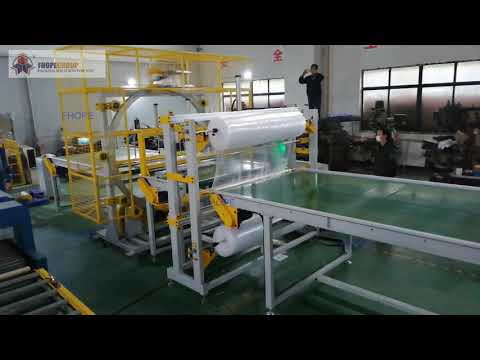
(Conceptual video showing automated packaging systems in manufacturing)
Benefits of Automated Hub-and-Spoke Dispensing
Implementing automated systems like the one pioneered at Warrington offers significant advantages for pharmacy operations and patient care:
- Enhanced Efficiency: Drastically reduces the time required for assembling complex multi-dose packages compared to manual methods.
- Improved Accuracy: Automation minimizes the risk of human error in medication selection and placement, enhancing patient safety.
- Optimized Workflow: Frees up valuable pharmacist and technician time at the community pharmacy level.
- Elevated Patient Care: Allows local pharmacy staff to focus on patient interaction, clinical services, and medication management support.
- Scalability: Centralized hubs can efficiently serve a large network of spoke pharmacies.
- Consistency: Ensures a standardized, high-quality packaging process.

coil wrapping machine www.fhopepack.com Conclusion: The Future of Pharmacy Fulfillment
The adoption of automated hub-and-spoke models represents a major step forward in optimizing pharmacy workflows. By leveraging robotic technology and sophisticated automation systems like those developed by CASI for the PHOENIX group's network, the industry can improve operational efficiency, enhance prescription accuracy, and ultimately empower pharmacists to play a more direct role in patient health outcomes. This shift towards centralized, automated assembly is critical for meeting the growing demands for safe and efficient medication delivery, particularly for patients managing multiple chronic conditions. Explore more about advanced automation solutions at Cornerstone Automation Systems (CASI) or learn about PHOENIX group's healthcare services here.