Green Manufacturing and Automated Packaging: Driving Sustainability in the Steel Industry
In today's industrial landscape, sustainability has transitioned from a niche concern to a core business imperative. Steel companies, traditionally associated with energy-intensive operations and significant carbon footprints, face increasing pressure to adopt environmentally responsible practices. A key area for transformation lies in integrating green manufacturing principles with advanced automated packaging solutions. This article explores how the steel industry is navigating these challenges and leveraging automation to achieve critical sustainability goals.
1. Understanding Green Manufacturing in Steel Production
The steel industry is a major contributor to global greenhouse gas emissions [External Link: e.g., World Steel Association CO2 data report]. However, this also signifies a substantial opportunity for impact reduction through green manufacturing. These practices focus on minimizing environmental harm by reducing waste, conserving resources like water and energy, and lowering emissions throughout the production lifecycle.
Core Principles of Green Manufacturing
In the context of steel production, green manufacturing involves several key strategies:
- Reducing Emissions: Transitioning to cleaner energy sources, such as hydrogen-based steelmaking or utilising renewable energy for plant operations. Implementing technologies like Direct Reduced Iron (DRI) with Electric Arc Furnaces (EAF) powered by green electricity is a growing trend.
- Water Conservation: Implementing advanced closed-loop water management systems to minimise water withdrawal and discharge.
- Waste Minimisation: Enhancing scrap recycling rates and finding ways to reuse by-products (like slag) in other industries, moving towards a circular economy model.
- Energy Efficiency Improvement: Investing in energy-efficient furnaces, motors, and process control systems, along with recovering waste heat for reuse within the plant.
Adopting these strategies helps steel companies reduce their environmental footprint and align with global climate objectives, such as those outlined in the Paris Agreement [External Link: e.g., UNFCCC Paris Agreement page].
The Role of Automated Packaging in Sustainable Steel Operations
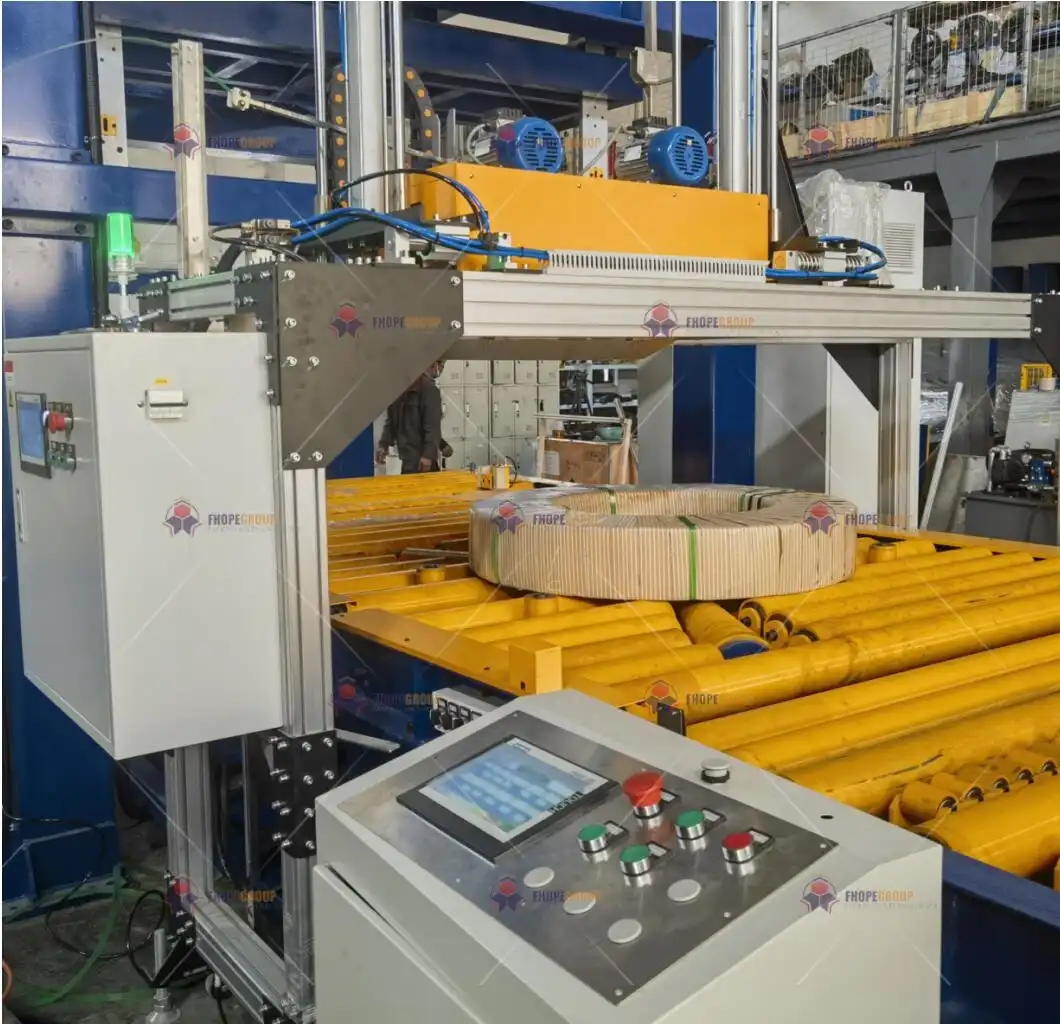
Automated packaging systems are instrumental in helping steel companies meet sustainability targets. Beyond mere efficiency gains, these systems actively contribute to environmental protection by optimising material use, reducing waste generation, and lowering the energy consumed during the packaging phase.
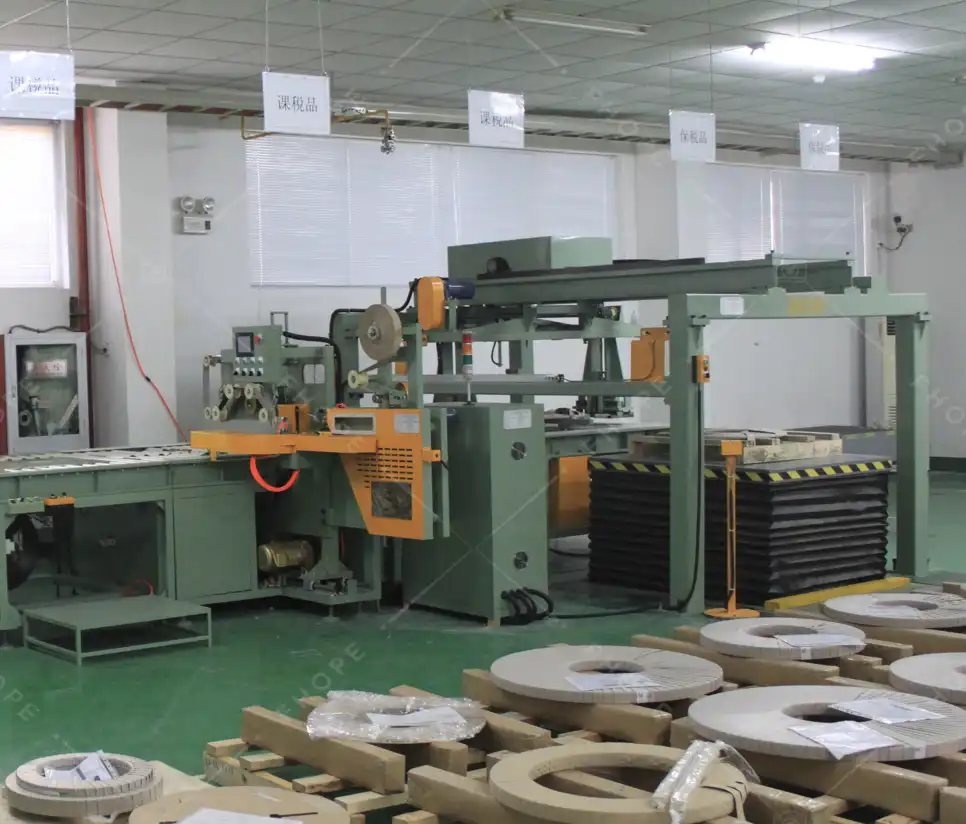
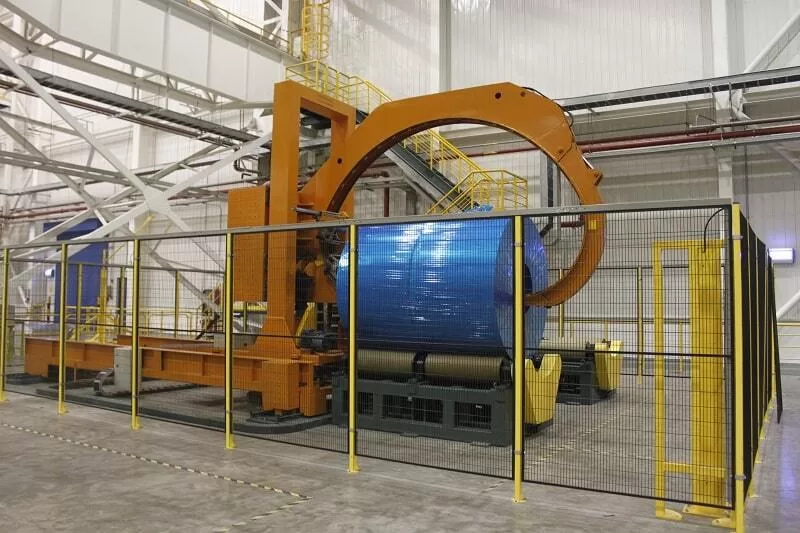
Automated packaging machines, such as those for wrapping and strapping steel coils or long products, minimise human error and ensure consistent application of packaging materials. This precision drastically cuts down on the overuse of resources like stretch film, VCI paper, or strapping bands. Accurate material dispensing means less waste, which is vital for manufacturers pursuing circular economy principles and waste reduction certifications. Furthermore, automation reduces the need for manual handling, improving workplace safety.
2. How Steel Companies Are Actively Embracing Sustainability
Forward-thinking steel companies are implementing sustainable practices across their operations, from melting and rolling to final product packaging. Here’s a closer look at how automation aids these efforts:

Integrating Renewable Energy
Many steel manufacturers are investing in renewable energy sources, like on-site solar farms or power purchase agreements (PPAs) for wind energy, to power their facilities. This shift significantly lowers Scope 2 emissions associated with electricity consumption. Powering automated packaging lines with renewable energy further decreases the carbon footprint of logistics operations and can lower operational expenditures.
Optimising Material Use in Packaging
Manual packaging processes often lead to inconsistent and excessive use of materials like plastic film, edge protectors, and strapping. Automated systems employ sensors and precise controls to apply only the necessary amount of material for secure and protective packaging. For example, automated stretch wrappers can pre-stretch film significantly, reducing the volume needed per package while maintaining load stability. This shift to precision automation directly cuts material costs and reduces the environmental impact associated with packaging material production and disposal.
Utilising Recyclable and Sustainable Packaging Materials
Sustainable steel companies are increasingly adopting eco-friendly packaging materials. This includes using films with recycled content, biodegradable VCI paper, or switching from steel strapping to PET strapping (which is often made from recycled materials and is itself recyclable). Modern automated packaging systems are designed to handle these newer, sustainable materials effectively, allowing companies to make environmentally conscious choices without sacrificing packaging performance or line speed.
For instance, automated systems can tension PET straps precisely or apply thinner gauge, eco-friendly stretch films reliably, ensuring product integrity during transport while minimising reliance on virgin plastics or energy-intensive steel strapping.
3. Tangible Benefits of Automated Packaging for Green Manufacturing
Integrating automated packaging within a green manufacturing framework yields substantial benefits that enhance both operational performance and environmental stewardship.
Lower Energy Consumption
Modern automated packaging equipment is often designed with energy efficiency in mind. Features like variable speed drives, servo motors, and automatic sleep modes reduce power consumption compared to older machinery or energy-intensive manual processes. Optimised machine cycles ensure energy is used only when necessary, contributing to lower operational costs and a reduced carbon footprint per unit packaged.
Precision Material Usage and Waste Reduction
Automated lines excel at precise material application. Whether it's stretch film, VCI paper, or strapping, automation ensures consistency and eliminates the guesswork that leads to material overuse in manual operations. This conservation of resources directly reduces waste and lowers procurement costs. Furthermore, consistent packaging quality minimises product damage during transit, reducing the environmental and economic costs associated with returns or replacements.
Reduced Carbon Footprint
By consuming less energy and using fewer packaging materials (especially virgin plastics or metals), automated packaging directly contributes to lowering a steel company’s overall carbon footprint. When combined with the use of recycled-content or bio-based materials, the environmental benefits are amplified. Some advanced systems even offer energy monitoring dashboards, allowing companies to track and manage consumption proactively.
Increased Operational Efficiency and Safety
Automation streamlines the packaging process, leading to higher throughput, reduced labour requirements for repetitive tasks, and minimal downtime. These efficiency gains result in significant cost savings. Furthermore, automating physically demanding or potentially hazardous tasks like manual strapping or heavy lifting improves workplace ergonomics and safety, contributing to overall operational excellence.
4. Industry Example: Green Packaging in Action
Leading steel manufacturers globally are demonstrating the successful integration of automated packaging into their sustainability strategies. For instance, companies like ArcelorMittal have publicly committed to carbon neutrality goals [External Link: e.g., ArcelorMittal Climate Action Report page] and often highlight investments in process efficiency, which includes optimizing logistics and packaging.
While specific case study data varies, industry reports often show that implementing automated coil wrapping and strapping systems can lead to significant material savings, potentially ranging from 15% to 30% in film or strap usage compared to manual methods. Similarly, energy savings from modern, efficient automated lines can contribute noticeably to reducing overall plant energy intensity, often cited as reductions of 10-20% for the packaging stage itself. These improvements deliver dual benefits: cost reduction and measurable progress towards environmental targets.

5. Future Outlook: Sustainable Packaging and Automation Trends
The convergence of green manufacturing and automated packaging in the steel industry is set to accelerate, driven by technological innovation and market demands.
AI and Smart Automation
Artificial intelligence (AI) and machine learning will enable smarter automation. Predictive maintenance algorithms will minimise downtime, while AI-driven process optimisation could adjust packaging parameters in real-time based on product dimensions and transport requirements, further minimising material use and energy consumption without compromising protection.
Integration of IoT and Data Analytics
The Internet of Things (IoT) will connect packaging machinery, allowing for real-time monitoring of material consumption, energy usage, and operational efficiency. This data can be analysed to identify bottlenecks, optimise resource allocation, and provide transparent reporting for sustainability audits and stakeholder communications [External Link: e.g., Article on IoT in Manufacturing/Logistics].
Advanced Sustainable Materials
Innovation in materials science will likely yield even more eco-friendly packaging options. We can expect wider adoption of high-performance films with higher recycled content, bio-based polymers, and potentially novel paper-based solutions suitable for demanding industrial applications. Automated systems will need to adapt to handle these new materials effectively.
6. Conclusion: Automation as a Key Enabler for Sustainable Steel
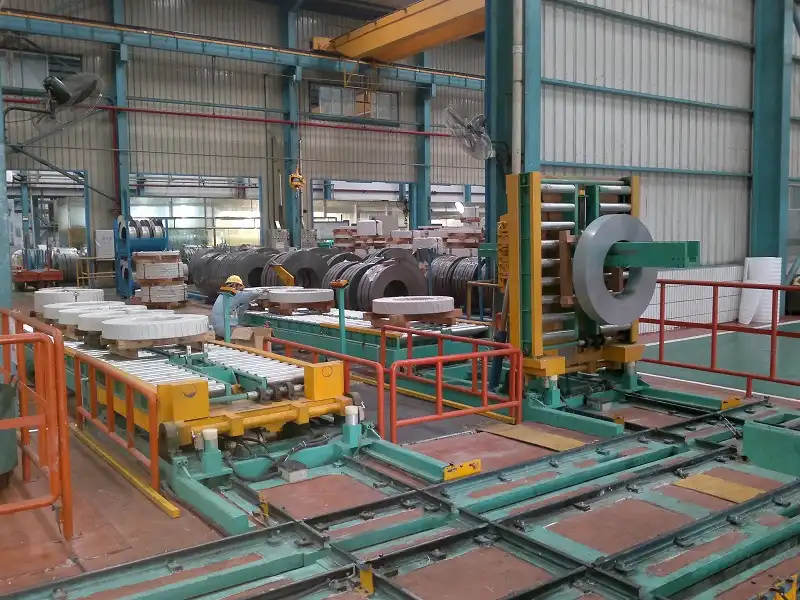
As global pressure mounts for industries to decarbonise and operate more sustainably, the steel sector is actively seeking solutions. Green manufacturing principles combined with advanced automated packaging systems offer a powerful pathway forward. These technologies enable steel companies to significantly reduce emissions, minimise waste, conserve resources, and improve operational efficiency.
By embracing automated packaging, steel manufacturers not only meet their environmental obligations and enhance their brand reputation but also unlock tangible cost savings and operational benefits. Investing in these solutions is no longer just an option but a strategic necessity for steel companies aiming to thrive in an increasingly eco-conscious global market and contribute positively to a greener future.
Get Your Best Solution !