Enhancing Efficiency and Protection: How Automated Wrapping Machines Revolutionize Rubber Hose Packaging
The global demand for rubber hoses across diverse sectors like automotive, industrial, and consumer goods is continuously growing. This expansion places significant pressure on manufacturers to optimize production, ensure product integrity, and maintain competitiveness. Automated wrapping machines have emerged as a critical solution, offering substantial improvements in efficiency, consistency, and protection for coiled rubber hoses. This article explores the pivotal role these machines play in addressing the modern challenges of the rubber hose industry.
1. Understanding Rubber Hose Market Dynamics
1.1. Industry Landscape and Demands
The rubber hose industry is integral to numerous applications, requiring products that meet stringent performance and durability standards. Key market drivers include infrastructure development, automotive production, and industrial automation. Manufacturers face the ongoing challenge of increasing throughput and product quality while managing costs and adhering to evolving environmental regulations.
1.2. Key Production Challenges
Manual or semi-automated packaging processes often struggle to keep pace with high-volume production. Common challenges include:
- Maintaining consistent wrapping quality and tension.
- Minimizing material waste during packaging.
- Ensuring adequate protection against handling damage, contaminants, and environmental factors (e.g., UV light, moisture).
- Reducing labor-intensive tasks and associated costs.
- Meeting tight delivery schedules in a competitive market.
2. The Role of Automated Hose Wrapping Machines
2.1. Defining Automated Wrapping Technology
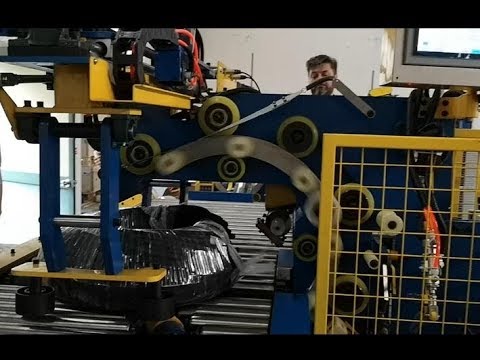
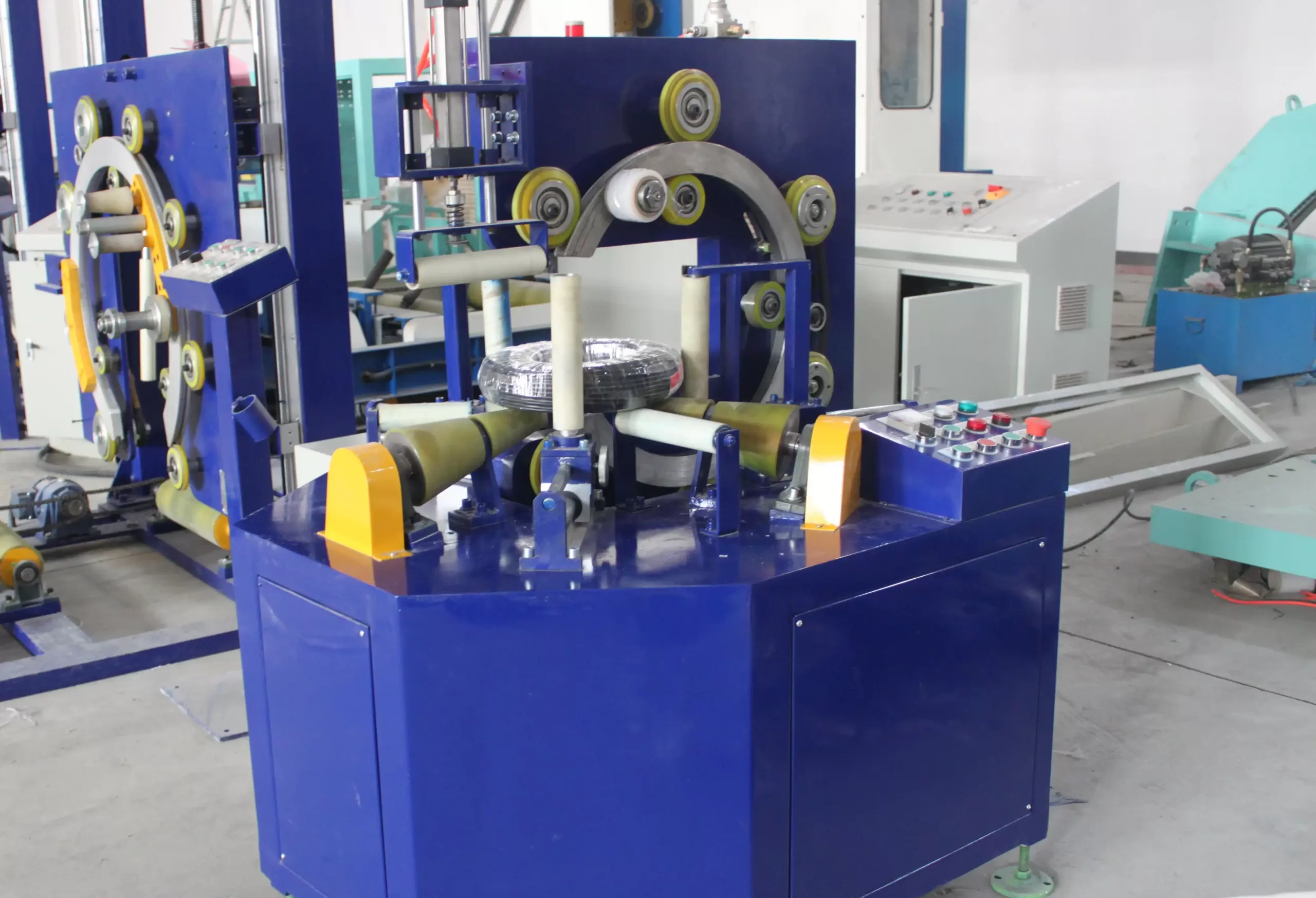
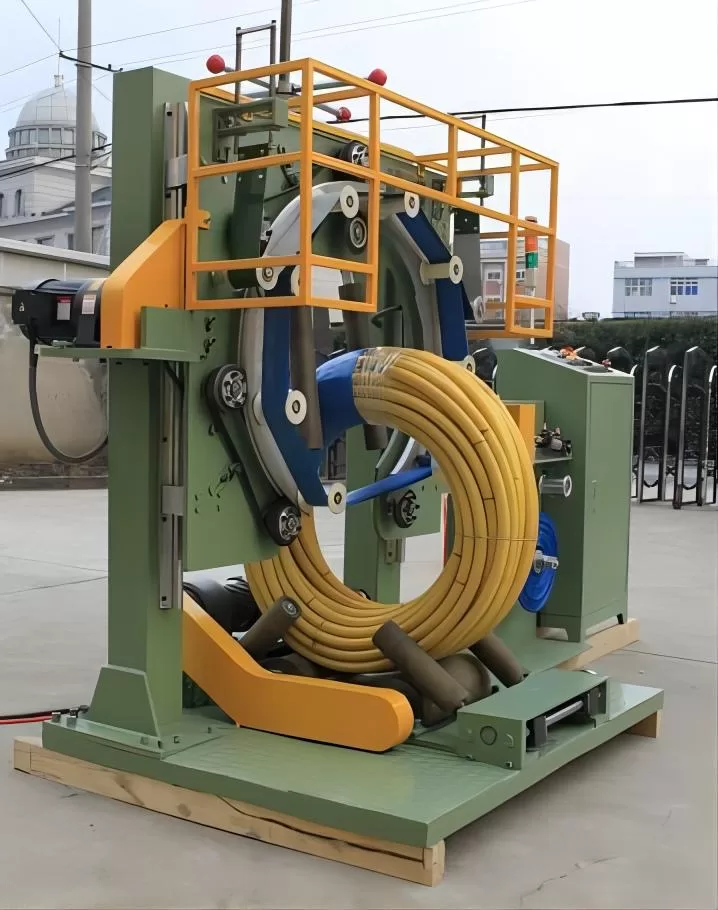
Automated wrapping machines, specifically hose coil wrapping machines, are engineered systems designed to apply protective materials (like stretch film, VCI paper, or crepe paper) around coiled rubber hoses efficiently and uniformly. These machines automate the wrapping process, significantly reducing manual intervention. An example of such technology can be seen in dedicated automatic rubber hose coil packing machine systems designed for this purpose.
2.2. Key Features and Capabilities
Modern automated hose wrappers offer a range of advanced features:
- Programmable Logic Controllers (PLCs): Allow for easy setup, adjustment of wrapping parameters (e.g., overlap rate, tension), and storage of multiple wrapping programs for different hose dimensions.
- Variable Speed Control: Adjusts ring speed and conveyor speed for optimal wrapping based on coil size and material.
- Automatic Film Clamping, Cutting, and Wiping: Streamlines the start and end of the wrapping cycle, minimizing operator input.
- Adjustable Film Tension Control: Ensures consistent, secure wrapping without damaging the hose.
- Safety Features: Integrated guarding, light curtains, and emergency stops ensure operator safety.
- Material Compatibility: Capable of handling various wrapping materials to meet specific protection requirements.
- Integration Options: Can be integrated into fully automated production lines with conveyors and robotic handling systems.
3. Core Benefits of Automation in Hose Packaging
3.1. Significantly Increased Efficiency
Automation dramatically accelerates the wrapping process compared to manual methods. This boost in throughput enables manufacturers to handle larger order volumes, reduce production bottlenecks, and improve overall operational efficiency. Faster cycle times translate directly to increased output capacity.
3.2. Unmatched Consistency and Quality Assurance
Automated systems apply wrapping materials with precise tension and overlap every time. This uniformity eliminates the variability inherent in manual wrapping, ensuring every hose coil receives the same level of protection and professional appearance, enhancing brand perception and reducing rejected shipments due to poor packaging.
3.3. Optimized Labor Utilization and Cost Reduction
By automating the repetitive task of wrapping, companies can reallocate labor resources to more complex or value-added activities. This leads to reduced direct labor costs associated with packaging and can improve overall workforce productivity and job satisfaction by eliminating monotonous tasks.
3.4. Enhanced Workplace Safety
Automating the wrapping process reduces the need for manual handling of large or heavy hose coils and interaction with rotating machinery, thereby minimizing the risk of workplace injuries associated with manual packaging operations.

4. Superior Product Protection with Automated Wrapping
4.1. Minimizing Transit and Storage Damage
Securely wrapped hose coils are far less susceptible to damage during handling, transportation, and storage. The protective layer applied by the machine shields the hose from:
- Abrasion, scratches, and impacts.
- Dirt, dust, and moisture contamination.
- Potential degradation from UV exposure (if using appropriate UV-resistant film).
4.2. Improved Load Stability and Handling
Consistent wrapping creates stable, unitized coils that are easier and safer to handle, stack, and transport. Proper containment prevents coils from unwinding or shifting, maintaining the integrity of the product from the factory floor to the end-user.
5. Leveraging Smart Technology and Connectivity
5.1. Real-Time Monitoring and Control
Many modern wrapping machines incorporate sensors and connectivity features (IIoT integration) that allow for real-time monitoring of operational parameters, material consumption, and machine status. This data enables operators to optimize performance and quickly identify potential issues.
5.2. Predictive Maintenance Capabilities
By analyzing operational data, smart machines can predict potential component failures or maintenance requirements. This proactive approach minimizes unexpected downtime, reduces maintenance costs, and ensures continuous, reliable operation, aligning with Industry 4.0 principles.
6. Environmental Responsibility in Packaging
6.1. Optimized Use of Sustainable Materials
Automated wrappers often feature precise control over film stretch and application, minimizing material consumption compared to manual methods. Furthermore, these machines can be adapted to use more sustainable packaging materials, such as films with recycled content or biodegradable options, helping companies meet environmental goals and consumer expectations.
6.2. Energy-Efficient Designs
Manufacturers are increasingly focusing on energy efficiency in machine design. Modern automated wrappers often incorporate energy-saving motors, drives, and operational modes, reducing the overall carbon footprint and lowering operational costs.
7. Key Industry Applications
7.1. Automotive Sector
Rubber hoses are vital components in vehicles (fuel lines, coolant hoses, hydraulic lines). Automated wrapping ensures these critical parts are protected to meet the high quality and reliability standards demanded by automotive OEMs.
7.2. Industrial and Hydraulic Systems
Industrial hoses often operate under demanding conditions (high pressure, abrasive materials). Robust, consistent packaging provided by automated wrappers ensures these hoses arrive at the installation site in perfect condition, ready for reliable service.
7.3. Construction and Agriculture
Hoses used in construction and agricultural equipment require durable packaging to withstand rough handling and outdoor storage conditions. Automated wrapping provides the necessary protection.
7.4. Household and Consumer Goods
For products like garden hoses, consistent and neat packaging enhances shelf appeal and protects the product until it reaches the consumer. Automated wrapping delivers a professional finish.
8. Illustrative Scenarios
8.1. Scenario: High-Volume Automotive Hose Supplier
An automotive supplier facing increasing order volumes implemented a fully automated hose coil wrapping line. Result: They achieved a 50% increase in packaging throughput, reduced packaging labor by 60%, and virtually eliminated shipping damage claims related to packaging failures, significantly improving delivery times and customer satisfaction.
8.2. Scenario: Industrial Hose Manufacturer Focused on Quality
A manufacturer of specialized hydraulic hoses adopted an automated wrapping system with precise tension control. Result: They saw a marked improvement in package consistency and a 20% reduction in stretch film usage due to optimized application. This enhanced product protection and supported their sustainability initiatives.
9. Future Directions in Automated Hose Wrapping
9.1. AI-Driven Optimization
Artificial intelligence will likely play a greater role in optimizing wrapping parameters in real-time based on coil dimensions and material characteristics, further enhancing efficiency and material savings.
9.2. Robotics Integration
Increased integration with robotic systems for coil handling, loading, and unloading will further automate the entire packaging process, creating highly efficient end-of-line solutions.
9.3. Enhanced Customization and Flexibility
Machines will offer even greater flexibility to handle a wider range of coil sizes, weights, and wrapping material types with minimal changeover time, catering to the trend of mass customization.
9.4. Continued Focus on Sustainability
Innovation will continue in developing machines that use less energy and are compatible with next-generation eco-friendly packaging materials, driven by regulations and corporate responsibility goals. For more on wrapping techniques, consider researching resources on stretch wrapping technology.
Conclusion
Automated rubber hose coil wrapping machines represent a fundamental technological advancement for manufacturers in the rubber hose industry. By delivering significant improvements in efficiency, packaging consistency, product protection, and operational cost savings, these systems are indispensable for meeting current market demands and achieving operational excellence. As technology evolves, particularly with advancements in smart features and sustainability, investing in modern automated wrapping solutions is not just an operational upgrade but a strategic necessity for maintaining competitiveness and ensuring long-term growth in the dynamic global marketplace.