Automated Packaging Solutions for XPS Insulation Boards
Extruded Polystyrene (XPS) insulation boards are widely used in construction due to their excellent thermal resistance, moisture resistance, and compressive strength. However, these properties also mean the boards require careful handling and packaging to prevent damage and maintain their integrity during transport and storage. This article provides an overview of automated packaging systems designed specifically for XPS boards, focusing on key machinery and features.
Why Specialized Packaging for XPS Boards?
XPS foam is relatively rigid but can be susceptible to surface damage, chipping, or cracking if not handled properly. Furthermore, maintaining its dimensional stability and protecting its surface is crucial for optimal installation and performance. Effective packaging solutions address several key concerns:
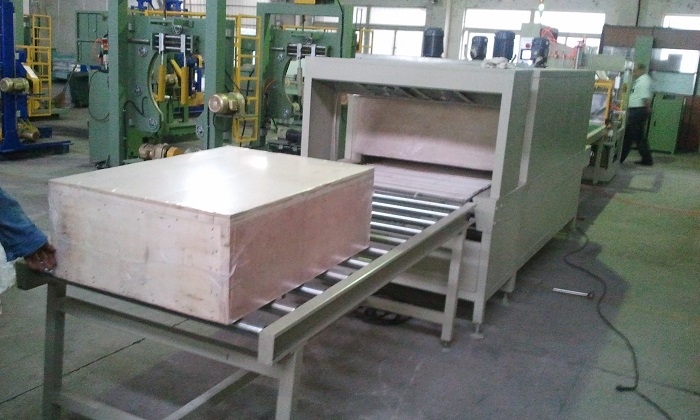
- Protection from Physical Damage: Shielding edges and surfaces from impacts and abrasions.
- Maintaining Insulation Value: Preventing compression or damage that could compromise thermal resistance (R-value).
- Environmental Protection: Guarding against UV exposure, excessive moisture, and contaminants.
- Handling Efficiency: Bundling boards securely for easier and safer logistical operations.
Automated packaging lines offer consistent and reliable methods to meet these requirements.
Key Machinery in XPS Packaging Lines
A typical automated packaging line for XPS boards may incorporate several specialized machines working in sequence:
XPS Board Packing Machines
These form the core of the system, designed to handle the specific dimensions and characteristics of XPS boards. They often serve as the integration point for other modules like shrinking, stacking, or bagging units.
Shrinking Machines
Heat shrink wrapping is a common method for packaging XPS boards.
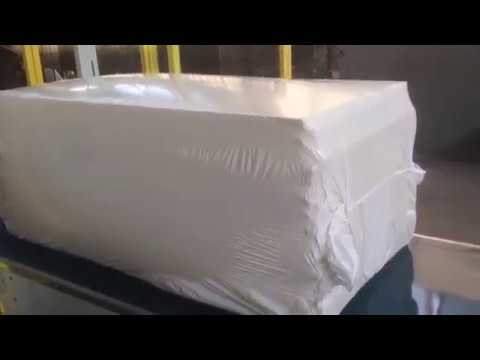
(Video: Example of an XPS board packing and shrinking process)
A shrinking machine typically uses a heat tunnel to apply polyethylene (PE) film tightly around a single board or a stack. This process offers several benefits:
- Unit Stability: Securely holds boards together, preventing shifting.
- Moisture Barrier: Provides a degree of protection against water ingress.
- Surface Protection: Shields the boards from scuffs and dirt.
Certain advanced shrinking systems may incorporate features like thermal baffles.
Stacking Machines
Automated stacking systems precisely place XPS boards one on top of another to create stable, uniform stacks. This improves efficiency compared to manual stacking, ensures consistent stack heights for warehousing and transport, and reduces the risk of product damage from mishandling.
Bagging Machines
As an alternative or supplement to shrink wrapping, bagging machines can encase boards or stacks in pre-made or continuously formed bags. This can offer enhanced protection, particularly for branding or when specific environmental barriers are needed.
Core Features and Considerations
When evaluating automated XPS packaging systems, several features are important:
Automation and Control (PLC)
Modern packaging lines rely heavily on Programmable Logic Controllers (PLC) for precise control over machine sequencing, speed, temperature (in shrinking), and integration between different modules. PLCs enable:
- Consistent and repeatable packaging cycles.
- Easy adjustment of parameters for different board sizes or packaging requirements.
- Reduced need for manual operator intervention, improving safety and efficiency.
Handling Capabilities (Size/Dimensions)
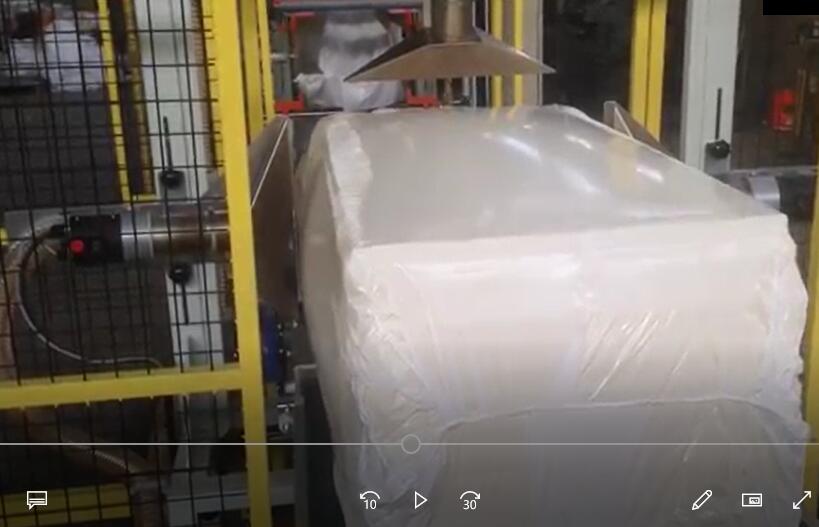
Machines must be specified to handle the range of XPS board dimensions required. Systems are available that can process very large boards; for example, handling sizes up to L6m x W1.4m x H1.4m is achievable with robustly designed equipment.
(Image: An automated line designed for packing large XPS insulation boards)
The Role of Thermal Baffles
In shrink wrapping systems, a thermal baffle is a specialized component sometimes included within the heat tunnel. Its purpose is to help regulate the heat applied to the shrink film, particularly around the XPS board itself. This precise temperature control aims to:
- Ensure optimal film shrinkage for a tight, secure wrap.
- Prevent excessive heat exposure to the XPS board surface, which could potentially cause minor warping or affect the material's integrity, especially crucial for maintaining consistent insulation performance.
- Contribute to energy efficiency within the shrinking process.
Integration and Customization
Automated XPS packaging systems are often modular, allowing fabricators to select and integrate the specific machines (stacking, shrinking, bagging) needed for their operation. Manufacturers can typically work with clients to provide customized solutions tailored to specific board sizes, line speeds, layout constraints, and packaging requirements.
Benefits of Automated XPS Packaging
Investing in automated packaging systems for XPS boards offers significant advantages:
- Enhanced Product Protection: Minimizes damage during handling, storage, and transit.
- Increased Operational Efficiency: Higher throughput compared to manual methods.
- Reduced Labor Costs: Frees up personnel for other tasks.
- Improved Safety: Reduces risks associated with manual lifting and handling of large boards.
- Consistent Package Quality: Ensures every board or bundle is packaged to the same standard.
Conclusion
Proper packaging is essential for preserving the quality and performance of XPS insulation boards. Automated packaging lines, incorporating machinery such as specialized packers, shrink wrappers (potentially with thermal baffles), stackers, and baggers, offer efficient, reliable, and protective solutions. By leveraging PLC control and customizable configurations, these systems help ensure that XPS boards reach their destination in optimal condition, ready for installation. Evaluating the specific needs regarding board dimensions, desired level of protection, and throughput is key to selecting the right automated system.