Why Automatic Steel Coil Palletizing is Safer Than Manual Handling
Efficient and safe material handling is the backbone of modern steel processing. For operations dealing with heavy steel coils, the transition from manual labor to automatic steel coil palletizing is no longer just an upgrade—it's a critical safety mandate.

1. Technical Safety Comparison: Automatic vs. Manual
Based on industry technical protocols and project feedback, the following table illustrates why automation is the superior choice for risk mitigation in heavy industrial environments.
| Safety Dimension | Manual/Semi-Auto Palletizing (Risks) | Automatic Palletizing System (Safety Advantages) | Key Technical Parameters / Reference |
|---|---|---|---|
| Heavy Object Handling | Relies on manual cranes, hooks, or forklifts; high risk of coil slippage. | Uses vacuum suckers or permanent magnets with extreme gripping power. | Load: 30kg - 25,000kg; Magnetic force up to 11 Tons. |
| Precision & Collision | Human alignment has low accuracy; prone to tipping pallets or impact damage. | Encoders and sensors assist in positioning; Gantry structures ensure smooth movement. | Stacking accuracy: ± 2 mm. |
| Personnel Exposure | Operators must physically enter the zone to adjust coils or place timber. | Safety fences and light curtains isolate the zone; no human presence required. | Complies with EU/CE standards. |
| Power/Air Failure | Suspended coils may fall immediately if power or air is lost. | Permanent magnet technology maintains grip during power loss. | Permanent Magnet Stacker (Fail-safe). |
| Auxiliary Task Safety | Hand injuries are frequent when manually placing timber spacers. | Optional Automatic Timber Feeders or "Confirm OK" interlocks ensure operator safety. | Automatic Timber Inserter logic. |
| System Monitoring | Relies on human observation; slow reaction to mechanical failures. | PLC self-diagnostics monitor all stations; instant auto-stop and error reporting. | Siemens S7-1500F (Fail-safe) PLC. |
2. Core Safety Advantages Explained
🛡️ Physical Isolation (Fencing & Interlocks)
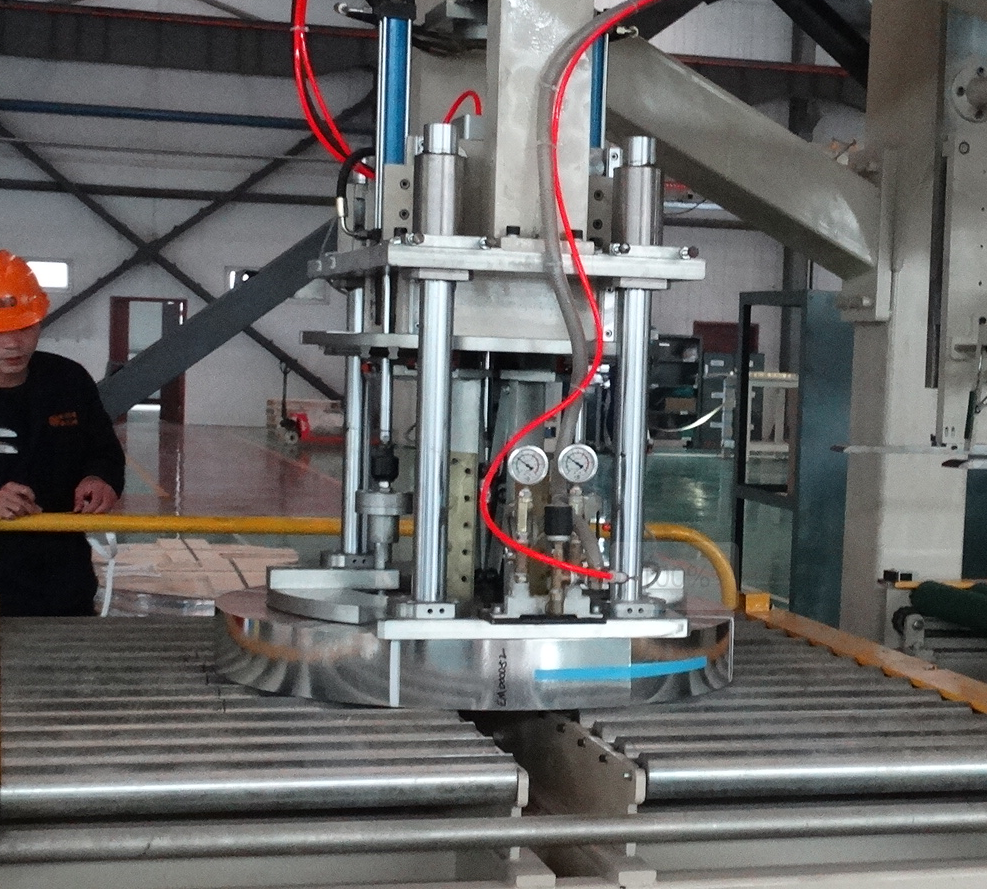
The automated line completely encloses high-risk zones with safety guards. Following strict project specifications, any unauthorized entry into the sensing zone triggers a light curtain alarm, resulting in an instantaneous system-wide shutdown.
🛡️ Failsafe Magnetic Handling
For heavy master coils, we utilize Permanent Magnets. Unlike standard electromagnets, these do not lose their grip during a factory-wide power outage, ensuring the coil remains securely attached to the lifter until power is restored and a release command is given.
🛡️ Prevention of Occupational Strain
The system automates the flipping (upending) of coils from eye-to-side to eye-to-sky orientation. This eliminates the severe risk of musculoskeletal injuries associated with moving heavy loads (up to 6,500 kg or more) manually.
🛡️ Operational Verification
Following best practices, the line includes a manual "Confirm OK" button at timber-placement stations. Even though stacking is automatic, the system requires physical human confirmation that protection materials are in place before resuming the cycle.
3. Key Technologies in Automated Coil Palletizing
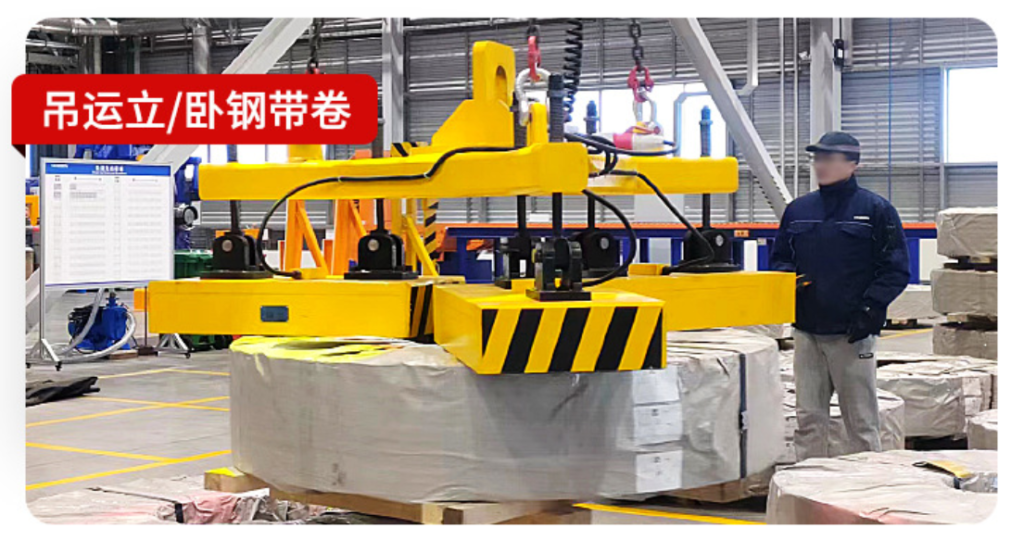
3.1 Mechanical Fork Type
- Best For: Heavy-duty coils up to 10 tons.
- Feature: Robust fork arms with center expanding mandrels for stable ID gripping.
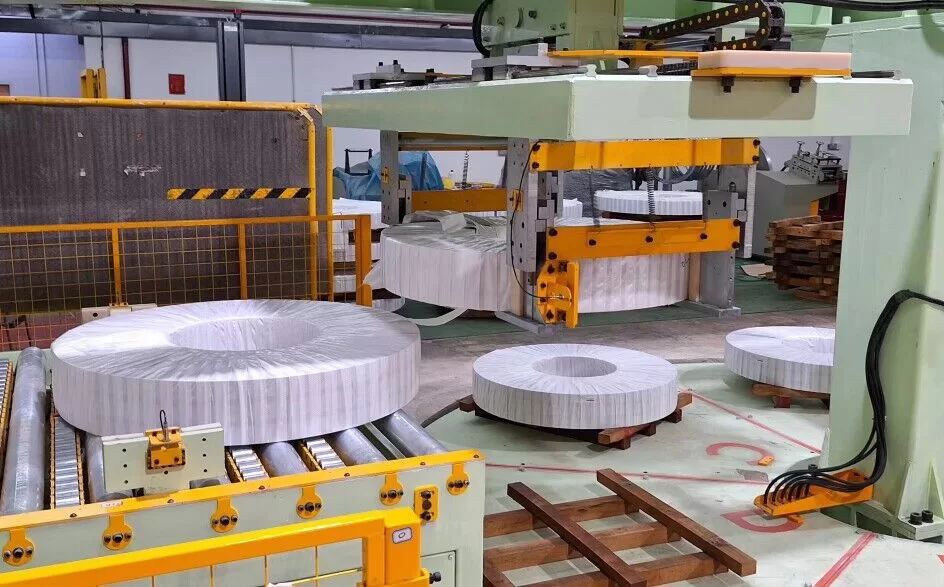
3.2 Robotic Stacking Systems
- Best For: High flexibility and complex patterns.
- Feature: High degree of automation, adaptability to changing needs, and enhanced safety by minimizing human interaction in the stacking zone.

Conclusion
The shift to automatic steel coil palletizing is a strategic investment in your most valuable asset: your workforce. By eliminating ergonomic risks and removing workers from hazardous zones, businesses achieve a safer, more productive, and more consistent packaging workflow.
Ready to optimize your plant safety and efficiency? Contact FHOPEPACK today for a customized technical proposal.