Enhancing Injection Mold Handling: The Role of Mold Upenders in Modern Manufacturing
1. Introduction: The Challenge of Modern Mold Handling
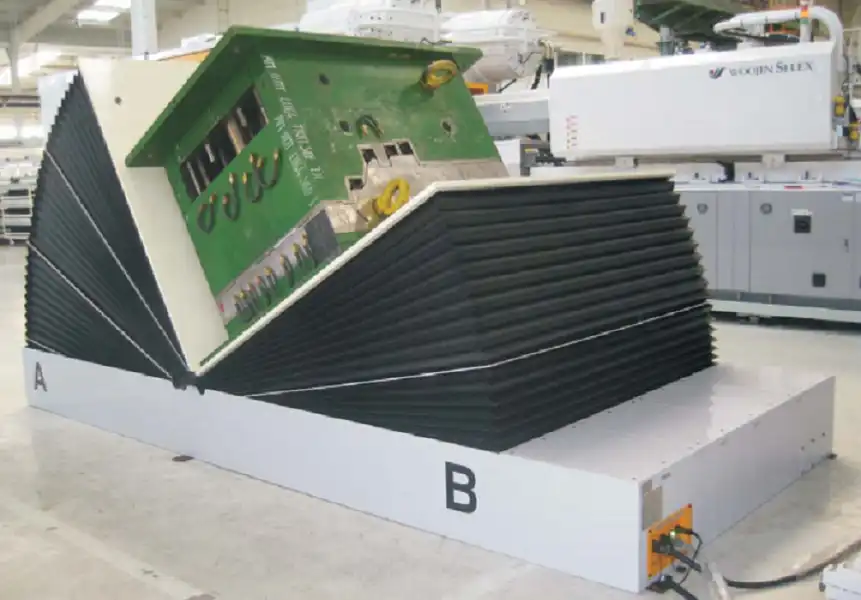
In dynamic manufacturing hubs like Mexico City, plastic part manufacturers constantly seek ways to improve efficiency, safety, and quality. A significant operational challenge lies in the handling of heavy injection molds. These critical tools, often weighing several tons, are fundamental to producing diverse plastic components, from automotive parts to consumer electronics. However, the traditional methods used for opening, cleaning, and maintaining these molds present considerable risks and inefficiencies.
Conventional mold handling often involves manual labor combined with basic equipment like forklifts and cranes. These methods can be slow, cumbersome, and pose safety hazards. As the plastics industry evolves, demanding faster cycle times and stricter quality standards, the need for advanced solutions for mold manipulation becomes increasingly critical. The hydraulic mold upender represents a significant technological advancement, designed to streamline mold maintenance and address the inherent challenges of traditional handling methods. This article explores the functionality and benefits of mold upenders in the context of modern plastic manufacturing.
2. Identifying the Problem: Inefficiencies in Traditional Mold Handling
Plastic part manufacturers utilizing traditional mold handling techniques face several persistent operational issues:
- Safety Risks and Manual Labor: Manually maneuvering multi-ton molds exposes workers to significant risks of crush injuries, strains, and other accidents. This reliance on manual effort is a primary safety concern in many facilities.
- Extended Downtime: Using forklifts or cranes to lift, rotate, and position molds for maintenance is inherently time-consuming. Each mold changeover or cleaning cycle contributes to non-productive downtime, directly impacting overall equipment effectiveness (OEE).
- Inconsistent Maintenance Quality: Manual cleaning and maintenance can lead to variability. Achieving thorough cleaning, especially within complex mold geometries, is difficult without stable positioning and complete access, potentially leading to part defects.
- Risk of Mold Damage: Accidental drops, impacts, or improper handling during manual manipulation can cause significant damage to expensive, precision-engineered molds, leading to costly repairs and production delays.
- Ergonomic Challenges: The physical strain involved in wrestling with heavy molds contributes to worker fatigue and potential long-term musculoskeletal issues.
- Process Bottlenecks: Mold handling and maintenance frequently become bottlenecks in the production workflow, limiting the overall throughput of the injection molding process.
mold flipper table manufacturer3 3. The Solution: Tailored Mold Upender Systems
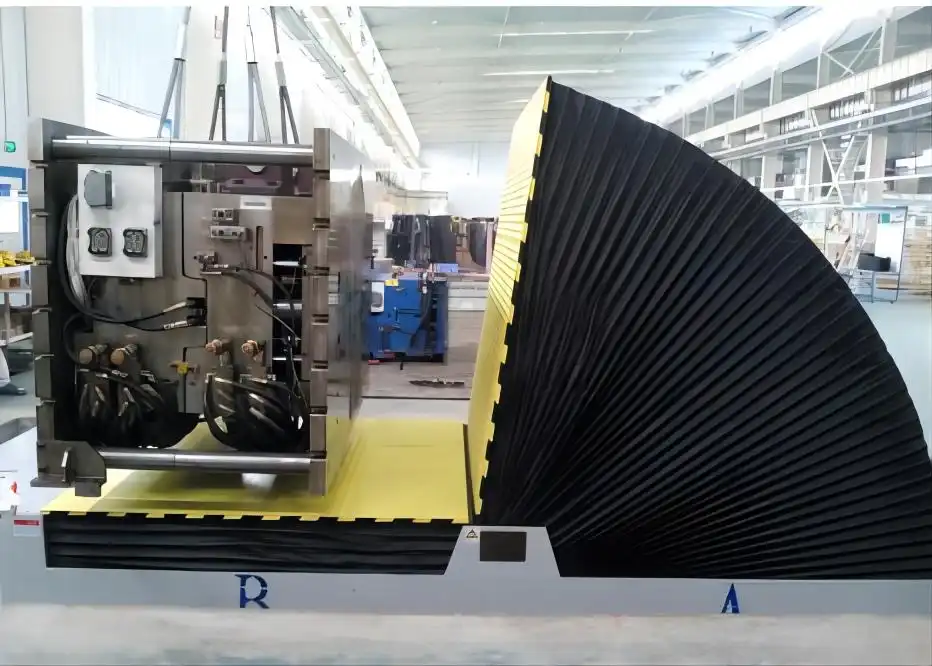
The mold upender provides a direct and effective solution to the aforementioned challenges by automating the rotation process and providing a secure, accessible platform for maintenance tasks. Customization is key to maximizing the benefits of this technology.
Example Specification Parameters:
- Maximum Mold Dimensions: Length 1500mm x Width 1500mm x Height 1500mm
- Rotation Capability: 180-degree turning
- Configuration: Two opposing working tables (dual-table system)
- Drive System: Hydraulic power unit
Key Customization Aspects:
- Capacity and Size: Mold upenders can be engineered to handle specific ranges of mold weights and dimensions, ensuring compatibility with a facility's tooling inventory.
- Rotation Angle: While 90 or 180 degrees are common, specific rotation requirements can often be accommodated.
- Control System: Integration with existing plant control systems or specific operational sequences can be customized.
- Working Table Surface: Table materials and finishes (e.g., non-marking surfaces) can be specified based on mold requirements.
- Safety Features: Enhanced guarding, light curtains, or specific interlocking mechanisms can be incorporated based on site safety assessments.
A customized mold upender, like the example specified, allows manufacturers to handle a significant range of mold sizes efficiently. The 180-degree rotation ensures comprehensive access for cleaning, inspection, and repair. Dual working tables enable a continuous workflow: one mold can undergo maintenance while another is being loaded or unloaded, minimizing idle time. Utilizing a robust hydraulic system, often designed with a significant power reserve (e.g., 2x safety factor), ensures smooth, controlled, and safe rotation even at maximum load capacity.
Industry Applications:
- Automotive Manufacturing: Facilitates rapid mold changes and consistent maintenance required for high-volume, precision component production.
- Consumer Goods: Enables faster changeovers between diverse molds, supporting flexible manufacturing schedules for varied product lines.
- Medical Device Sector: Ensures thorough, repeatable cleaning processes critical for meeting stringent hygiene and quality standards.
- Industrial Components: Safely handles large, heavy molds used for producing robust industrial parts, reducing injury risks and equipment damage.
4. Key Features and Operational Benefits of Mold Upenders
Key Features:
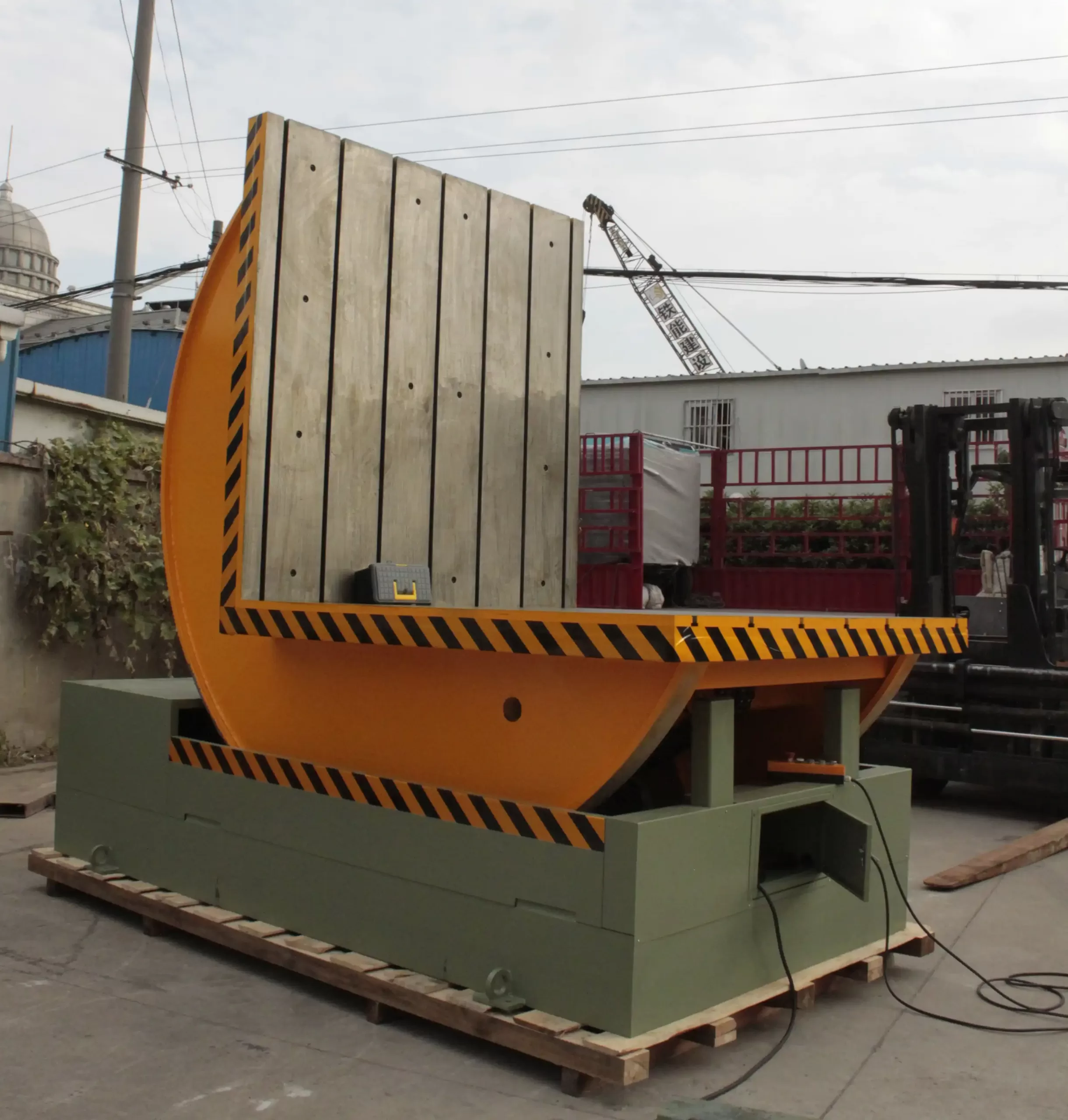
- Controlled Hydraulic Rotation: Provides smooth, precise rotation (e.g., 90 or 180 degrees) for optimal mold access.
- Dual Working Tables (Optional): Allows for parallel processing – maintenance on one mold while preparing the next – significantly reducing overall cycle time.
- Heavy-Duty Construction: Built with robust materials and structural integrity, often including substantial safety factors, to handle heavy loads reliably.
- Precision Positioning: Advanced control systems enable accurate stopping and holding at any point during rotation.
- Integrated Safety Systems: Features like emergency stops, safety interlocks, and physical guarding are standard to protect operators.
- Durable Drive Mechanism: Hydraulic systems are known for their power and reliability in demanding industrial environments.
Operational Benefits:
- Significant Time Savings: Dramatically reduces mold rotation and positioning time compared to manual or crane-based methods, potentially cutting maintenance downtime by 50% or more.
- Enhanced Worker Safety: Virtually eliminates the manual handling risks associated with heavy molds, leading to fewer accidents and injuries.
- Improved Maintenance Quality: Stable positioning and full access enable more thorough and consistent cleaning and inspection, contributing to better part quality and reduced defect rates.
- Reduced Mold Damage: Controlled, automated movement minimizes the risk of accidental impacts or drops, protecting valuable tooling assets.
- Increased Productivity: Less downtime for mold maintenance translates directly to increased production uptime and overall output.
- Optimized Labor Allocation: Frees up personnel previously engaged in cumbersome manual handling for more value-added tasks.
- Potential Environmental Gains: More efficient cleaning protocols facilitated by the upender can lead to reduced consumption of cleaning agents and water.
5. Case Study: Improving Operations with a Mold Upender
Consider a mid-sized automotive component supplier in Mexico City that faced challenges with mold maintenance efficiency and safety. Their process involved using overhead cranes and manual assistance, resulting in lengthy changeovers and occasional minor mold damage.

- Average mold cleaning/maintenance cycle time: 2.5 hours per mold.
- Required personnel: 3-4 workers for safe handling.
- Reported incidents: Minor mold scuffs and near-miss safety events during rotation.
- Production bottleneck: Mold changes frequently delayed production starts.
Results After Implementing a Custom Mold Upender:
- Efficiency Gains: Mold handling and cleaning time reduced to under 1 hour per cycle (a 60% reduction).
- Labor Optimization: Required personnel reduced to 1-2 operators for supervision and cleaning.
- Safety Improvement: Elimination of manual rotation tasks significantly reduced injury risks. No mold damage incidents reported in the first year of operation.
- Increased Throughput: Reduced downtime allowed for approximately 1-2 additional hours of production per day.
The plant manager commented, "The mold upender was a significant investment, but the ROI was clear within the first year. Our maintenance workflow is faster, much safer, and the consistency has even improved our part quality by reducing issues related to mold contamination. It addressed a major bottleneck on our shop floor." This example highlights the tangible benefits achievable through adopting automated mold handling technology.
6. Visual Demonstration
Observing a mold upender in operation provides the clearest understanding of its function and benefits. The following video demonstrates key aspects:
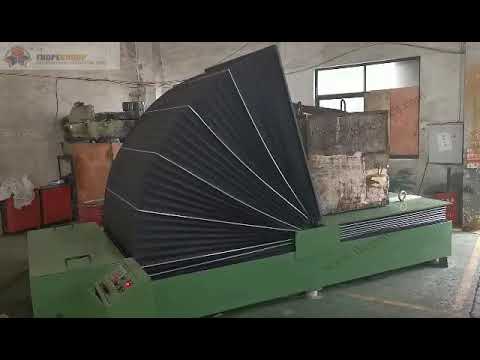
This demonstration typically showcases:
- The controlled 180-degree rotation of a representative injection mold.
- Operation of the dual-table system, illustrating workflow efficiency.
- The user interface and control precision.
- The stability of the platform during maintenance tasks.
- Safety features in action.
Visual aids effectively convey the scale, operational smoothness, and accessibility improvements offered by a mold upender compared to traditional methods.
7. Exploring Mold Upender Solutions
For manufacturers seeking to improve mold handling operations, exploring tailored mold upender solutions is a logical next step. Assessing specific requirements, such as mold size range, weight capacity, available floor space, and workflow integration, is crucial. Consulting with equipment providers specializing in material handling and mold maintenance technology can provide insights into standard and custom options available to meet operational goals for efficiency, safety, and quality.
8. Frequently Asked Questions (FAQs)
-
What types of molds can a mold upender handle? Mold upenders are versatile and can be designed for various injection molds, die-casting dies, and other heavy tooling. Standard models handle specific size/weight ranges (e.g., up to 1500mm dimensions), while custom solutions cater to larger or uniquely shaped tooling.
-
What is the typical installation timeframe? Installation usually takes a few days, depending on site preparation and complexity. Operator training is typically completed within a day following installation, aiming for minimal disruption to production.
-
What maintenance is required for a mold upender? Maintenance is generally straightforward, focusing on periodic checks of the hydraulic system (fluid levels, filters, connections) and lubrication of mechanical components as per the manufacturer's schedule. Preventive maintenance service plans are often available.
-
Can a mold upender be integrated with automated systems? Yes, mold upenders can often be integrated into automated production cells or linked with robotic systems for loading/unloading, depending on the control system capabilities and integration planning.
-
What are the primary safety features? Standard safety features include emergency stop circuits, hydraulic system overload protection, safety interlocks (preventing rotation unless secure), physical guards around pinch points, and often audible/visual operating signals.
-
How does this equipment support sustainability initiatives? By facilitating faster and more thorough cleaning, mold upenders can potentially reduce the overall consumption of cleaning agents and water. Their energy-efficient hydraulic designs also contribute to lower power usage compared to prolonged manual or crane operations for the same task.