Optimizing PVC Pipe Packaging: The Role of Automated Tube Bundle Packing Machines
1. Introduction: Addressing Packaging Bottlenecks in Pipe Manufacturing
In high-volume production environments like PVC pipe manufacturing, the packaging process is a critical stage influencing overall operational efficiency and cost-effectiveness. Traditional manual methods often struggle to keep pace with production output, leading to significant bottlenecks. A case study involving a prominent PVC pipe producer in Mexico City highlights these challenges. Their reliance on manual labor for counting pipes, filling bags, and sealing them resulted in inefficiencies, high labor costs, and difficulties maintaining consistent operations, particularly across multiple shifts.
The challenge intensified with round-the-clock operations. Staffing difficulties, especially for night shifts, led to slowdowns and further compromised productivity. Implementing an automated plastic tube bundle packing machine emerges as a strategic solution. This technology streamlines the packaging process, automating critical tasks to enhance speed, accuracy, consistency, and reduce dependency on manual labor, thereby improving overall packaging quality and operational flow.
2. Problem Analysis: The Drawbacks of Manual Pipe Packaging
Manual packaging operations present several inherent challenges for manufacturers:
- High Labor Costs: Manually counting, bagging, and sealing pipe bundles requires a significant workforce, especially for multi-shift operations, driving up labor expenditures.
- Slow Packaging Speed: Manual processes often cannot match the speed of modern extrusion lines, creating bottlenecks that limit overall production throughput.
- Inconsistent Quality: Manual packaging can lead to variations in bundle tightness, seal quality, and overall presentation, potentially affecting product protection during handling and transport.
- Operational Disruptions: Staffing challenges, such as reluctance to work night shifts, can cause slowdowns and inconsistencies in the packaging workflow, impacting delivery schedules and increasing operational costs.
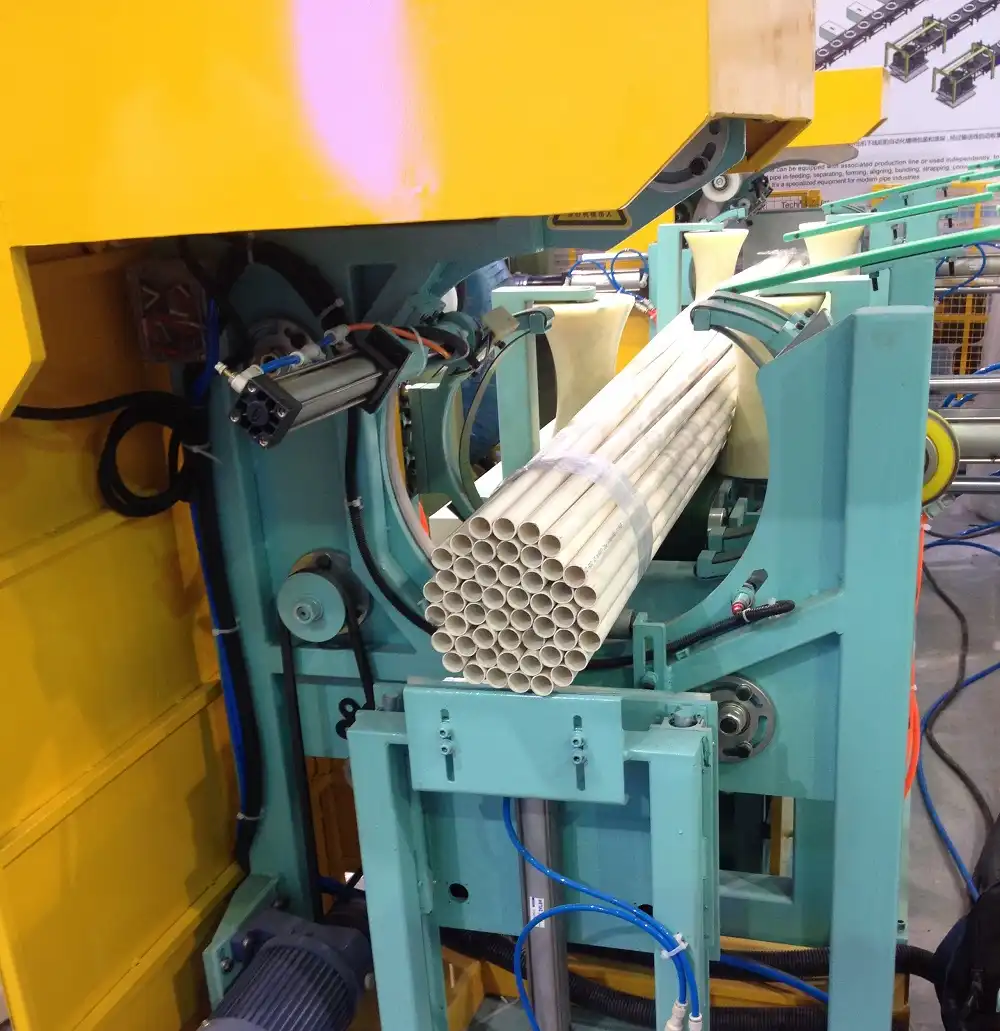
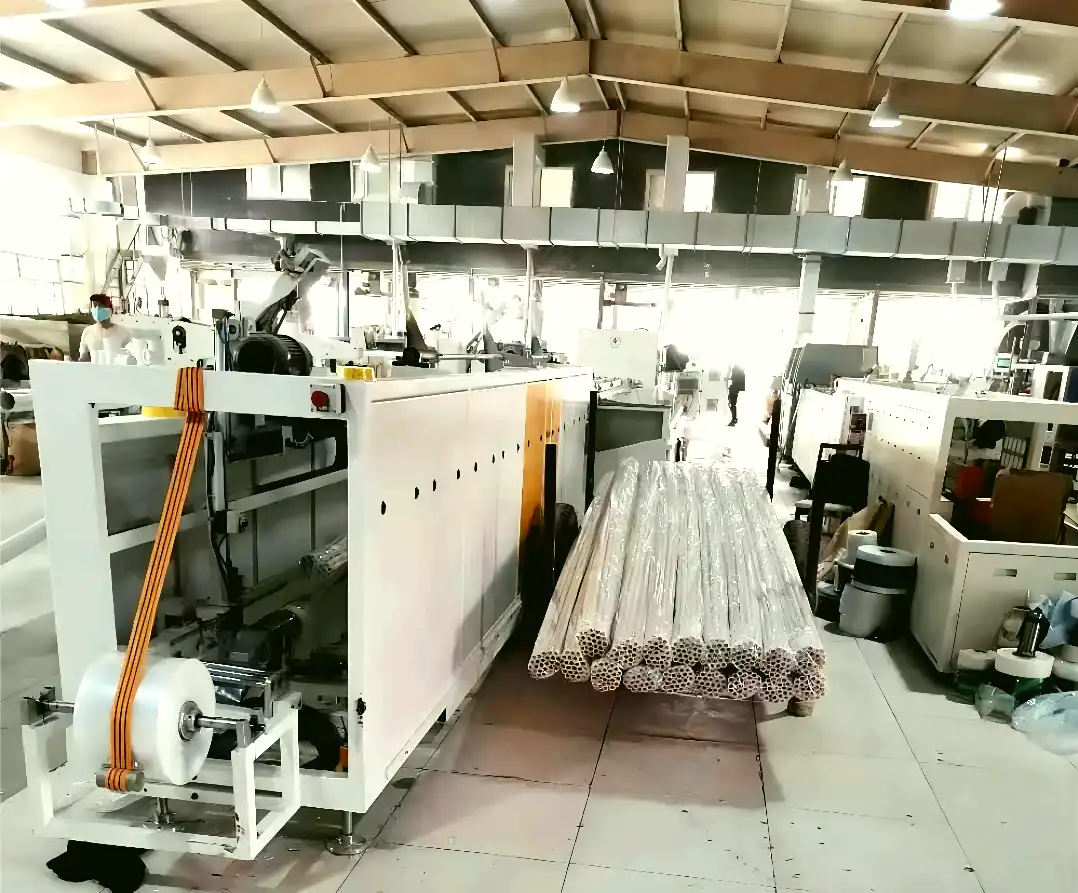
The plastic tube bundle packing machine directly addresses these issues by integrating key packaging steps into a single automated system. By automating tube counting, bag filling, sealing, and bundling, it minimizes the need for manual intervention, enabling continuous and efficient operation 24/7. This automation resolves labor bottlenecks, enhances productivity, ensures uniform packaging quality, and contributes to significant operational cost savings.
3. Solution Customization: Adapting Automation to Specific Needs
A key strength of modern automated pipe bundling solutions is their adaptability to specific production requirements. For the Mexico City PVC pipe producer, the system was configured to handle a range of product specifications:
- Pipe Diameter: Ø16 mm to Ø32 mm
- Pipe Length: 2000 mm to 4200 mm
- Packaging Speed: Up to 25 meters per minute
- Wrapping Points: Configurable for 2 or 3 points per bundle for secure packaging along the pipe length.
- Packaging Materials:
- PE shrink film (Width: 50-100 mm)
- Transparent tape (Standard: 48 mm x 100 yards)
This level of customization ensures the machine seamlessly integrates into existing production lines handling diverse PVC pipe products, from smaller diameters for residential applications to larger ones for industrial use.
The automation extends to precise counting, eliminating manual errors and ensuring accurate bundle quantities. Adjustments for the number of wrapping points and tape rounds per point allow fine-tuning for optimal bundle security based on product type and shipping demands. Furthermore, the automated folding and wrapping of bag ends create a neat, secure seal without manual labor, enhancing package integrity and appearance.
4. Key Features and Operational Benefits of Automated Pipe Packaging
The plastic tube bundle packing machine incorporates several features designed to maximize efficiency and reliability:
- Automatic Tube Counting and Checking: Ensures precise quantities in each bundle, improving accuracy and eliminating manual counting tasks.
- Adjustable Wrapping Points: Allows configuration for 2 or 3 wrapping locations per bundle, providing tailored security based on pipe length and bundle size.
- Secure Material Application: Utilizes PE shrink film and transparent tape, with adjustable tape rounds (3-20 per point), ensuring bundles are tightly secured for storage and transport.
- Automated Bag Finishing: Automatically folds and wraps the ends of the bag, delivering a consistently neat and secure seal without manual intervention.
These features translate into significant operational benefits:
- Increased Throughput: Automation of counting, wrapping, and sealing processes accelerates the packaging cycle, allowing for higher output in less time.
- Reduced Labor Costs: Minimizes the need for manual labor in the packaging area, lowering wage expenses and mitigating issues related to shift staffing. Continuous operation becomes more feasible.
- Consistent Packaging Quality: Ensures every bundle is wrapped and sealed to the same high standard, improving product presentation and reducing the risk of damage during handling and transit.
- Improved Operational Efficiency: Streamlines the end-of-line process, reducing bottlenecks and contributing to a smoother overall production flow.
5. Real-World Impact: A Case Study in Efficiency Gains
The PVC pipe manufacturer in Mexico City provides a compelling example of the impact of transitioning from manual to automated packaging. Before implementation, their process was labor-intensive, slow, and prone to inconsistencies, especially during night shifts.
Following the integration of the plastic tube bundle packing machine:
- Productivity Increased: The automated counting and high-speed packaging capabilities led to a reported 30% increase in packaging productivity.
- Error Reduction: Automated counting eliminated quantity errors in bundles.
- Enhanced Package Quality: Consistent wrapping and sealing reduced instances of damaged pipes during transport.
- Labor Costs Reduced: The reduced need for manual labor resulted in a 25% decrease in packaging-related labor costs.
- Operational Stability: Staffing issues for night shifts were effectively resolved, enabling consistent 24/7 operation.
This case demonstrates how investing in pipe packaging automation can yield substantial improvements in efficiency, cost-effectiveness, and operational reliability.
6. Visualizing the Process: Demonstration of Automated Packaging
Understanding the mechanics and efficiency of the plastic tube bundle packing machine is best achieved through visual aids. Videos can effectively demonstrate:
- The automated counting mechanism in action.
- The process of wrapping bundles at multiple points.
- The speed and precision of the automated sealing process.
- Handling of different pipe sizes and bundle configurations.
- The automated folding and finishing of package ends.
Comparing manually packaged bundles with those produced by the machine visually underscores the improvements in consistency and professional appearance.
7. Conclusion: Embracing Automation for Future-Proof Pipe Packaging
For manufacturers facing challenges with manual packaging processes, exploring automated solutions like the plastic tube bundle packing machine offers a clear path toward enhanced efficiency and reduced operational costs. The ability to customize these systems to specific product dimensions and packaging requirements, combined with features like automated counting, wrapping, and sealing, addresses common bottlenecks effectively. As demonstrated by real-world applications, the transition to automation can yield significant improvements in productivity, consistency, and cost savings, positioning manufacturers for greater competitiveness in the market. Evaluating the potential of pipe packaging automation is a crucial step for businesses aiming to optimize their end-of-line operations.
8. Frequently Asked Questions (FAQs)
1. What range of pipe sizes can the automated packing machine handle? The machine is typically configurable for various dimensions. A common specification handles pipe diameters from Ø16mm to Ø32mm and lengths from 2000mm to 4200mm, but customization for other ranges is often possible.
2. What is the typical packaging speed of this type of machine? Packaging speeds can vary, but systems often operate at speeds up to 25 meters per minute, enabling efficient handling of high production volumes.
3. Can the number of wrapping points per bundle be adjusted? Yes, the machine typically allows adjustment between 2 or 3 wrapping points per bundle, providing flexibility to ensure secure packaging based on pipe length and bundle stability requirements.
4. What types of packaging materials are used by the machine? Commonly used materials include PE (Polyethylene) shrink film (often 50-100mm width) and transparent adhesive tape (e.g., 48mm width). The amount of tape applied per point is usually adjustable (e.g., 3-20 rounds).