Making the Data-Driven Case for Pallet Inverters in Your Warehouse Operations

Modern warehouse and distribution center operations constantly seek ways to improve efficiency, safety, and cost-effectiveness. Pallet handling, particularly the need to transfer loads between pallets or replace damaged ones, can be a significant bottleneck. While manual methods exist, they are often slow, labor-intensive, and pose safety risks. Pallet inverters offer a mechanical solution, but justifying the investment requires a clear understanding of the operational benefits. This article presents a data-driven examination of how implementing pallet inverters can optimize warehouse processes, focusing on efficiency gains, cost reductions, and safety enhancements.
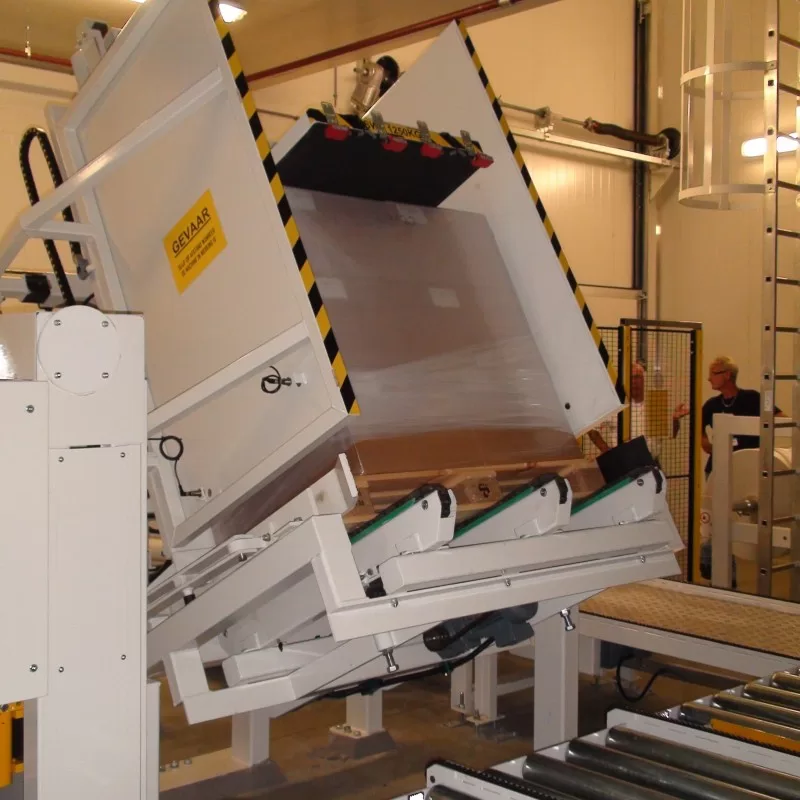
1. Understanding Pallet Inverters: Functionality and Types
A pallet inverter, also known as a pallet exchanger or load transfer system, is a piece of material handling equipment designed to rotate a fully loaded pallet by 90 or 180 degrees. This rotation allows operators to quickly and safely access the bottom of the load for various purposes:
- Replacing Damaged Pallets: Swapping out broken or substandard pallets without manual restacking.
- Transferring Loads: Moving goods from one type of pallet (e.g., wood) to another (e.g., plastic, hygienic, or rental pallets like CHEP).
- Recovering Damaged Goods: Easily accessing and removing damaged items from the bottom layer of a load.
- Improving Load Presentation: Ensuring loads are on the correct pallet type for specific customer requirements or automated systems.
The basic operation involves clamping the load securely, rotating it, allowing the original pallet to be removed, placing a new pallet, and rotating the load back (or leaving it inverted if required). This automated or semi-automated process contrasts sharply with manual restacking, which is time-consuming and physically demanding.
Several types of pallet inverters cater to different operational needs:
- Free-Standing 180° Inverters: Require loading via forklift, rotate the load fully, and are highly versatile.
- Ground-Level (Ramp-Loaded) Inverters: Allow pallet jack access via a ramp or are installed in a pit for floor-level loading, improving accessibility.
- Inline Conveyorized Systems: Integrate directly into automated conveyor lines for seamless load transfer without manual intervention.
- 90° Tippers/Exchangers: Tilt the load 90 degrees, suitable for stable, boxed goods, allowing pallet exchange in specific orientations. ## 2. Key Operational Benefits Supported by Data
- Manual (avg. 20 min/pallet): 50 pallets/day x 20 min = 1,000 minutes (approx. 16.7 hours)
- Inverter (avg. 2 min/pallet): 50 pallets/day x 2 min = 100 minutes (approx. 1.7 hours)
- Back injuries
- Shoulder and neck strains
- Repetitive stress injuries
- Fragile goods (glass, electronics)
- High-value products (pharmaceuticals, cosmetics)
- Products sensitive to orientation or compression
- GMA (Grocery Manufacturers Association) pallets
- CHEP (pool) pallets
- EURO pallets
- Plastic and metal pallets
- Labor Savings: Calculate the reduction in hours spent on manual handling multiplied by the fully burdened labor rate.
- Reduced Product Damage: Estimate the value of goods saved from damage based on historical data and expected improvements.
- Lower Injury Costs: Factor in potential savings from reduced workers' compensation premiums and associated costs (difficult to quantify precisely but significant).
- Increased Throughput: Value the additional capacity gained through faster processing, if applicable.
- Equipment Cost: The initial purchase price of the inverter.
- Operating Costs: Energy consumption and routine maintenance.
- Location: Place the inverter strategically near receiving docks, quality control areas, or production outputs where pallet exchanges frequently occur.
- Space and Utilities: Ensure adequate floor space for the machine footprint and operational clearance (forklift maneuvering). Confirm power requirements.
- Workflow Integration: Define clear procedures for when and how loads are brought to and taken from the inverter. Integrate with Warehouse Management Systems (WMS) if tracking pallet changes is necessary.
- Training: Provide thorough operator training on safe and efficient use, including proper clamping pressure settings for different load types.
- Food and Beverage / Pharmaceuticals: Transferring incoming goods from wood pallets to captive plastic or aluminum pallets to meet hygiene standards and prevent contamination in cleanroom environments.
- Cold Storage: Exchanging standard pallets for specialized cold-resistant pallets or dealing with pallets damaged by moisture/ice.
- Manufacturing Output: Transferring finished goods from in-house pallets to shipping pallets suitable for customer requirements or export.
- Distribution Centers: Handling high volumes of inbound goods on various pallet types, requiring standardization onto internal or outbound pallets. Also used for order picking where bottom-layer access is needed.
- Rental Pallet Programs (e.g., CHEP/PECO): Efficiently transferring goods off rented pallets upon return or onto them for outbound shipment.
Implementing pallet inverters yields measurable improvements across several key performance indicators in warehouse operations.
### 2.1. Enhanced Pallet Handling EfficiencyManual pallet transfer is inherently slow. Depending on the load size, stability, and number of workers, manually restacking a pallet can take anywhere from 15 to 30 minutes. In contrast, a pallet inverter typically completes the entire cycle in 1 to 3 minutes. For a facility handling even 50 pallet transfers per day, this translates to significant time savings. Consider:
This represents a potential 90% reduction in time spent on this specific task, freeing up labor for other value-added activities and increasing overall warehouse throughput.
### 2.2. Reduced Labor Requirements and CostsManual pallet exchange often requires two or more workers. A pallet inverter typically requires only one operator, often the forklift driver already handling the pallet. Industry analyses suggest that automating such tasks can lead to labor cost savings related to pallet handling ranging from 30% to 70%, depending on the volume and previous manual process. These savings accumulate quickly, directly impacting the operational budget.
### 2.3. Improved Workplace Safety and ErgonomicsManual handling of heavy or unstable loads is a primary cause of workplace injuries, particularly musculoskeletal disorders (MSDs) like back strains. According to the U.S. Bureau of Labor Statistics (BLS), overexertion and bodily reaction (including lifting and repetitive motions) consistently rank among the leading causes of nonfatal workplace injuries requiring days away from work. Pallet inverters eliminate the need for manual lifting, bending, and twisting associated with restacking goods. This significantly reduces the risk of:
Reducing injury rates not only protects employees but also lowers costs associated with workers' compensation claims, lost productivity, and potential regulatory fines. Resources from bodies like the Occupational Safety and Health Administration (OSHA) emphasize engineered solutions like inverters for mitigating manual handling risks.
### 2.4. Minimized Product Damage During TransferManual restacking increases the likelihood of dropping items, crushing lower layers, or creating unstable loads. Pallet inverters use adjustable clamping pressure to secure the load firmly but gently throughout the rotation process. This controlled handling minimizes the risk of product damage, which is especially critical for:
Reducing product damage directly translates to lower inventory write-offs and improved customer satisfaction. Some users report damage reductions related to pallet transfer by upwards of 25-50% after implementing an inverter.
### 2.5. Versatility in Handling Pallets and LoadsPallet inverters are designed to accommodate a wide range of standard pallet sizes and types, including:
Adjustable clamping mechanisms and load capacities allow them to handle diverse products, from boxes and bags to drums and irregular shapes (within limits). This flexibility makes them suitable for various industries and adaptable to changing operational needs.
## 3. Calculating the Return on Investment (ROI)A data-driven case for pallet inverters hinges on demonstrating a favorable ROI. Key factors to include in the calculation are:
Example Calculation Framework:
Annual Labor Savings = (Manual Hours per Pallet - Inverter Hours per Pallet) x Pallets per Year x Labor Rate
Annual Damage Savings = (Damage Rate Manual - Damage Rate Inverter) x Value of Goods Handled Annually
Total Annual Savings = Labor Savings + Damage Savings + Estimated Injury Cost Reduction
Payback Period (Years) = Initial Investment / Total Annual Savings
Industry reports, such as those from the Material Handling Industry (MHI), often indicate that automation investments like pallet inverters can yield payback periods of 1 to 3 years in high-volume applications, demonstrating strong financial justification.

Effective implementation requires considering how the inverter fits into existing processes:
Choosing the right type of inverter (free-standing vs. ground-level vs. inline) depends heavily on the existing material flow and degree of automation desired.
## 5. Common Applications Driving ImplementationWhile versatile, pallet inverters are particularly beneficial in specific scenarios:
In these applications, the efficiency, safety, and product integrity benefits directly address critical operational requirements.
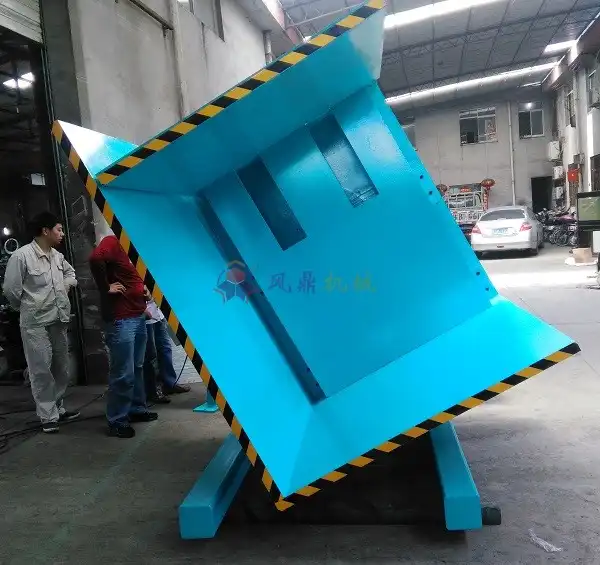
The decision to implement pallet inverters should be based on a careful analysis of current operational data and potential improvements. As demonstrated, these machines offer quantifiable benefits in terms of increased efficiency, reduced labor costs, enhanced worker safety, and minimized product damage. By automating the strenuous and time-consuming task of pallet exchange, warehouses can reallocate labor, improve throughput, and reduce operational risks.
While the initial investment requires justification, the potential for a rapid ROI, typically within 1-3 years for suitable applications, makes pallet inverters a strategic consideration for facilities looking to optimize their material handling processes. Evaluating your specific needs regarding volume, pallet types, safety concerns, and integration potential will determine if a pallet inverter is the right data-driven solution for your operation.