Pallet Inverter Guide: Which Model Suits Your Warehouse Needs Best?
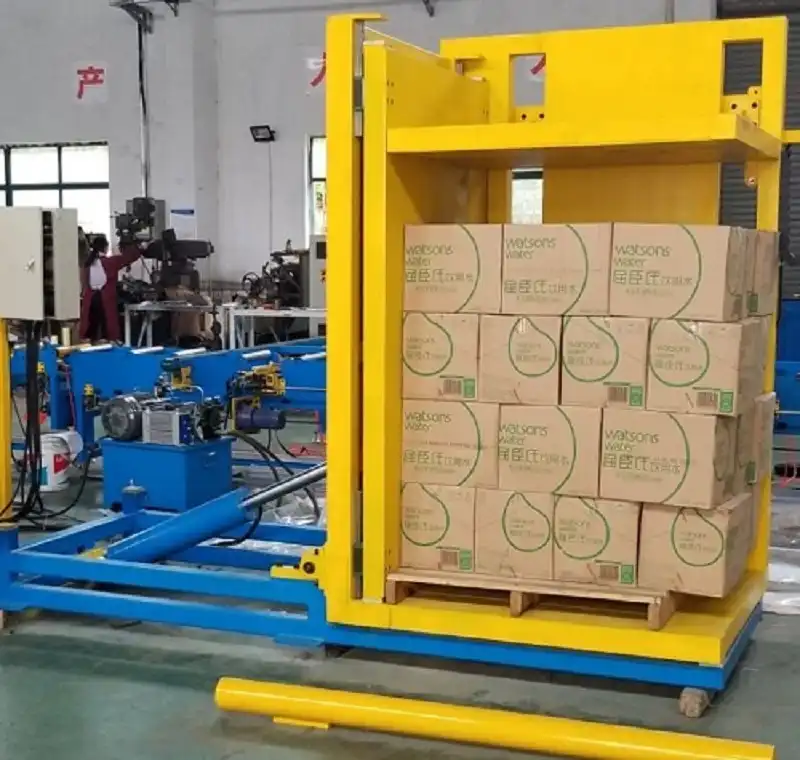
In today’s demanding warehouse and logistics environments, optimizing efficiency and safety is crucial. A key piece of material handling equipment that significantly contributes to these goals is the pallet inverter, also known as a load inverter or pallet turner. These machines facilitate rapid pallet exchanges, reduce strenuous manual handling, streamline operations, minimize product damage, and can lower associated labor costs. However, with various models available, selecting the most suitable pallet inverter for your specific warehouse requirements can seem daunting. This comprehensive guide will outline the functions, types, benefits, and selection criteria to help you make an informed decision.
1. Understanding Pallet Inverters: Function and Features
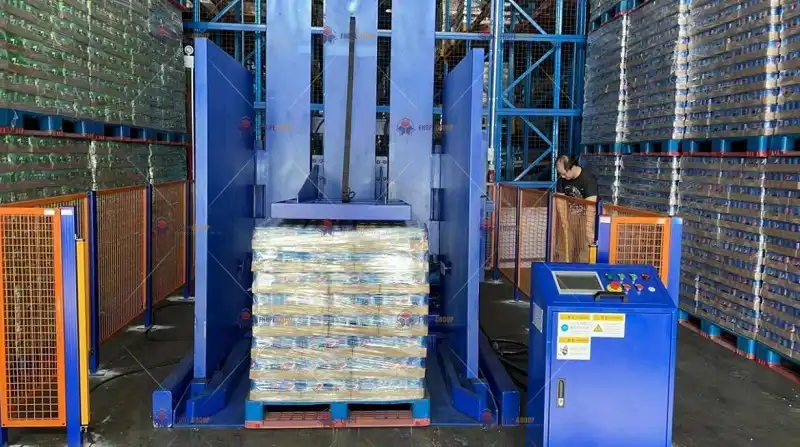
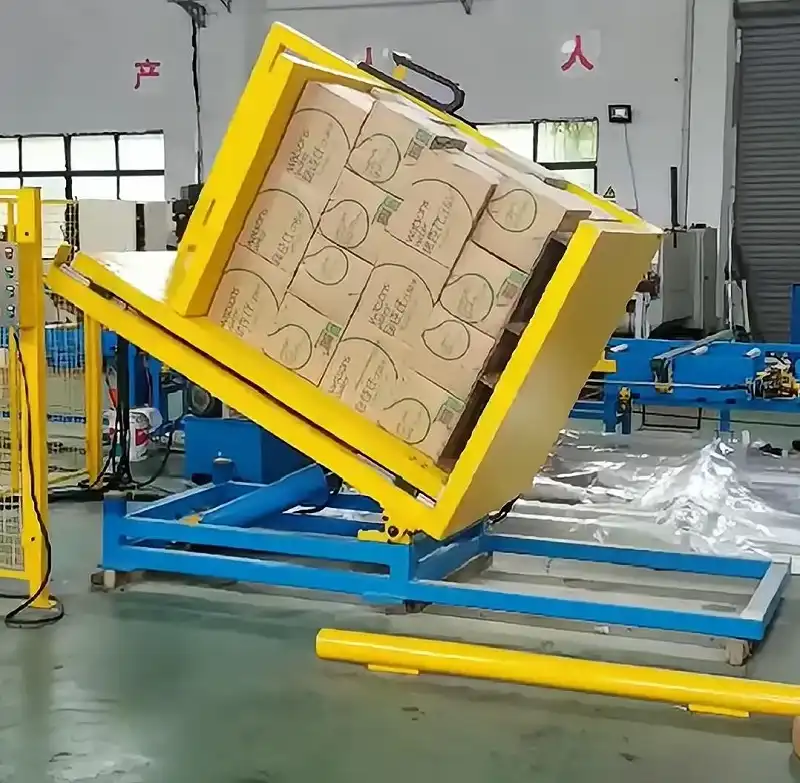
A pallet inverter is specialized equipment engineered to rotate a fully loaded pallet, typically 180 degrees. This rotation allows warehouse staff to quickly and safely remove or replace the bottom pallet without manually destacking the goods. This capability is invaluable in numerous situations, such as replacing damaged pallets, switching to different pallet types (e.g., from wood to plastic for hygiene zones), transferring loads to shipping or rental pallets, or recovering damaged goods at the bottom of a stack.
Whether your operation handles wooden pallets, plastic pallets, metal pallets, or specialized slip sheets, a pallet inverter is designed to save significant time and physical effort. Its core purpose is to securely clamp and invert the entire load, keeping the goods stable and drastically reducing the risk of product damage during the transfer process.
Key Features of Pallet Inverters:
- Rotation Mechanism: Most commonly provides 180-degree rotation to allow access to the bottom pallet. Some models offer 90-degree tipping (pallet exchangers) for different applications.
- Clamping System: Utilizes hydraulic or electro-mechanical clamps to securely hold the load during inversion. Clamping pressure is often adjustable to suit different load types and prevent damage to sensitive products.
- Loading Method: Can be loaded via forklift, pallet jack, or integrated into conveyor systems depending on the model (stationary vs. mobile, manual vs. automatic).
- Control System: Ranges from simple manual controls to sophisticated PLC systems for automated sequences.
2. Key Applications: Where Pallet Inverters Boost Efficiency
Pallet inverters are versatile tools used across diverse industries, including food and beverage, pharmaceuticals, logistics, manufacturing, and retail distribution. Here are common scenarios where their implementation yields significant advantages:
Replacing Damaged or Incorrect Pallets
One of the most frequent uses is swapping broken, substandard, or incorrect pallets (e.g., replacing a standard pallet with a required export pallet) without the time-consuming and potentially hazardous process of manual unloading and restacking. This maintains pallet integrity and ensures compliance with shipping or internal standards.
Improving Load Stability and Recovering Damaged Goods
If a load has shifted or products at the bottom are damaged, a pallet inverter allows the load to be safely inverted. This provides easy access for restacking, inserting slip sheets, or replacing damaged items, thereby enhancing overall load stability and preventing further loss.
Transferring Loads Between Pallet Types
Many industries require transferring goods from in-house wooden pallets to hygienic plastic or aluminum pallets (common in food and pharmaceutical sectors) or onto customer-specific or rental pallets like those used in pallet pooling systems (e.g., CHEP, PECO, EPAL). Pallet inverters streamline this transfer process considerably.
Handling Specific Products
Certain products, like bagged goods (cement, seeds, flour), may need inversion to prevent compaction or require pallet exchange before final shipping. Inverters provide a controlled method for these tasks.
3. Types of Pallet Inverters: Finding the Right Fit
Pallet inverters are not a one-size-fits-all solution. The ideal model depends heavily on your operational volume, workflow, space availability, and budget. Here are the main categories:
3.1 Stationary Pallet Inverters
These robust machines are fixed in a specific location within the warehouse, often integrated into a production or dispatch line. They are designed for high-volume, repetitive pallet exchange tasks.
- Best for: High-throughput warehouses, distribution centers, manufacturing facilities with consistent pallet exchange needs at a fixed point.
- Advantages: Heavy-duty construction, high load capacities (often exceeding 2000 kg / 4400 lbs), fast cycle times, suitable for automation integration.
- Disadvantages: Requires dedicated floor space, lacks mobility, higher initial investment compared to mobile units.
3.2 Mobile Pallet Inverters
Mobile pallet inverters combine the functionality of inversion with the flexibility of movement, often resembling a powered pallet truck with an integrated inverter mechanism. They can be brought directly to the load anywhere in the warehouse.
- Best for: Warehouses needing flexibility, operations with multiple processing points, lower volume applications, or facilities with space constraints.
- Advantages: Highly versatile, no dedicated footprint required, can access loads in various locations.
- Disadvantages: Generally lower load capacity and slower cycle times compared to stationary models, may require battery charging/maintenance.
3.3 Manual Pallet Inverters
Simpler in design, manual pallet inverters often rely on mechanical leverage or manual hydraulic pumps for clamping and rotation. They are a cost-effective solution for infrequent use.
- Best for: Small businesses, low-volume operations, budget-conscious applications.
- Advantages: Lowest cost, simple operation, minimal maintenance.
- Disadvantages: Slowest operation speed, limited load capacity, requires more physical effort from the operator.
3.4 Automatic Pallet Inverters
Fully automated pallet inverters operate with minimal human intervention. They can be seamlessly integrated into automated warehouse systems, such as conveyor lines and Automated Guided Vehicles (AGVs), offering maximum speed and efficiency.
- Best for: Large-scale automated warehouses, industries with very high throughput requirements and minimal tolerance for delays.
- Advantages: Maximizes operational speed and efficiency, reduces labor requirements, ensures consistent handling, integrates with WMS/automation.
- Disadvantages: Highest initial cost, complex installation and integration, requires skilled maintenance.
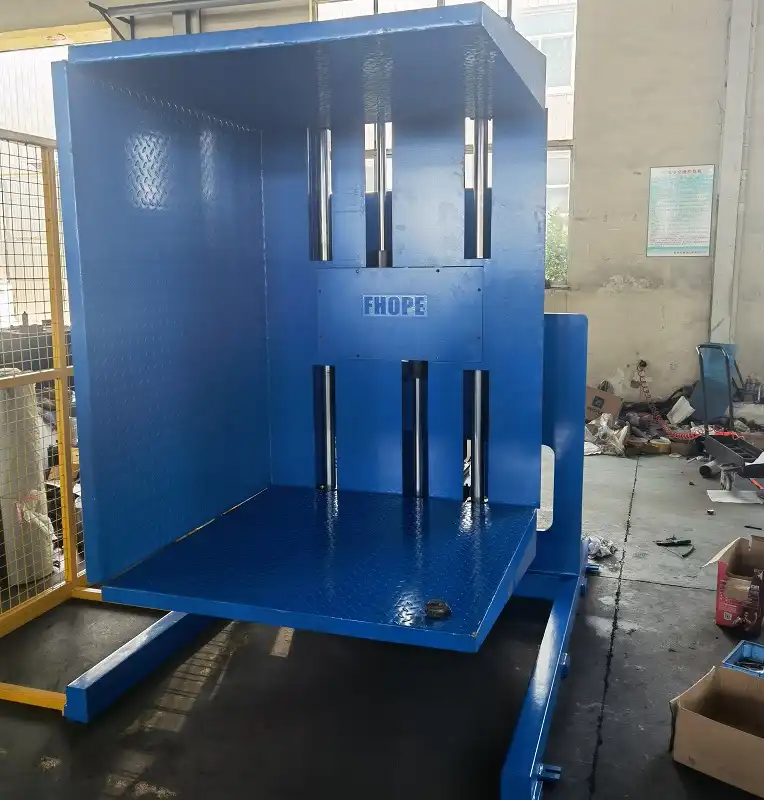
pallet inverter with two clamper heave laoding 2t 3
4. Selection Guide: Choosing the Optimal Pallet Inverter
Selecting the right pallet inverter requires careful consideration of your specific operational parameters. Evaluate these critical factors:
4.1 Load Characteristics (Weight, Size, Type)
- Capacity: Determine the maximum weight of the loads you need to handle. Choose an inverter with a rated capacity comfortably exceeding your heaviest pallet load.
- Dimensions: Ensure the inverter's opening range (width and height) can accommodate your largest and smallest load dimensions.
- Product Sensitivity: For fragile, unstable, or pressure-sensitive goods (e.g., glass bottles, delicate electronics), look for models with adjustable clamping pressure or soft-touch clamp options to prevent damage.
4.2 Throughput Requirements (Frequency of Use)
- Volume: How many pallets per hour or shift do you need to invert? High-frequency operations (e.g., >10-15 pallets/hour) typically justify stationary or automatic models. Lower frequencies might be adequately served by mobile or manual options.
4.3 Facility Layout and Space Availability
- Footprint: Stationary models require a fixed, dedicated area. Assess your available floor space. Mobile units offer flexibility if space is limited or if inversion needs occur in multiple locations. Consider ceiling height for rotation clearance.
4.4 Loading Method Compatibility
- How will loads be brought to and taken from the inverter? Ensure the chosen model is compatible with your existing equipment (e.g., standard forklifts, counterbalance trucks, pallet jacks, conveyors). Some models offer ground-level loading, while others require lifting.
4.5 Budget and Return on Investment (ROI)
- Initial Cost: Prices vary significantly from manual to fully automatic systems.
- Operational Savings: Calculate potential ROI based on reduced labor time, minimized product damage, improved safety (lowered injury costs), and increased throughput. Higher upfront costs for automated systems can often be justified by substantial long-term savings in high-volume scenarios.
4.6 Operator Safety and Ergonomics
- Look for safety features like guarding, safety interlocks, emergency stops, and clear operating procedures. Ensure the design minimizes awkward postures or strenuous actions for operators. Compliance with safety standards like those from OSHA or equivalent regional bodies is essential.
5. Core Benefits of Integrating Pallet Inverters
Incorporating the right pallet inverter into your workflow delivers tangible benefits:
Enhanced Productivity and Efficiency
Automating or simplifying pallet exchange dramatically cuts down handling time compared to manual methods. This boosts throughput, allowing warehouses to process more goods faster and meet tighter deadlines.
Improved Workplace Safety and Ergonomics
Manual pallet handling, especially with heavy or unstable loads, carries a high risk of musculoskeletal injuries. Pallet inverters eliminate most hazardous manual lifting and turning tasks, creating a safer work environment and potentially reducing workers' compensation claims.
Reduced Product Damage
Controlled clamping and smooth rotation minimize the risk of products shifting, falling, or being crushed during pallet transfer, leading to significant cost savings by reducing waste and returns.
Increased Operational Flexibility
Quickly switching between pallet types allows businesses to meet specific customer or shipping requirements (e.g., export, hygiene) without disrupting workflow or requiring large buffer stocks of pre-palletized goods.
Lower Labor Costs
By reducing the time and manual effort required for pallet exchange, inverters allow labor resources to be allocated to more value-added tasks, leading to direct and indirect cost savings.

6. Making the Decision: Final Considerations
Choosing the right pallet inverter boils down to a thorough analysis of your warehouse's unique operational profile. For high-volume, fast-paced environments demanding maximum efficiency, a stationary or automatic pallet inverter, despite its higher initial investment, often provides the best long-term value. Conversely, operations with lower throughput, varied inversion locations, or tighter budgets may find a mobile or manual pallet inverter to be a more suitable and cost-effective solution.
By carefully evaluating factors such as load characteristics, required throughput, available space, budget constraints, and safety requirements, you can select a pallet handling solution that enhances productivity, improves worker safety, minimizes product damage, and delivers a strong return on investment. As warehouse logistics continue to evolve towards greater speed and automation, pallet inverters remain a critical tool for maintaining a competitive edge and an efficient, safe workflow.
Ultimately, matching the specific features and capabilities of a pallet inverter model to your precise operational needs is key to unlocking its full potential and driving significant improvements in your material handling processes.