Coil Upenders: A Comprehensive Guide to Types, Features, and Selection
Introduction to Coil Upenders
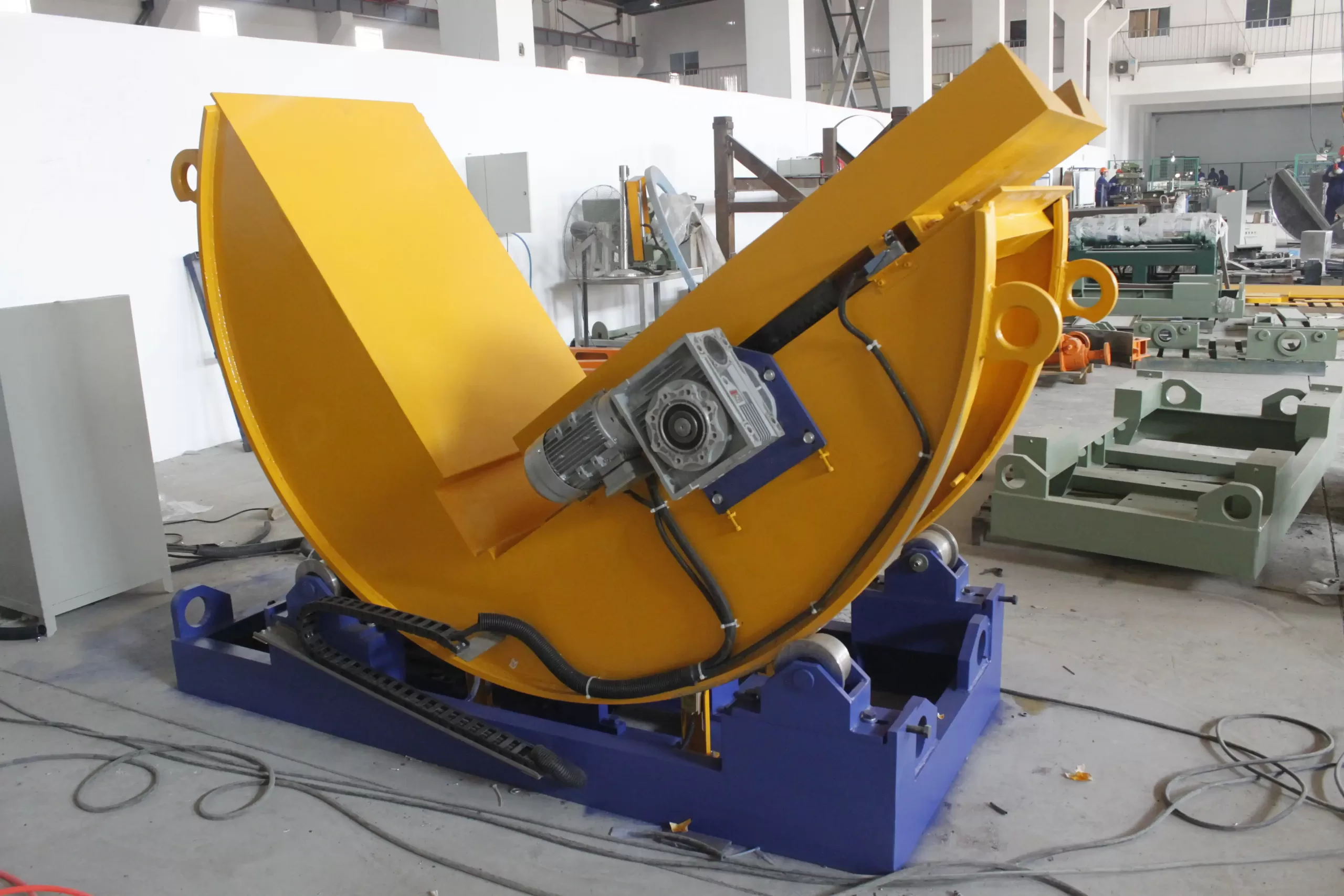
Coil upenders, also known as coil tilters or coil manipulators, are indispensable pieces of industrial equipment, particularly vital in metal processing, fabrication, and manufacturing sectors. These robust machines are engineered to safely and efficiently rotate heavy coils—often made of steel, aluminum, copper, or paper—between horizontal ("eye-to-sky") and vertical ("eye-to-the-wall") orientations. This capability streamlines material handling, significantly improving safety and workflow efficiency during loading, unloading, storage, and processing operations. With numerous models available, understanding their core functionalities, key features, and operational differences is crucial for selecting the right coil handling equipment for your specific industrial application. This guide provides a detailed exploration and comparison to aid in making an informed investment.
What is the Purpose of a Coil Upender?
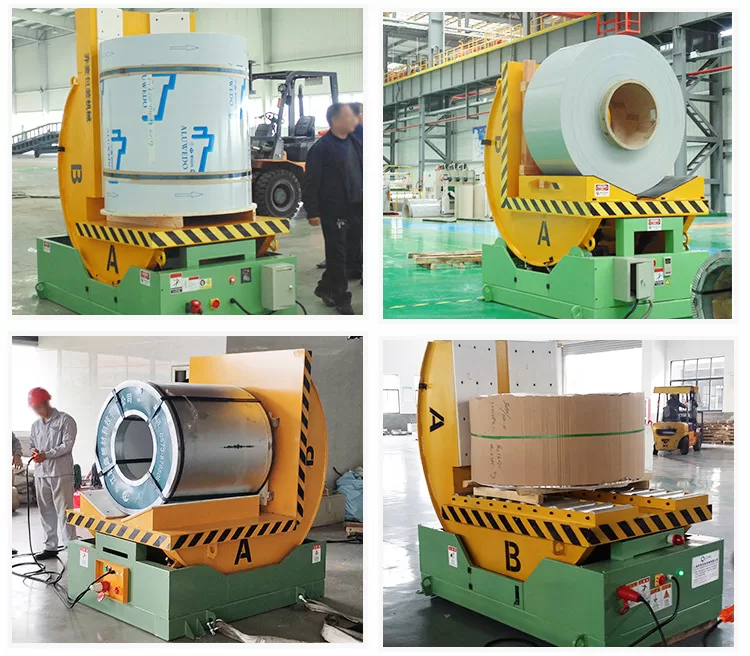
A coil upender is a specialized piece of material handling equipment designed primarily for rotation. Its core function is to securely grip and tilt a heavy coil, typically 90 degrees, transitioning it from a horizontal to a vertical axis, or vice versa. This maneuver is essential for several reasons:
- Safety: Manually attempting to reposition heavy coils poses significant risks to personnel. Upenders provide a controlled, mechanical method, minimizing potential injuries.
- Efficiency: Automating the tilting process drastically reduces the time and labor required compared to manual methods or less specialized equipment like forklifts with attachments.
- Damage Prevention: The controlled motion protects the coil material from potential damage (denting, scratching) that can occur during manual handling or improper lifting.
- Process Integration: Upenders facilitate smooth integration with various industrial processes, such as feeding coils onto slitting lines, stamping presses, or placing them onto pallets or transport vehicles in the required orientation.
Coil upenders are available in various sizes and load capacities, tailored to handle coils ranging from a few hundred kilograms to over 50 tons.
Understanding Key Components of Coil Upenders
To effectively compare different coil upender models, it's helpful to understand their fundamental components:
- Main Frame: This is the structural backbone of the machine, typically constructed from heavy-gauge steel, providing the necessary support and stability for lifting and rotating heavy loads.
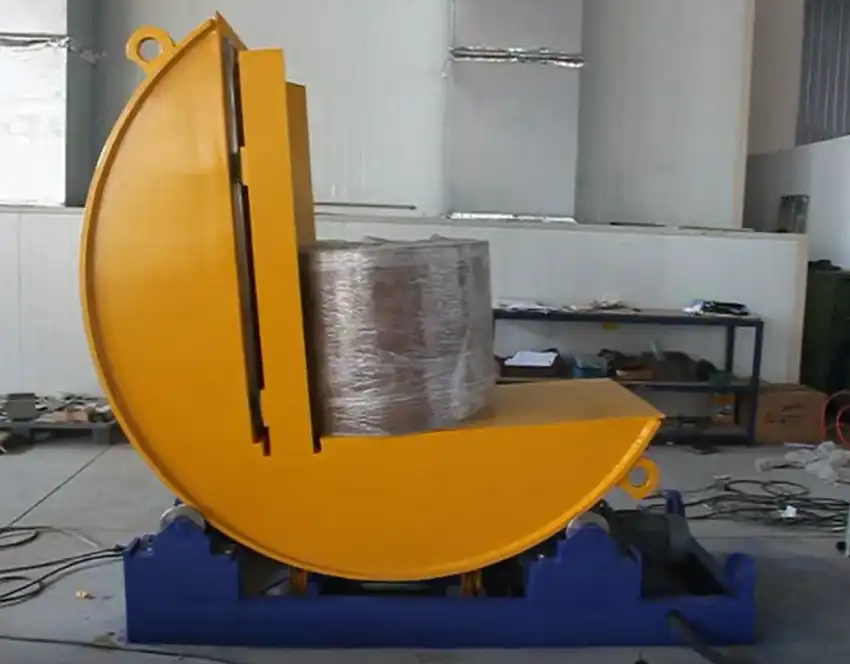
- Cradle or Platform: The cradle is the assembly that directly supports the coil during rotation. It often features a V-shape or contoured surface to securely hold cylindrical objects and may include protective linings (e.g., UHMW plastic, rubber) to prevent material damage. Some designs incorporate adjustable supports or clamping mechanisms.
- Drive System: This system provides the power for the tilting motion. Common drive types include:
- Electromechanical: Utilizes electric motors, gearboxes, chains, sprockets, or screw jacks to generate rotational force. Known for reliability and precise control.
- Hydraulic: Employs hydraulic cylinders powered by a hydraulic power unit (HPU). Offers high lifting capacity and smooth motion, suitable for very heavy loads.
- Control System: This interface allows operators to manage the upender's functions. It can range from simple pendant controls (push buttons for up/down/tilt) to more sophisticated PLC (Programmable Logic Controller) systems with touch screens (HMIs), offering features like variable speed control, positioning presets, and diagnostic feedback.
- Power Unit: For hydraulic models, this includes the motor, pump, reservoir, valves, and filters. For electromechanical models, it primarily involves the electric motor and associated gearing.
- Safety Features: Essential components like limit switches (to define rotation limits), emergency stop buttons, overload protection mechanisms (hydraulic relief valves or motor overcurrent sensors), and physical guarding are critical for safe operation.
Common Types of Coil Upenders
Coil upenders can be categorized based on their power source, capacity, and specific design features:
-
Mechanical Coil Upenders:
- Mechanism: Typically use electric motors coupled with gear reducers and chain drives or screw mechanisms to achieve rotation.
- Pros: Generally offer precise control, relatively lower maintenance than hydraulics (no fluid leaks), good energy efficiency.
- Cons: May have limitations on extremely heavy load capacities compared to hydraulic systems.
- Best Suited For: Moderate to heavy loads, applications requiring precise positioning and frequent use.
-
Hydraulic Coil Upenders:
- Mechanism: Utilize hydraulic cylinders driven by a dedicated hydraulic power unit to generate the tilting force.
- Pros: Excellent for handling very heavy loads (high power density), inherently smooth operation, robust construction.
- Cons: Require hydraulic fluid maintenance, potential for leaks, can be less energy-efficient than mechanical drives if not properly designed.
- Best Suited For: Heavy-duty applications (steel mills, large fabrication shops), handling exceptionally large or heavy coils.
-
Standard vs. Heavy-Duty Models:
- This distinction primarily relates to load capacity and robustness of construction. Standard models handle lighter coils (e.g., up to 5-10 tons), while heavy-duty models are engineered for significantly larger capacities (e.g., 20, 30, 50 tons or more) with reinforced frames and more powerful drive systems.
-
Specialized Designs:
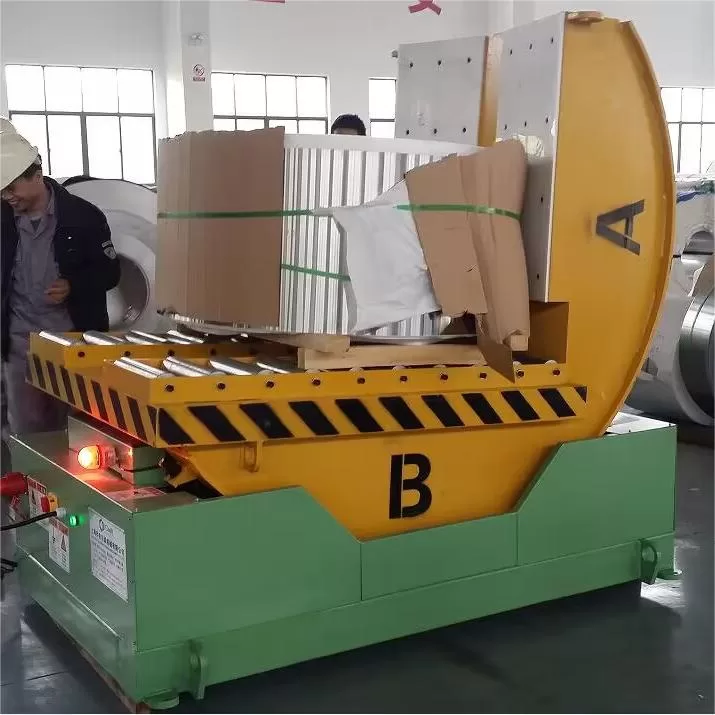
- Upenders with Conveyors: Integrate powered or gravity roller conveyors on the cradle/platform for easier loading and unloading.
- Tilters with Moving Base: Some designs allow the entire unit to traverse short distances, aiding integration into production lines.
- 90-Degree and 180-Degree Tilters: While most upenders perform a 90-degree tilt, some specialized tilters can rotate objects a full 180 degrees.
Comparing Key Features: How to Choose the Right Coil Upender
Selecting the appropriate coil upender requires careful consideration of several critical features that vary significantly between models:
-
Load Capacity:
- Parameter: Maximum weight the upender can safely handle (e.g., 5,000 kg, 10 tons, 30 tons).
- Importance: Crucial for safety and longevity. Always choose a model with a capacity that comfortably exceeds the heaviest coil you anticipate handling. Overloading can lead to catastrophic failure.
-
Coil Size Range (Dimensions):
- Parameters: Minimum/Maximum Outside Diameter (OD), Inside Diameter (ID), and Coil Width.
- Importance: The upender's cradle must physically accommodate your range of coil sizes. Ensure the chosen model fits both your smallest and largest coils.
-
Platform/Cradle Design:
- Parameters: Size (Length x Width), surface type (e.g., flat steel, V-saddle), protective lining (e.g., hardwood, nylon, UHMW).
- Importance: Must match the coil dimensions and provide stable support. Protective linings prevent damage to sensitive materials. V-saddles are common for coils.
-
Rotation Speed and Control:
- Parameters: Time taken for a full 90-degree rotation (e.g., 30-90 seconds), availability of variable speed control.
- Importance: Faster speeds can improve throughput but require smooth acceleration/deceleration to prevent load shifting or damage. Variable speed control offers operational flexibility.
-
Drive System (Revisiting Types):
- Parameters: Mechanical (motor HP/kW, gear type) vs. Hydraulic (cylinder size, pump pressure/flow).
- Importance: Impacts load capacity, speed, smoothness, maintenance needs, and energy consumption. Match the drive type to your load requirements and operating environment.
-
Safety Features:
- Parameters: Emergency stops, limit switches, overload protection (hydraulic relief valves, motor current monitoring), safety guarding/fencing, audible/visual alarms during operation, potential for interlocks with other equipment.
- Importance: Non-negotiable. Ensure the machine meets relevant safety standards (e.g., OSHA standards or equivalent regional regulations). Robust safety features protect operators and equipment.
-
Control Interface:
- Parameters: Pendant control (wired or wireless), PLC with HMI (touch screen), integration capabilities (e.g., connection to plant network).
- Importance: Should be intuitive and ergonomic for operators. Advanced controls allow for better diagnostics, customization, and automation integration.
-
Maintenance Requirements:
- Parameters: Lubrication points, hydraulic fluid checks/changes, chain tensioning, component accessibility, availability of spare parts.
- Importance: Consider the ease and frequency of required maintenance. Hydraulic systems generally require more fluid-related maintenance, while mechanical systems need regular lubrication and checks on drive components.
-
Footprint and Installation:
- Parameters: Overall machine dimensions (L x W x H), weight, foundation requirements (pit-mounted vs. surface-mounted), power requirements (voltage, phase, amperage).
- Importance: Must fit within your available floor space and meet facility power specifications. Some models may require special foundations or pits.
-
Durability and Construction Quality:
- Parameters: Materials used (heavy-duty structural steel), weld quality, quality of components (motors, bearings, hydraulics).
- Importance: A well-built machine ensures reliability and a long service life under demanding industrial conditions. Look for reputable manufacturers with proven track records.
-
Customization Options:
- Parameters: Availability of non-standard platform sizes, specific linings, integrated scales, conveyor options, unique control sequences.
- Importance: If you have unique application needs, check if the manufacturer offers customization to tailor the upender precisely to your requirements.
-
Cost and Return on Investment (ROI):
- Parameters: Initial purchase price, installation costs, operating costs (energy consumption), maintenance costs, expected lifespan, productivity gains, safety improvements.
- Importance: Consider the Total Cost of Ownership (TCO), not just the upfront price. A more durable, efficient, or safer machine might offer a better long-term ROI despite a higher initial cost.
coil upender232 Real-World Applications of Coil Upenders
Coil upenders are essential across numerous industries where large coils are handled:
- Steel Mills and Service Centers: Handling master coils of steel sheet, plate, and wire for processing (slitting, cutting) and storage.
- Aluminum Processing Plants: Safely manipulating coils of aluminum sheet, foil, and plate used in automotive, aerospace, and packaging.
- Copper and Brass Mills: Managing coils of copper/brass sheet, strip, and tube for electrical components, plumbing, and industrial applications.
- Paper and Pulp Industry: Tilting large rolls (coils) of paper for printing presses, converting lines, and packaging.
- Packaging Industry: Handling rolls of plastic film, foil, and other materials used in flexible packaging production.
- Wire and Cable Manufacturing: Rotating large spools or coils of wire and cable.
- Automotive Manufacturing: Handling steel and aluminum coils used for stamping body panels and components.
- Textile Industry: Managing large rolls of fabric for processing and finishing.
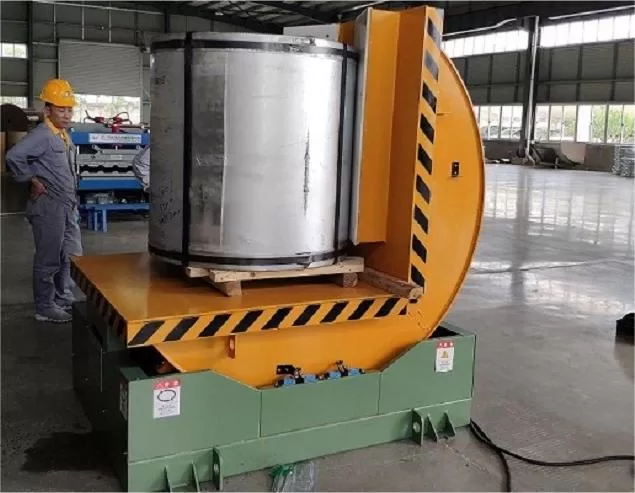
upender & tilter Conclusion: Making the Right Choice
Coil upenders are critical assets for enhancing safety and efficiency in industrial material handling involving coiled materials. Selecting the optimal model requires a thorough evaluation beyond just load capacity. Key considerations must include the range of coil sizes, required rotation speed, the robustness of the drive system, comprehensive safety features, ease of operation, maintenance needs, durability, and the overall return on investment.
By carefully analyzing your specific operational requirements—the types and sizes of coils handled, frequency of use, integration with existing workflows, and safety protocols—against the features offered by different mechanical and hydraulic models, you can choose a coil upender that optimizes your processes. Investing in the right machine not only boosts productivity and protects valuable materials but, most importantly, safeguards your workforce. As technology evolves, look for ongoing innovations in control systems, energy efficiency, and safety integration that further enhance the value proposition of modern coil handling equipment.
Get Your Best Solution !