Optimizing Pallet Inverter Selection: Cold Storage vs. Dry Warehousing Needs

Introduction: Matching Equipment to Environment
Effective pallet management is fundamental to efficient logistics, particularly within the specialized environments of cold storage and dry warehousing. Each setting presents unique challenges for handling and rotating heavy loads. Consequently, pallet inverters have emerged as indispensable material handling equipment in modern supply chains. Whether you manage operations in sub-zero conditions or maintain a standard ambient temperature warehouse, choosing the correct pallet inverter is vital for boosting operational efficiency, ensuring workplace safety, and minimizing costs. This guide provides a detailed comparison to help you select the best pallet inverter for your specific needs.
1. Understanding the Function of a Pallet Inverter
Before comparing models, it's crucial to grasp the core function of a pallet inverter. This specialized machine is engineered to rotate, tilt, or completely invert palletized loads. Its primary purpose is to enable access to goods, facilitate pallet exchange (e.g., wood to plastic), remove damaged goods from the bottom of a stack, or reorient loads without requiring manual de-stacking and re-stacking.
Key benefits include:
- Time and Labor Savings: Automates the rotation process, significantly reducing manual handling.
- Increased Efficiency: Streamlines workflows like quality control checks, order picking, and pallet replacement.
- Enhanced Safety: Minimizes manual lifting of heavy items, reducing risks of musculoskeletal injuries.
Pallet inverters are widely utilized across industries such as food and beverage, pharmaceuticals, logistics, and manufacturing to optimize pallet handling tasks.
2. Key Environmental Differences: Cold Storage vs. Dry Warehousing
The operational environment dictates the necessary specifications for a pallet inverter.
- Cold Storage: Characterized by temperatures ranging from cool (0°C to 10°C) down to deep freeze (below -18°C). Key challenges include potential equipment malfunction due to ice formation, condensation on components, and material brittleness at low temperatures. Cold storage typically houses perishable goods (food, pharmaceuticals), making equipment reliability and operational speed paramount to maintain product integrity and the cold chain.
- Dry Warehousing: Operates under ambient temperature conditions. While less extreme, these facilities focus on storing diverse goods like electronics, textiles, automotive parts, and general merchandise. The emphasis here is often on throughput, durability, and versatility to handle varied load types and sizes efficiently. Environmental challenges are minimal compared to cold storage.
Recognizing these distinctions is the first step in selecting a pallet inverter designed to perform reliably in its intended setting.
3. Essential Factors for Choosing a Cold Storage Pallet Inverter
Cold storage facilities impose demanding conditions. Selecting a pallet inverter requires careful consideration of these factors:
- Temperature Resistance and Materials: The primary requirement is the ability to function reliably in sub-zero temperatures. Look for models constructed with materials that resist brittleness in the cold. Key components, including hydraulics, electrical systems, and controls, must be rated for low-temperature operation. Stainless steel construction (e.g., grade 304 or 316) is often preferred for its corrosion resistance against condensation and frequent washdowns.
- Anti-Corrosion Properties: Humidity and condensation are constant threats. Ensure the inverter features corrosion-resistant coatings, stainless steel components, and appropriate sealing to prevent rust and premature degradation, extending the machine's service life.
- Sealed and Heated Components: Bearings, motors, and electrical enclosures should be sealed (e.g., IP65 rating or higher) to prevent moisture ingress. In extremely low temperatures, heated components or specialized low-temperature hydraulic fluids and lubricants may be necessary to ensure smooth operation and prevent freezing.
- Speed and Energy Efficiency: Minimizing the time cold storage doors remain open is crucial for temperature stability and energy conservation. An efficient inverter with fast cycle times helps reduce cold air loss. Look for models with energy-efficient motors and hydraulic systems designed for cold environments.
4. Critical Factors for Selecting a Dry Warehousing Pallet Inverter
While less environmentally harsh, dry warehousing demands robust and versatile equipment:
- Versatility for Pallet Types and Loads: Dry warehouses frequently handle diverse pallet sizes (standard, Euro, custom) and materials (wood, plastic, metal). The inverter must accommodate this variety efficiently, often featuring adjustable clamping pressure and opening ranges. It should also handle different load types, from stable boxes to potentially irregular shapes.
- Durability and High Load Capacity: Continuous operation and handling heavy loads require a robustly built machine. Assess the inverter's duty cycle, structural integrity, and maximum load capacity to ensure it can withstand the demands of high-volume throughput without frequent breakdowns.
- Automation and System Integration: Modern warehouses increasingly rely on automation. Consider pallet inverters that can integrate seamlessly with Automated Guided Vehicles (AGVs), conveyor systems, and Warehouse Management Systems (WMS). Features like automatic cycling, remote diagnostics, and data logging can enhance overall efficiency.
- Ease of Use and Maintenance: Operator-friendly controls and straightforward maintenance procedures are important for maximizing uptime. Accessibility of key components for routine checks and servicing is a practical consideration.
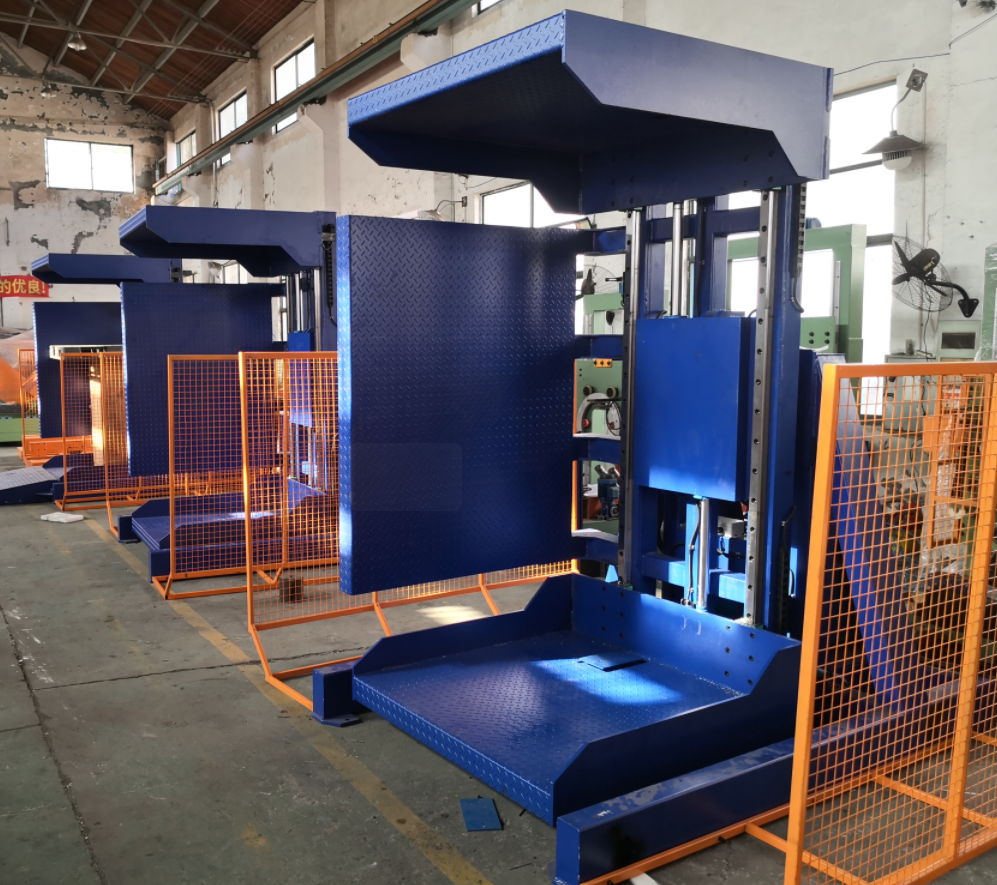
pallet1 5. Common Types of Pallet Inverters and Their Suitability
Several pallet inverter designs cater to different operational needs:
- Single Clamp Pallet Inverter: Utilizes one clamping table to secure the load against the base during rotation. Suitable for stable loads and general applications in both dry and less demanding cold environments. Often loaded by forklift.
- Double Clamp Pallet Inverter: Employs two clamping tables that secure the load from top and bottom. Offers greater stability during inversion, making it ideal for fragile, unstable, or irregularly shaped loads. Commonly used in food, beverage, and pharmaceutical industries, including cold storage.
- 180-Degree Inverter (Ground-Loading): Allows loading at ground level using a pallet truck. The machine clamps and rotates the load 180 degrees for pallet exchange. Highly versatile for both cold and dry warehousing.
- Inline Pallet Inverter: Designed for integration into automated conveyor lines, allowing continuous flow without forklift intervention. Suitable for high-throughput operations in both environments, provided they are built with appropriate materials for the temperature range.
- Freezer Spacer Removal Systems: A specialized type of inverter/exchanger designed specifically to insert or remove freezer spacers between layers of frozen goods, common in cold storage logistics.
6. Advantages of Pallet Inverters in Cold Storage Logistics
Implementing the right pallet inverter in cold storage yields significant benefits:
- Enhanced Productivity and Reduced Energy Costs: Faster pallet exchange cycles minimize door open times, crucial for maintaining stable low temperatures and reducing the load on refrigeration systems, thereby saving energy.
- Improved Worker Safety: Reduces manual handling in slippery, cold conditions, mitigating risks of slips, falls, and cold stress injuries. Adherence to safety standards like those from OSHA (Occupational Safety and Health Administration) is enhanced.
- Product Integrity Protection: Gentle, automated handling minimizes damage to temperature-sensitive or fragile frozen goods during pallet exchange or inspection. Prevents temperature excursions that can compromise product quality.
- Operational Flexibility: Enables quick replacement of damaged or inappropriate (e.g., wood) pallets, essential for hygiene standards (HACCP) and maintaining the cold chain.
Get Your Best Solution !
7. Benefits of Pallet Inverters in Dry Warehousing Operations
Dry warehouses also realize substantial advantages from pallet inverters:
- Increased Throughput and Efficiency: Automating pallet inversion frees up labor for other value-added tasks, significantly boosting overall warehouse productivity and order fulfillment speed.
- Reduced Labor Costs and Ergonomic Strain: Minimizes the physically demanding task of manual pallet handling, leading to lower labor costs associated with these tasks and reduced risk of worker injuries.
- Versatile Load Handling: Safely and efficiently handles a wide range of goods, from heavy industrial components to delicate electronics, reducing product damage during transfer or pallet exchange.
- Streamlined Logistics: Facilitates easier quality control checks, sorting operations, and transfer of goods between different pallet types (e.g., internal plastic pallets to shipping wood pallets).
8. Comparing Maintenance Needs: Cold vs. Dry Environments
Maintenance requirements differ significantly based on the operating environment:
- Cold Storage Maintenance:
- Frequency: Requires more frequent inspections due to harsh conditions.
- Focus Areas: Checking for ice buildup, ensuring seals are intact, monitoring hydraulic fluid viscosity (requires low-temperature grade fluids), inspecting electrical components for condensation damage, verifying lubrication effectiveness (special low-temp grease).
- Materials: Monitoring for signs of corrosion, especially on non-stainless components.
- Dry Warehousing Maintenance:
- Frequency: Typically follows standard manufacturer recommendations unless operating under very high cycle rates.
- Focus Areas: Routine checks on wear parts (clamps, bearings, hydraulics), lubrication schedules, structural integrity checks, ensuring safety features are operational.
- Environment: Less concern about temperature-related failures but potential for dust accumulation affecting components.
Proactive maintenance is key in both settings to ensure longevity and reliability.
9. The Impact of Automation on Pallet Inverter Efficiency
Automation significantly enhances the capabilities of pallet inverters in both environments:
- Cold Storage Automation:
- Reduced Human Exposure: Automated cycles minimize the time staff need to spend in freezing temperatures.
- Consistency: Ensures repeatable and reliable handling cycles, crucial for maintaining product quality and process stability.
- Integration: Can be linked with automated storage and retrieval systems (AS/RS) for fully unmanned operations within the freezer.
- Dry Warehousing Automation:
- High Throughput: Fully automated inline systems can achieve very high pallet exchange rates, matching the speed of other automated equipment.
- Data Integration: Automated inverters can communicate with WMS/ERP systems, providing real-time data on pallet movements and operations.
- Reduced Errors: Eliminates human error associated with manual or semi-automatic operations.
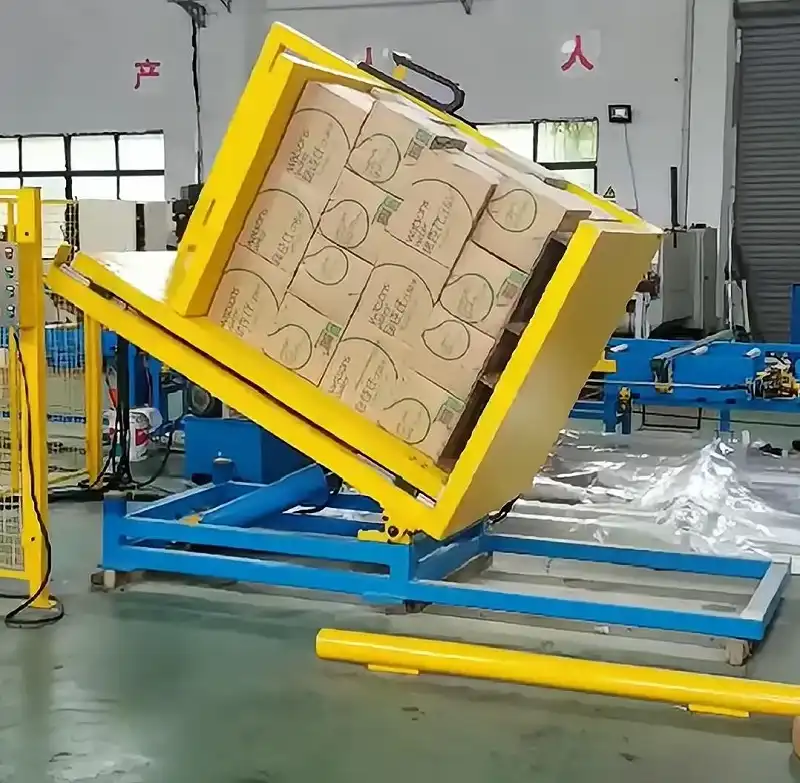
95 degree pallet tipper2 10. Energy Efficiency Considerations for Pallet Inverters
Energy consumption is an increasingly important factor:
- Cold Storage Energy Use: As refrigeration is energy-intensive, any efficiency gain is valuable. Look for:
- High-Efficiency Motors: Premium efficiency motors (e.g., IE3 or IE4 rated).
- Optimized Hydraulic Systems: Systems designed to minimize energy loss during operation and idle times.
- Fast Cycle Times: Directly reduces energy loss from open doors.
- Smart Controls: Features like auto-shutdown after periods of inactivity.
- Dry Warehousing Energy Use: While less critical than in cold storage, efficiency still matters. Focus on:
- Appropriate Sizing: Ensuring the motor and hydraulic system are sized correctly for the load, avoiding oversized, inefficient systems.
- Power Management Features: Inverters with energy-saving modes or efficient standby power consumption.
11. Cost Comparison: Cold Storage vs. Dry Warehousing Models
Investment and operational costs vary:
- Cold Storage Pallet Inverters:
- Initial Cost: Generally higher due to specialized materials (stainless steel), sealed/heated components, low-temperature rated hydraulics and electronics.
- Operational Cost: Can offer long-term savings through reduced energy loss (faster cycles), enhanced durability in harsh conditions leading to potentially longer lifespan, and preventing costly product spoilage. Maintenance costs might be slightly higher due to specialized parts/lubricants.
- Dry Warehousing Pallet Inverters:
- Initial Cost: Typically lower as standard materials and components suffice.
- Operational Cost: Generally lower maintenance costs. However, high-volume operations might require heavy-duty models, increasing the initial price. Energy costs are typically lower than refrigerated environments.
Calculating the Total Cost of Ownership (TCO), including purchase price, energy, maintenance, and potential downtime, provides a clearer picture.
12. Making the Final Selection: Key Decision Parameters
To select the optimal pallet inverter, systematically evaluate your specific requirements:
- Define Operating Environment: Accurately determine the temperature range (minimum/maximum), humidity levels, and any specific hygiene requirements (e.g., washdown procedures).
- Analyze Load Characteristics: Consider maximum weight, dimensions (L x W x H), stability, fragility, and types of pallets used (material, size, quality).
- Determine Throughput Needs: Calculate the number of pallets requiring inversion per hour or per shift to determine necessary cycle speed and durability.
- Assess Integration Requirements: Evaluate the need for integration with forklifts, pallet trucks, conveyors, AGVs, or WMS.
- Evaluate Space and Layout: Ensure the chosen inverter model fits within the available footprint and aligns with workflow patterns.
- Consider Budget vs. TCO: Balance the initial investment against long-term operational costs, including energy, maintenance, and expected lifespan.
- Consult with Experts: Engage with reputable manufacturers or suppliers who understand the nuances of both cold storage and dry warehousing applications. They can provide tailored recommendations and insights.
Conclusion: Tailoring Your Choice for Optimal Performance
Selecting the best pallet inverter hinges on a thorough understanding of your specific operational context – primarily whether it's a demanding cold storage environment or a high-volume dry warehousing setting. Cold storage necessitates models built for durability in low temperatures, corrosion resistance, and energy efficiency to protect products and control costs. Dry warehouses benefit most from versatility, robustness for high throughput, and seamless automation integration.
By carefully considering the factors outlined—environmental conditions, load types, throughput requirements, maintenance needs, automation potential, and cost implications—businesses can invest in a pallet inverter that not only meets their immediate needs but also enhances long-term productivity, improves worker safety, and contributes positively to the bottom line. Making an informed choice ensures this vital piece of material handling equipment becomes a valuable asset in your logistics operation.
Get Your Best Solution !