Streamlining Copper Tube Packaging: An Overview of Automatic Pancake Coil Wrapping Systems
Packaging pancake coils, particularly those made from copper tubing, requires precision and efficiency to protect the product and optimize logistics. Manual processes can be slow and inconsistent. An automatic pancake coil packaging machine offers a robust solution, automating the wrapping, bagging, and sealing process for improved productivity and package quality.
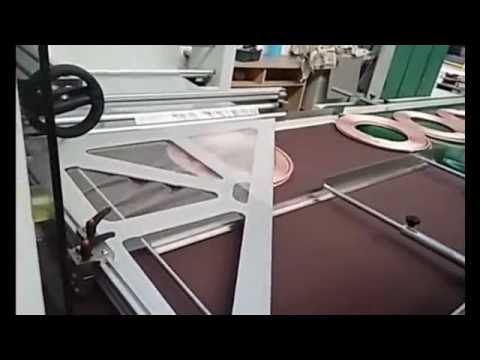
This type of automated system, like the one shown capable of handling coils with a maximum outer diameter (OD) of 650mm, is specifically designed for the unique requirements of pancake coils. These typically feature:
- Copper Tube Diameter: 6.76 mm to 32.3 mm
- Tube Length per Coil: 5,000 mm to 55,000 mm
- Layers per Coil: 1 to 2
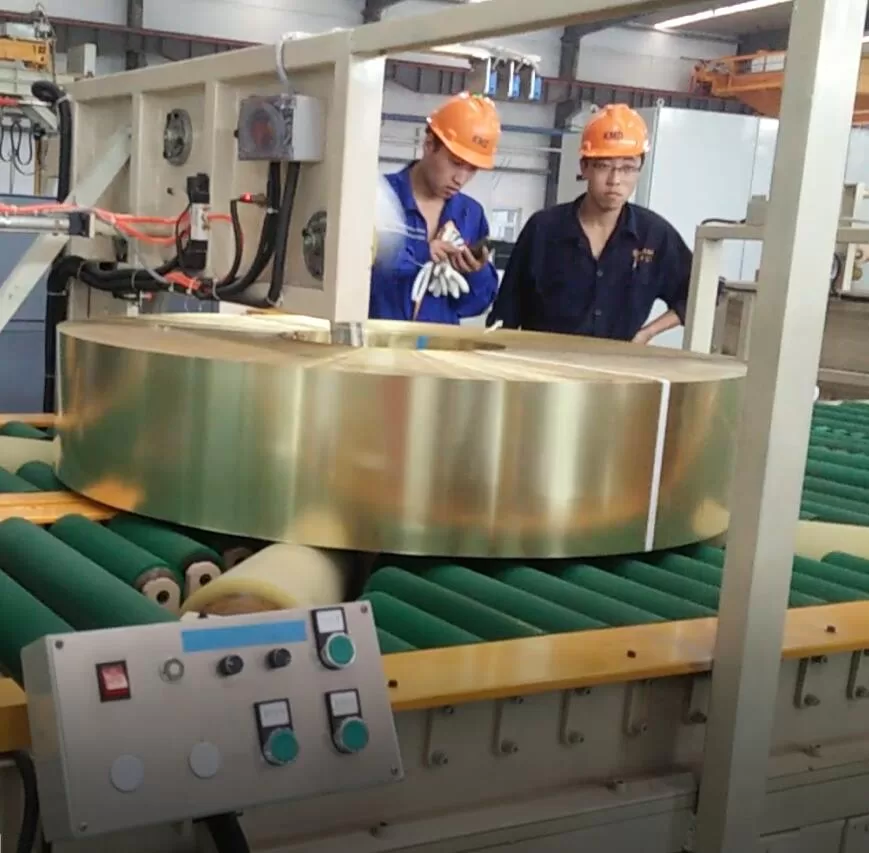
copper coil packing machine Key Features and Operational Stages of Automatic Pancake Coil Packaging Machines
Understanding the components and processes involved highlights the system's capabilities:
Automated Coil Handling and Feeding
- Tube Guide System: Utilizes guides, sprockets, and conveyors to automatically feed copper tubes into the coiling station. Maintains proper tension for consistently tight and uniform coils.
Bagging and Sealing
- Bag Supply: Features large roll holders to continuously supply bagging material. Includes mechanisms for precise cutting, guiding, and handling of bags.
- Sealing System: Employs impulse heat sealers or potentially UV-curable systems to create secure, durable seals around the coil packs. Temperature and pressure controls ensure effective sealing without damaging the product or packaging.
Optional Shrink Film Application
- Shrink Film Applicator: Some systems include a station to apply shrink film over the bagged coil before sealing.
- Heat Shrinking: The film is then typically shrunk using integrated electrical heaters or hot air guns, providing enhanced containment and stability to the packaged coil.

brass copper strip vacuum handling and welding line2 Control System and Automation
- Programmable Logic Controller (PLC): The core of the automation, the PLC manages all machine functions—coiling, bagging, sealing, shrinking (if applicable), and electro-mechanical movements—in a precise, pre-programmed sequence. Incorporates error-proofing logic.
- Operator Interface: Allows operators to set parameters for different tube dimensions or packaging requirements, monitor the process, and manage operations.
- Sensors and Switches: Utilizes various sensors (e.g., photoelectric, proximity) and limit switches to detect coil presence, position, and ensure correct machine sequencing and safety. Includes emergency stop buttons.
- Drive System: Employs AC motors, often with variable frequency drives (VFDs), allowing for adjustable speeds to optimize the packaging process for different coil sizes and materials.
Construction and Durability
- Frame: Typically built with a fully welded steel frame for robustness and long service life in industrial environments.
- Mounting: Usually floor-mounted for stability during operation.
- Enclosure: May feature weather-proof or protective enclosures for key components.
Monitoring and Quality Control (Optional)
- Visual Monitoring: Cameras or viewing ports can allow operators to observe critical processes.
- Sensor Feedback: Force and pressure transducers can monitor packing force, ensuring consistency and preventing potential damage to tube ends. This data aids in quality control and troubleshooting.
Benefits of Automating Pancake Coil Packaging
Implementing an automatic pancake coil packaging machine provides significant advantages over manual methods:
- Increased Productivity: Automated systems can achieve packing rates of 40-60 coils per hour or more, significantly outpacing manual packing (typically 20-30 coils/hour). This leads to higher throughput and operational efficiency.
- Consistent Package Quality: Automation ensures uniformity in coil tightness, bagging, and sealing across all units. This consistency enhances product protection and brand presentation, minimizing variance compared to manual packing.
- Reduced Labor Requirements: Automating the repetitive tasks of coiling, bagging, and sealing frees up personnel for other value-added activities.
- Improved Material Handling: Automated feeding and handling reduce the risk of damage to delicate copper tubes during the packaging process.
- Enhanced Safety: Enclosed automated systems minimize direct operator interaction with moving parts, improving workplace safety.
- Optimized Material Usage: Tightly packed coils require less storage space and can optimize transport logistics. Durable sealing minimizes waste compared to less secure manual methods. Using appropriately sized bags and controlled film application (if applicable) reduces material consumption.
Considerations for Implementation
When evaluating an automatic pancake coil packaging solution, consider:
- Coil Dimensions: Ensure the machine can handle your specific range of tube diameters, coil ODs, widths, and weights.
- Speed Requirements: Match the machine's throughput capacity to your production needs.
- Packaging Material: Compatibility with desired bagging materials (e.g., PE film) and shrink film types.
- Integration: How the machine will fit into your existing production line.
- Customization: Availability of options like labeling, specific sealing types, or advanced monitoring features.
- Support and Maintenance: Availability of technical support, spare parts, and training.
By carefully evaluating these factors and understanding the capabilities of modern automated systems, manufacturers can effectively implement solutions that significantly enhance their copper tube pancake coil packaging operations. For more information on copper standards and applications, resources like the Copper Development Association can be valuable.