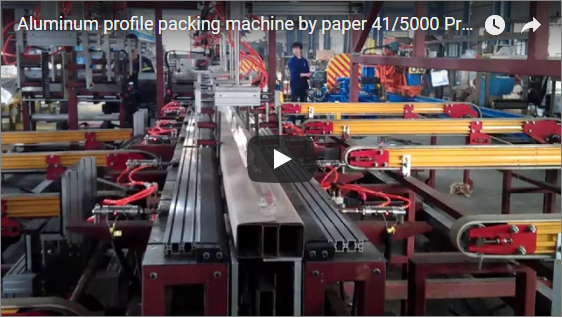
Samenvatting Our automatic bagging machine forms a film envelope around each profile or tube, then heat-seals and cuts it. It handles tubes of 9.5 – 50 mm OD and 6,000 mm long at about 10–50 m/min. We size it from your tube sizes, bundle shape and output per shift.
Inhoudsopgave
- How bagging works
- Does the tube fit
- Bagging speed and output
- Folie en afdichting
- Controls and changeovers
- Nutsvoorzieningen en veiligheid
- Selectie checklist
- Veelgestelde vragen over techniek
- Volgende stap
- Gerelateerd lezen
- Bronnen
How bagging works
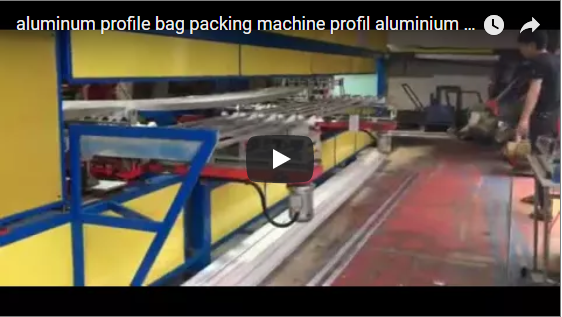
The entrance conveyor feeds the profiles continuously into the bagging station. Film is fed automatically and formed into an envelope with the profile inside it. The machine then heat-seals and cuts the film between pieces, and the outlet conveyor carries each bagged piece to discharge.
The result is a sealed bag around the profile rather than a spiral wrap, so the surface is fully enclosed. In our video, the sealed envelope carries a stainless steel bundle out of the bagging station on the outlet conveyor.

Does the tube fit?
| Parameter | Zakkenmachine |
|---|---|
| Buismaat | OD 9.5–50 mm |
| Buislengte | 6,000 mm as listed, other lengths confirmed in proposal |
| Verpakkingssnelheid | ongeveer 10–50 m/min |
| Bag grootte | adjustable for different tube OD |
Illustrative example: a 25 mm stainless tube, 6,000 mm long, is within the listed tube window. For profile bundles, we confirm the bag size on your bundle drawing.
Bagging speed and output
Illustrative example for 6,000 mm pieces, film travel only:
| Verpakkingssnelheid | Time per piece | Pieces per hour |
|---|---|---|
| 50 m/min | 7.2 s | 500 |
| 10 m/min | 36 s | 100 |
These figures exclude feeding gaps and film roll changes. Feeding and the outlet conveyor are automatic, so the real limit is often how fast profiles arrive from upstream.
Folie en afdichting
| Item | Detail |
|---|---|
| Film | BOPP or PE |
| Filmrol | OD 100–200 mm, core 75 mm |
| Film dikte | 30–60 micron |
| Afdichting | constant temperature heat sealing and cutting |
| Temperatuurregeling | precise, for sealing |
Sealing is smokeless and leaves no packing material residue. Changing the film roll is easy, and we confirm the roll size against your output.
Controls and changeovers
| Item | Detail |
|---|---|
| Controleer: | PLC program, English menu |
| Modes | handmatig en automatisch |
| Snelheid | adjusted by inverters |
| Packing action time | adjustable for different packing purposes |
| Zakafdichting | automatisch |
For a new tube OD, the bag size is adjusted to the new diameter, and the packing action time is set to suit.
Nutsvoorzieningen en veiligheid
| utility | Zakkenmachine |
|---|---|
| Stroomvoorziening | 380 V, 3 fase, 60 Hz |
| Luchttoevoer | 5-7 bar |
Sensors and mechanical limit stoppers provide safety, and motors have over-current protection. The standards that apply depend on the destination market. For CE markets, ISO 12100 sets the risk-assessment method and EN 415-10 sets general requirements for packaging machines.
Selection checklist for a profile bagging machine
- Tube or profile sizes and lengths.
- Single pieces or bundles.
- BOPP or PE film, and thickness.
- Pieces per hour needed.
- Upstream feeding and discharge layout.
- Compressed air at 5–7 bar.
Veelgestelde vragen over techniek
Q: What tube sizes does the bagging machine take? A: OD 9.5–50 mm, 6,000 mm long, with the bag size adjustable for different OD.
Q: How fast does it bag? A: About 10–50 m/min, or 7.2–36 s for a 6,000 mm piece.
Q: Which films can we use? A: BOPP or PE, 30–60 micron.
Q: Does sealing leave smoke or residue? A: No. Sealing is smokeless and leaves no material residue.
Q: What utilities does it need? A: 380 V, 3 phase, 60 Hz power and 5–7 bar air.
Volgende stap
We plan your bagging machine in three steps:
- Dien uw lay-outtekening in. with tube sizes, lengths and pieces per hour to info@fhopepack.com.
- Ontvang binnen 48 uur een offerte., with the machine, film and layout.
- Plan een locatiebezoek to fit the machine to your line.
Gerelateerd lezen
- Automatische verpakkingsmachine met aluminium profiel
- Automatische verpakkingslijn voor aluminium profielen
- Subbundelwikkelmachine met aluminium profiel
- Video: verpakkingsmachine en wikkellijn voor aluminiumprofielen
- Video: machine voor het stretchwikkelen van aluminiumprofielen
Bronnen
- Bagging machine data: automatic aluminum profile bagging machine page
- De machine in actie: our profile bagging machine video on YouTube
- Toepassingsgebied van de normen: ISO 12100:2010, EN 415-10: 2014
Laatst beoordeeld: 04-10-2026