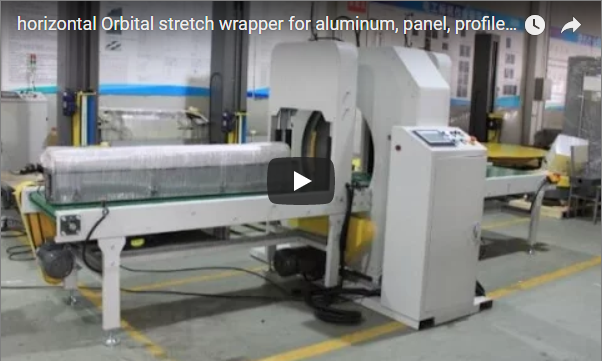
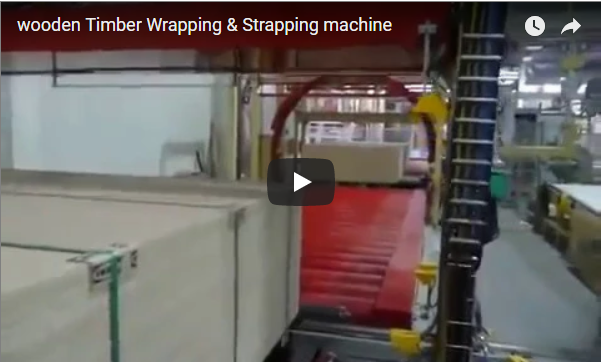
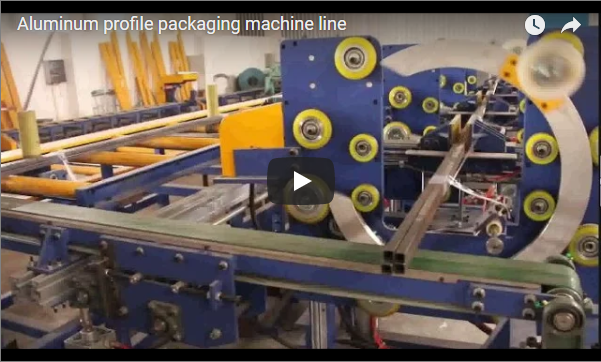
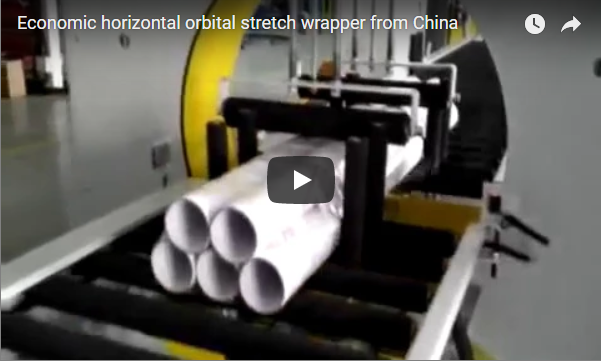
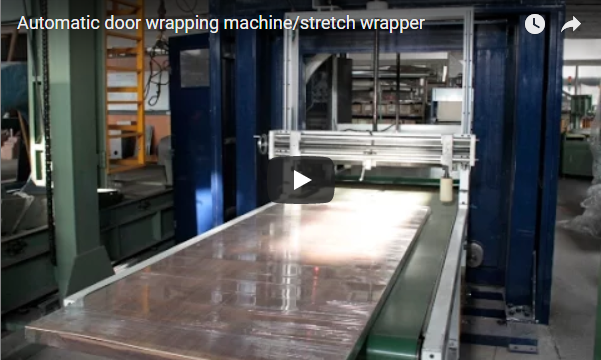
Resumen ejecutivo A sandwich panel wrapping machine wraps a whole stack of panels in stretch film as it passes on a roller conveyor through a rotating ring, so the stack leaves the line as one sealed bundle. In this clip a stack enters the ring at about 6 s and is out the far side, fully wrapped, by about 28 s. Our E1800 horizontal orbital wrapper is specified for stacks over 1,200 mm long, 400 to 1,800 mm wide and 50 to 1,500 mm high, configured per project.
Índice
- Lo que muestra el clip, en orden
- Why sandwich panels are stretch wrapped
- Tiempo de ciclo de envoltura en el clip
- Especificaciones del E1800
- Comprobación de Takt
- Selection checklist for a sandwich panel wrapping machine
- Controles y seguridad
- Preguntas frecuentes sobre ingeniería
- El próximo paso
- Lectura relacionada
- Fuentes
Lo que muestra el clip, en orden
The wrapper is a tall blue frame with a large round opening, set between an infeed and an outfeed roller conveyor. Stacks of white sandwich panels, about ten to twelve panels each, travel through it.
- De 0 a aproximadamente 4 s. The infeed is empty. A worker stands beside a stack of wooden pallets on the left, and an operator stands at the control station behind the frame.
- Aproximadamente de 6 a 10 segundos. A stack of panels runs along the infeed into the ring opening.
- Aproximadamente de 12 a 18 segundos. The stack moves on through the ring and the film builds up over its sides.
- Aproximadamente de 20 a 28 segundos. The whole stack has passed the ring and leaves on the outfeed, wrapped as one bundle.
- Aproximadamente de 30 a 58 segundos. The next stack, with printed film on its panel faces, runs steadily into the ring without a stop.
- Aproximadamente de 60 a 76 segundos. Another stack passes through. An overhead crane hook hangs above the conveyor and does not touch the panels.
Why sandwich panels are stretch wrapped
Sandwich panels have painted metal faces that scratch easily and edges that dent, and a stack of loose panels shifts in transport. A stretch film wrap around the whole stack holds the panels together, keeps dust and water off the faces and edges, and turns the stack into one unit for the crane or the fork-lift.
A horizontal orbital wrapper does this without lifting the stack off the line. The film roll is carried on a ring that turns around the stack while the conveyor moves it through, so the film lays on in a spiral along the full length.
| Wrapper setting | Lo que controla |
|---|---|
| Velocidad del transportador | Time in the ring and the film overlap |
| Velocidad del anillo | Number of film turns per metre |
| Ancho de la película | Overlap per turn |
| Talla de anillo | Largest stack that passes |
Tiempo de ciclo de envoltura en el clip
| Pisa el clip | Ventana de tiempo | Duración |
|---|---|---|
| Stack enters the ring | aproximadamente 6 a 10 s | alrededor de 4 s |
| Stack passing through the ring | aproximadamente 12 a 18 s | alrededor de 6 s |
| Stack out on the outfeed | aproximadamente 20 a 28 s | alrededor de 8 s |
| Entry to exit, total elapsed | aproximadamente 6 a 28 s | alrededor de 22 s |
The steps above are read from frames 2 s apart, so the total elapsed time is longer than the sum of the listed steps. Stacks follow one another without a stop on the clip, so the line runs at the speed of the conveyor through the ring. On our E1800 the conveyor runs at 4 to 15 m/min, so a 6 m stack takes 24 to 90 s to pass the ring, and a longer panel takes proportionally longer.
Especificaciones del E1800
| E1800 horizontal orbital wrapper | Especificación |
|---|---|
| Longitud de la pila | Más de 1,200 mm |
| Ancho de pila | 400 1,800 a mm |
| Altura de la pila | 50 1,500 a mm |
| Bundle diagonal (OD) | menos de 1,800 mm |
| Transportadores de entrada y salida | 2,000 mm cada uno |
| Velocidad del transportador | De 4 a 15 m / min |
| Velocidad del anillo | 10 a 60 rpm |
| Potencia | aproximadamente 4.5 kW, CA 380 V, 60 Hz, trifásico |
| Film | LLDPE, PE or PVC, 250, 300 or 500 mm wide |
Comprobación de Takt
Takt for a panel line comes from the panel line output, usually given in metres per minute. If the panel line delivers stacks at a rate equivalent to 8 m/min, the wrapper conveyor has to run at 8 m/min or more, inside the 4 to 15 m/min range. The ring speed is then set so the film overlap stays where you want it at that conveyor speed.
Selection checklist for a sandwich panel wrapping machine
- Panel length range, stack width and stack height.
- Stack diagonal against the 1,800 mm limit on the E1800; maximum width and height cannot be combined.
- Panel line output in metres per minute.
- Film type and width, and whether the stack ends need covering.
- Conveyor height to match the stacker and the outfeed.
- Crane or fork-lift pickup at the outfeed.
Controles y seguridad
The turning ring and the conveyor nip points are the danger zones. On the clip the workers stay beside the pallet stack and at the control station, away from the ring, and the crane hook stays clear of the panels. Keep everyone and any lifting gear away from the ring and the conveyor while stacks are moving.
Stop, isolate and lock out the wrapper before anyone threads film, clears a jam or works on the ring.
Las normas aplicables dependen del mercado de destino. Para los mercados CE, la norma ISO 12100 establece el método de evaluación de riesgos y la norma EN 415-10 abarca los requisitos generales para las máquinas de envasado, que establecen las protecciones y el sistema de parada de emergencia.
Preguntas frecuentes sobre ingeniería
Q: What stack sizes fit the E1800? A: Stacks over 1,200 mm long, 400 to 1,800 mm wide and 50 to 1,500 mm high, provided the bundle diagonal stays under 1,800 mm. Maximum width and maximum height cannot occur together.
Q: How long does a stack take to pass the ring? A: On the clip, about 22 s from entry to exit. On the E1800 a 6 m stack takes 24 to 90 s at 4 to 15 m/min.
Q: Which film does the wrapper use? A: LLDPE stretch film, PE film or PVC, in 250, 300 or 500 mm widths.
El próximo paso
We size a sandwich panel wrapping machine in three steps:
- Envíe su plano de distribución with the panel length range, stack width and height, and the panel line output, to info@fhopepack.com.
- Reciba una propuesta en 48 horas., including the ring size, the conveyor lengths and the speed check against your line.
- Solicitar una visita al sitio so we confirm the line height, the space and the pickup at the outfeed.
Lectura relacionada
- E1800 horizontal panel stretch wrapper
- EPS, 3D and sandwich panel packaging line
- Envolvedora orbital semiautomática para perfiles largos
- Máquina envolvedora de palets con prensa superior
Fuentes
- Especificaciones del envoltorio: Página del producto: Envolvedora horizontal de film estirable E1800
- Sincronización del clip: tiempos de fotograma tomados del clip, 2 s entre fotogramas.
- Máquina en acción: nuestro video en YouTube
- Alcance de las normas: ISO 12100:2010, EN 415-10: 2014
Última revisión: 05/10/2026