Resumen ejecutivo: La protección de una carga en palé depende de la superficie menos cubierta. La mayoría de las envolvedoras cierran los laterales y dejan la parte superior abierta, precisamente donde se acumulan primero el polvo, la lluvia y las marcas de manipulación. Una envolvedora de palé con cubierta superior cierra la carga por todas sus caras durante el proceso. Esta página explica el mecanismo, cuándo conviene especificar una cubierta superior y los parámetros de referencia de la clase de placa superior FHOPE A200.
Índice
- Cómo funcionan conjuntamente la lámina superior y el revestimiento lateral.
- Techo cubierto o techo descubierto
- Programa de envoltura y detección de altura
- Parámetros de ingeniería básicos
- Controles y seguridad
- Preguntas frecuentes sobre ingeniería
- Lista de verificación de selección
- Lectura relacionada
- Fuentes
- El próximo paso
Cómo funcionan conjuntamente la lámina superior y el revestimiento lateral.
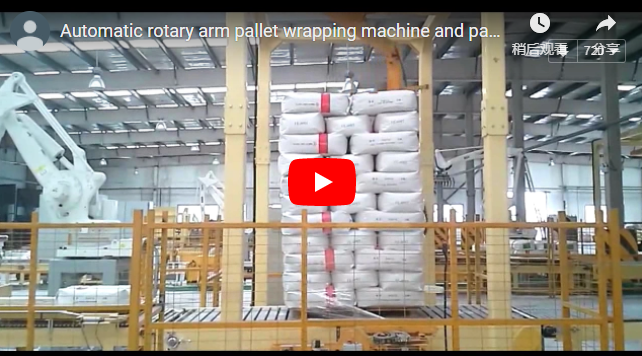
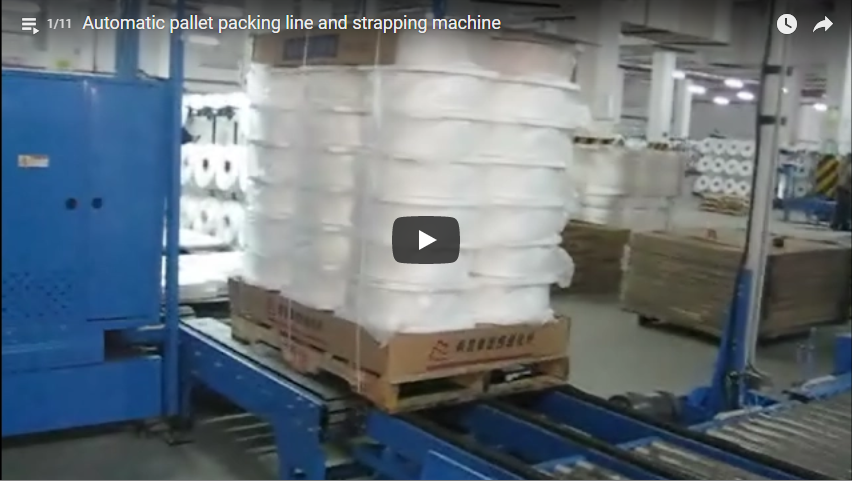
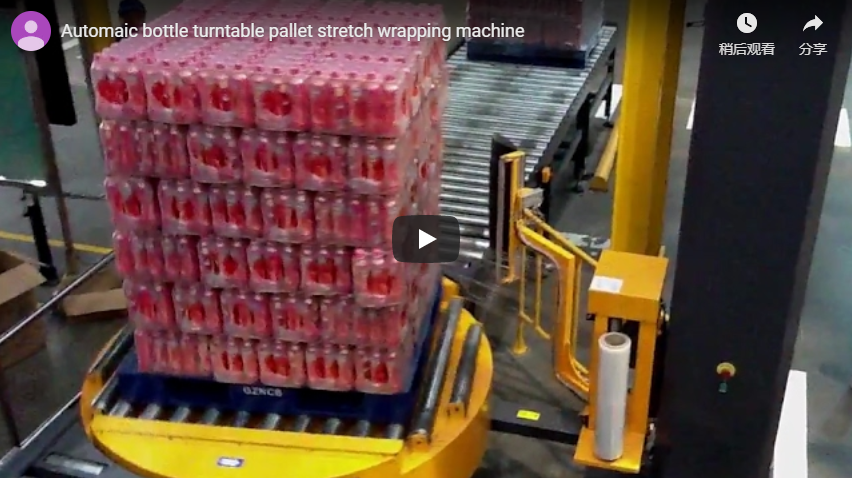
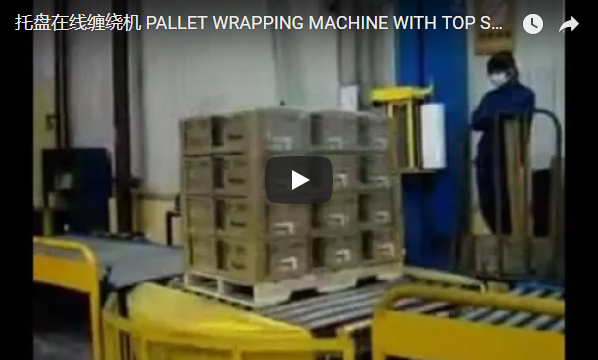
La envolvedora funciona en una sola secuencia sobre una carga paletizada. Una placa superior acolchada desciende sobre la carga y la mantiene en su lugar mientras la película, proveniente de un rollo superior, se extiende por los laterales y envuelve la pila. Cuando la película alcanza el punto de ajuste, la placa se eleva y la carga se cierra por la parte superior y los cuatro lados en un solo ciclo, de modo que no queda nada expuesto.
La carga permanece en posición vertical sobre la estación de paletización durante todo el ciclo. Al tratarse de una plataforma giratoria con placa superior de la clase A200, la misma geometría de la plataforma puede utilizarse con una plataforma de paletización giratoria, y la disposición se adapta a la mercancía y a la línea de producción durante la fase de ingeniería del proyecto.
Techo cubierto o techo descubierto
Especifique la cubierta superior cuando el destinatario evalúe la carga por su cara superior. Las cajas impresas, el transporte en condiciones de polvo o lluvia, y las cargas que deben llegar con un aspecto limpio justifican el uso de la cubierta superior, ya que proporciona al destinatario una carga sellada en lugar de una plataforma abierta.
Elija una envoltura de film únicamente cuando la parte superior pueda permanecer abierta, como en el caso de productos que ya llevan tapa o que admiten retractilado. Casi todos los lotes de almacenamiento mixtos se benefician de una cubierta superior, al menos en la capa exterior, por lo que la decisión se toma para cada producto según las especificaciones.
Programa de envoltura y detección de altura
El programa decide cómo se coloca el envoltorio. El número de vueltas de envoltura superior e inferior y el paso de la película se configuran para cada producto en el PLC.
Un sensor fotoeléctrico mide la altura de cada carga, y la película se aplica con preestiramiento motorizado antes de que alcance la carga, lo que garantiza un estiramiento uniforme en lugar de depender de la tensión de paso. En una línea mixta, los programas almacenados para cada producto mantienen la configuración en el panel en lugar de en la memoria del operador.
Parámetros de ingeniería básicos
Los valores que aparecen a continuación son registros de cotización publicados por FHOPE; considérelos como referencia y confirme su carga en el departamento de ingeniería del proyecto.
| Parámetro | Valor de referencia | Base |
|---|---|---|
| Clase de máquina | Envolvedora de palets con plataforma giratoria A200 con placa superior | récord de la placa superior FHOPE A200 |
| Tamaños de palés estándar | 1000 × 1200 mm y 1100 × 1200 mm | récord de la placa superior FHOPE A200 |
| Rango de altura de carga | 1600 – 3000 mm | récord de la placa superior FHOPE A200 |
| Clase de rendimiento | 10–30 palets/hora | récord de la placa superior FHOPE A200 |
| Aplicación de película | preestirar con potencia antes de la aplicación | récord de la placa superior FHOPE A200 |
| detección de altura | fotocélula con control PLC | récord de la placa superior FHOPE A200 |
| Dimensionamiento final | Huella de palés y ciclo por proyecto | Ingeniería de proyectos |
Controles y seguridad
El suministro estándar está diseñado conforme a las normas CE (EN ISO 13849-1 / EN 415-10) y a los requisitos de diseño de OSHA. Incluye de serie un botón de parada de emergencia amarillo y una protección alrededor de la platina y la zona de la película; el ciclo no se ejecutará con la protección abierta.
Para configuraciones con cintas transportadoras, la entrega estándar incluye vallas perimetrales entrelazadas, cortinas fotoeléctricas de seguridad en las aberturas de entrada y salida, y circuitos de parada de emergencia de doble canal en cada puesto de operador. La aplicabilidad de las cláusulas para su mercado de destino se confirma durante la ingeniería del proyecto.
Preguntas frecuentes sobre ingeniería
P: ¿Qué tamaños de palets admite la máquina? R: El registro abarca palets estándar de 1000 × 1200 mm y 1100 × 1200 mm, con una altura de carga de 1600 a 3000 mm. Elija la plataforma cuya profundidad de 1200 mm coincida con su carril de transporte y verifique el voladizo del palet; otras dimensiones se diseñan según el proyecto.
P: ¿Por qué pagar por una cubierta superior? R: Utilice una cubierta superior cuando el transporte sea polvoriento o húmedo, cuando las cajas estén impresas y deban llegar limpias, o cuando el destinatario revise la parte superior de la carga al llegar. La cubierta cierra la plataforma que queda expuesta con un envoltorio abierto.
P: ¿Qué tan rápida es la máquina? R: La velocidad de la clase es de 10 a 30 palets por hora. La tasa objetivo se confirma en función del ritmo de su línea en el departamento de ingeniería del proyecto.
P: ¿Debo modificar el programa para diferentes alturas de pila? R: No, el sensor fotoeléctrico mide la altura de cada carga al entrar, y el PLC ajusta automáticamente el envoltorio a esa altura, por lo que las pilas de diferentes alturas funcionan sin necesidad de modificar el programa.
P: ¿Qué normas de seguridad se aplican? R: La entrega estándar está diseñada conforme a los requisitos CE (EN ISO 13849-1 / EN 415-10) y OSHA, con parada de emergencia, protección y acceso enclavado; la cobertura de las cláusulas se confirma para cada mercado en la ingeniería del proyecto.
Lista de verificación de selección
- Dimensiones del palé y altura de apilamiento, eligiendo la plataforma de 1000 × 1200 mm o 1100 × 1200 mm según el ancho de la cinta transportadora, o un tamaño personalizado para cada proyecto.
- Política de la parte superior: parte superior cubierta o parte superior descubierta, según el producto.
- Ancho de la película, tipo y programa de envoltura, incluyendo el número de rollos superior e inferior y el paso.
- Rendimiento en palets por hora, ajustado al ritmo de la línea de producción.
- Integración: cintas transportadoras de entrada y salida para una línea de envasado en línea.
- La potencia, el voltaje, la fase y la frecuencia de cada emplazamiento se confirmaron en la fase de ingeniería del proyecto.
- Alcance de seguridad y cobertura de las cláusulas para el mercado de destino.
Lectura relacionada
- Envolvedora automática de platos giratorios con lámina superior
- Envolvedora con plataforma giratoria B200
- Máquina envolvedora de palets A100
- Envolvedora de palets robótica
- Envolvedora de film estirable con anillo giratorio
Fuentes
- Vídeo de demostración: Máquina de envoltura de palets FHOPE con cubierta de lámina superior (YouTube), ciclo de envoltura superior y lateral en funcionamiento.
- Registro del modelo: Envolvedora de palets con plataforma giratoria FHOPE A200 con placa superior, presupuesto y registros de ingeniería, 08/10/2026.
- Política de selección y arquitectura de seguridad: Revisión de ingeniería de FHOPE, 08/10/2026.
- Los valores de referencia indicados anteriormente corresponden a los registros de FHOPE; las cifras finales se confirman en el departamento de ingeniería del proyecto.
El próximo paso
- Indique el tamaño de su palé, la altura de la pila y el rendimiento. a info@fhopepack.com — Superficie, altura y palés por turno.
- Reciba una propuesta personalizada en 48 horas., con opción de lámina superior, programa de envoltura e integración de línea adaptados al tamaño de sus productos.
- Solicite una visita gratuita al sitio. Confirme la alimentación eléctrica, el acceso y la entrega de la cinta transportadora antes de realizar su pedido.
Última revisión: 08/10/2026