Where the Seconds Go in an Exchange Cycle
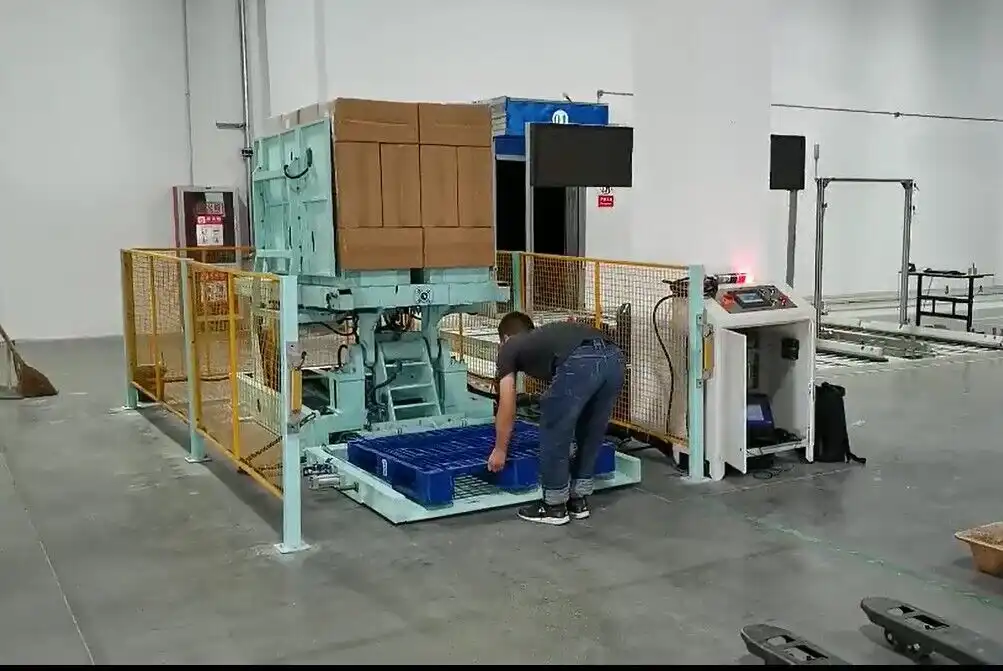
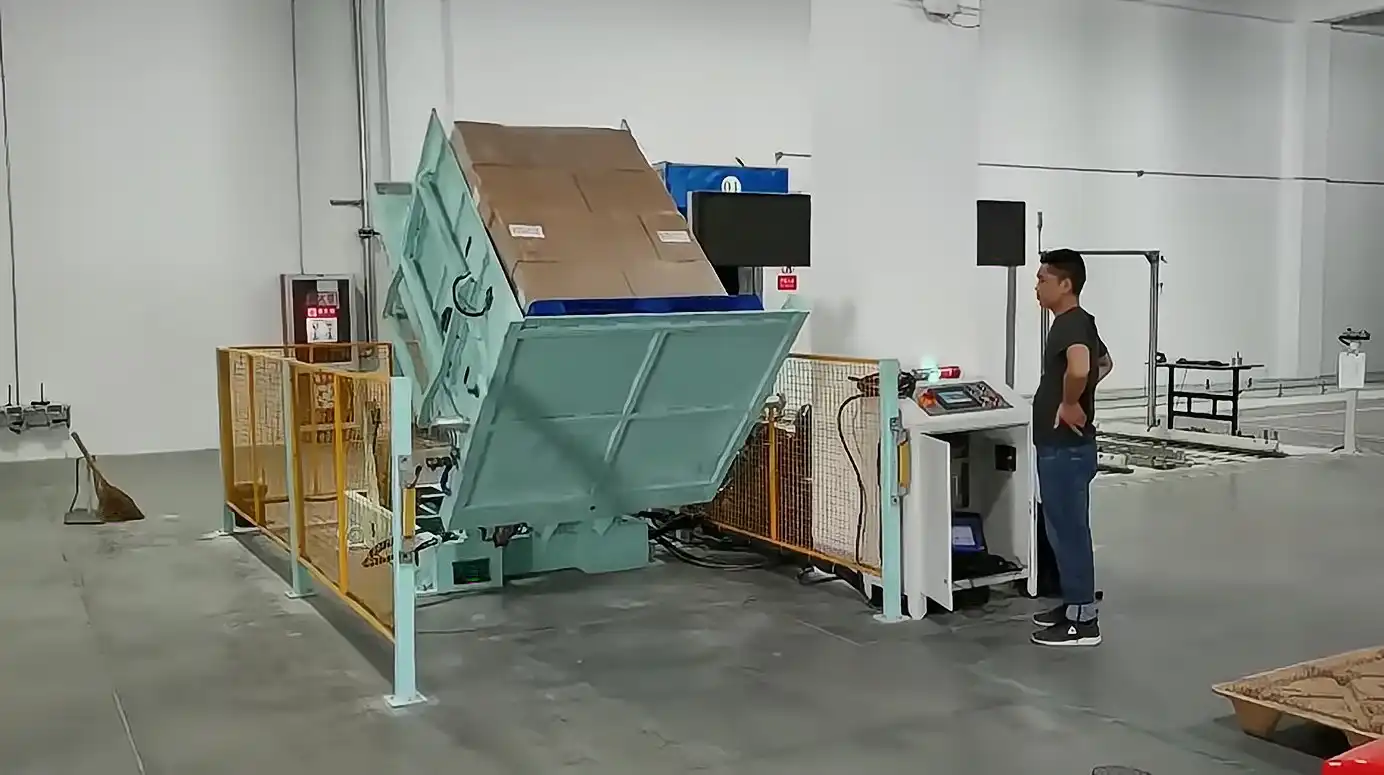
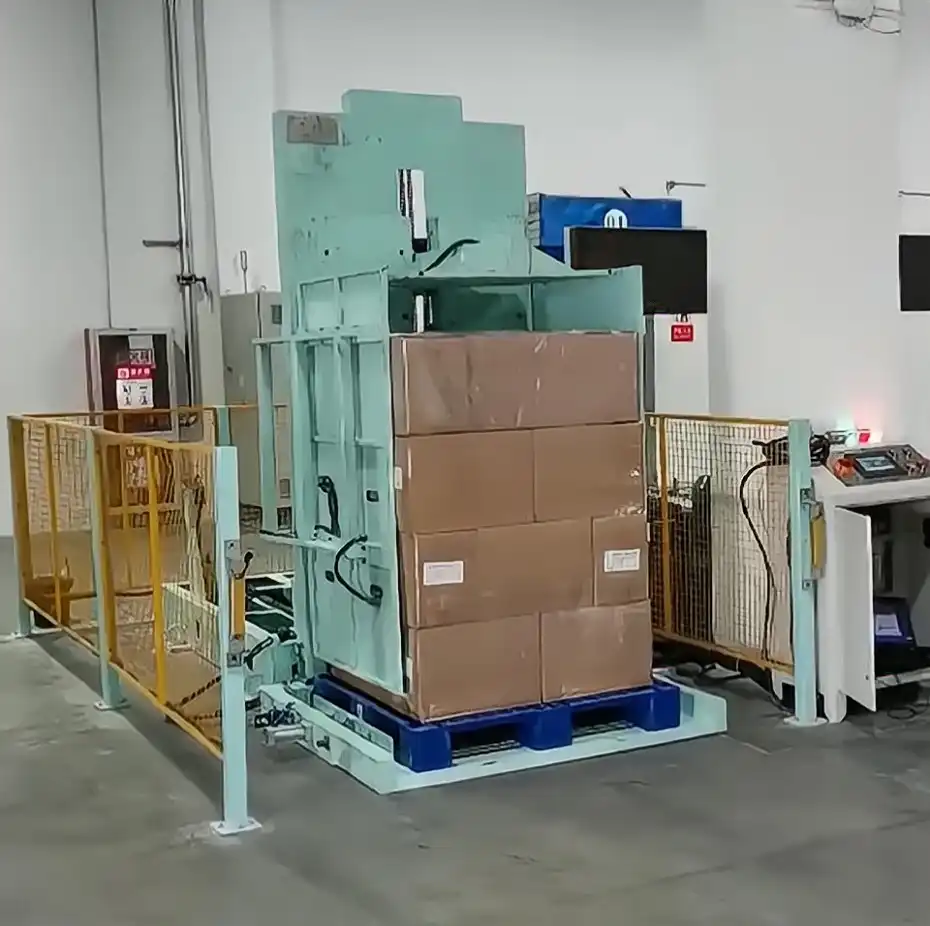
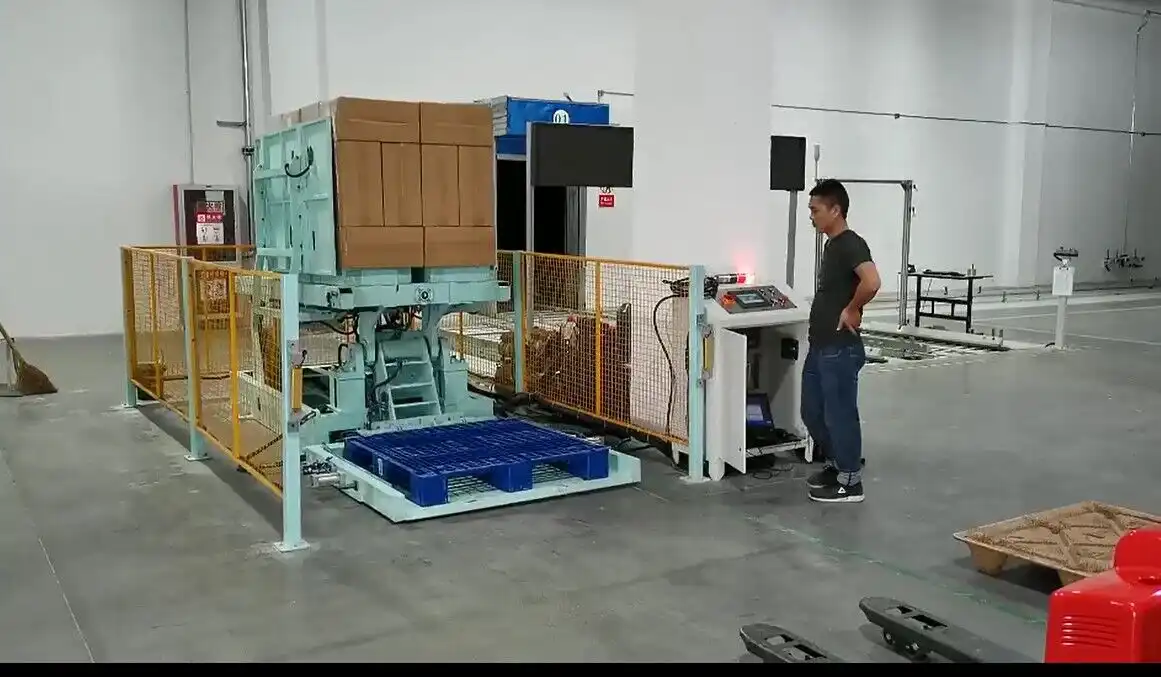
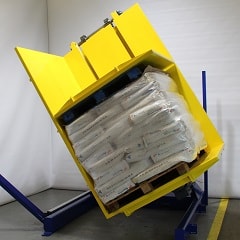
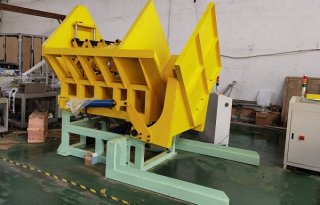
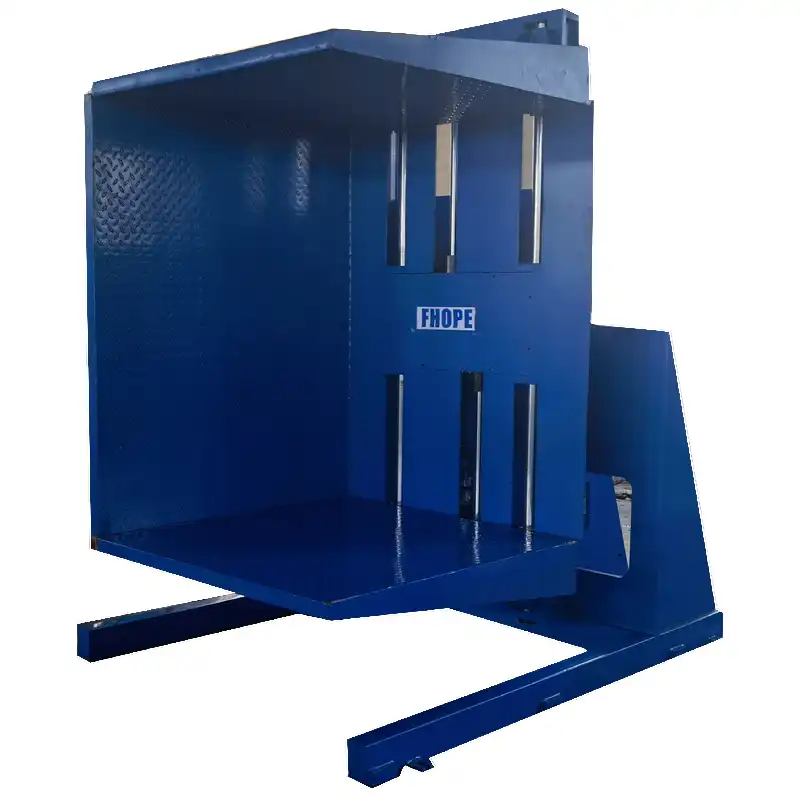
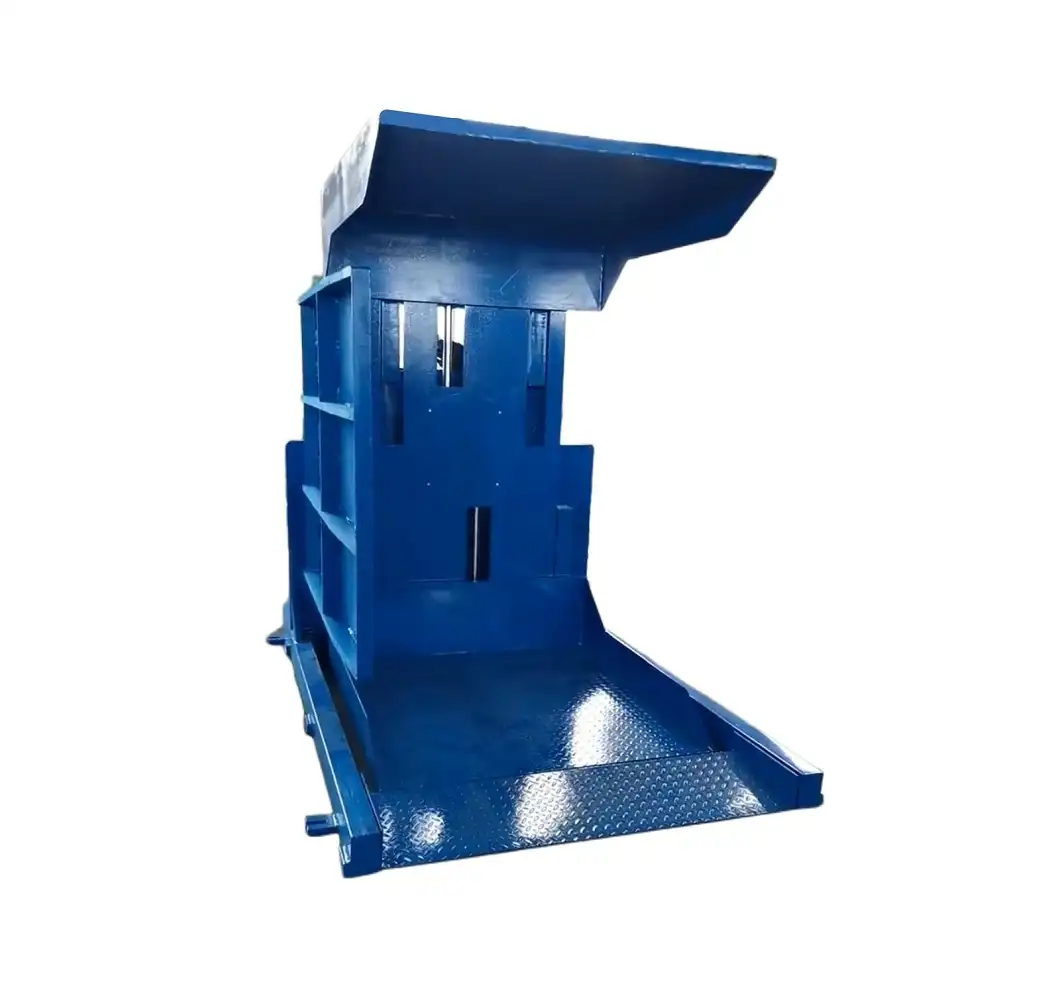
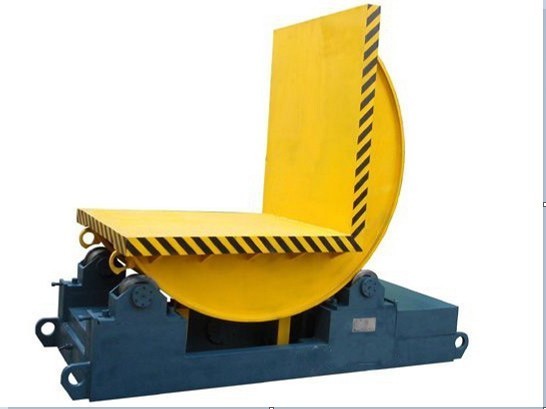
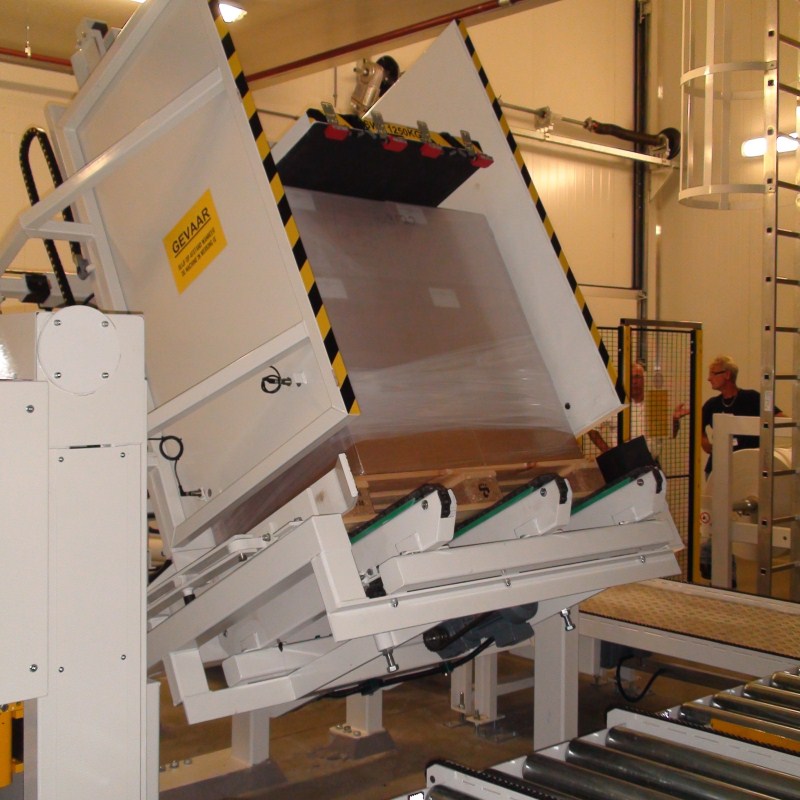
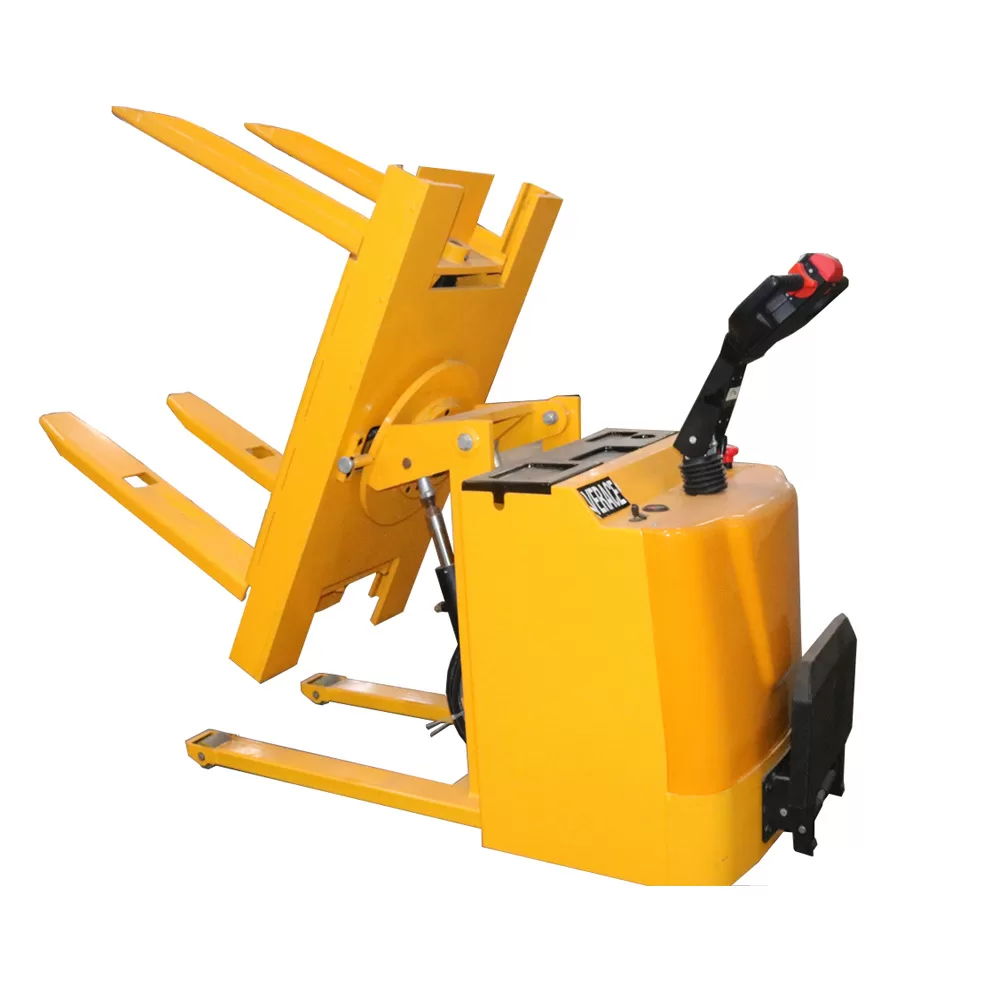
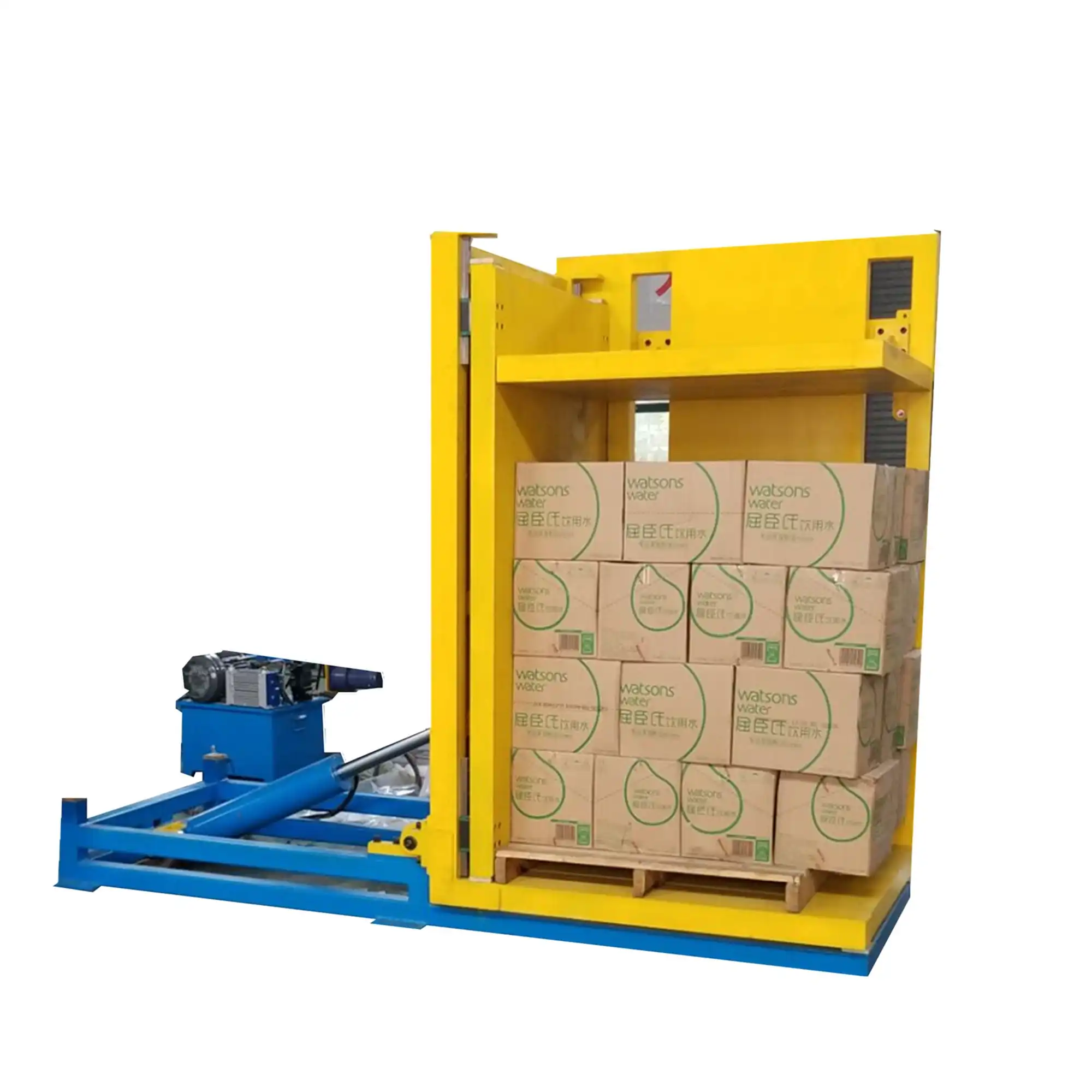
A floor-level pallet changing machine divides its complete cycle into five distinct mechanical stages. The platform accepts the load at grade, elevates through hydraulic cylinder displacement, executes a counterbalanced rear rotation, pauses for bottom skid replacement, and completes controlled descent.
Actuator velocity and fluid displacement dictate machine throughput before human intervention begins. Hydraulic piston displacement governs the initial elevation phase:
For an effective cylinder bore area of 0.015 square meters, a vertical lift stroke of 0.25 meters completed in 10 seconds requires an effective hydraulic supply rate:
The rotational phase operates under proportional directional valves that generate a trapezoidal acceleration-velocity-deceleration profile. The total mechanical phase duration follows the kinematic summation:
T_cycle = T_elevation + T_tilt_back + T_dwell + T_tilt_forward + T_descent (example only)
T_cycle = 11.5 + 14.2 + 22.0 + 13.8 + 10.5 = 72.0 seconds (example only)
Angular motion introduces variable gravitational loading on the primary structural pivot. The center of mass creates a dynamic moment arm:
Torque_dynamic = Mass_total × g × Center_distance × sin(Theta_rotation) (example only)
As the tilt angle passes vertical and settles into the over-travel resting position, the normal load shifts from the base plate to the structural spine. The retention force resting against the lower lip drops to near zero, freeing the empty pallet.
Verify cycle timing on site by connecting a pressure transducer and digital logger to the main hydraulic block. Record the pressure rise time during initial elevation; an uncommanded pressure spike exceeding 18.0 MPa indicates mechanical binding in the lift column guide shoes. Monitor the proportional valve ramp down at terminal rotation; the deceleration phase must hold between 1.5 and 2.0 seconds to prevent dynamic shock loads on packaging strapping.
How One Station and Two Stations Compare
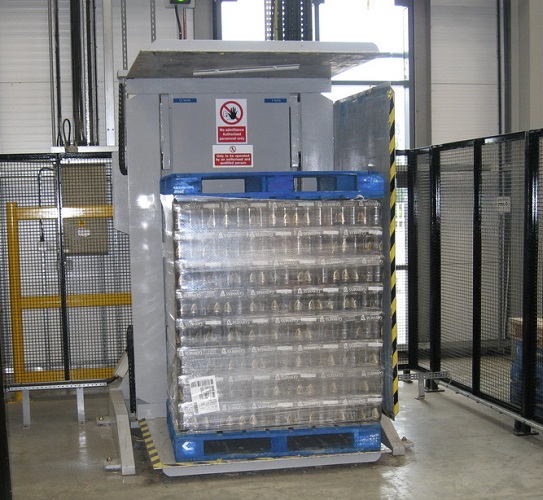
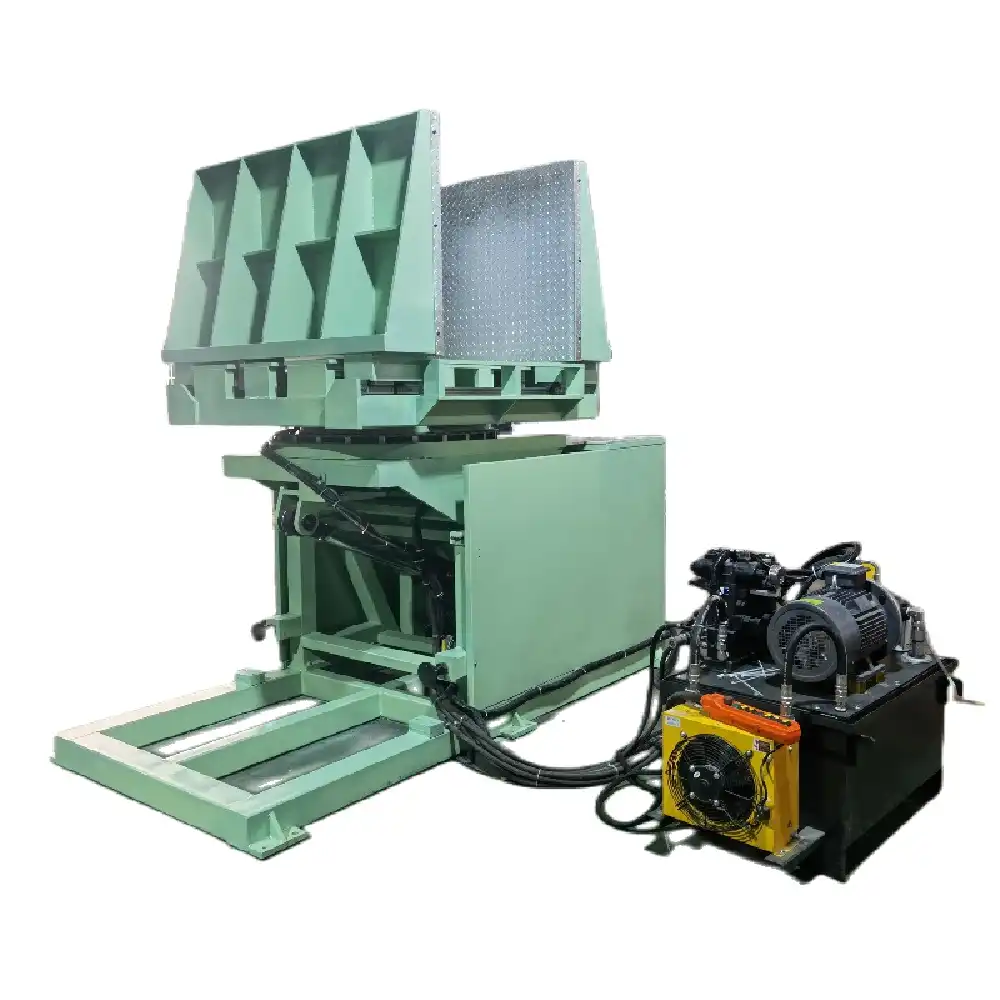
A single station pallet changing machine executes loading, structural tilting, pallet extraction, and reloading sequentially within a shared envelope. A two station architecture decouples material tilting from pallet handling, running parallel operations that dramatically decrease cycle dead time.
Single-unit designs force the primary lift carriage to remain completely idle while the base pallet is manually disengaged and replaced. Dual-station platforms integrate automated transfer shuttles or parallel intermediate holding zones. Throughput comparison derives from critical path analysis:
T_critical_single = T_stage + T_motion + T_swap + T_unstage (example only)
T_critical_dual = max(T_stage_motion, T_pallet_prep) + T_transfer (example only)
If a single station requires 98 seconds total processing time, hourly theoretical output reaches:
In a dual-station configuration, an automated shuttle introduces the replacement base while the primary platform completes its reverse rotation. Assuming an overlapping pallet staging window of 28 seconds, the net operational cycle drops:
T_net_dual = 98 - 28 = 70.0 seconds (example only)
Field calibration between dual stations requires physical alignment mapping. Measure structural runout between the transfer bed and the tilting carriage using dial indicators mounted to linear slides. Maximum permissible horizontal runout across a 1400 mm frame width cannot exceed 1.2 mm. If transfer motors slip during pallet indexing, inspect variable frequency drive torque limits and ensure drive chains maintain 10 to 15 mm of mid-span vertical deflection.
What the Handshake Between Infeed and Outfeed Requires
Proper handshaking between infeed transport, exchange platform, and outfeed transit prevents equipment collisions and structural overload. The system uses optical interlocks, hardwired safety circuits, and position sensors to confirm that the platform is stationary at ground level before vehicles enter.
Operational handshakes demand continuous verification of physical and electrical states across defined line boundaries. The supervisory programmable logic controller (PLC) executes safety bus communication using optical muting arrays, zone scanners, and hardwired force-guided interlock relays. The safety circuit verifies zero energy state and positive mechanical stop engagement before granting clearance.
The minimum safety distance for perimeter optical curtains obeys standardized industrial reaction dynamics:
Safety_distance = Velocity_approach × Reaction_time + Zone_penetration (example only)
S_dist = 1600 mm/s × (0.025 s_sensor + 0.035 s_plc + 0.050 s_brake) + 120 mm (example only)
S_dist = 1600 × 0.110 + 120 = 296 mm (example only)
Dual hydraulic safety valves monitor spool position via inductive proximity targets. If either spool fails to seat within 40 milliseconds of de-energization, the system enters an unresettable fault state.
Execute the following safety verification checklist during routine line commissioning:
-
Inspect Category 4 dual safety relays; measure coil response latency under simulated emergency stops to verify de-energization within 20 milliseconds.
-
Align class 1 laser area scanners to project a 1800 mm entry perimeter; verify optical beams correctly blank out fork tines while tripping on operator boots.
-
Calibrate differential pressure switches across the dual mast lift cylinders; confirm that differential readings exceeding 1.2 MPa immediately trigger hydraulic bypass.
-
Measure mechanical limit switch overtravel on bottom mechanical travel stops; confirm that physical switch actuation occurs 8.0 mm prior to bottom dead-end cylinder contact.
How Buffer Depth Sets Real Throughput
Buffer depth before and after the pallet changing machine dictates actual production throughput. Without adequate staging space, fork truck transit delays starve the infeed platform or block outgoing pallets. This stops the machine even if its internal cycle runs fast.
Machine cycling speed remains entirely theoretical if upstream material staging or downstream evacuation lanes lack accumulation depth. Industrial transport vehicles operate with variable dispatch intervals. When arrival intervals deviate, queues either collapse into equipment starvation or overflow staging capacity.
Buffer sizing relies on continuous replenishment models adjusted for arrival variance:
Buffer_depth = Rate_production × (Transit_interval_mean + 2 × Standard_dev_arrival) - Storage_discharge (example only)
For an exchange station cycling 32 loads per hour (0.533 units/min), an average transport turnaround of 7.5 minutes, and a standard arrival deviation of 2.1 minutes:
Buffer_depth = 0.533 × (7.5 + 2 × 2.1) - 1.0 (example only)
Buffer_depth = 0.533 × (7.5 + 4.2) - 1.0 = 0.533 × 11.7 - 1.0 = 5.23 -> 6 pallet positions (example only)
Restricting infeed staging to a single lane without buffer depth forces the unit to pause whenever transport drivers divert to secondary tasks. The resulting equipment starvation ratio manifests as lost operating capacity:
Establish site verification by tracking dwell time timers in the machine SCADA register. Log the duration between platform horizontal home arrival and forklift entry detection. If this idle dwell exceeds 22 percent of gross operating hours across three production shifts, line layout requires physical staging expansion.
Mark floor slots for minimum three incoming loads and two discharged loads clear of primary transit corridors, maintaining 1200 mm egress clearance around structural perimeter cages.
What Stops a Changer From Running at Rate
Mechanical bind, contaminated hydraulic fluid, incorrect pallet dimensions, and off-center loads prevent a pallet changer from achieving rated cycle output. Structural deflection and irregular load friction slow down the rear tilting motion and cause safety stops.
Dynamic friction, internal component binding, and hydraulic fluid breakdown degrade mechanical motion over prolonged operation. When loads contain variable moisture or damaged packaging, friction against the supporting panels fluctuates.
Parasitic mechanical friction on lift mast slides increases with off-center loading. The eccentricity moment generates asymmetric reaction forces:
Moment_eccentric = Load_mass × g × Offset_distance (example only)
For a 1250 kg load positioned 120 mm off centerline with 600 mm guide shoe spacing:
This normal force increases sliding friction, slowing vertical movement and generating proportional valve overpressure bypass.
The maintenance crew must execute the following mechanical inspection checklist every 250 operating hours:
-
Measure hydraulic fluid contamination using portable optical particle counters; verify cleanliness meets or exceeds ISO 4406 code 18/16/13 (NAS 1638 Class 7).
-
Check operating fluid temperature after two hours of continuous cycling; verify reservoir temperature stabilizes between 38°C and 48°C.
-
Measure clearance between bronze wear pads and mast columns with feeler gauges; reject assemblies showing gaps wider than 0.85 mm or narrower than 0.35 mm.
-
Measure hydraulic pressure drop across proportional valve manifolds using glycerin-filled gauges; ensure bypass leakage does not exceed 0.4 MPa under static hold.
How to Time an Exchange With a Stopwatch
Timing an exchange cycle requires splitting the operation into precise physical milestones. An engineer uses a multi-lap stopwatch to record the exact start and end points of vehicle placement, platform elevation, tilt angle arrival, pallet extraction, return tilt, and final removal.
Precise field verification eliminates guesswork regarding operator pacing versus electro-hydraulic limitations. The engineer establishes stationary measurement points outside perimeter light curtains with an unobstructed line of sight to the platform edge and mechanical travel limit switches.
The stopwatch capture protocol splits the total sequence into five discrete engineering intervals:
-
Lap_1_entry: Initial front tire contact across floor perimeter mark to fork disengagement and mast clearance.
-
Lap_2_lift_tilt: Electrical contactor pull-in for hydraulic power unit to rear limit switch engagement.
-
Lap_3_exchange: Extraction of incoming pallet, visual inspection, and seating of replacement pallet against stops.
-
Lap_4_return: Limit switch disengagement, reverse tilt, and descent to mechanical floor dead stops.
-
Lap_5_exit: Fork entry under replacement pallet, vertical pickup, and load evacuation past perimeter mark.
Collect fifteen consecutive production cycles during peak shift activity. Calculate the statistical mean and sample standard deviation for each interval:
For Lap 2 (lift and tilt motion), an allowable standard deviation must remain below 0.4 seconds. If Lap 2 variation exceeds 0.9 seconds, hydraulic oil temperature fluctuations or spool stiction are present. For Lap 3 (pallet exchange), operator manual tasks typically yield standard deviations between 3.5 and 5.0 seconds.
Apply Grubbs' test to detect procedural anomalies:
If G_stat exceeds 2.57 for N=15, reject the outlier cycle and inspect line conditions for external obstructions such as broken pallet runners or vehicle entry interferences.
Which Pallet Flows Need Two Stations
Pallet flows exceeding thirty-five transfers per hour, mixed wood and plastic pallet sorting loops, and cleanroom transition barriers need two stations. Dual stations decouple clean hygiene zones from industrial warehouse pallets while keeping cycle times below line output rates.
Selecting between single-station configurations and two-station decoupled platforms depends on line pacing, pallet inventory uniformity, and hygienic zoning boundaries. Single platforms enforce a linear queuing discipline that caps plant output.
Line utilization rate dictates when a single station reaches mechanical saturation:
For a plant requiring 42 pallet exchanges per hour with a single-station baseline cycle of 94 seconds:
Because the utilization factor exceeds 0.85, the station operates in an oversaturated condition where minor staging delays cascade into line stoppages. A dual-station unit compresses active machine holding time to 56 seconds:
A utilization factor of 0.65 leaves adequate maintenance and vehicle buffer margins.
Hygienic barrier boundaries establish a physical mandate for dual stations regardless of hourly throughput. In cleanroom transitions, wooden pallets harbor biological residues, wood chips, and moisture. A dual station setup allows the dirty-side carriage to withdraw the wooden pallet in an exterior staging bay. The load transfers across a physical wall seal, where a clean-side carriage inserts an approved aluminum or composite pallet.
Verify air seal compliance during dynamic exchange cycles by measuring pressure differentials across the hygiene wall using a micro-manometer. Differential air pressure must remain steady at 15 to 25 Pa during carriage transit without transient reversals.
What the Operator Does Between Cycles
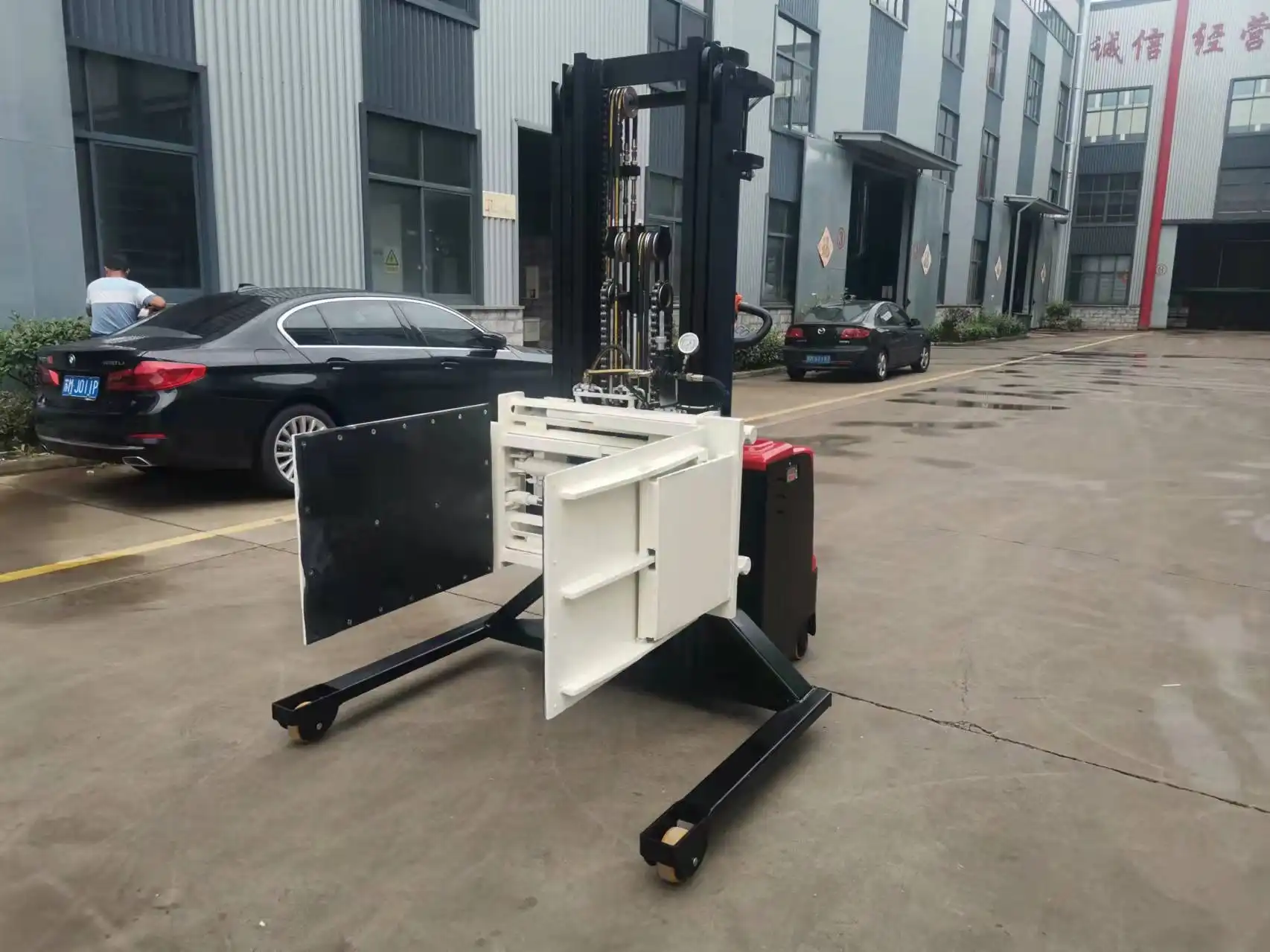
Between active cycles, the operator inspects outgoing load integrity, stacks removed pallets, transports replacement pallets, and scans tracking barcodes. Keeping these secondary tasks organized prevents operator lag from becoming the primary cause of cycle delay.
Operator manual workflow represents the highest source of statistical variance in semi-automated pallet exchange cells. While hydraulic systems execute their programmed cycle, the operator must complete secondary tasks to prevent starved or deadlocked cycles.
Total human task duration must fall within the machine's autonomous operating window:
T_available = T_tilt_back + T_dwell + T_tilt_forward (example only)
T_available = 14.5 + 20.0 + 13.5 = 48.0 seconds (example only)
During these 48 seconds, the operator's standard work allocation includes four discrete steps evaluated through Methods-Time Measurement (MTM):
-
Extract spent pallet and translate 2.5 meters to return stack: 12.0 seconds
-
Visual check of bottom package layer for tears or protruding fasteners: 6.0 seconds
-
Retrieve clean replacement pallet from adjacent staging gravity rack: 14.0 seconds
-
Scan pallet barcode and execute WMS terminal confirmation: 8.0 seconds
Total standard work allocation:
T_operator_work = 12.0 + 6.0 + 14.0 + 8.0 = 40.0 seconds (example only)
Available_margin = 48.0 - 40.0 = 8.0 seconds (example only)
If replacement pallets are staged more than 5.0 meters away from the exchange zone, walking time adds 1.2 seconds per meter round-trip. A 6.0-meter transit adds 7.2 seconds, eroding the operational margin to near zero:
T_revised = 40.0 + 7.2 = 47.2 seconds (example only)
Any handling complication, such as a splintered deck board catching on guide rails, immediately forces the machine to wait at zero degrees, causing line delays.
Audit operator ergonomics by tracking motion paths with video analysis or physical distance pedometers across an eight-hour shift. Total walking distance per cycle must remain under 12.0 meters. If operator cycle time exceeds 45 seconds, reposition the replacement pallet magazine directly parallel to the loading throat.
When the Cycle Is the Bottleneck
The exchange cycle becomes the line bottleneck when downstream packing machines wait for palletized material, or when infeed conveyors halt because the changer platform is occupied. Sizing decisions depend on balancing mechanical cycle speed with transport staging capacity.
Equipment sizing resolves through quantitative boundary checks that balance payload geometry, plant cycle targets, and structural tilt limitations:
-
Selection Rule A: When required throughput <= 26 pallets per hour, load stability permits rear rotation, and floor space is constrained to a single loading bay, implement a single-station floor-level tilt changer.
-
Selection Rule B: When required throughput > 34 pallets per hour, or when strict cleanroom sanitary containment partitions internal and external pallets, implement an automated dual-station exchange cell.
Operational limitations govern where tilt-based exchange technology applies:
Max_permissible_height_to_base_ratio = 1.8 : 1 (example only)
Max_load_eccentricity_limit = 75 mm from platform centerline (example only)
Uncontained liquids in open vessels, loose tall stacks of lightweight cartons with friction coefficients below 0.25, and loads exceeding 2000 kg with non-uniform density cannot safely execute rearward rotation without secondary clamping structures.
If line monitoring confirms that upstream accumulation conveyors stay filled past 85 percent capacity while downstream wrappers run below 60 percent utilization, the pallet changer cycle is the primary line constraint. Re-evaluate hydraulic pump displacement, assess dual-station upgrades, and cross-reference site mechanical integration constraints with technical engineering representatives at www.fhopepack.com.