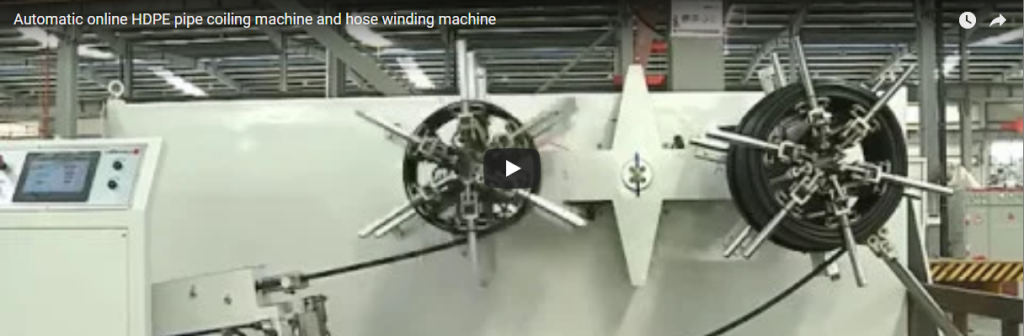
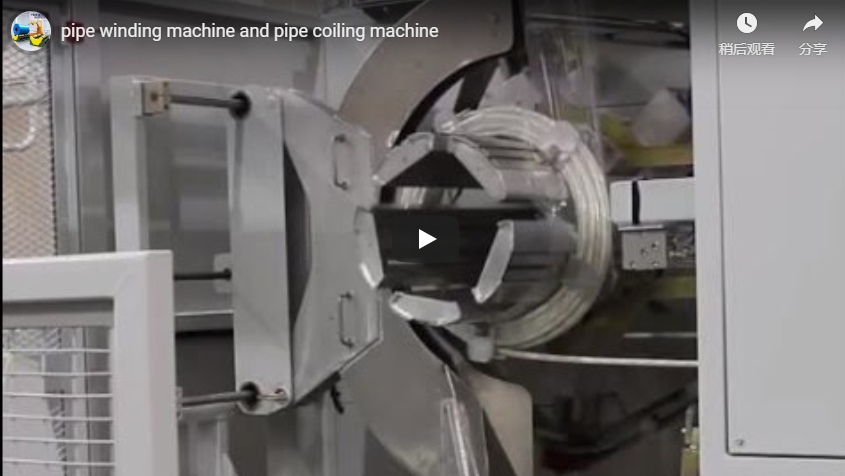
Managementsamenvatting: A corrugated hose that ships loose is a hose that tangles, stretches and eats floor space. This page is for buyers deciding whether an automatic coiler for corrugated hose and plastic pipe fits that winding step. It describes what the footage shows the coiler doing, what it does not, and gives the checklist that makes the quotation testable.
https://www.fhopepack.com/Automatic-Coiling-Machine/
Op deze pagina: Wat deze pagina u helpt te beslissen · Why a hose must be coiled · How the coiler builds a ring · What the feed tells you · Wat het veiligheidsbeeld laat zien · Wat de video laat zien · Controlelijst voor kopersverificatie · FAQ · Gerelateerd lezen · Volgende stap
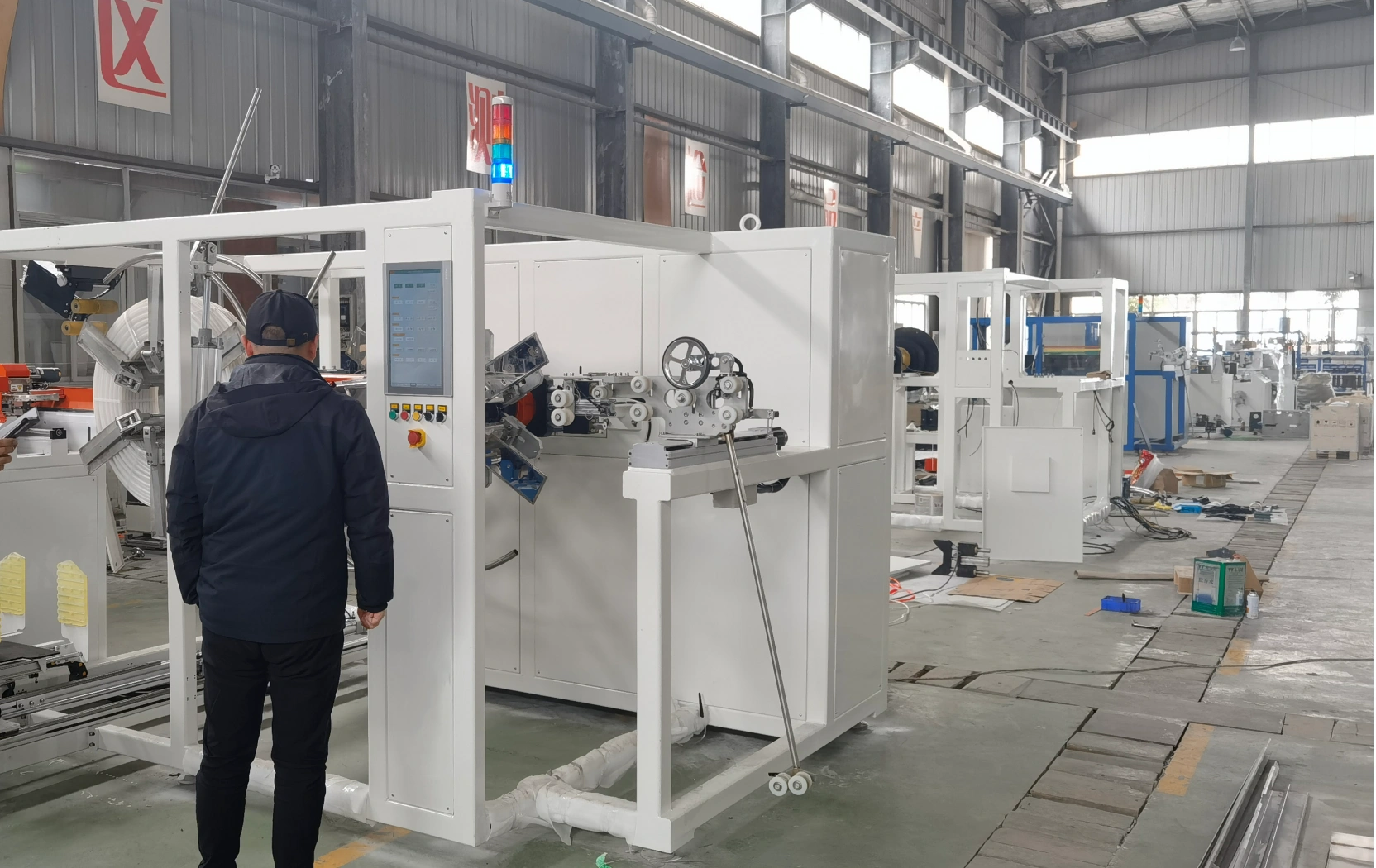
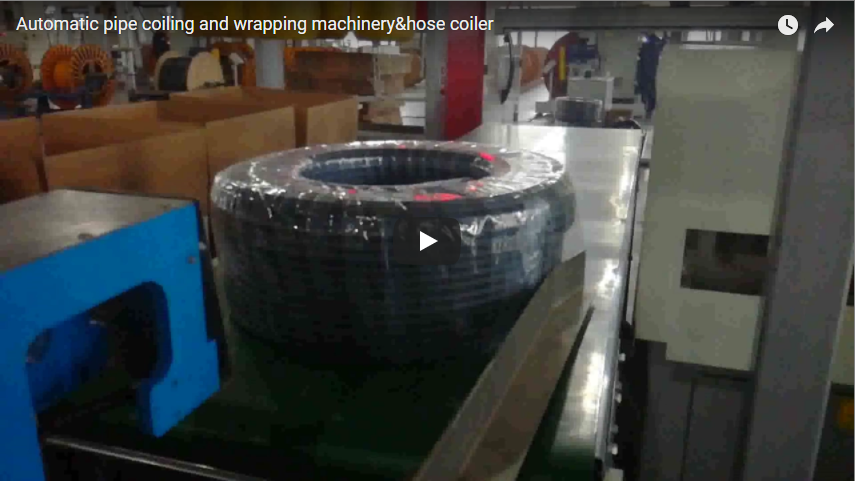
Caption: An automatic pipe and hose coiling machine. Product-library reference image, not a still from the clip.
Wat deze pagina u helpt te beslissen
Corrugated hose and small plastic pipe pay for themselves when they arrive in tidy coils. Loose lengths tangle, kink and argue with their neighbours in a truck, so the winding step is what turns a long flexible product into a shippable unit.
This page is for the buyer evaluating an automatic coiler. It records what the footage shows the machine doing with the hose, and it separates those observations from the cycle figures the clip never presents.
Why a hose must be coiled
A flexible hose has no natural shape. It flops, folds and tangles the moment it leaves the line, and a tangled coil costs more in handling than the material itself.
Coiling gives the hose a fixed footprint. Once wound onto its centre, the hose sits as one compact ring that can be strapped, bagged and palletized without unrolling.
The coil also protects the hose’s own body. The layers support each other, the ends stay accessible, and the customer unwinds a clean product instead of a knot.
How the coiler builds a ring
The footage shows a yellow coiling machine with a centre rotating shaft. A red corrugated hose is fed into the machine from the left, and a yellow arm with a clamp guides the hose onto the shaft as it rotates.
The hose is wound into a vertical disc-shaped coil on the shaft. The guide arm moves the incoming hose side to side, which lays each layer flat against the coil as its diameter builds.

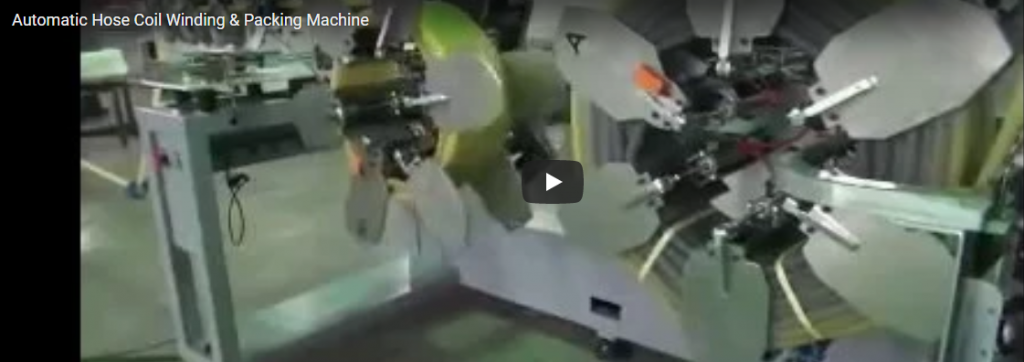
Caption: An automatic pipe coiling machine. Product-library reference image, not a still from the clip.
The finished coil leaves the machine by conveyor on the right. In the closing frames the wound ring has grown to a full coil, and the run continues without stopping.
What the feed tells you
The feed in the footage is semi-manual. The red hose is brought to the machine and presented at the entry, the machine then pulls it in, and the arm takes over the winding without further hands.
That split decides the labour story. The machine winds and finishes on its own, and a person manages the hose supply at the start of each run.
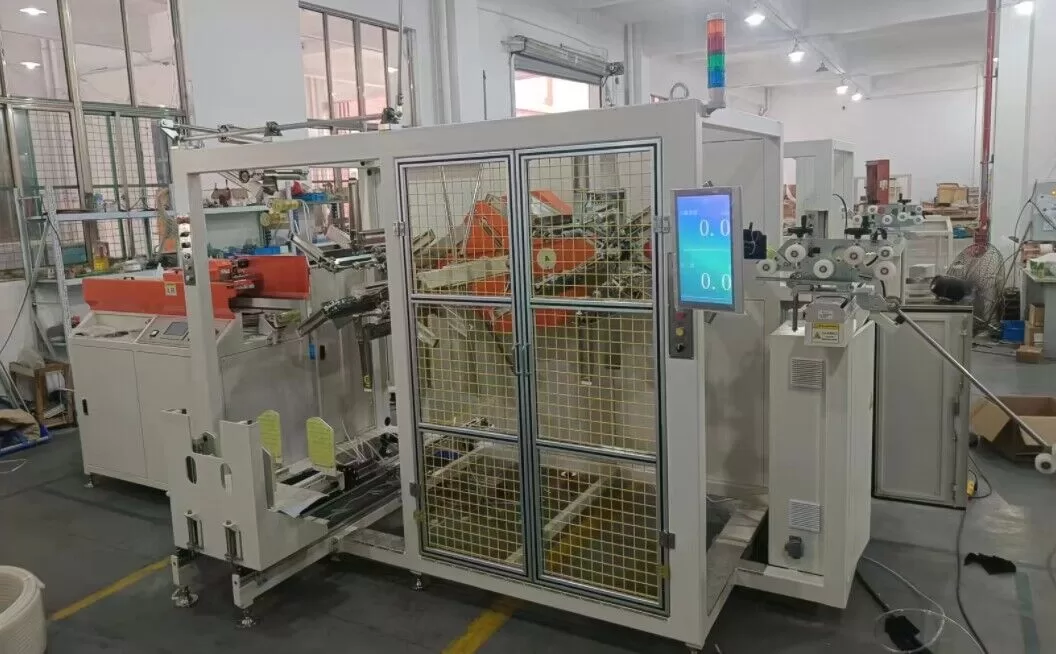
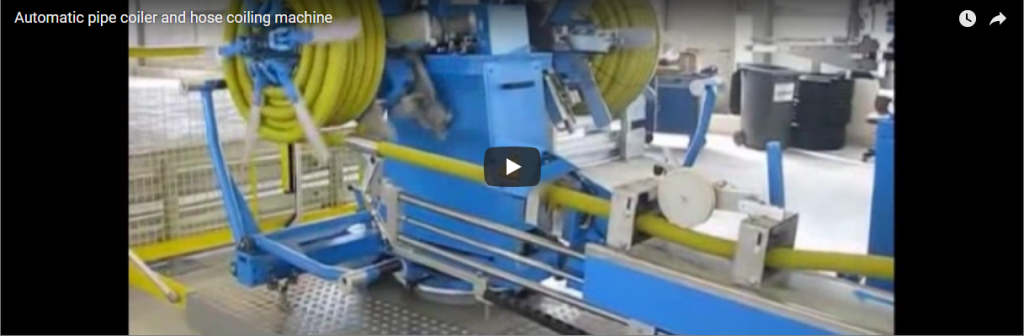
Caption: An automatic pipe coiling machine, feed view. Product-library reference image, not a still from the clip.
How the coil is completed and taken is also visible. The finished ring reaches a conveyor at the machine exit, and the automation of the final handling depends on the model and is worth confirming in writing.
Wat de veiligheidsafbeelding van de machine laat zien
The coiler in the footage works in the open with a worker nearby. The moving clamp arm and the rotating shaft are the live hazards, and no guard fence or light curtain appears around them.
No emergency stop is clearly visible in the sampled frames. The worker stands beside the machine during the run, so the stop position and the guarding are exactly the points the supplier’s safety list should answer.
The own-brand mark FHOPEGROUP and the site watermark appear in the footage, which is the maker’s own branding rather than a third-party logo.
Wat de video van de machinelijn laat zien
What the video shows is a yellow coiling machine with a rotating centre shaft. A red corrugated hose is fed in from the left, a yellow arm with a clamp guides it onto the shaft, and the hose winds into a vertical disc-shaped coil as the shaft turns.
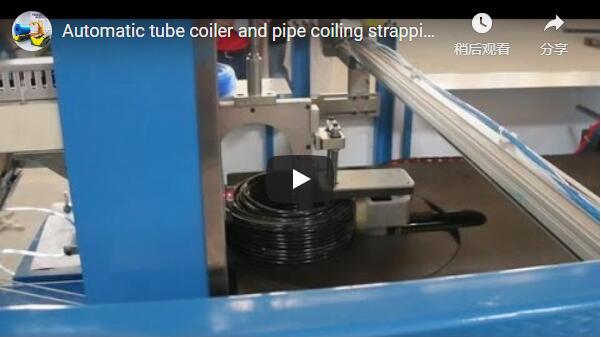
The finished coil is carried away by the conveyor at the exit. The photos on this page are product-library reference images, not stills from the clip. Direct observation notes from the sampled frames, not a performance test.
What the clip does not show is the hose diameter and coil size range, the winding speed, the cycle time, the finished coil take-out detail, a model number, the motor ratings, or any certification.
The footage proves the winding and the coil build. The capacity and cycle figures have to come in writing.
Controlelijst voor kopersverificatie
Six questions decide whether the coiler fits your hose. Ask them in writing, and keep the answers with the quotation.
| Vraag de leverancier om | Waarom het de aankoopbeslissing bepaalt |
|---|---|
| Hose and pipe diameter range | Er is geen maximale bestandsgrootte aangegeven voor de clip. |
| Coil inner and outer diameter and weight | Sets the shipping unit, unseen in the footage |
| Winding speed and cycle time | In de video worden geen klokcijfers weergegeven. |
| Automatisering van aanvoer en afvoer | The hose is brought in by hand in the clip |
| Rupture and tension control | Not addressed in the frames |
| Guard and emergency-stop list | Er is geen stopinrichting zichtbaar |
Stuur dit naar de leverancier en kopieer het zoals het is:
- Your hose and pipe diameter and coil sizes.
- Je ploegdoel in rollen per uur.
- The winding speed you need for your material.
- Whether the feed and take-out must be automatic.
- The tension and stop control you expect on the hose.
- The safety device list around the shaft and arm.
- A reference installation coiling a hose like yours.
FAQ
Does the machine run unmanned?
The machine winds the coil automatically once the hose is presented, and the finished coil reaches the exit conveyor by itself. Feeding the hose is handled in the footage, so the crew count depends on your infeed design.
What hose sizes can it coil?
Not shown. The clip demonstrates one red corrugated hose, and no label states a range, so send the supplier your diameters and ask which model covers them.
Can it coil plastic pipe as well as hose?
The page name covers corrugated hose and plastic pipe, and the footage shows the hose being wound. The specific plastic-pipe diameters and stiffness range have to be confirmed in writing.
Gerelateerd lezen
- Automatische wikkelmachine — automatic coiling machines.
- Pijpverpakkingsmachine — Verpakking voor pijpleidingproducten.
- Kabelverpakkingsmachine — verpakking voor kabelproducten.
- Hoofdwikkeling van de spoel — verpakking voor rollen en lange producten.
- Draadspoelwikkelmachine — wikkeling voor draadspoelen.
- Automatische verpakkingslijn — volledig geautomatiseerde verpakkingssystemen.
Volgende stap
Send the supplier your hose diameters, coil sizes and shift target first, and ask for the winding speed and cycle. The footage proves the coil build on the shaft; the capacities have to come from them.
Stuur vervolgens de zeven bovenstaande vragen op en vraag om de lijst met bewakingsdiensten en noodstops.
Then run one full coil through the machine and check the take-out at the exit. Use the contact pagina om die uitwisseling te starten.
Laatst beoordeeld: 28-09-2026
Gepubliceerd: 2026-09-28