Samenvatting
Hose and small pipe come off the line in length, and coiling them by hand takes the seat of the crew and leaves each coil to the pull of the hand. This automatic pipe coiler and hose coiling machine coils the hose and straps each coil, running the gather, coil and strap steps on the machine. We build automatic coiling and strapping machines. Hose range and coil plan are confirmed per project.
Inhoudsopgave
- Why hand coiling costs the line
- Wat de machine doet
- Coiling the hose
- Strapping each coil
- From line to coil
- Coils that leave ready
- Typische configuratie
- Wat de video laat zien
- Selectie checklist
- Bediening en veiligheid
- Veelgestelde vragen over techniek
- Volgende stap
- Gerelateerd lezen
- Bronnen en standaarden
Why hand coiling costs the line
Hose and small pipe exit the line at the pace of production, and hand coiling ties each length to the arms of the operator. Every coil pulled by hand varies, and the step slows the end of the line. Machine coiling is what keeps the coil even while the line keeps moving. The hose range and its pace are confirmed per project.
Wat de machine doet
The machine takes hose from the line, winds it into a coil and straps the coil, completing the coiling step without a hand gathering the length. Each coil is wound with a controlled start and finish, then closed with a strap. Because the machine runs gather, coil and strap together, the end of the line clears. The covered step is confirmed per project.
Coiling the hose
The hose is wound onto the coil in even turns, with the machine controlling the lay of each ring from the first turn to the last. Controlled coiling is what keeps the coil tight and its sides clean, so the coil handles without a loose tail. The coil diameter and lay are set on the machine, confirmed per project.
Strapping each coil
After coiling, the machine straps the coil, applying the strap around the wound hose to hold the coil together. A strapped coil keeps its shape through handling and the next moves. The strap positions and tension follow the hose and coil, confirmed per project. Closing each coil as it comes off keeps the coil secure end to end.
From line to coil
The machine sits at the end of the line, taking the hose as it runs and finishing each coil before it moves on. Line-to-coil flow removes the off-line step where coils used to be made by hand. The coil is ready at the point the hose stops. The line interface is confirmed per project.
Coils that leave ready
What leaves the machine is a coiled and strapped unit, ready for the pallet or the shelf without a further hand step. A ready coil is what the distribution side expects from the line. The machine closes the step so coils stay as produced. The coil standard is confirmed per project.
Typische configuratie
De onderstaande cijfers geven de functionele ontwerpgrenzen weer in plaats van numerieke waarden en zijn per project bevestigd.
| Parameter | Typisch bereik, bevestigd per project. |
|---|---|
| Slang | small pipe range |
| Spoel | diameter set |
| Bochtig | even lay |
| Riemen | posities, spanning |
| Stroom | line-to-coil |
| Elektrische voeding | 380 V driefase 50 Hz, of 220 V eenfase voor lichte machines, te kiezen per project. |
Wat de video laat zien
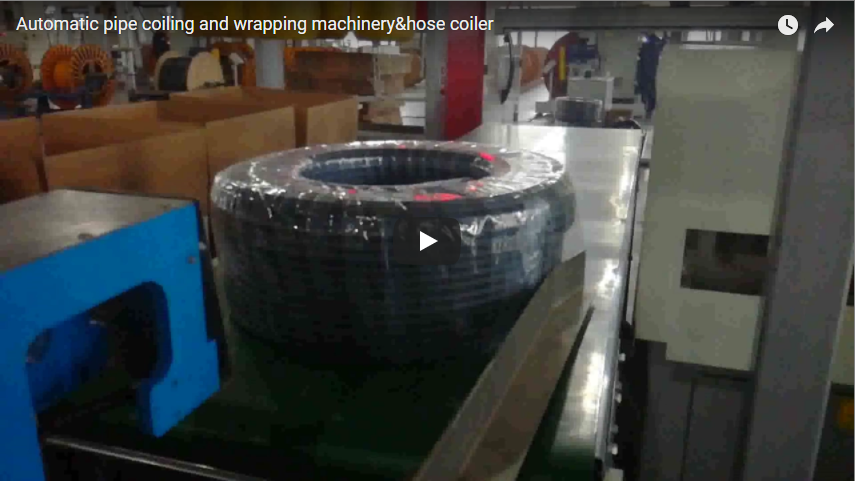
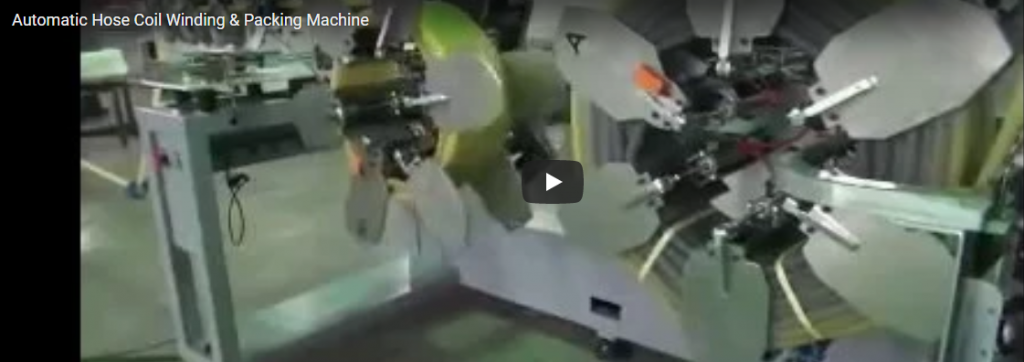
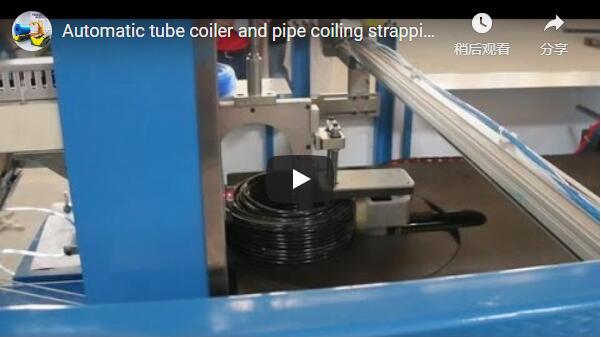
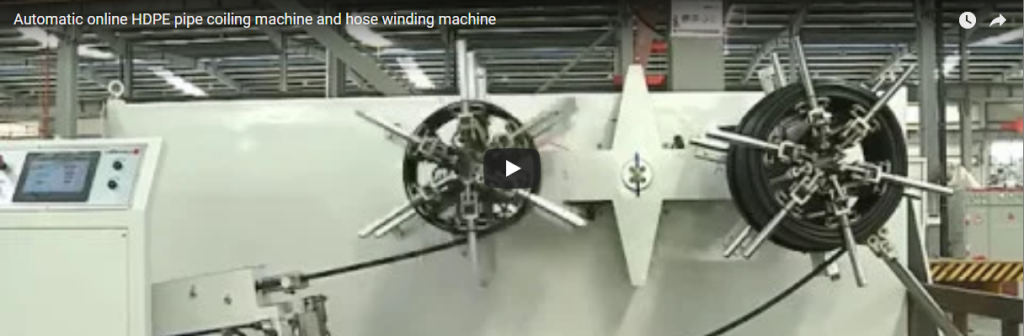
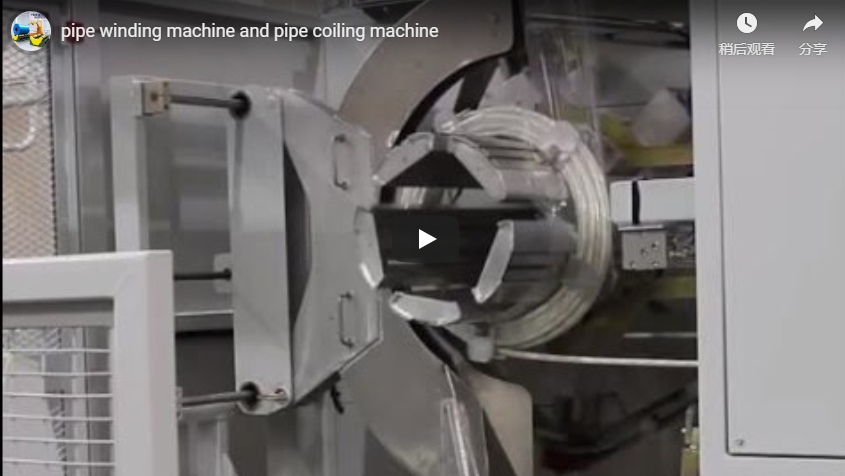
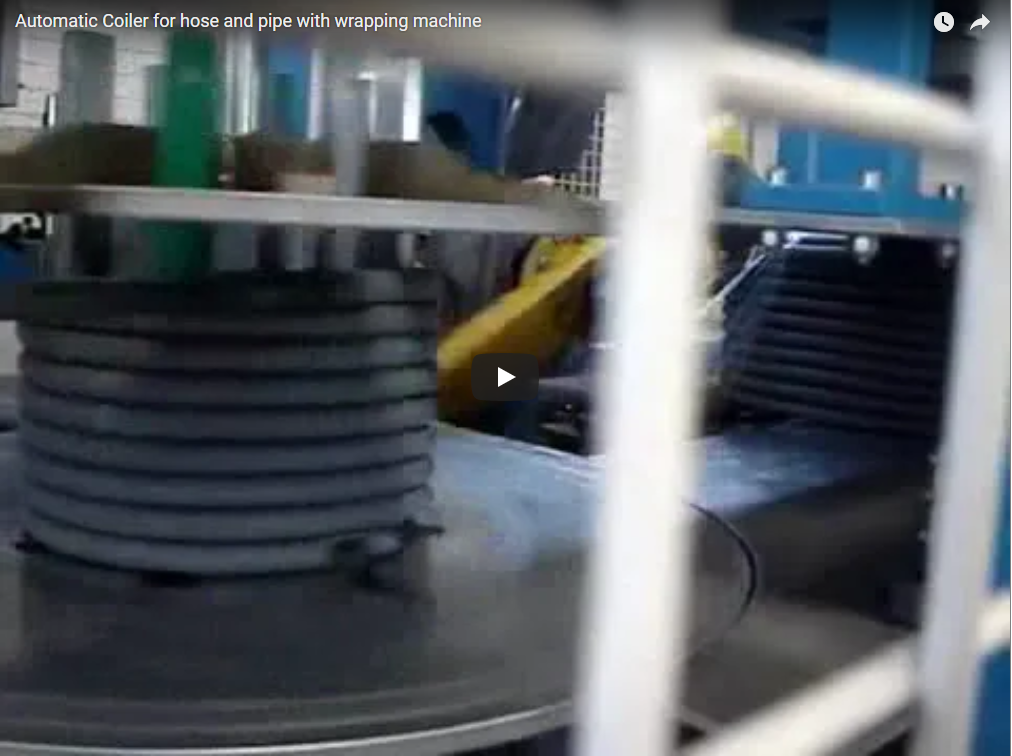
Our footage shows an automatic pipe coiler and hose coiling machine winding and strapping hose. It is a general demonstration, so your hose range and coil plan are confirmed with us per project.
Selectie checklist
| Vraag | Bevestig per project |
|---|---|
| Slang | diameters, coil |
| Spoel | diameter set |
| Bochtig | lay plan |
| Riemen | tellen, spanning |
| Stroom | lijn pasvorm |
| Elektrische voeding | spanning, fase en frequentie op locatie |
Bediening en veiligheid
Run the cycle from the panel and the machine coils and straps each hose automatically. Keep clear of the winding head, hose path, strap head and outfeed while the machine runs, with guarding and emergency stops at the operator position. Routine checks cover the winding drive, guides, strap unit, sensors and control, per the machine manual. Confirm the coil settings against the hose before each run so coils stay tight.
Veelgestelde vragen over techniek
Q: What does this machine do? A: It takes hose from the line, winds it into a coil and straps the coil.
Q: How is the coil wound? A: The machine lays each turn in order from the first ring to the last, closing the coil tight.
Q: What holds the coil closed? A: A strap applied around the wound hose after the coil is complete.
Q: Where does it run? A: At the end of the line, where the hose stops and the coil begins.
Q: What leaves the machine? A: A coiled and strapped unit ready for the pallet or the shelf.
Volgende stap
- Email us at info@fhopepack.com with your hose range and line pace.
- We send a coiling proposal and a layout drawing within 48 hours.
- We arrange a site survey to confirm hose range and line position.
Gerelateerd lezen
- Automatische pijpoproller en omsnoeringsmachine
- Pipe coiling and strapping machine for hose
- Slangwikkelmachine per folie
- FHOPE verpakkingsmachine productlijnen
Bronnen en standaarden
- ISO 12100:2010 Veiligheid van machines, algemene principes voor ontwerp en risicobeoordeling
- EN 415-10:2014 Veiligheid van verpakkingsmachines, algemene eisen
- EN ISO 13849-1:2023 Veiligheid van machines, veiligheidsgerelateerde onderdelen van besturingssystemen
FHOPE automatic pipe coiler and hose coiling machine demonstration video. Reviewed as a general demonstration; hose range confirmed per project.
Laatst beoordeeld: 10-10-2026