Santrauka
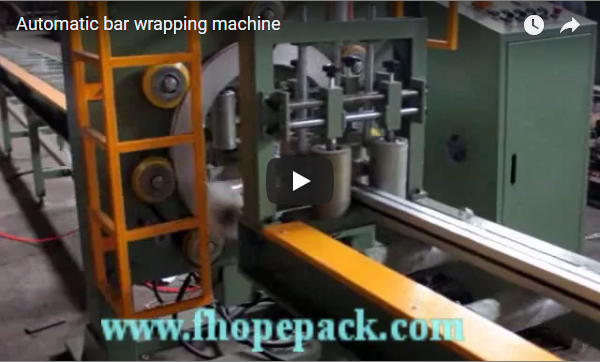
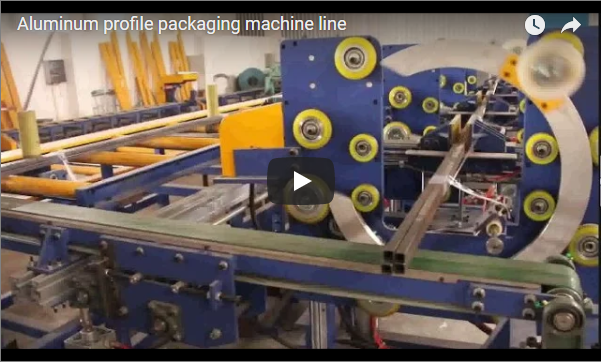
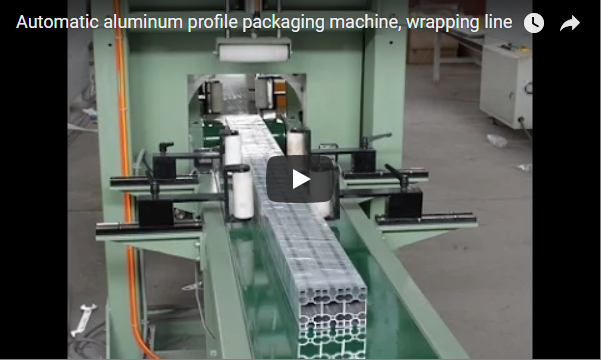
An extrusion plant can press profiles faster than a packing team can count, layer and wrap them by hand, and hand packing is where most surface marks happen. Our automatic aluminum profile packing line takes profiles from the cooling table, counts and layers them into bundles, covers them with paper or PE sheet and tapes them, with as little sliding contact as possible.
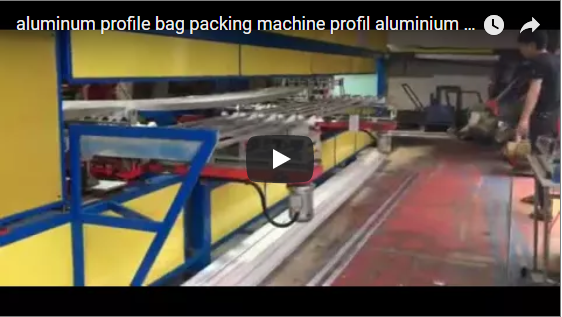
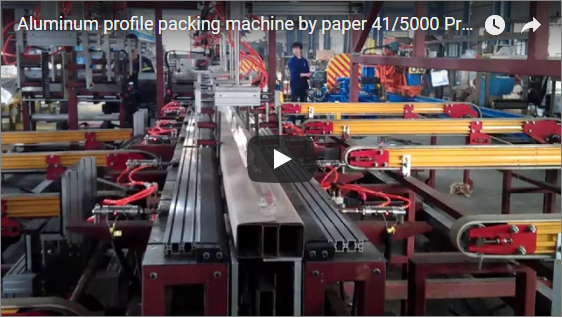
Silver angle profiles run in along a long yellow and green line under an overhead gantry. Rows of profiles are gathered side by side on a green table. Under the bundle station a white roll of covering material waits to be pulled across, and finished bundles move out on parallel transfer bars.
Turinys
- Why automate profile packing
- Linijos stotys
- Bundle make-up
- Covering and taping
- Išvesties patikrinimas
- Atrankos kontrolinis sąrašas
- Saugumas
- Inžinerijos DUK
- Kitas žingsnis
- Susijęs skaitymas
- Šaltiniai
Why automate profile packing
Hand packing means lifting each profile, sliding it into place and counting by eye. Every slide is a chance to mark the surface, and every miscount is a short bundle at the customer. An automatic line counts each piece, places layers without dragging them and covers the bundle the same way every time.
Linijos stotys
- Sklaidos kanale: profiles arrive from the cooling or cutting table.
- Counting and layer forming: the line counts pieces and gathers them into a layer.
- Krovimas: the gantry places layers one on another, with timber spacers where needed.
- Danga: paper or PE sheet is drawn from the roll and folded round the bundle.
- Tapyba: the cover is taped at 3–4 points along the bundle.
- Out-feed: the bundle moves out on transfer bars for strapping or loading.
Bundle make-up
Pieces per layer ≈ bundle width ÷ profile width
Pieces per bundle = pieces per layer × layers
Example only: 50 mm angle profiles in a 300 mm wide bundle give 300 ÷ 50 = 6 per layer; with 5 layers that is 30 pieces. Angle and channel profiles can be nested to pack tighter, so the real count is set per profile in the program.
| Pavyzdinis paketas | Reikšmė |
|---|---|
| Profilio plotis | 50 mm |
| Ryšulio plotis | 300 mm |
| Pieces per layer | 6 |
| Sluoksniai | 5 |
| Vienetų skaičius ryšulyje | 30 |
Covering and taping
Paper is the usual cover for anodised and powder-coated profiles because it breathes and does not trap moisture against the finish. PE sheet is used where the bundle must be kept dry. The cover is folded over the bundle and taped at 3–4 points, which holds it until the bundle is strapped or wrapped.
Išvesties patikrinimas
Bundles per hour ≈ profiles per hour from the press ÷ pieces per bundle
Example only: 600 profiles per hour in bundles of 30 means 600 ÷ 30 = 20 bundles per hour. The line must also finish one bundle cycle (counting, gantry moves for each layer, covering and taping) inside 3,600 ÷ 20 = 180 s. The gripper type, counting sensors and cycle time are set for your profiles, confirmed at quote.
Atrankos kontrolinis sąrašas
- Profile shapes, widths and lengths.
- Pieces per bundle and bundle size.
- Paviršiaus apdaila.
- Paper or PE cover.
- Profiles per hour from the press.
- Strapping, wrapping or stacking after covering.
Saugumas
We design to EN ISO 12100:2010 for risk assessment, EN 415-10 for packaging machine safety and EN 60204-1 for the electrical equipment. The gantry area is fenced and the line has manual and automatic modes.
Inžinerijos DUK
Q: How are surface marks avoided? A: Layers are placed, not slid, with soft-contact handling.
Q: Can it count automatically? A: Yes, to the set count per bundle.
Q: Paper or PE? A: Paper for coated finishes; PE where the bundle must stay dry.
Q: Can it run online with the press? A: Yes, in-feed is linked to the cooling or cutting table.
Kitas žingsnis
- Send your profile drawings, lengths and press output paštu info@fhopepack.com.
- Mes išdėstome the counting, stacking and covering stations.
- Atsakome per 24 valandas su pasiūlymu ir citata.
Susijęs skaitymas
- Aluminum profile paper packing machine (product)
- Aluminum profile stacker (product)
- Aliuminio profilių pakavimas mašina su popieriumi
- Aluminum extrusion packaging
Šaltiniai
- FHOPE product pages: aluminium profile paper packing machine; aluminium profile stacker
- EN ISO 12100:2010; EN 415-10; EN 60204-1
Paskutinį kartą peržiūrėta: 2026-10-20