
Why Should Farm Product Exporters Invest in Pallet Inverters for Frozen Goods?
Imagine your frozen farm products, ready for international shipment. Then, a sudden bottleneck hits. Your team struggles to switch pallets. They wrestle with heavy, often icy, loads. This delay can mean missed deadlines. It can lead to product spoilage, or even worse, safety incidents. This problem is real for many exporters. It eats into profits and threatens customer trust. It is a challenge I have seen many times throughout my career.
Investing in a pallet inverter for frozen goods is critical for farm product exporters because it directly tackles key operational challenges. It boosts efficiency by automating the slow, manual process of pallet changing. It dramatically improves safety by removing workers from dangerous tasks. It also ensures product integrity and compliance with diverse international shipping standards. This investment protects your valuable frozen cargo and secures your supply chain.
This is not just about moving goods. It is about moving them smarter, safer, and faster. If you are an exporter dealing with frozen farm products, you know the stakes are high. Let us explore why pallet inverters are becoming indispensable tools for businesses like yours.
Are Manual Pallet Operations Jeopardizing Your Frozen Goods and Team Safety?
Do you worry about your frozen produce getting damaged during pallet transfer? Are you concerned about your team members getting hurt? Many exporters face these fears every day. Manual pallet changing is tough work. It is physically demanding and poses a real risk, especially with heavy, frozen pallets. This can lead to costly accidents and product loss.
Manual pallet operations for frozen goods carry significant risks for both product quality and worker safety. The cold, heavy, and often slippery nature of frozen farm products makes manual handling prone to errors, drops, and impacts. This can damage packaging or compromise the cold chain. More importantly, it exposes workers to back injuries, crushed limbs, and falls. Such incidents increase insurance costs, lead to legal liabilities, and reduce overall team morale.
When I first started in the packing machine industry, I saw firsthand the dangers. Workers would strain and struggle. They often moved hundreds of pallets each day. This was before automated solutions became common. I remember a client who lost a significant shipment of frozen berries. This happened because a stack of pallets toppled during a manual transfer. The berries thawed and became unsellable. This was a huge financial blow for them. Modern pallet inverters eliminate this human element from the riskiest parts of the process. They create a much safer work environment. This protects both your valuable products and your dedicated team.
1.1 The Hidden Costs of Manual Labor and Injuries 📉
Manual pallet handling is not just slow; it is also expensive. The direct costs include wages for a large labor force. There are also rising insurance premiums due to higher accident rates. Indirect costs are often overlooked. These include lost productivity from injured workers. There is also the cost of replacing damaged goods. Think about a worker taking sick leave after a strain. That means finding a replacement or slowing down operations. For frozen goods, any delay can mean product spoilage. This adds to the financial burden. Pallet inverters drastically cut down on these costs. They reduce the need for multiple workers on a single task. They also lower the risk of accidents. This protects your team and your bottom line. Investing in safety is not an expense. It is an investment in long-term operational health. It prevents much larger future costs. This approach directly improves your financial stability.
1.2 Protecting the Cold Chain and Product Integrity 🥶
Frozen farm products are delicate. Their quality depends on a consistent cold chain. Any break in this chain can ruin the product. Manual pallet transfer often involves exposing goods to warmer temperatures for too long. Workers might also struggle to transfer products quickly. This increases thawing time. It compromises product quality and shelf life. For example, if a pallet of frozen fish sits outside the freezer for too long during a manual switch, its quality drops. This leads to customer complaints or even rejection. A pallet inverter works fast and efficiently. It minimizes exposure to ambient temperatures. It ensures your frozen goods stay frozen. This maintains their quality from your warehouse to the final destination. It protects your brand reputation. It also prevents costly rejections.
1.3 Navigating Diverse Pallet Standards Safely 🗺️
Exporting means dealing with many different pallet types. European standard pallets (Euro pallets) differ from American standard pallets (GMA pallets). Plastic pallets are also used. Switching between these different types is crucial for international shipping compliance. Manual methods are slow and can be dangerous. Workers often have to manually shift goods from one pallet to another. This is especially risky with heavy frozen items. It can lead to mistakes. It can also cause injuries. Pallet inverters are designed to handle various pallet sizes and materials. They make the switch seamless and safe. This ensures your goods are always on the correct pallet for their destination. It avoids delays at customs. It also prevents fines. It offers a reliable way to meet global shipping requirements. It simplifies a complex part of your export process.

How Do Pallet Inverters Accelerate Frozen Product Exports and Meet Tight Deadlines?
Are you constantly chasing deadlines for your export orders? Do you feel pressure from customers for faster delivery? The global market demands speed. For farm product exporters, especially with frozen goods, this means your logistics must be incredibly efficient. Slow pallet changing can be a major roadblock. It impacts your ability to deliver on time. This can cost you customers and damage your reputation.
Pallet inverters significantly accelerate frozen product exports by automating the time-consuming process of pallet exchange. They drastically cut down the time needed to switch goods from one pallet type to another. This ensures faster loading and unloading. It boosts overall warehouse throughput. This automation helps exporters meet tight delivery schedules. It also improves their ability to respond quickly to market demands. This ultimately enhances customer satisfaction and strengthens business relationships.
In my experience, speed and reliability are paramount for success. I once worked with a client exporting frozen poultry to several different countries. They struggled with their shipping times. Their manual pallet transfer process was simply too slow. It created bottlenecks at the loading dock. We introduced them to an automated pallet inverter system. Overnight, their processing speed for pallet changes almost doubled. This allowed them to increase their export volume. They could also fulfill urgent orders more easily. This made their customers very happy. This kind of automation removes a huge barrier to efficient, fast-paced logistics. It gives you a competitive edge in a demanding market.
2.1 Streamlining International Shipping Logistics 🚀
International shipping involves complex logistics. Every step needs to be efficient. Pallet switching is a common and often slow part of this process. Goods arriving on one type of pallet, like a Euro pallet, may need to be transferred to a different type, like a plastic pallet, for hygienic reasons or different regional standards. Manually doing this takes a lot of time and labor. It can cause significant delays. These delays cascade through the supply chain. They can lead to missed shipping slots or increased storage costs. An automated pallet inverter handles this switch quickly. It does it with precision. It reduces the need for manual intervention. This frees up your team for other tasks. It ensures that your frozen products move smoothly from your warehouse to the shipping container. This greatly speeds up your entire export operation. It makes your logistics more agile.
2.2 Meeting Customer Demands for Speed and Reliability ⏱️
Today’s customers expect fast delivery. This is true whether they are end consumers or large distributors. E-commerce and retail clients, in particular, demand shorter lead times. For frozen farm product exporters, reliability is also key. Customers need to know their orders will arrive on time and in perfect condition. Manual pallet operations introduce variability. They increase the risk of delays or damage. A pallet inverter provides consistency. It ensures predictable processing times. This means you can give more accurate delivery estimates. You can also meet those deadlines consistently. This builds trust with your customers. It sets you apart from competitors. It turns a potential bottleneck into a smooth, reliable part of your service. It directly contributes to greater customer satisfaction.
2.3 Boosting Warehouse Throughput and Efficiency 📈
Your warehouse is the heart of your export operations. Its efficiency directly impacts your output. Pallet inverters significantly boost throughput. They do this by rapidly processing pallet changes. Instead of hours of manual work, a machine can complete the task in minutes. This means more pallets can move through your warehouse each day. It increases your overall capacity. This is especially important during peak seasons. Imagine doubling your pallet processing speed. This allows you to handle higher volumes without expanding your physical space or hiring more staff. This increased efficiency translates into faster order fulfillment. It means better utilization of your existing resources. It leads to a more productive and profitable operation. This helps you scale your business.
Can Automated Pallet Switching Really Cut Costs and Improve Your Bottom Line?
Are you constantly looking for ways to reduce operational costs? Do you feel the squeeze from rising labor expenses? Many businesses, especially those in food processing and logistics, grapple with these challenges. The thought of adding another machine might seem like an extra cost. But what if this machine could actually save you a significant amount of money in the long term?
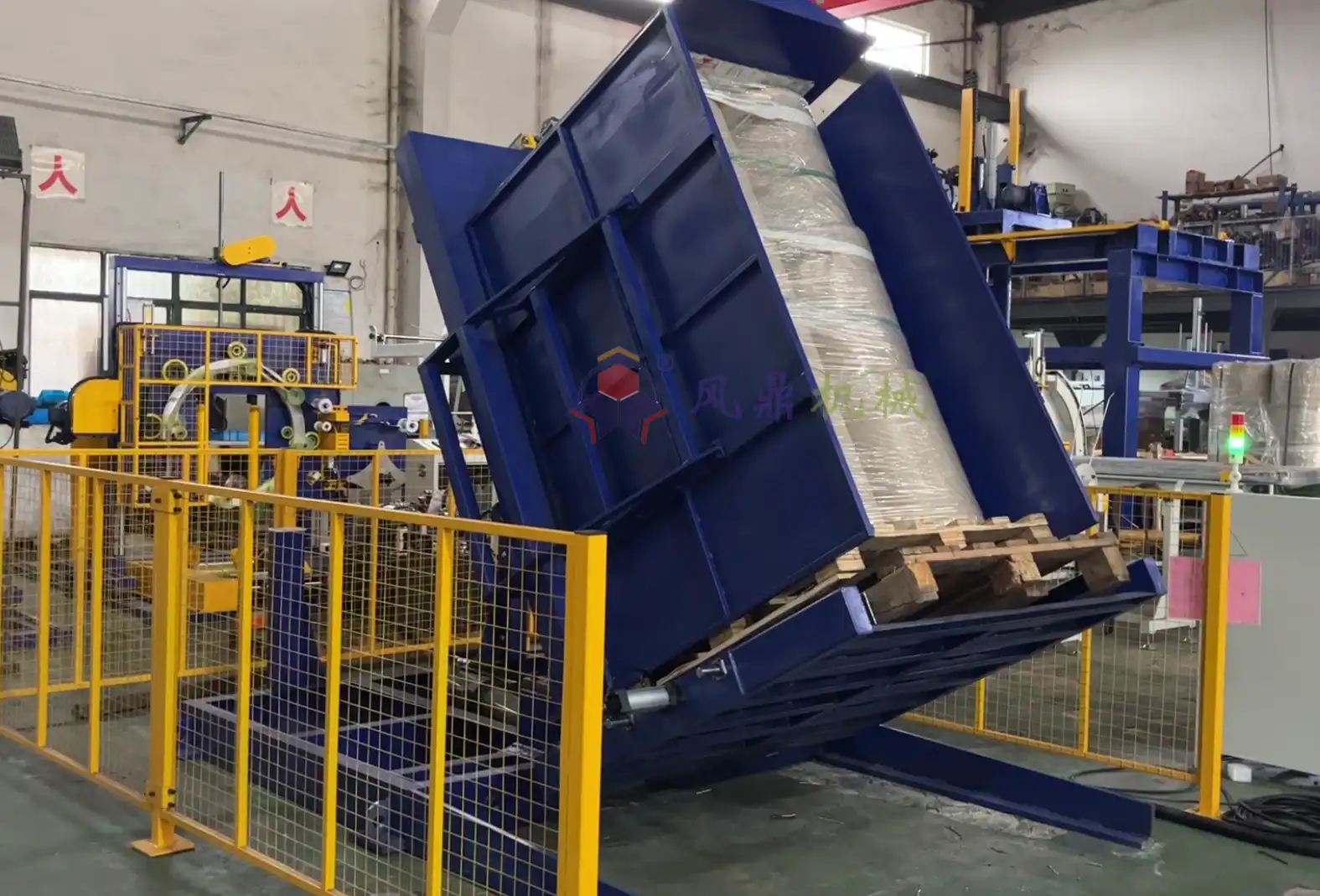
Automated pallet switching with a pallet inverter delivers substantial cost savings for farm product exporters. It significantly reduces reliance on costly manual labor. This lowers wage expenses and decreases the financial impact of workplace injuries. It also minimizes product damage and waste caused by inefficient manual handling. This leads to fewer returns and less scrapped inventory. Over time, these combined savings greatly improve your operational efficiency and directly boost your bottom line.
When I was building my own packing machine factory, I learned a crucial lesson: the cheapest solution upfront is rarely the most cost-effective in the long run. I once advised a client, a large dairy exporter, who was hesitant about automation. They feared the initial investment. But their manual pallet operations were plagued by high labor turnover and frequent damages to their frozen dairy products. After carefully calculating their current costs—wages, injury claims, product spoilage—we showed them that a pallet inverter would pay for itself in less than two years. They made the investment. They saw a dramatic reduction in both labor costs and product losses. This transformed their profitability. Automated pallet switching is not just an expense. It is a strategic investment that yields tangible financial benefits.
3.1 Reducing Labor Dependence and Costs 💰
Labor is a major operational cost for many businesses. This is especially true in warehousing and logistics. Manual pallet changing requires several workers. These workers spend hours on a repetitive and often dangerous task. With increasing labor shortages and rising wages, this cost only grows. A pallet inverter can replace the need for multiple workers on this specific job. It allows you to reallocate your staff to more value-added activities. This reduces your overall labor expenses. It also decreases the need for overtime. This can lead to significant savings each year. For example, if you save on the equivalent of two full-time employees, the machine’s cost quickly becomes justified. It is a smart way to combat rising labor costs. It makes your operations more lean and efficient.
3.2 Minimizing Product Damage and Waste 🗑️
Frozen farm products are valuable. Any damage means financial loss. Manual pallet transfers, with their inherent human error, often result in dropped products, crushed packaging, or compromised goods. This leads to waste. It also leads to rejections from clients. Think about a pallet of frozen vegetables that gets punctured during a manual lift. That entire pallet might be unsellable. Pallet inverters handle products gently and precisely. They use hydraulic or mechanical systems to secure the load. This minimizes the risk of impacts or drops. This significantly reduces product damage and waste. It ensures more of your product reaches the customer in perfect condition. This directly improves your profitability. It also strengthens your reputation for quality.
3.3 Lowering Insurance Premiums and Liabilities 🛡️
Workplace injuries are expensive. They lead to higher insurance premiums. They can also result in costly legal liabilities. Manual handling of heavy, frozen pallets is a high-risk activity. Back strains, falls, and crushed limbs are common in such environments. Each incident has a financial impact. It also has a human cost. By automating pallet changing with a pallet inverter, you remove your workers from these dangerous tasks. This drastically reduces the likelihood of accidents. Fewer injuries mean lower insurance premiums over time. It also means fewer legal claims. This creates a safer work environment for your team. It also provides a significant financial benefit by reducing your overall operational risk. It is a win-win for both your employees and your balance sheet.
What Role Do Pallet Inverters Play in Ensuring Food Safety and International Compliance?
Is ensuring the safety of your frozen food exports a constant concern? Do you struggle to meet strict international compliance standards? For farm product exporters, especially with frozen goods, food safety and compliance are non-negotiable. Any lapse can lead to product recalls, fines, or even damage to your brand. Manual methods often present challenges to maintaining these critical standards.
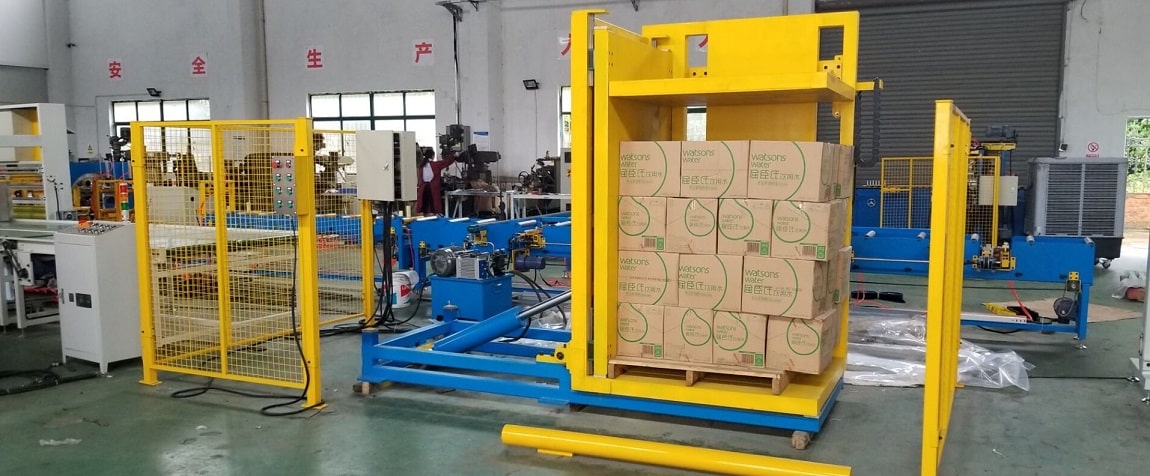
Pallet inverters play a vital role in ensuring food safety and international compliance for frozen farm product exporters. They facilitate hygienic pallet changes, moving products from unsanitary wooden shipping pallets to clean, food-grade plastic pallets for storage or internal use. This prevents cross-contamination. They also ensure rapid and secure pallet transfers, minimizing exposure to temperature fluctuations and maintaining the cold chain. This helps meet strict HACCP and other food safety regulations. Furthermore, they allow seamless adaptation to diverse international pallet standards, ensuring compliance with destination country import rules.
I have always believed that quality and compliance are the bedrock of any successful export business. Early in my career, I visited a meat processing plant struggling with contamination issues. They were manually transferring frozen meat boxes from wooden pallets, which had often been used for various goods, to clean internal pallets. This process was slow and messy. It created a high risk of bacterial transfer. We helped them implement a pallet inverter. This system allowed them to perform clean, quick pallet changes without human contact with the product. The plant saw an immediate improvement in their hygiene audit scores. This underscored the critical link between efficient machinery and strict food safety. Pallet inverters are not just about speed. They are about protecting your product and your reputation.
4.1 Maintaining Hygienic Standards and Preventing Cross-Contamination 🧼
Food safety starts with hygiene. Pallets, especially wooden ones used for transport, can harbor dirt, dust, and even pests. They are often exposed to various environments. When frozen food products are transferred from these shipping pallets to internal or hygienic storage pallets, manual handling increases the risk of cross-contamination. Workers might touch the product or transfer debris from one pallet to another. A pallet inverter, however, performs this transfer mechanically. It moves the product from one pallet to another without human touch. This means your frozen goods are transferred to clean, food-grade pallets, like plastic ones, without risk. This protects the product from external contaminants. It ensures compliance with strict hygiene standards. This is crucial for perishable farm products.
4.2 Adhering to Cold Chain Requirements and Quality Control 🌡️
Frozen goods must stay frozen. Any significant temperature fluctuation can degrade product quality. It can even make it unsafe for consumption. Manual pallet changing often takes time. It can expose frozen products to ambient temperatures for longer periods. This can cause partial thawing. This breaks the cold chain. Pallet inverters perform transfers quickly and efficiently. They minimize the time products spend outside a controlled temperature environment. This ensures the cold chain remains intact. Many inverters can also be operated within cold rooms or freezers. This further protects product quality. By maintaining consistent temperatures, pallet inverters help you meet critical quality control standards. They safeguard the integrity of your frozen farm products. This ensures they arrive at their destination in perfect condition.
4.3 Ensuring Seamless Compliance with International Regulations 🌐
Exporting farm products means navigating a maze of international regulations. Different countries have different rules for pallet types, hygiene, and packaging. For example, some regions require all incoming goods to be on plastic pallets. Others might have specific treatment requirements for wooden pallets (ISPM 15). Manually managing these varying requirements is complex. It is also prone to errors. Pallet inverters are highly adaptable. They can handle a wide range of pallet sizes and materials. They make it easy to switch your goods to the required pallet type. This ensures your shipments comply with all destination country import regulations. This avoids costly delays at customs. It prevents fines and rejection of your goods. It makes your export process smoother and more compliant. It offers peace of mind.
My Insight!
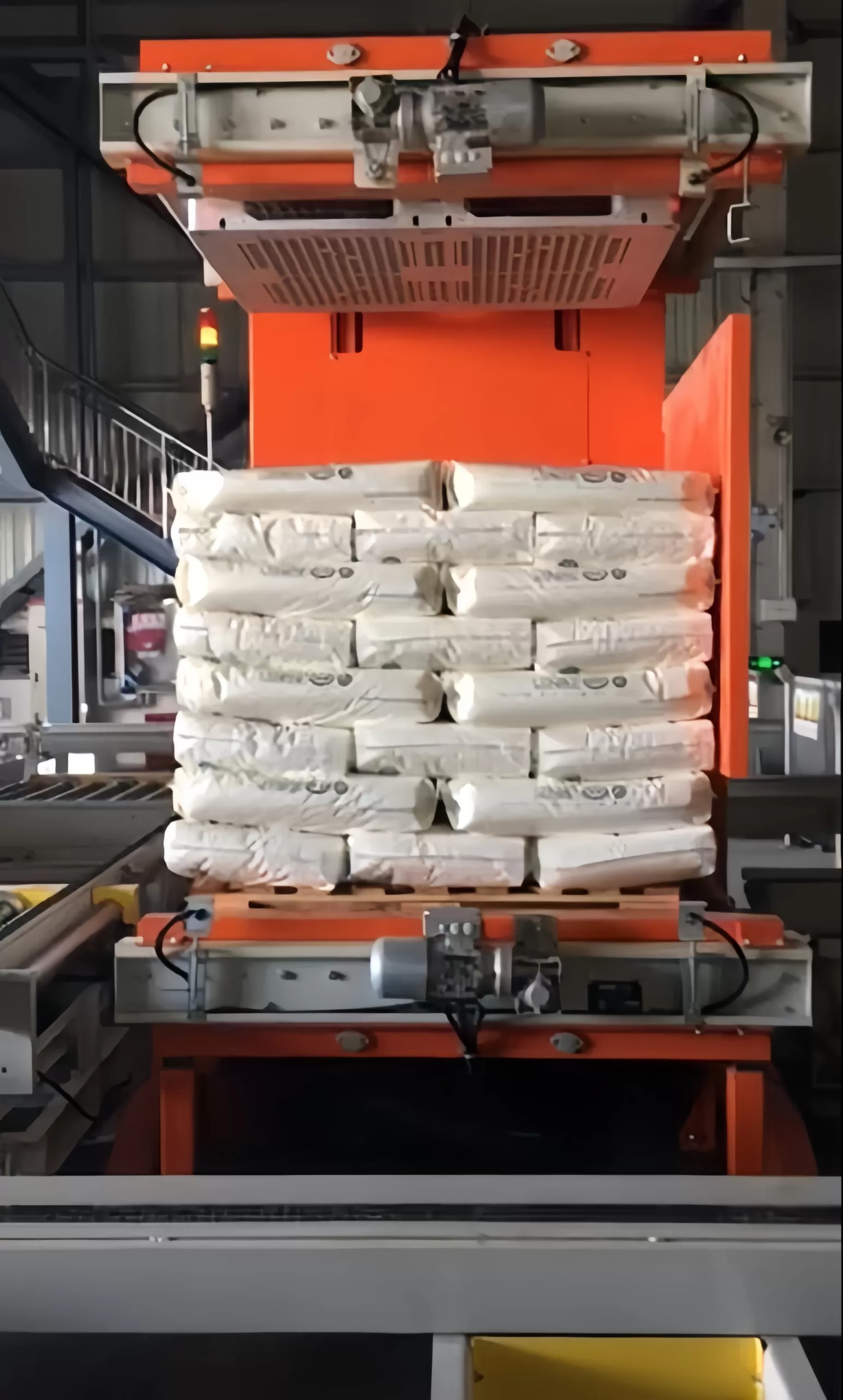
From my journey, starting as an employee on the factory floor and then building FHOPEPACK, I have learned one thing above all else: practical solutions solve real-world problems. For farm product exporters of frozen goods, the challenges of safety, efficiency, cost, and compliance are immense. I have seen how a simple yet robust piece of machinery can transform operations. It protects your team, preserves your product, and significantly boosts your profitability. Investing in a pallet inverter is not just buying a machine. It is investing in the future resilience and competitiveness of your business. It is about embracing smart automation to navigate the complexities of global trade. My mission is to help businesses like yours thrive by sharing knowledge and offering reliable tools.
Conclusion
Investing in a pallet inverter is a strategic move for farm product exporters of frozen goods. It improves safety, boosts efficiency, cuts costs, and ensures compliance. This makes your operations smoother and more profitable. It is a necessary step for navigating the competitive global market and protecting your valuable products.








