
Why Should Chemical Industry Buyers Choose Pallet Inverters Over Other Pallet Changers?
Are you managing a chemical warehouse? Do you worry about product damage, worker safety, or the slow pace of manual pallet changes? If you are, you know these issues can cause big headaches, from lost product to costly delays and even injuries. Many managers I talk to feel this pressure every day, especially when handling sensitive or hazardous materials.
Chemical industry buyers should choose pallet inverters because these machines offer unmatched safety, protect product integrity, boost operational efficiency through automation, and provide essential versatility for diverse pallet types, directly addressing the unique challenges of handling hazardous and sensitive goods.
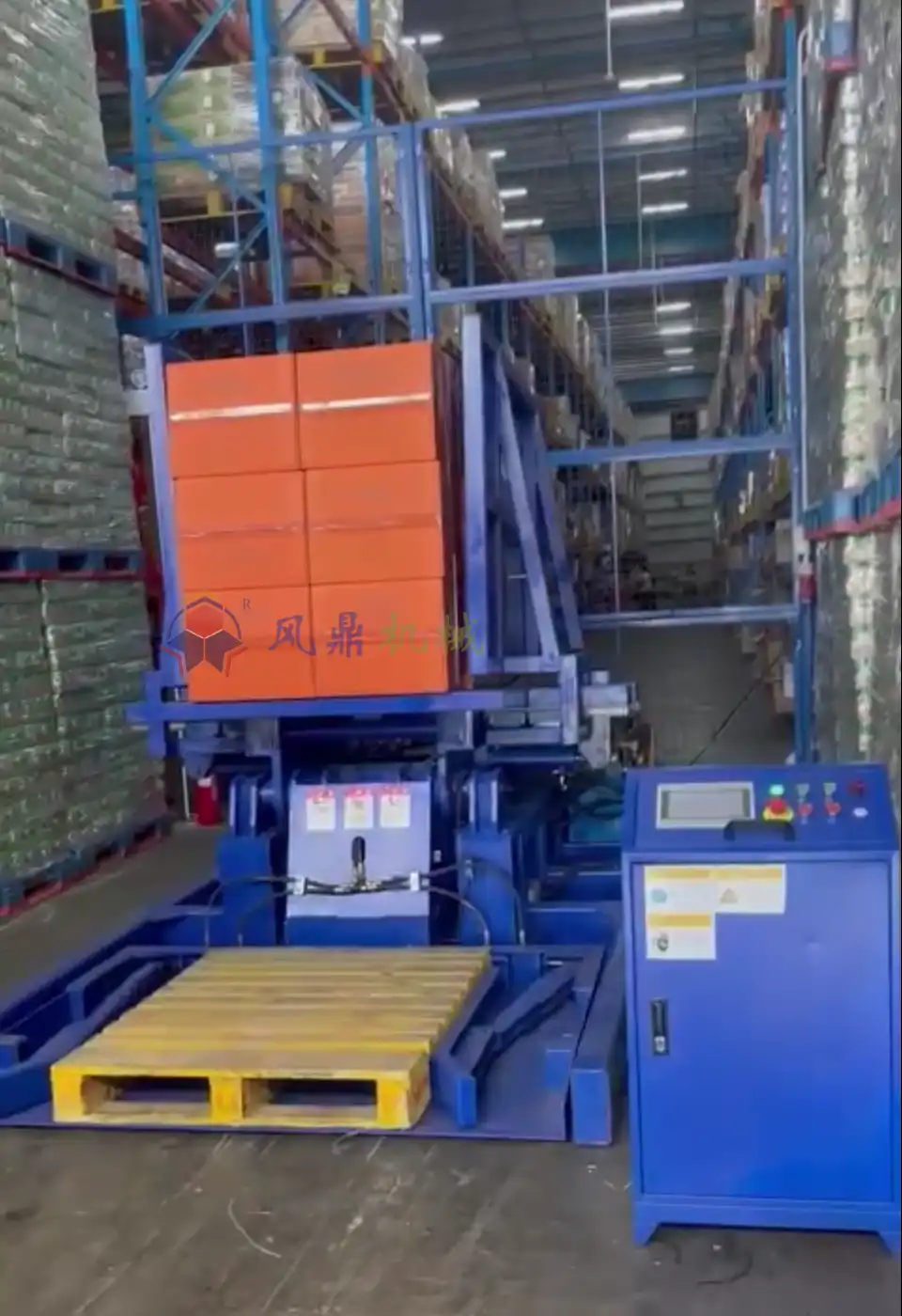
Choosing the right equipment for your warehouse is a big decision. It’s not just about buying a machine; it’s about investing in the future of your operations. If you want to understand how a pallet inverter can truly make a difference for your chemical business, keep reading.
Safety First: Why Pallet Inverters Reduce Risks in Chemical Handling?
Does the thought of your team manually handling heavy or delicate chemical containers make you anxious? The risks are real and can be very serious, from accidental spills to painful worker injuries. Many warehouse managers face this worry daily, knowing one wrong move can lead to big problems.
Pallet inverters significantly reduce safety risks in chemical handling by eliminating the need for manual lifting and tilting of heavy loads, thereby preventing worker injuries from strain, drops, or chemical exposure during pallet transfers.
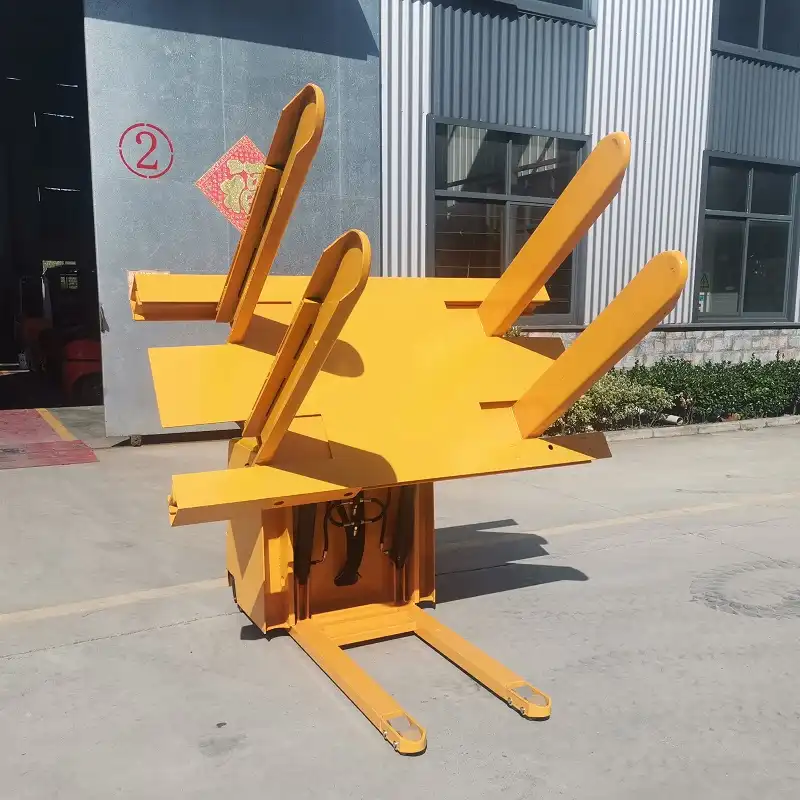
When I started FHOPEPACK, I saw firsthand how much pressure managers were under to keep their teams safe while also hitting production targets. For the chemical industry, this challenge is even greater. Pallet inverters offer a clear solution to many of these safety concerns.
-
Minimizing Manual Intervention
- Manual pallet changes involve lifting, tilting, and rotating heavy stacks. This exposes workers to immediate risks.
- For chemical products, these risks increase. Workers might handle drums, bags, or fragile containers with hazardous contents.
- A pallet inverter takes over these actions. It clamps the load securely and rotates it mechanically.
- This means fewer hands touch the product directly during the transfer. This lowers the chance of human error leading to spills or drops.
- Imagine a worker trying to manually swap a pallet under a stack of solvent drums. The potential for a drum to fall or tip is high. An inverter handles this with controlled, mechanical movements.
-
Preventing Worker Injuries
- Musculoskeletal injuries are common in warehousing. Lifting heavy objects, twisting, and repetitive motions cause these injuries.
- Manual pallet changing tasks require significant physical effort. Workers can suffer back strains, shoulder injuries, and more.
- For chemical facilities, an injury also means potential exposure to hazardous materials. This adds a layer of danger.
- Pallet inverters remove the physical strain from workers. They operate the machine safely from a control panel.
- This shift to automation makes the job safer. It reduces worker compensation claims and improves overall workplace health.
- I once helped a client who was seeing high rates of back injuries among their staff. After installing an inverter, those injury rates dropped sharply. It made a real difference for their team’s well-being.
-
Ensuring Load Stability
- Chemical products often come in various forms: liquids, powders, granules. Their packaging can be drums, sacks, or special containers.
- Maintaining load stability during transfer is vital. An unstable load can fall, leading to product loss, facility damage, or chemical release.
- Pallet inverters are designed to hold the load firmly. They use hydraulic clamps that secure the product from top to bottom.
- This secure grip prevents shifting or toppling during the inversion process. The entire stack moves as one stable unit.
- Compared to other methods that might rely on pushing or tipping, the inverter’s controlled rotation keeps everything in place. This is especially important for chemicals that are sensitive to shock or vibration.
- Table: Comparing Pallet Inverter Safety Features
| Feature | Pallet Inverter | Other Pallet Changers (e.g., Push-Pull) |
|---|---|---|
| Manual Lifting | Minimal to None | Often required for load positioning |
| Load Stability | High (Full Clamp) | Variable (Depends on method) |
| Chemical Exposure | Low (Automated) | Moderate (More manual interaction) |
| Injury Risk | Low (Ergonomic operation) | High (Strains, drops) |
| Spill Prevention | Excellent (Controlled movement) | Moderate (Risk of accidental tipping) |
Product Integrity: How Pallet Inverters Protect Your Chemical Goods?
Are you losing money due to damaged chemical products during pallet transfers? It’s frustrating when valuable inventory gets compromised because of rough handling or an inefficient process. Many chemical companies struggle to keep their goods safe from the moment they arrive until they ship out.
Pallet inverters safeguard chemical product integrity by providing a gentle, controlled, and stable transfer process that prevents physical damage, spills, and contamination, which is crucial for maintaining the quality and safety of sensitive or hazardous materials. 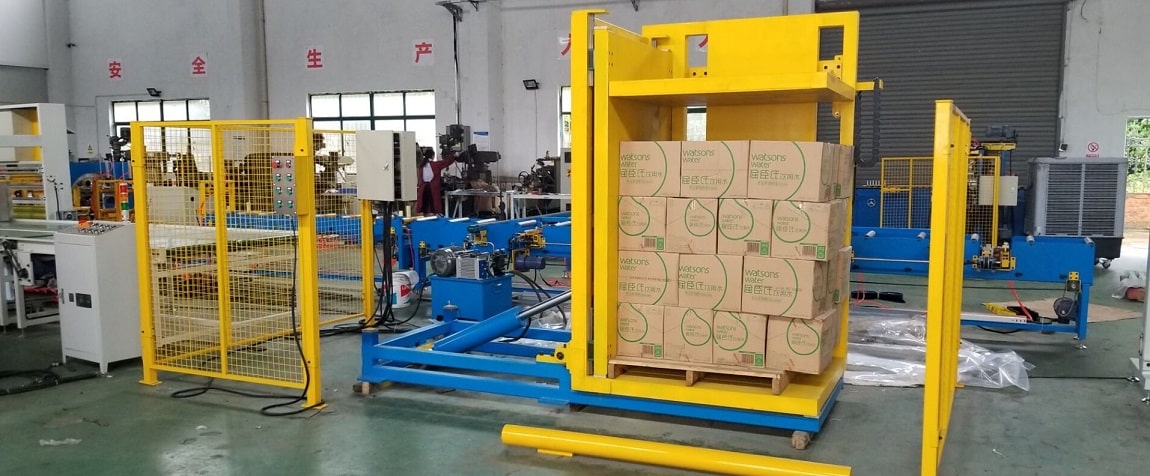
Protecting your product is always a top priority for any business. But in the chemical industry, product damage isn’t just a financial loss; it can be a safety hazard or a compliance nightmare. I’ve seen this happen too often, and it led me to appreciate the precise handling capabilities of machines like pallet inverters.
-
Gentle and Controlled Handling
- Chemical products, whether liquids in drums, powders in bags, or specialized containers, often require careful handling. Sudden movements or impacts can cause damage.
- Traditional manual methods or less sophisticated pallet changers can be jarring. They might involve pushing, pulling, or tipping at awkward angles.
- A pallet inverter, by contrast, operates with smooth hydraulic or electric power. It slowly clamps the load and then rotates it through 90 or 180 degrees.
- This controlled motion minimizes any shock or stress on the product. It ensures that even fragile packaging or sensitive chemical compounds remain intact.
- Think about a pallet of glass bottles filled with a specific chemical. A sudden jolt could easily break bottles. An inverter prevents this kind of impact.
-
Preventing Spills and Leaks
- Spills in a chemical facility are not just messy; they are dangerous. They can lead to environmental contamination, worker exposure, and costly clean-up operations.
- Manual or less secure transfer methods increase the risk of containers tipping or breaking open. This is especially true if the load is not perfectly stable.
- Pallet inverters hold the load tightly on all sides before any movement. The clamping pressure is adjustable to suit different product types.
- This firm grip prevents individual items from shifting or falling during the transfer. It keeps drums upright and bags sealed.
- By maintaining the integrity of the packaging, inverters significantly reduce the chances of leaks or spills. This helps maintain a cleaner and safer work environment.
- For a chemical plant, avoiding spills can save millions in clean-up costs and regulatory fines, not to mention protecting the health of employees.
-
Maintaining Product Quality and Compliance
- The quality of chemical products must remain consistent from production to delivery. Any compromise during handling can affect their effectiveness or purity.
- Contamination is another major concern. If a product is exposed during transfer, it can become unusable.
- Pallet inverters ensure that the product is handled in a contained and consistent manner. They reduce the need for direct human contact with the product during the pallet swap.
- This minimizes potential sources of contamination. It helps to keep the product in its original, sealed condition.
- For industries with strict quality control and regulatory compliance, using an inverter helps meet these standards. It supports batch integrity and traceability.
- By reducing damage and contamination, chemical companies can deliver high-quality products consistently. This builds customer trust and reduces returns or complaints. It means your reputation stays strong.
Efficiency and Automation: Can Pallet Inverters Boost Your Chemical Logistics?
Are your manual pallet changing processes slowing down your entire operation? In today’s fast-paced world, especially in chemical logistics, delays can mean missed deadlines and unhappy customers. Many companies struggle with bottlenecks caused by outdated handling methods.
Pallet inverters significantly boost efficiency in chemical logistics by automating the pallet transfer process, which reduces labor costs, speeds up cycle times, and allows for smoother integration into automated warehouse systems, directly addressing the demand for faster and more reliable operations.

When I started my first packing machine factory, I quickly learned that speed and reliability are key. For the chemical industry, these factors are even more critical. A good machine doesn’t just do a task; it transforms your whole workflow. Pallet inverters are a prime example of this.
-
Reducing Labor Dependence and Costs
- Manual pallet changes are labor-intensive. They often require multiple workers for heavy or awkward loads.
- The chemical industry, like many others, faces rising labor costs and a shortage of willing workers for physically demanding roles.
- Pallet inverters automate the process. One operator can manage the machine, often using simple controls.
- This reduces the number of staff needed for pallet transfers. It frees up workers for more skilled tasks.
- Over time, this leads to significant savings on wages, benefits, and training. It also helps in areas where labor is scarce.
- I once consulted with a client who was able to reassign three workers from pallet changing to other critical packaging lines, improving their overall output without hiring new staff.
-
Accelerating Throughput and Cycle Times
- Manual pallet changing is inherently slow. Each pallet needs individual attention, often involving forklifts, manual adjustments, and careful stacking.
- In a busy chemical warehouse, this can create bottlenecks. It slows down inbound receiving, outbound shipping, and internal transfers.
- Pallet inverters perform transfers quickly and consistently. A typical cycle can take as little as 30-60 seconds, depending on the model and load.
- This speed significantly increases throughput. It allows more pallets to be processed in less time.
- Faster cycle times mean products move through the warehouse more efficiently. This reduces waiting times for vehicles and helps meet tight delivery schedules.
- For chemical companies facing strict deadlines or high-volume orders, this increase in speed is a major competitive advantage.
-
Seamless Integration with Automation
- Modern warehouses are moving towards greater automation. This includes automated guided vehicles (AGVs), conveyor systems, and sophisticated warehouse management systems (WMS).
- Manual pallet changing acts as a break in this automated chain. It requires human intervention and slows down the flow.
- Pallet inverters are designed for integration. Many models can connect with existing conveyor lines or be loaded/unloaded by forklifts.
- Some advanced inverters offer fully automated operation. They can be part of a larger, integrated material handling system.
- This capability allows chemical companies to build truly automated warehouses. It optimizes the entire supply chain, from receiving raw materials to dispatching finished goods.
- By removing manual steps, inverters ensure a smoother, more predictable flow of goods. This reduces human error and boosts overall system reliability.
Versatility and Compliance: Are Pallet Inverters the Right Fit for Diverse Pallet Types?
Are you constantly struggling with different pallet sizes and types for your chemical products? Many international chemical operations deal with a mix of Euro, US, and plastic pallets, making pallet changes a logistical headache. This complexity can lead to delays and compliance issues.
Pallet inverters are the right fit for diverse pallet types because their adjustable clamping mechanisms and robust design allow them to handle a wide range of pallet sizes, materials (wood, plastic, metal), and load configurations, ensuring compliance with international shipping standards and optimizing warehouse flexibility.

When I started FHOPEPACK, I aimed to offer solutions that truly solve real-world problems. For many of my clients in the packing industry, especially those with international operations, dealing with varied pallet types is a constant challenge. This is where the flexibility of a pallet inverter really shines.
-
Handling Various Pallet Sizes and Materials
- The chemical industry often ships products globally. This means encountering different pallet standards, like European (1200x800mm) and American (48×40 inches).
- Besides size, pallets can be made from different materials: wood, plastic, or even metal. Each has specific handling requirements.
- Many other pallet changing methods might struggle with this variety. They can be optimized for one size or type, requiring compromises for others.
- Pallet inverters are highly adaptable. Their clamping system can be adjusted to secure loads on almost any standard pallet size.
- They can handle both wooden pallets and plastic pallets with equal ease. The robust design ensures stability regardless of the pallet material.
- This versatility means you do not need multiple machines for different pallet types. One inverter can manage all your conversion needs.
-
Ensuring Compliance for International Shipments
- International shipping of chemical products comes with strict regulations. Pallet hygiene and specific standards (e.g., ISPM 15 for wooden pallets) are often required.
- Often, products arrive on one type of pallet (e.g., a wooden pallet from a supplier) but need to be transferred to another (e.g., a clean plastic pallet for internal storage or an export-compliant pallet).
- Pallet inverters allow for quick and efficient pallet swaps. This ensures that the outgoing pallet meets all destination country requirements without damaging the product.
- For example, you can switch from a non-compliant wooden pallet to a treated or plastic one. This avoids customs delays and potential fines.
- This capability is essential for chemical companies engaged in global trade. It streamlines the export process and guarantees adherence to diverse regulations.
-
Optimizing Warehouse Space and Flexibility
- Warehouse space is valuable. Equipment that can handle multiple tasks or adapt to changing needs helps optimize this space.
- Using different types of manual equipment or specialized machines for each pallet type can clutter the warehouse. It also requires more operational planning.
- A single pallet inverter can perform all necessary pallet changes. This reduces the need for extra machinery.
- Its ability to handle various loads means it can be placed strategically to serve multiple parts of your operation. This enhances overall layout efficiency.
- By providing a flexible solution for pallet handling, inverters contribute to a more agile warehouse. This helps adapt to evolving product lines or shipping demands.
- This flexibility means your warehouse can operate more smoothly, even when faced with new challenges like a sudden shift in international shipping requirements.
Conclusion
Choosing the right equipment for your chemical operation is crucial. Pallet inverters stand out for their superior safety, product protection, automation benefits, and versatility. Investing in a pallet inverter helps you streamline operations, reduce costs, and ensure compliance for years to come.








