
How pallet inverter boosts efficiency in chemical warehouses with corrosive materials?
Chemical warehouses handle some of the most critical and dangerous goods. One wrong move can lead to severe consequences, from environmental damage to worker injury and significant financial loss. Are you struggling with slow, risky, or non-compliant pallet handling in your facility? You are not alone. Many warehouse managers face these exact issues every day.
A pallet inverter significantly boosts efficiency in chemical warehouses handling corrosive materials by automating the process of switching pallets, reducing direct human contact with hazardous goods, improving safety, accelerating material flow, and ensuring compliance with varied shipping standards, all while minimizing operational costs. This technology handles different pallet types quickly and safely, which is crucial for chemical logistics.
Understanding these challenges is the first step. Finding the right solutions is the next. Let us explore how a simple yet powerful machine can change your chemical warehouse operations for the better.
Why are chemical warehouses unique and challenging for pallet handling?
Handling goods in a chemical warehouse often feels like walking a tightrope. Every decision carries high stakes. Do you ever worry about the specific risks involved with corrosive materials during routine tasks like pallet transfer? This is a problem many face.
Chemical warehouses are unique because they store and move hazardous, often corrosive, materials, requiring stringent safety protocols, specialized equipment, and adherence to complex regulations for pallet handling to prevent spills, contamination, and worker injury. This environment demands more than standard warehousing practices.
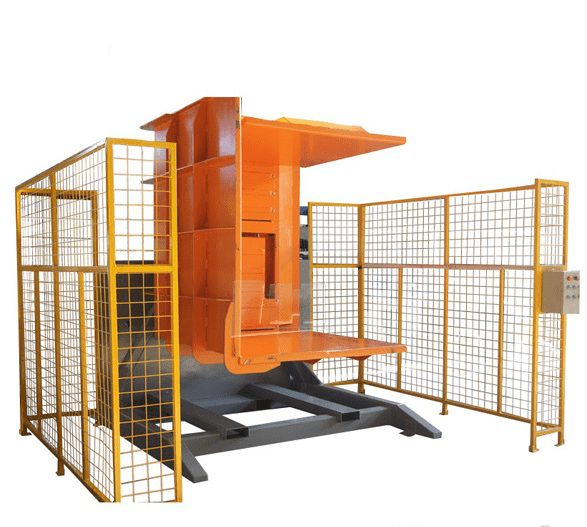
From my years in the packing machine industry, I have seen many kinds of warehouses. Chemical warehouses stand out because of the inherent dangers. The products can be volatile, corrosive, or flammable. This means that every step, especially pallet handling, needs extra care. You cannot just pick up a pallet of acid the same way you would a box of cookies. The risks are too high. These facilities often deal with different types of pallets. They might get inbound materials on one type of pallet, perhaps a wooden pallet, and need to ship them out on another, like a plastic or Euro pallet, to meet customer or regulatory needs. This constant switching adds another layer of complexity. The need for precise and safe handling is paramount. Any mistake can lead to a spill, an injury, or a costly incident. This makes the environment tough for workers and managers alike. It puts constant pressure on operations to be both fast and safe. For example, if a corrosive liquid spills, it can damage other goods, harm workers, and require expensive cleanup. This is why standard equipment often falls short in these settings. You need solutions built for this unique level of risk.
-
High Risk of Contamination and Spills:
- Corrosive materials can leak if packages are damaged.
- Manual handling increases the chance of dropping or tilting items.
- Even small leaks can cause significant damage to other products, the facility floor, or the environment.
- Cleaning up corrosive spills is expensive and hazardous.
-
Strict Regulatory Compliance:
- Chemical warehouses must follow many local, national, and international laws.
- These laws cover storage, handling, labeling, and transportation of hazardous goods.
- Non-compliance can lead to huge fines and even facility shutdowns.
- Using the wrong type of pallet for transport can violate shipping rules.
-
Specialized Pallet Requirements:
- Many chemical products need specific pallet types. Some cannot sit on wood.
- Certain chemicals react with wood or absorb moisture from it.
- Plastic or metal pallets might be required for specific goods or shipping regions.
- This means frequent pallet changes for incoming and outgoing shipments.
-
Worker Safety Concerns:
- Workers are at risk during manual pallet transfer.
- They can be exposed to fumes, splashes, or skin contact with corrosive substances.
- Heavy lifting of chemical containers can cause back injuries or strains.
- Safety equipment is essential, but it does not remove all risks of direct contact.
-
Impact on Facility Infrastructure:
- Corrosive spills can damage concrete floors, racking systems, and other equipment.
- This leads to costly repairs and downtime.
- Long-term exposure to fumes can also degrade building materials.
- Proper containment and handling are vital to protect the physical assets of the warehouse.
How does manual pallet changing endanger operations with corrosive goods?
Imagine your team manually shifting heavy loads of corrosive chemicals from one pallet to another. Does this thought make you nervous? It should. The risks are incredibly high, yet many operations still rely on outdated manual methods.
Manual pallet changing in operations with corrosive goods presents severe dangers, including increased risk of chemical exposure, physical injuries from heavy lifting, potential for spills and contamination, and significant operational delays due to the slow and careful nature of the task. This method is not only inefficient but also compromises worker safety and regulatory compliance.
I have seen operations where workers manually transfer goods, package by package, from a damaged or incorrect pallet to a new one. When you add corrosive materials into this mix, the process becomes extremely dangerous. Workers are often bent over, lifting heavy containers, and trying to keep them stable. One slip, one wrong move, and you could have a major accident. The risk of spilling a corrosive substance directly onto a worker or the warehouse floor is very real. These substances can cause severe burns, respiratory problems, or worse. Besides the immediate safety hazards, manual handling is incredibly slow. Each container must be handled individually. This slows down the entire logistics chain. It creates bottlenecks and delays in dispatching products. My goal at FHOPEPACK has always been to help businesses improve these processes. We want to remove these avoidable risks. When I established my packing machine factory, I saw how much efficiency and safety improved with the right machines. Manual pallet changing is the opposite of that. It is inefficient, costly, and puts your most valuable asset—your people—at risk every single day.
-
Direct Exposure to Hazardous Materials:
- Workers come into close contact with chemical containers.
- Risk of skin contact or inhalation from splashes, fumes, or residues.
- Even with protective gear, accidents can happen, leading to severe burns or health issues.
- Contaminated clothing or equipment can also spread corrosive substances.
-
High Risk of Physical Injuries:
- Lifting heavy or awkwardly shaped containers causes muscle strains, back injuries, and repetitive stress injuries.
- Falling objects can injure workers’ feet, legs, or heads.
- Poor ergonomics during manual transfer leads to long-term health problems for staff.
- The need for extreme caution adds mental stress, increasing the chance of error over time.
-
Increased Likelihood of Spills and Product Damage:
- Human error during lifting or moving can lead to drops or collisions.
- Damaged containers mean spilled corrosive materials.
- This results in product loss, expensive cleanup, and potential environmental harm.
- Even minor leaks can compromise product integrity or packaging.
-
Significant Operational Inefficiencies and Delays:
- Manual pallet changes are very time-consuming.
- They create bottlenecks in the warehouse, slowing down inbound and outbound logistics.
- Labor costs rise due to the time and number of people needed for the task.
- The overall throughput of the warehouse drops, impacting delivery schedules and customer satisfaction.
-
Compliance and Documentation Challenges:
- Ensuring correct pallet standards for different regions or customers is harder manually.
- Errors in pallet selection can lead to shipment rejections or fines.
- Tracking and documenting each manual transfer adds administrative burden.
- The risk of non-compliance increases with human involvement in a task requiring strict adherence.
What role does a pallet inverter play in enhancing safety for corrosive materials?
Safety is non-negotiable when dealing with corrosive substances. Are you looking for a way to drastically reduce risks in your chemical warehouse? A pallet inverter offers a clear solution.
A pallet inverter significantly enhances safety for corrosive materials by virtually eliminating manual handling, creating an enclosed and controlled process for pallet transfers, thereby minimizing the risk of chemical exposure, spills, and physical injuries to workers. It ensures goods remain stable and secure throughout the transfer, protecting both personnel and product integrity.
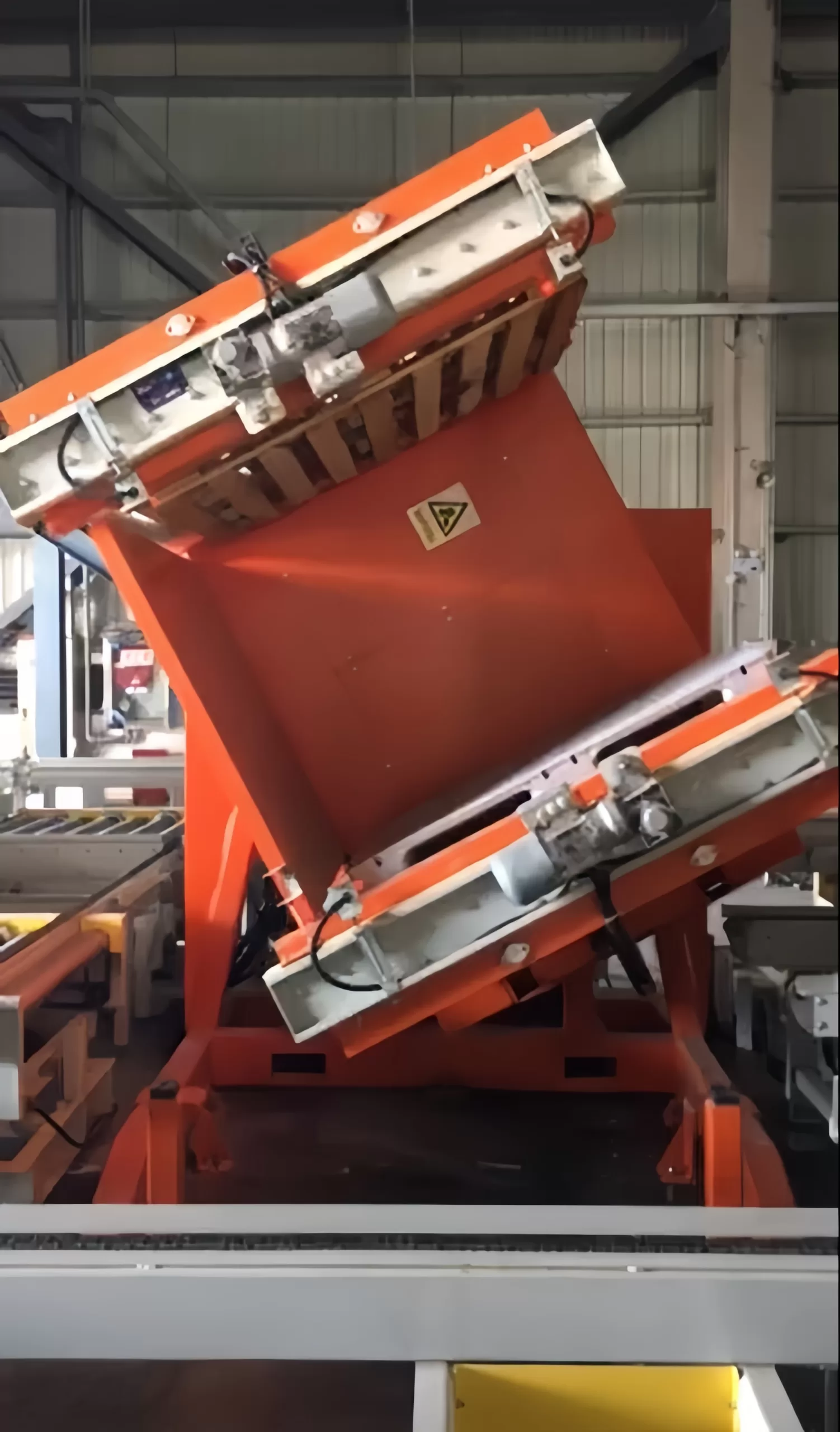
When I think about the dangers of manual pallet changing in a chemical warehouse, the pallet inverter immediately comes to mind as a key solution. It changes the game entirely. Instead of people physically lifting and maneuvering heavy, potentially hazardous containers, the machine does the work. The goods are clamped securely, and the entire pallet load is flipped or exchanged mechanically. This means workers do not have to touch the products directly. This drastically cuts down on the risk of exposure to corrosive liquids or fumes. I remember one client who managed a facility processing industrial cleaning agents. Before they adopted automated solutions, they had several minor spill incidents during manual transfers. After installing a pallet inverter, these incidents dropped to almost zero. It was a clear demonstration of how automation protects people. The design of many pallet inverters also helps contain any accidental leaks during the transfer process itself. This layered protection is something you simply cannot achieve with manual methods. Safety moves from being a constant worry to a managed, controlled process.
-
Elimination of Direct Human Contact:
- The machine handles the entire pallet load, so workers do not need to touch individual items.
- This removes the risk of skin contact, inhalation, or eye exposure to corrosive substances.
- It minimizes the need for workers to be near the hazardous materials during transfer.
- This is the most direct way to protect personnel from chemical harm.
-
Prevention of Spills and Product Damage:
- Pallets are securely clamped before inversion or transfer.
- This stability prevents goods from shifting, tipping, or falling.
- Reduced movement minimizes the chance of container damage that could lead to leaks.
- The controlled motion of the inverter is much smoother than manual handling, preventing sudden jolts.
-
Reduced Physical Strain and Injuries:
- Workers no longer perform heavy lifting or awkward movements.
- This prevents muscle strains, back injuries, and repetitive stress injuries.
- The machine takes on the physical burden, improving worker well-being and reducing injury-related costs.
- It creates a more ergonomic work environment for the entire team.
-
Enhanced Operational Control and Predictability:
- The pallet inverter performs the task consistently every time.
- This standardization reduces human error, a common cause of accidents.
- It allows for better planning and management of hazardous material handling.
- The predictable process also makes safety audits and compliance checks easier.
-
Improved Containment in Case of Accidental Leakage:
- Some pallet inverters have drip trays or design features to manage small leaks during operation.
- This helps contain any corrosive material that might escape during the transfer.
- It makes cleanup easier and prevents widespread contamination.
- This adds an extra layer of protection beyond preventing the initial spill.
Can a pallet inverter truly optimize operational speed and material flow in a corrosive environment?
Time is money in logistics, but safety in a chemical warehouse cannot be rushed. How do you balance speed with the critical need for safe handling of corrosive materials? Many managers face this dilemma.
Yes, a pallet inverter truly optimizes operational speed and material flow in a corrosive environment by automating fast and consistent pallet changes, reducing manual labor time, eliminating bottlenecks, and allowing for seamless transitions between different pallet types without compromising safety. This automation speeds up the entire handling process from inbound to outbound.
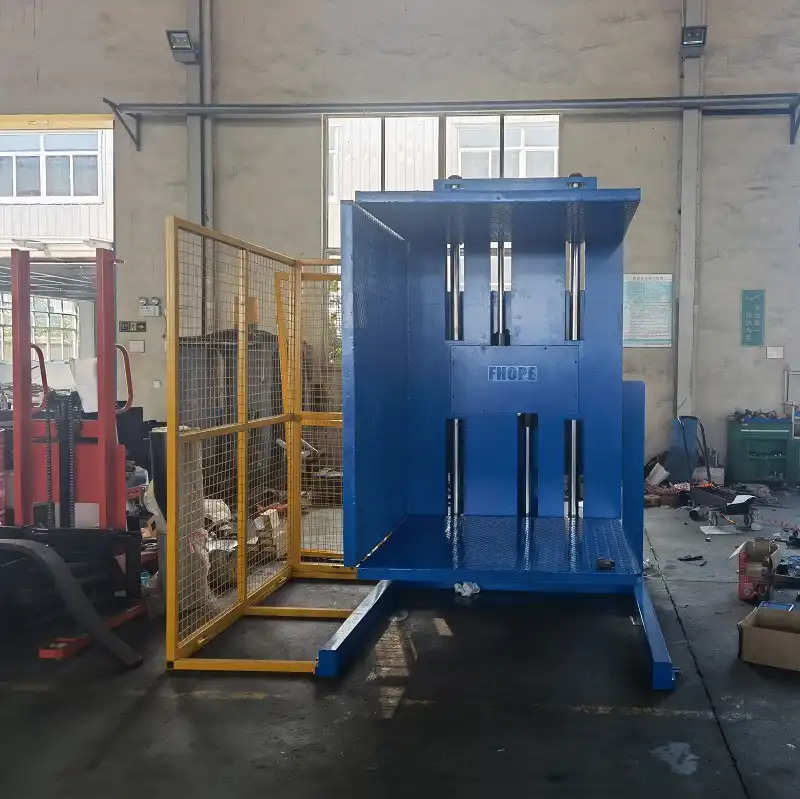
The beauty of a pallet inverter is how it marries speed with safety. In my experience, manual pallet changing can take anywhere from 10 to 30 minutes per pallet, depending on the product and the number of items. An automated pallet inverter can complete the same task in just a few minutes, often less than one minute for the actual inversion. This is a massive time saving. Think about a busy chemical warehouse receiving thousands of pallets a day, many needing a pallet change for export or internal storage. If you save 15-20 minutes per pallet, that adds up to hours, even days, of saved time across the operation. This directly impacts the material flow. Products move faster from receiving to storage, and from storage to dispatch. Bottlenecks at the pallet changing station disappear. This means you can process more goods in less time. This helps meet tight delivery deadlines, which is crucial in today’s fast-paced market. It also lets your existing staff focus on other value-added tasks instead of risky, repetitive manual labor. My journey establishing FHOPEPACK taught me that good engineering is about making complex tasks simple and efficient. A pallet inverter does exactly that for chemical logistics.
-
Rapid Pallet Changeovers:
- Automated pallet inverters complete transfers much faster than manual methods.
- A full pallet load can be swapped in minutes, not tens of minutes.
- This significantly reduces the time spent on a crucial, often slow, step.
- High-volume operations see the greatest benefits in speed.
-
Elimination of Bottlenecks:
- Manual pallet changing points often become choke points in the warehouse.
- An automated system clears these bottlenecks, allowing for continuous material flow.
- This ensures products move smoothly through receiving, storage, and dispatch.
- Improved flow prevents delays and keeps the entire supply chain moving.
-
Seamless Handling of Diverse Pallet Types:
- Pallet inverters can easily handle Euro pallets, US pallets, plastic pallets, and more.
- This flexibility is vital for international logistics and diverse customer requirements.
- The machine adapts quickly, removing the need for labor-intensive, product-by-product transfers.
- It supports compliance with different shipping standards without slowing down operations.
-
Reduced Labor Dependence and Reallocation:
- Fewer workers are needed for pallet changing.
- This frees up staff for other, more productive tasks in the warehouse.
- It addresses labor shortage issues and optimizes workforce utilization.
- The overall operational efficiency increases because human resources are used better.
-
Consistent and Predictable Process:
- The machine performs the task with consistent speed and accuracy every time.
- This predictability helps in scheduling and planning warehouse operations.
- It reduces variations in processing time, leading to more reliable delivery estimates.
- A stable process is easier to manage and integrate into a larger automated system.
How do pallet inverters contribute to cost savings and compliance in chemical logistics?
Are you looking for ways to cut down on costs while ensuring your chemical logistics operations meet all strict regulations? The right equipment can make a huge difference.
Pallet inverters significantly contribute to cost savings in chemical logistics by reducing labor expenses, minimizing product damage and waste, and lowering insurance claims from accidents, while also ensuring critical compliance with diverse international shipping and safety regulations through automated, standardized processes. This dual benefit makes them a wise investment.
From my experience helping companies master their packing challenges, cost savings and compliance are always top priorities. Pallet inverters hit both targets effectively. First, consider labor costs. Manual pallet changing requires multiple workers, and it is a slow process. With a pallet inverter, you often only need one operator to manage the machine, or it can even be fully integrated into an automated line. This dramatically reduces the labor hours dedicated to this task. The money saved on wages alone can be substantial over time. Then there are the costs associated with safety. Fewer manual operations mean fewer accidents. This translates into lower worker’s compensation claims, reduced insurance premiums, and less downtime due to injury investigations. I once worked with a client who realized their total cost of ownership went down significantly after automating pallet changes, not just because of efficiency gains, but also because their safety record improved dramatically. On the compliance side, the ability to quickly and reliably switch to specific pallet types (like plastic pallets for export to certain regions, or clean pallets for food-grade chemicals, even if not corrosive) ensures that your shipments always meet regulatory standards. This avoids costly fines, rejections, and delays at customs, which can be a major headache for any logistics manager.
-
Reduced Labor Costs:
- Automated pallet changing needs fewer workers than manual methods.
- This directly cuts down on wages and associated employment costs.
- It also addresses labor shortages by making existing staff more productive.
- The long-term savings on personnel can be significant for any business.
-
Minimized Product Damage and Waste:
- The secure and controlled operation of an inverter reduces drops and spills.
- Less product damage means less waste of valuable chemical materials.
- It saves money on replacing damaged goods and cleaning up messes.
- Reduced waste also supports environmental sustainability goals.
-
Lower Accident and Insurance Costs:
- Fewer manual tasks lead to fewer workplace accidents and injuries.
- This results in lower worker’s compensation claims and related legal costs.
- A better safety record can also lead to reduced insurance premiums for the warehouse.
- Less downtime from accidents means operations run more consistently.
-
Ensured Compliance with Shipping Regulations:
- Pallet inverters allow quick adaptation to various pallet standards (e.g., Euro, US, plastic).
- This ensures that outbound shipments meet specific country or customer requirements.
- It helps avoid customs delays, rejected shipments, and costly fines for non-compliance.
- Maintaining compliance protects the company’s reputation and prevents legal issues.
-
Increased Lifespan of Pallets and Equipment:
- Gentle, mechanical handling reduces wear and tear on pallets compared to rough manual handling.
- This extends the useful life of pallets, reducing replacement costs.
- It also protects other warehouse equipment from damage caused by shifting loads or spills.
- Proper equipment care leads to long-term operational savings.
Conclusion
Pallet inverters offer a clear path to safer, more efficient, and cost-effective operations in chemical warehouses, especially when dealing with corrosive materials. They reduce risks, speed up material flow, and ensure compliance. Investing in a pallet inverter is a strategic move for any manager aiming to optimize their chemical logistics.








