
How pallet inverter solutions help procurement teams meet strict safety regulations?
The pressure on procurement teams today is immense. You are not just buying machines; you are ensuring worker safety, operational efficiency, and legal compliance. Manual pallet handling often seems like a cost-effective choice, but it hides significant risks. These risks include serious worker injuries, costly fines, and major disruptions to your supply chain. This approach can quickly turn a perceived saving into a massive expense, threatening both your team and your company’s reputation.
Pallet inverter solutions help procurement teams meet strict safety regulations by automating dangerous manual tasks. They reduce worker exposure to heavy lifting and repetitive strain. They also prevent accidents. This ensures compliance and minimizes costly liabilities for any business, especially in high-volume operations.
I know from my years in the packing machine industry how important reliable solutions are. This is not just about moving products. It is about protecting people and securing your operations. This article will show you how integrating pallet inverters into your operations can change your safety protocols. It will streamline your compliance efforts and protect your most valuable asset: your people.
Are manual pallet handling methods putting your team at risk?
Imagine a busy warehouse in Europe, like the one Carlos manages. Thousands of pallets move daily. Many of them need to switch between Euro and US specifications for export. Workers are constantly lifting, tilting, and moving heavy loads by hand. This happens in a fast-paced environment. This constant physical strain and repetitive motion are not just tiring. They are dangerous. They lead to muscle injuries, back problems, and even crushing accidents. The warehouse team knows these risks. They feel the pressure from demanding customers. These practices also open the door to strict regulatory penalties if an accident happens.
Manual pallet handling exposes workers to significant risks. These include musculoskeletal injuries, crushed limbs, and product damage. This directly hinders safety compliance. It also increases operational costs due to accidents and inefficiency.
My journey in this industry, from an employee on the factory floor to leading FHOPEPACK, showed me the true cost of manual handling. I saw how often workers strained their bodies or nearly had accidents. It was never just about moving a pallet. It was about the heavy load and the awkward positions. It was about the constant stress on a person’s body. These methods do not meet modern safety standards. They put your team at a very high risk.
Physical Strain Injuries 🏋️♀️
Manual pallet operations often involve heavy lifting. They also require twisting and bending. These actions are a primary cause of musculoskeletal disorders (MSDs). MSDs affect muscles, tendons, ligaments, and nerves. They are common in warehouse workers. Symptoms include pain, swelling, and reduced movement. These injuries lead to lost workdays. They also mean higher medical costs. For example, lifting a 25kg box repeatedly throughout a shift can cause chronic back pain. This is a common issue for many workers. A single manual pallet flip, even with help, puts immense strain on the body. This is especially true when handling different pallet types, like switching from a wooden Euro pallet to a plastic US pallet. Such diverse needs increase the likelihood of awkward movements and poor posture. This makes injuries more likely.
Collision and Crushing Hazards 💥
When workers manually handle pallets, they are close to heavy loads. They are also close to moving equipment. This creates a high risk of accidents. A falling pallet or shifting load can cause serious injury or even death. For example, imagine a worker trying to manually tilt a stack of goods to access the bottom pallet. If the stack becomes unstable, it can fall. This can crush a worker or damage products. This risk is even higher in a busy environment with many forklifts and tight spaces. In my experience, I saw many close calls. A small mistake can lead to a big problem. This is why I always focus on machine design that removes human proximity to danger. This keeps people safe and keeps operations moving. Manual flipping of goods often requires multiple workers. They use pry bars or makeshift ramps. This practice significantly increases the chance of something going wrong.
Compliance and Financial Penalties ⚖️
Safety regulations exist for a good reason. They protect workers. Organizations like OSHA in the US or national labor inspectorates in Europe (like in Spain, where Carlos works) set strict rules. These rules cover manual handling limits, ergonomics, and workplace safety. If a company fails to follow these rules, it faces fines. It also faces legal action. Beyond fines, there are other costs. These include increased insurance premiums, workers’ compensation claims, and lost productivity. The legal processes that follow serious accidents can also be very disruptive. They damage a company’s reputation. Procurement teams need to consider these hidden costs. They are part of the total cost of manual operations. My goal at FHOPEPACK is to help companies avoid these pitfalls. I want to help them improve their bottom line through safer, smarter solutions.
How do pallet inverters turn safety risks into secure operations?
The shift from manual handling to automated pallet inverters completely changes the safety landscape. Instead of workers lifting or pushing heavy loads, a machine takes over. These machines are designed for stability and control. They move pallets smoothly and securely. This removes the direct physical risk to your employees. They can stand back and operate the machine safely. This keeps them out of harm’s way. This change is not just about efficiency. It is about creating a truly secure workplace.
Pallet inverters transform risky manual operations into secure, automated processes. They minimize human contact with heavy loads. They provide controlled pallet exchange. They also eliminate the need for hazardous manual lifting or tilting. This directly enhances workplace safety.

I always believed that good engineering should protect people. When I designed FHOPEPACK machines, safety was a top priority. I wanted to build equipment that truly removed the danger. I knew the physical toll manual work takes. So, I focused on creating systems that do the heavy, risky work. This leaves people free to do safer, more skilled jobs. Pallet inverters are a perfect example of this philosophy in action.
Eliminating Manual Strain 🚫💪
The main benefit of a pallet inverter is that it removes the need for human physical effort. Workers no longer need to lift, push, or pull heavy pallets. The machine does all the heavy work. This greatly reduces the risk of MSDs. It also lowers the chances of back injuries, sprains, and strains. For a warehouse manager like Carlos, who faces labor shortages, this is crucial. It means existing staff can work without fear of injury. It also helps attract new talent, as the job becomes less physically demanding. When I was starting out, I saw so many experienced workers leave the industry because of chronic pain. Pallet inverters help retain valuable employees by making their work environment much safer and more sustainable for their health. This also reduces the company’s liability and medical costs.
Controlled Load Handling 🔄🔒
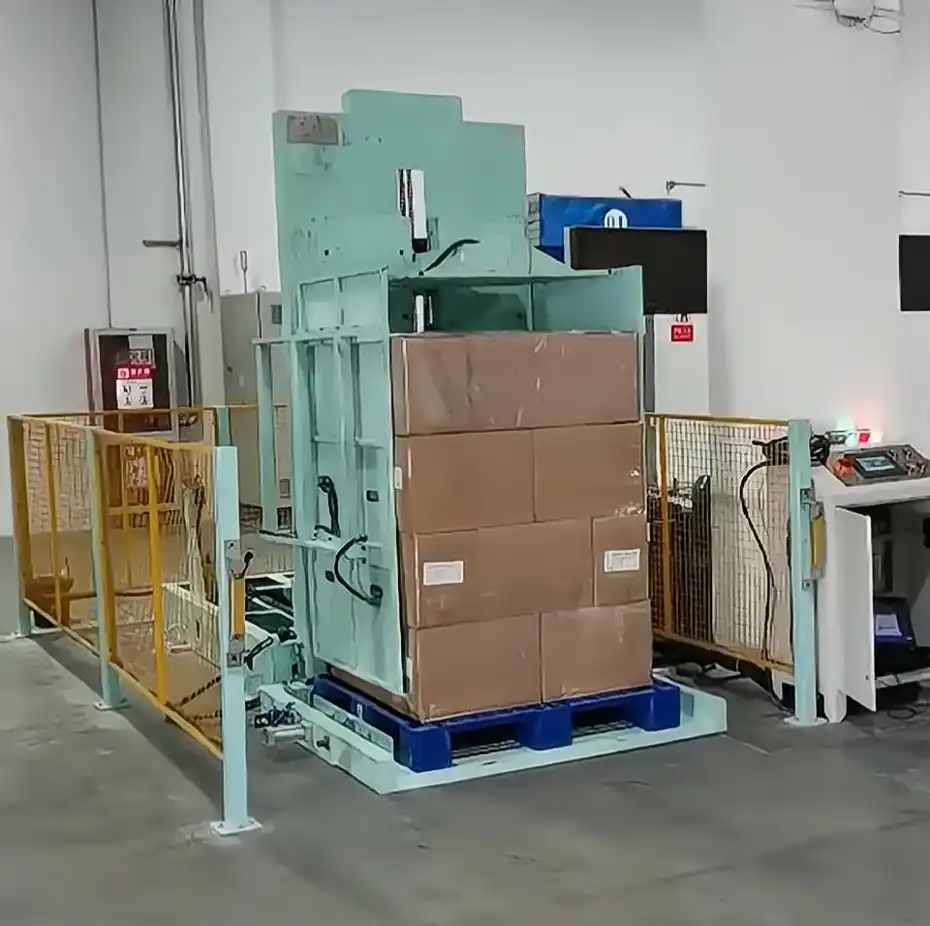
Pallet inverters handle loads with precision and stability. They clamp the load firmly. Then, they rotate or exchange the pallet in a controlled way. This prevents goods from falling or shifting. It greatly reduces the risk of crushing injuries. This is a huge improvement over manual methods. Manual methods often involve unstable stacks or precarious balancing acts. Machines perform these tasks smoothly, without sudden movements. This ensures the safety of both workers and products. For instance, in food processing, ensuring the integrity of the product during pallet transfer is critical for quality control and avoiding waste. A secure machine ensures consistent handling, reducing damage and enhancing overall safety. This level of control is something manual labor simply cannot achieve consistently.
Integrated Safety Features 🚨🛡️
Modern pallet inverters come with advanced safety features. These include:
- Emergency stop buttons: Located in easy-to-reach places, they instantly halt the machine.
- Safety light curtains: These create an invisible barrier. If a person breaks this barrier, the machine stops.
- Safety guarding: Physical barriers prevent access to moving parts.
- Audio/visual alarms: These warn workers when the machine is operating. These features are not just add-ons. They are fundamental parts of the design. They ensure maximum protection for operators. From my engineering perspective, these features are non-negotiable. They are essential for meeting strict international safety standards. They protect your workers and your business. Choosing a machine with robust safety features is a commitment to your team’s well-being. This is an investment that pays off daily.
Can automation truly simplify compliance with safety standards?
The idea of simplifying safety compliance might seem too good to be true. But with automation, it is very real. Safety standards are complex. They require consistent adherence to many rules. Manual processes often lead to human error, which then leads to non-compliance. Automated pallet inverter systems remove this variable. They ensure every pallet exchange follows the same safe, pre-set procedure. This makes proving compliance much easier for procurement teams. It also simplifies audits.
Automation, particularly with pallet inverters, greatly simplifies safety compliance. It standardizes procedures. It removes human error from high-risk tasks. It consistently adheres to established safety protocols. This makes audits and adherence much easier for procurement teams.
When I started FHOPEPACK, my vision was always to build machines that not only performed well but also stood up to the toughest safety scrutiny. I knew from my engineering background how important robust design is. It ensures operational reliability. It also ensures consistent safety. This consistency is the key to simplifying compliance. It reduces the headaches that procurement and logistics managers like Carlos often face.
Standardizing Operations ✅📊
Automated pallet inverters perform tasks in a standardized way every single time. This means less variability in how pallets are handled. It also means less room for human error. Standardization makes it easier to meet and maintain safety regulations. You can set the machine parameters once. Then, it will consistently operate within those safe limits. This helps companies comply with ISO standards or specific industry regulations. This consistency provides a clear audit trail. It demonstrates a commitment to safety. For Carlos, dealing with varied international pallet standards, a standardized process ensures that every exchange, whether Euro to US or vice-versa, is executed safely and correctly. This reduces the risk of non-compliant shipments. It also reduces potential penalties.
Reducing Human Error 🤖❌
Human error is a major cause of workplace accidents. Workers can get tired. They can get distracted. They can also take shortcuts. These factors increase accident risk. Automated systems do not get tired. They do not get distracted. They follow programmed instructions precisely. This significantly reduces accidents caused by human mistakes. For example, a worker might forget a safety check during a busy shift. A machine will not. It will follow its safety protocol every time. This consistent adherence to safety protocols is a huge advantage. It makes compliance much more achievable. It removes a significant source of risk for procurement teams to worry about. My own experience building and maintaining these machines taught me that the more you automate dangerous, repetitive tasks, the safer your entire operation becomes.
Supporting Audits and Documentation 📝👍
Automated pallet inverter systems often have data logging capabilities. These systems can record operational parameters. They can also record maintenance schedules. This provides valuable documentation for safety audits. When an inspector asks for proof of safety measures, you have tangible data. This includes how many cycles the machine ran safely or when it was last serviced. This kind of detailed record-keeping makes audits faster and less stressful. It shows a proactive approach to safety management. It provides clear evidence of compliance. This is a huge benefit for procurement teams. It ensures that safety is not just a promise but a verifiable reality. It helps avoid the delays and potential fines that come with poor documentation.
What makes a pallet inverter solution a long-term safety investment?
Investing in a pallet inverter is not just a one-time purchase. It is a strategic decision. It yields long-term benefits for safety, efficiency, and your company’s future. It continuously reduces injury risks. It improves operational efficiency. It also lowers insurance costs. Moreover, it builds a strong culture of safety within the warehouse. This yields sustainable benefits for years to come. This makes it a true long-term safety investment.
A pallet inverter solution becomes a long-term safety investment by continuously reducing injury risks, improving operational efficiency, lowering insurance costs, and building a culture of safety within the warehouse, yielding sustainable benefits for years.
For me, designing a machine means thinking about its lifetime value. It is not just about the initial purchase. It is about years of reliable service and protection for workers. It is about offering a partnership. This partnership helps clients like Carlos grow their businesses securely and efficiently. This commitment to long-term value is central to FHOPEPACK’s mission.
Beyond Compliance: A Culture of Safety 🤝🌟
Implementing pallet inverters shows a strong commitment to employee well-being. This goes beyond just meeting regulations. It helps create a positive safety culture. When employees see that their company invests in their safety, morale improves. They feel valued. This leads to higher job satisfaction and lower employee turnover. For a warehouse facing labor shortages, like Carlos’s, this is a major benefit. A safer workplace attracts and retains talent. It reduces the costs associated with hiring and training new staff. It transforms the warehouse from a physically demanding environment into a modern, safe, and attractive workplace. This cultural shift is a powerful long-term advantage.
Durability and Reliability 💪⚙️
High-quality pallet inverters are built to last. They are made from robust materials. They have precision-engineered components. This ensures reliable operation even in demanding warehouse environments. This durability means less downtime for repairs. It also means consistent safety performance over many years. When I build machines at FHOPEPACK, I focus on strength and longevity. I know that businesses need equipment they can count on day in and day out. This reliability is key to a true long-term investment. It means fewer unexpected costs and consistent safety protection. It reduces the need for frequent replacements. This maximizes your return on investment in safety. It gives you peace of mind.
The Value of a Trusted Partner 🧑🤝🧑💼
Choosing the right supplier is as important as choosing the right machine. A trusted partner offers more than just equipment. They provide expert advice, installation support, and ongoing maintenance. This ensures your pallet inverter operates safely and efficiently for its entire lifespan. For a manager like Carlos, who wants a long-term partner, this is essential. He needs a company that understands his specific challenges. He needs a partner who can adapt to his varied pallet types and operational needs. At FHOPEPACK, my team and I are dedicated to being that partner. We provide solutions that truly fit your needs. We stand by our machines and our clients. This support ensures the long-term success and safety of your operations.
Conclusion
Pallet inverters are vital for procurement teams aiming to meet strict safety regulations. They automate risky tasks, reduce injuries, and simplify compliance. This creates safer workplaces and ensures long-term operational efficiency. Invest in a pallet inverter for a safer, more productive future.








