
Which pallet inverter design suits EV cell turnover in large-scale plants?
The rapid growth of the electric vehicle (EV) industry brings new challenges to manufacturing. Handling EV cells is complex. These cells are delicate, often heavy, and require precise movement. If you are struggling with efficient, safe, and cost-effective pallet turnover in your EV plant, you are not alone. Many plant managers face high labor costs, safety risks from manual handling, and the constant pressure to speed up production. This can lead to production delays, damaged goods, and even worker injuries, hitting your bottom line hard.
For large-scale EV cell turnover, the most suitable pallet inverter designs are typically automated 180-degree inline pallet changers or specialized heavy-duty 90-degree tippers, often integrated into a conveyor system to maintain high throughput and minimize manual intervention, ensuring safety and efficiency for delicate and heavy battery components.
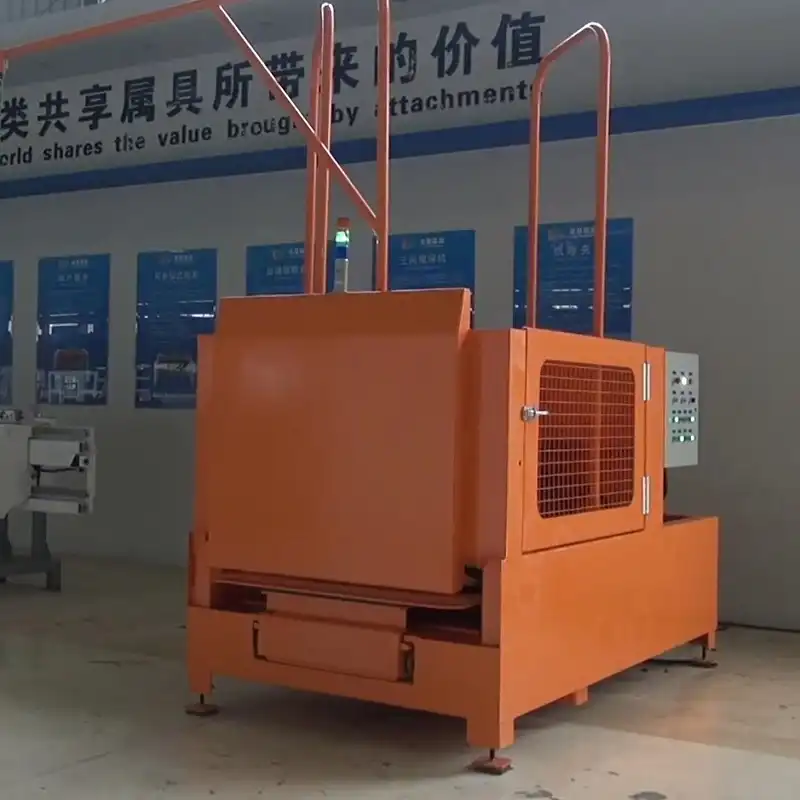
I have seen many factories grapple with these issues. The right pallet inverter can transform your operation. It can solve these problems by increasing automation, improving safety, and making your entire production line more efficient. Let’s look deeper into finding the best solution for your EV plant.
What unique demands does EV cell turnover place on pallet handling systems?
EV cell manufacturing is a high-stakes game. The products are valuable and delicate. Any damage can lead to significant losses. Are you constantly worried about damaging sensitive battery cells during pallet transfers? Do you struggle with the sheer volume of pallets needing to be moved and inverted every day? This concern is common. The specific needs of EV cell handling make standard pallet operations insufficient, creating bottlenecks and increasing risk.
EV cell turnover demands pallet handling systems that offer high precision, gentle handling, robust construction for heavy loads, and the ability to integrate seamlessly into automated production lines to prevent damage and maintain cleanliness.
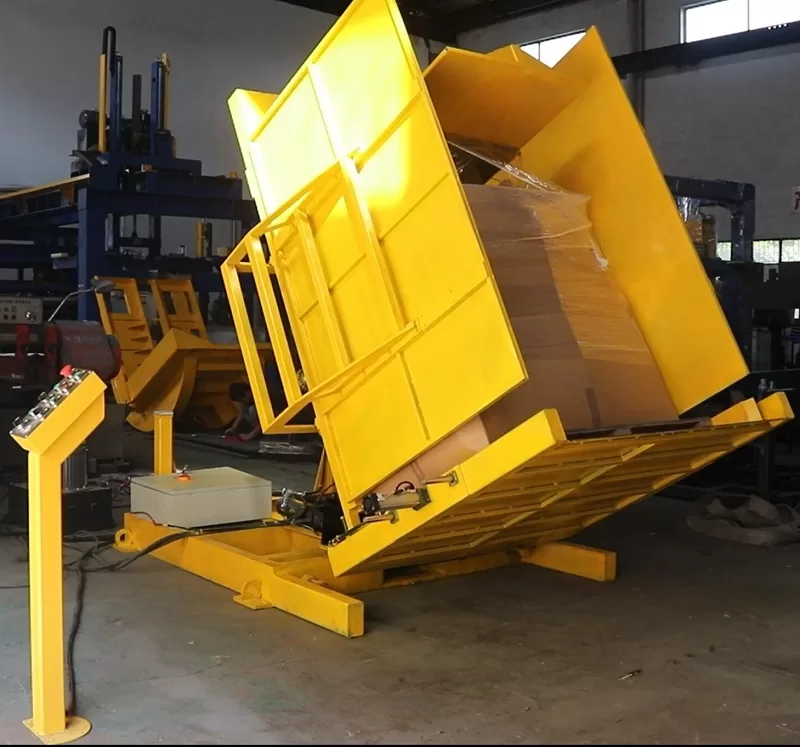
From my years in the packing machine industry, I have seen how specialized products like EV cells require specialized handling. They are not like regular goods. The stakes are much higher. You need equipment that understands these unique needs. It must protect your product, keep your workers safe, and keep your production moving fast.
-
Product Sensitivity and Protection Requirements
- Delicate Components: EV cells are sensitive. They can be damaged by shock, vibration, or incorrect handling. This means any pallet inverter must operate smoothly. It cannot jar or drop the cells. Precision is key to avoid micro-fractures or short circuits.
- Clean Room Compatibility: Many EV manufacturing stages happen in clean room environments. Pallet inverters must not create dust or debris. They should use materials that are easy to clean. They also need to be designed to minimize contamination risks. For instance, hydraulic systems might need sealed units to prevent leaks.
- Specific Orientation Needs: Cells often need to be inverted for inspection, packaging, or to fit into a battery module. The inverter must achieve this orientation change without stressing the product. This calls for controlled, gradual movements, not sudden flips.
-
High Throughput and Integration into Automated Lines
- Speed and Efficiency: Large-scale EV plants operate 24/7. They handle thousands of pallets daily. The pallet inverter cannot be a bottleneck. It needs to keep up with the fast pace of the production line. This means quick cycle times are essential.
- Seamless Automation: Modern EV plants are highly automated. The pallet inverter must integrate easily with existing conveyor systems, robotic arms, and plant control software. It should receive commands and send status updates automatically. Manual intervention should be minimal.
- Continuous Flow: An ideal system ensures a continuous flow of materials. It prevents stoppages. This helps maintain consistent production rates. Downtime is very costly in this industry.
-
Heavy Load Capacity and Safety
- Weight of Battery Packs: Pallets loaded with EV cells or modules can be very heavy. A single battery pack can weigh hundreds of kilograms. This means pallet inverters need robust construction. They must have high load capacities. They need powerful motors and strong frames.
- Worker Safety: Manual pallet turning is dangerous. It can cause serious injuries. A good pallet inverter removes workers from hazardous tasks. It includes safety features like light curtains, emergency stops, and interlocks. These features protect operators from moving parts. In my factory days, I saw firsthand the accidents that manual handling could cause. Automating this step is a huge win for safety.
- Ergonomics: Even if direct handling is reduced, workers might still interact with the machine. The design should be ergonomic. It should make any manual tasks easy and safe. This includes things like clear loading zones and accessible controls.
Which pallet inverter designs offer the best balance of efficiency and footprint for EV plants?
You have limited space in your factory. Every square foot counts. At the same time, you need to move a lot of pallets quickly. It is a common dilemma. Many plant managers ask me how they can get high efficiency without building a bigger facility. Finding the right balance between how much space a machine uses and how much work it can do is crucial, especially when dealing with high-volume, valuable products like EV cells.
For large-scale EV plants, the best balance of efficiency and footprint often comes from compact 180-degree inline pallet changers that integrate directly into conveyor lines, or specialized 90-degree fixed tippers designed for specific stages, which both minimize floor space while maximizing throughput.
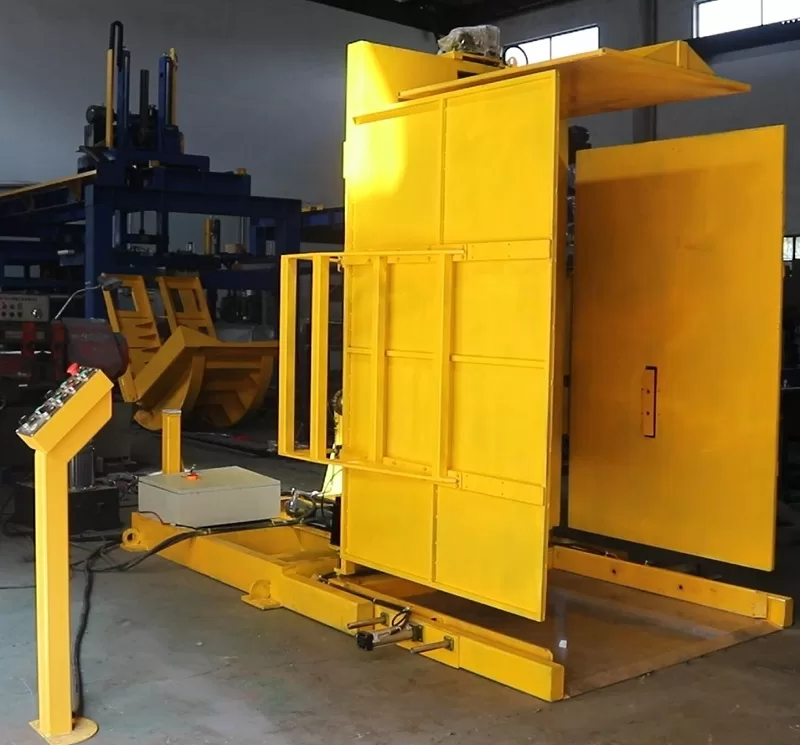
I often tell clients that “bigger” does not always mean “better.” Sometimes, a smarter design makes a huge difference. I remember one client who thought they needed a massive machine. We showed them how a more compact, integrated solution could actually outperform the larger one they envisioned, saving them both space and money.
-
180-Degree Inline Pallet Changers
- Description: These machines take a loaded pallet, grip it, and rotate it 180 degrees. They typically operate in line with a conveyor system. This means pallets move straight through the machine.
- Efficiency: Very high throughput. They can process pallets quickly and continuously. This is ideal for high-volume operations like EV cell manufacturing. The continuous flow minimizes stops and starts.
- Footprint: Relatively compact for their throughput. Since they are inline, they fit well into existing conveyor layouts. They do not require extra space for turns or complex material handling paths. This design makes efficient use of your factory floor.
- Integration: Excellent for full automation. They connect directly to upstream and downstream conveyors. This allows for seamless integration into a completely automated production line.
- Use Cases in EV Plants: Perfect for tasks like turning pallets for inspection, switching to different pallet types for internal transport, or preparing for specific packaging steps where orientation matters.
-
90-Degree Fixed Tippers
- Description: These units tilt the entire pallet load by 90 degrees. They can then transfer the load or allow access to the bottom. Some models lift and clamp before tilting.
- Efficiency: Good for specific tasks where a 90-degree tilt is enough. Not as high throughput as 180-degree inline systems for continuous turning, but very effective for specific process steps.
- Footprint: Can be compact, especially if integrated as a workstation. Some models are standalone. They might need more space around them if manual interaction is required.
- Integration: Can be automated, but sometimes they act as a specific processing station rather than a continuous flow system. They might require short conveyor sections or manual loading/unloading.
- Use Cases in EV Plants: Useful for accessing the bottom of a pallet for strapping, cleaning, or for operations that only need a single 90-degree turn. For example, if cells need to be removed from one side of a pallet after a drying process.
-
Mobile Pallet Changers (Stand-alone Units)
- Description: These are units that can be moved around the plant. They are often battery-powered. They typically lift and clamp a pallet, then rotate it.
- Efficiency: Lower throughput compared to fixed inline systems. They are designed for flexibility, not raw speed. They require an operator to move and position them.
- Footprint: Very flexible. They do not take up permanent floor space. You can move them where they are needed. This is great for plants with changing layouts or lower volume specific tasks.
- Integration: Less integrated into full automation. They are more for flexible, on-demand operations. They might interact with manual forklifts or pallet jacks.
- Use Cases in EV Plants: Ideal for handling diverse pallet types in a changing environment. Carlos mentioned frequent pallet changes for different export standards. A mobile unit can be a great solution for that kind of flexibility without committing to a fixed, complex system. It is also good for tasks where a fixed solution is not justified.
How do advanced pallet inverters improve safety and automation in battery manufacturing?
Safety is paramount, especially when working with heavy, delicate, and potentially hazardous EV cells. Are you concerned about your workers’ safety during manual pallet handling? Are you looking for ways to reduce labor costs and human error? Many operations struggle with the risks of manual work. Accidents can be costly, both in terms of human suffering and financial impact. Manual handling is slow and prone to errors. This impacts your production schedule and product quality.
Advanced pallet inverters improve safety by eliminating manual lifting and turning, reducing the risk of injuries and product damage, while enhancing automation through seamless integration with production lines, precise control systems, and data collection capabilities.

In my career, I have seen firsthand the dangers of manual pallet operations. I remember a client whose workers often suffered back injuries from manually flipping heavy boxes. Investing in an automated system not only made their workplace safer but also boosted their morale and productivity. It showed their commitment to their team.
-
Eliminating Manual Handling and Reducing Injury Risk
- Heavy Lifting Prevention: Advanced pallet inverters take over the physically demanding task of lifting and turning heavy pallets. This completely removes the need for workers to manually handle heavy loads. This greatly reduces the risk of muscle strains, sprains, and other ergonomic injuries.
- Reduced Risk of Falling Objects: Manual turning can cause loads to become unstable. This leads to dropped products or falling pallets. Automated systems clamp loads securely. They perform turns smoothly. This minimizes the chance of accidents. It protects both personnel and valuable EV cells.
- Improved Workplace Environment: By automating these hazardous tasks, the overall safety culture improves. Workers can focus on higher-value activities. They can work in a safer environment. This also helps with labor shortages, as fewer people are needed for dangerous jobs.
-
Enhancing Automation and Operational Efficiency
- Seamless Integration: Modern pallet inverters are designed to integrate with existing automated conveyor systems and warehouse management systems (WMS). They can receive instructions and send feedback. This creates a fully automated material flow.
- Precise Control and Repeatability: Automated systems offer precise control over the turning process. They ensure every pallet is inverted in the same way, every time. This consistency is vital for maintaining product quality and for processes that require exact orientation. It also reduces human error.
- Increased Throughput and Speed: By automating the turning process, cycle times are optimized. Pallets move faster through the line. This increases overall throughput. It helps meet the demands of high-volume EV production. It also allows plants to meet tighter delivery schedules.
-
Data Collection and System Intelligence
- Performance Monitoring: Advanced pallet inverters can collect data on their operation. This includes cycle times, error rates, and machine uptime. This data helps managers monitor performance. They can identify bottlenecks or areas for improvement.
- Predictive Maintenance: Some systems can detect early signs of wear or potential breakdowns. This allows for predictive maintenance. You can address issues before they cause costly downtime. This proactive approach saves time and money.
- Adaptability and Customization: Modern inverters can be programmed to handle different pallet sizes and load types. This flexibility is crucial for EV plants that might deal with various cell formats or need to switch between Euro and US pallets, as Carlos often does. They can adapt quickly to new production requirements.
What defines a reliable pallet inverter supplier for the high-stakes EV industry?
Choosing the right pallet inverter is only half the battle. The supplier you choose is just as important, especially in a critical industry like EV manufacturing. Are you tired of suppliers who only care about making a sale and then disappear when you need support? Do you worry about equipment breakdowns impacting your production schedule? Carlos specifically mentioned wanting a partner, not just a seller. This is a critical point. A bad supplier can turn a good machine into a huge headache.
A reliable pallet inverter supplier for the EV industry is defined by their deep understanding of specific material handling challenges, a proven track record of durable and precise machinery, robust after-sales support, custom engineering capabilities, and a commitment to long-term partnership.
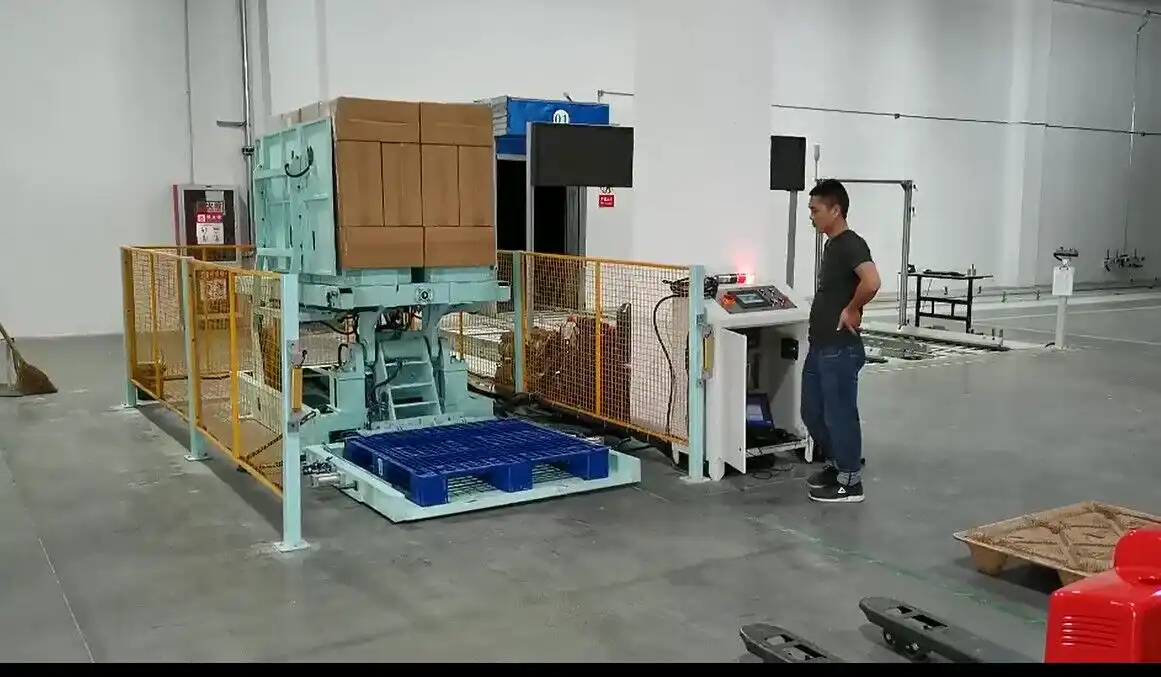
This is where FHOPEPACK truly shines. We do not just sell machines. We share knowledge. My journey from a factory employee to owning a successful packing machine factory taught me this. I built FHOPEPACK because I believe in giving back and helping others succeed. A supplier should be a partner who understands your challenges and helps you grow.
-
Industry-Specific Expertise and Understanding
- Knowledge of EV Production: A reliable supplier understands the unique demands of EV cell manufacturing. They know about product sensitivity, clean room needs, and high-volume requirements. They do not treat EV cells like generic goods.
- Consultative Approach: They should ask about your specific pain points and goals. They should not just push a standard product. They need to listen to your challenges, like dealing with diverse pallet sizes or labor shortages. This helps them recommend the best solution, not just any solution.
- Problem Solvers: They offer solutions to your problems, not just machines. If you have issues with diverse pallet specs or safety, they should have ideas on how their equipment can help. I always aim to solve real problems for my clients.
-
Quality, Durability, and Precision of Equipment
- Robust Construction: The machinery must be built to last in a 24/7 industrial environment. This means using high-quality materials and components. It must withstand heavy loads and continuous operation.
- High Precision: For delicate EV cells, precision is key. The inverter must operate smoothly and consistently. It should not cause any shocks or damage. This requires good engineering and manufacturing standards.
- Proven Track Record: Look for suppliers with a history of successful installations in similar industries. Ask for case studies or references. This shows their equipment works reliably in real-world settings.
-
Comprehensive After-Sales Support and Service
- Technical Support: A good supplier offers strong technical support. They can help with installation, troubleshooting, and maintenance questions. This includes remote support and on-site visits if needed.
- Spare Parts Availability: Quick access to spare parts is crucial. Downtime is expensive. A supplier should have a good inventory of parts and efficient logistics to get them to you fast.
- Training: They should provide thorough training for your operators and maintenance staff. This ensures your team can use and maintain the equipment effectively and safely.
-
Customization and Long-Term Partnership
- Flexible Solutions: The supplier should be able to customize their machines. They need to meet your specific needs, like handling unique pallet sizes or integrating with a complex automated line. Carlos needed adaptability for multiple pallet standards.
- Scalability: They should offer solutions that can grow with your business. If your EV production expands, the supplier should be able to provide upgrades or additional compatible equipment.
- Relationship Focus: A true partner focuses on a long-term relationship. They offer ongoing support and insights. They are interested in your success, not just one-time sales. This means they are there for you years down the road, not just at the point of purchase.
Conclusion
Selecting the right pallet inverter design for EV cell turnover in large-scale plants is vital for efficiency, safety, and long-term success. Focus on automated, heavy-duty inline or 90-degree tippers for high throughput and precise handling, ensuring your supplier offers strong support and customization.








