
Which pallet inverter design ensures safe and compliant operation in semiconductor fabs?
The semiconductor industry is a world of extreme precision. Even a tiny particle can ruin an entire batch of sensitive components. So, when it comes to moving materials, especially on pallets, the stakes are incredibly high. Just thinking about the risks involved, like contamination or static discharge, gives me a real understanding of the challenges many managers face. It is not just about moving a pallet; it is about protecting millions of dollars worth of product and keeping complex operations running smoothly.
In semiconductor fabs, a specialized pallet inverter design ensures safe and compliant operation by incorporating cleanroom-compatible materials, robust electrostatic discharge (ESD) protection, gentle handling mechanisms, and precise automation, all engineered to prevent contamination and product damage while adhering to strict industry standards like SEMI.
When I talk with clients about their needs, especially in high-tech fields, I always emphasize that a pallet inverter is not just a piece of equipment. It is a critical link in their supply chain. Choosing the right one for a semiconductor fab means understanding the unique environment and product sensitivities. Let us dive into how the right design makes all the difference.
Why do semiconductor fabs need specialized pallet inverters, not just any model?
Imagine a particle, invisible to the eye, landing on a microchip. That one particle can cost a company millions. This is the reality in semiconductor fabs. Standard pallet inverters, designed for general warehousing or food processing, simply cannot meet these strict demands. I have seen the damage caused when companies try to cut corners, and it is rarely worth the initial saving.
Semiconductor fabs need specialized pallet inverters because their environments demand stringent control over contamination, electrostatic discharge (ESD), and physical handling, which conventional pallet inverters cannot provide without risking product integrity and operational compliance.

My experience tells me that ignoring these specific needs leads to big problems. From costly product rejections to regulatory fines, the consequences are severe. That is why understanding these unique requirements is the first step in selecting the right equipment.
1. Cleanroom Environment Requirements 洁净室环境要求 🌬️
Cleanrooms in semiconductor manufacturing are classified based on the maximum number of particles allowed per cubic meter. For example, a Class 100 or ISO 5 cleanroom is extremely demanding. Any equipment brought into this space must not generate particles. This includes dust, fibers, or even microscopic flakes from moving parts. Standard pallet inverters often use materials like painted steel or exposed hydraulic components. These can shed particles, rust, or leak fluids. Such materials are completely unacceptable in a fab. I learned early on that material science is key here. It is not just about making a machine work; it is about making it work without causing harm. When you are dealing with sensitive electronics, every detail matters. This is where my background in packing machine design helps. I think about how materials interact with the environment and the product. A specialized pallet inverter must be constructed from non-shedding materials. Stainless steel is often preferred because it is durable, easy to clean, and does not rust. Furthermore, its surfaces must be smooth and free of crevices where dust can collect. All moving parts, like bearings and chains, need to be enclosed or sealed. This prevents them from releasing lubricating oils or wear particles into the cleanroom air. Any electrical components must also be designed to dissipate heat without creating air currents that could stir up particles. Even the paint, if any, must be a special low-VOC, non-chipping variety. This level of detail shows why standard machines just do not cut it in a fab.
2. Electrostatic Discharge (ESD) Sensitivity 静电放电敏感性 ⚡
Semiconductor components are incredibly sensitive to electrostatic discharge. A small static shock, barely noticeable to a human, can instantly destroy a microchip. This means all equipment in a fab, including pallet inverters, must be ESD-safe. This is a challenge I have seen many companies struggle with. It requires a deep understanding of electrical grounding and material properties. A standard pallet inverter might build up a static charge during operation. This charge can then transfer to the pallets or the product. The result can be invisible damage to components. Such damage might not show up until much later in the product life cycle, leading to costly recalls. Specialized pallet inverters combat this problem through several design elements. First, they use anti-static materials for any parts that come into contact with the product or pallet. These materials dissipate static charges safely. Second, the entire machine must be properly grounded. This ensures any static build-up is channeled away from the product. Grounding points need to be regularly checked for continuity. Third, the operating environment itself often has humidity controls to minimize static. The machine must work effectively within these controlled conditions. My personal approach has always been to over-engineer safety features. With ESD, there is no room for error. We consider every path a static charge could take and then block it.
3. Product Value and Integrity 产品价值与完整性 💰
The materials moved in a semiconductor fab are often extremely valuable. A single pallet can hold components worth hundreds of thousands or even millions of dollars. Therefore, any pallet handling equipment must ensure maximum product integrity. The risk of damage, even minor, is simply too high. This is different from handling less valuable goods where a small percentage of breakage might be acceptable. In a fab, every component counts. A general-purpose pallet inverter might use aggressive clamping forces or sudden movements. These could easily crush or jar sensitive components. Even slight impacts can cause microscopic cracks that lead to device failure later. Specialized inverters are designed for gentle handling. They use soft-grip clamps, adjustable pressure settings, and slow, controlled acceleration and deceleration. The entire process of rotating a pallet needs to be smooth and free of any sudden shocks. Furthermore, the design must minimize any points where product could snag or get caught. This attention to detail protects the immense value of the materials being handled. I always tell my team that when you are moving something so valuable, you are not just handling a box. You are handling trust and a future.
4. Regulatory Compliance and Audit Readiness 法规合规性与审计准备 📜
The semiconductor industry is heavily regulated. Companies must adhere to various international standards, including those from organizations like SEMI (Semiconductor Equipment and Materials International) and ISO (International Organization for Standardization). This means all equipment must be compliant. Failing an audit can lead to significant delays, financial penalties, and damage to reputation. Standard pallet inverters are usually not built with these specific regulatory frameworks in mind. A specialized pallet inverter, however, is designed from the ground up to meet these requirements. This includes documentation, material certifications, and performance validation. For example, SEMI standards might dictate specific requirements for equipment safety, ergonomics, and even how materials are handled to prevent contamination. ISO standards often cover quality management systems and environmental performance. Companies need to be ready for audits at any time. This means having detailed records for equipment maintenance, calibration, and operational procedures. I have seen how a lack of proper documentation can bring an entire operation to a halt. A reputable supplier of specialized inverters will provide all necessary certifications. They also understand the importance of traceability for all components and processes. This ensures the equipment not only performs its task but also helps the fab maintain its certifications and compliance.
What design features make a pallet inverter safe and compliant for cleanroom environments?
Achieving cleanroom compliance and maximum safety is not an accident; it is the result of careful design choices. When I first started working with packing machines, I quickly learned that the materials and construction methods truly define a machine’s capability. For semiconductor fabs, these choices become even more critical. It is about building a machine that not only works but also integrates seamlessly into a highly controlled environment.
Design features that make a pallet inverter safe and compliant for cleanroom environments include the exclusive use of non-shedding, corrosion-resistant materials like stainless steel, fully enclosed mechanisms, smooth, crevice-free surfaces, advanced air filtration, and a modular design for easy cleaning and maintenance.
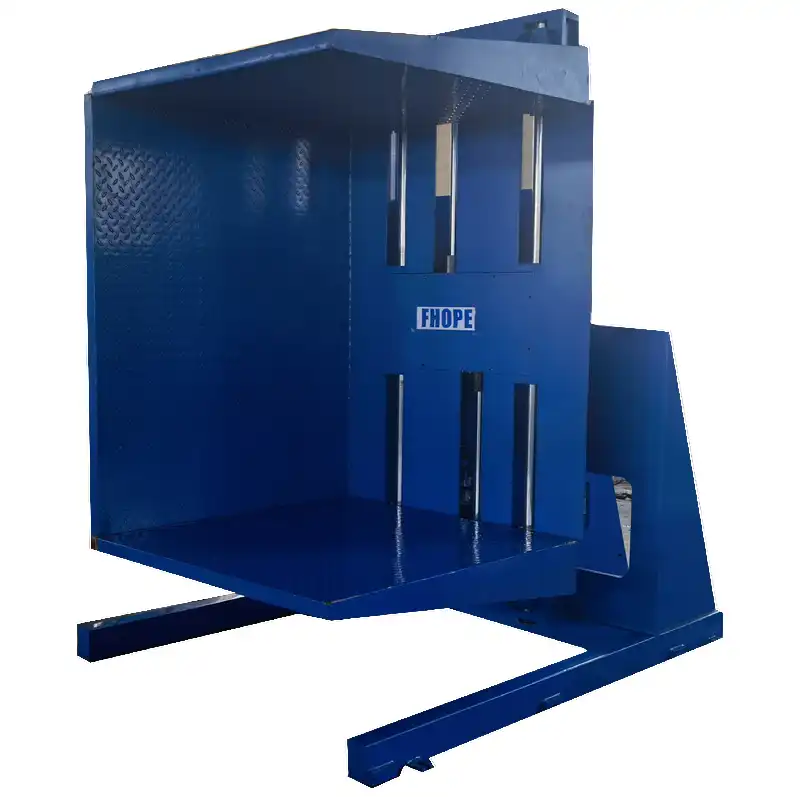
I have always believed that robust design means thinking about problems before they happen. For cleanrooms, this means anticipating every potential source of contamination or risk. It is a meticulous process, but it is necessary for success.
1. Material Selection and Surface Finishes 材料选择与表面处理 🛠️
The choice of materials is perhaps the most fundamental aspect of cleanroom compatibility. As I mentioned, standard painted steel is a no-go. Specialized pallet inverters must primarily use stainless steel, particularly grades like 304 or 316. These grades offer excellent corrosion resistance and do not shed particles. Stainless steel is also easy to clean and sanitize, which is vital for maintaining cleanroom protocols. Beyond the material itself, the surface finish is equally important. All surfaces should be smooth, polished, or electropolished. This minimizes surface roughness, which can trap dust and particles. It also prevents the accumulation of microorganisms, if applicable. Weld seams must be continuous and smooth, without any rough spots or pores. Any non-metallic components, such as seals, gaskets, or conveyor belts, must be made from non-shedding, cleanroom-compatible polymers like UHMW-PE or special virgin PTFE. These materials must also resist chemical degradation from common cleanroom cleaning agents. My experience has taught me that even a tiny chip in a painted surface can become a major contamination source. By choosing the right materials and applying the correct finishes, we eliminate these risks from the start. This proactive approach saves a lot of headaches later on.
2. Enclosed Mechanisms and Filtered Airflow 封闭机构与过滤气流 🌬️
Standard pallet inverters often have exposed gears, chains, hydraulic lines, or electrical wiring. These elements are problematic in a cleanroom. Moving parts generate friction and wear, releasing microscopic particles. Hydraulic systems can leak fluids. Exposed wiring can accumulate dust and is harder to clean. Therefore, a specialized inverter design fully encloses all such mechanisms. This enclosure prevents particles from escaping into the cleanroom environment. It also protects the mechanisms from external contamination. For example, hydraulic power units and control panels should be sealed off from the main operational area. In some advanced designs, internal air pressure or filtered airflow systems are integrated. These systems can maintain a positive pressure within the machine’s critical areas, preventing ambient cleanroom air (and any particles it might carry) from entering. Exhaust air from motors or vacuum systems, if present, must be HEPA or ULPA filtered before being released. This meticulous management of airflow and enclosure ensures that the machine itself does not become a source of contamination. From my perspective, it is like creating a mini-cleanroom within the machine. This level of control is what makes the difference.
3. Safety Interlocks and Ergonomic Design 安全联锁与人机工程学设计 🔒
Safety in a semiconductor fab extends beyond just product integrity; it also includes operator safety. Manual pallet handling, especially flipping heavy loads, is inherently dangerous. My years in the packing machine industry have shown me the direct link between poor design and workplace accidents. Specialized pallet inverters significantly reduce these risks through automation and intelligent safety features. Key safety features include robust safety interlocks that prevent operation if guards are open or if an operator is in a restricted area. Light curtains, pressure mats, and emergency stop buttons are standard. The control system should be intuitive and user-friendly, minimizing the chance of human error. Ergonomic design also plays a role in safety and compliance. This means designing the machine so operators can load, unload, and interact with it comfortably and safely. For instance, loading heights should be appropriate. The user interface should be clear and easy to understand. Furthermore, the machine’s stability during operation is crucial. It must be designed to handle the maximum rated load without tipping or excessive vibration. This ensures the safety of personnel and prevents damage to the facility. A well-designed machine protects both the product and the people operating it.
4. Modular Design and Ease of Maintenance 模块化设计与易于维护 🔧
Cleanroom equipment requires regular cleaning and maintenance to maintain its integrity. A complex, hard-to-access design can make these tasks difficult, time-consuming, and potentially compromise the cleanroom environment during the process. Specialized pallet inverters are often designed with modularity in mind. This means components are grouped into easily accessible modules. For example, electrical cabinets might be designed to be moved away for maintenance without fully disconnecting the machine. Surfaces are smooth and free of tight corners or crevices where contaminants can accumulate. This simplifies cleaning. Furthermore, parts that require routine inspection or replacement, such as filters or wear parts, should be easily accessible. This reduces downtime and ensures that maintenance can be performed quickly and efficiently, minimizing the impact on production schedules. Documentation for cleaning procedures and maintenance schedules is also a critical part of compliance. A machine that is easy to maintain is more likely to be maintained correctly. This directly translates to sustained cleanroom performance and operational safety. In my experience, a good machine design simplifies life for everyone involved, from operators to maintenance technicians.
How do pallet inverters protect delicate semiconductor products from damage and ESD?
Protecting delicate semiconductor products is arguably the most critical function of a pallet inverter in a fab. These components are fragile and susceptible to even minor physical shocks or static electricity. It is not just about avoiding visible damage; it is about preventing microscopic issues that can lead to catastrophic failures later. My philosophy has always been to treat every product as if it were my own, and in this industry, that means extreme care.
Pallet inverters protect delicate semiconductor products by employing soft, adjustable clamping mechanisms, integrated anti-static and grounding systems, precisely controlled, smooth motion profiles, and sensor-based detection to prevent jarring or electrostatic discharge during the entire transfer process.
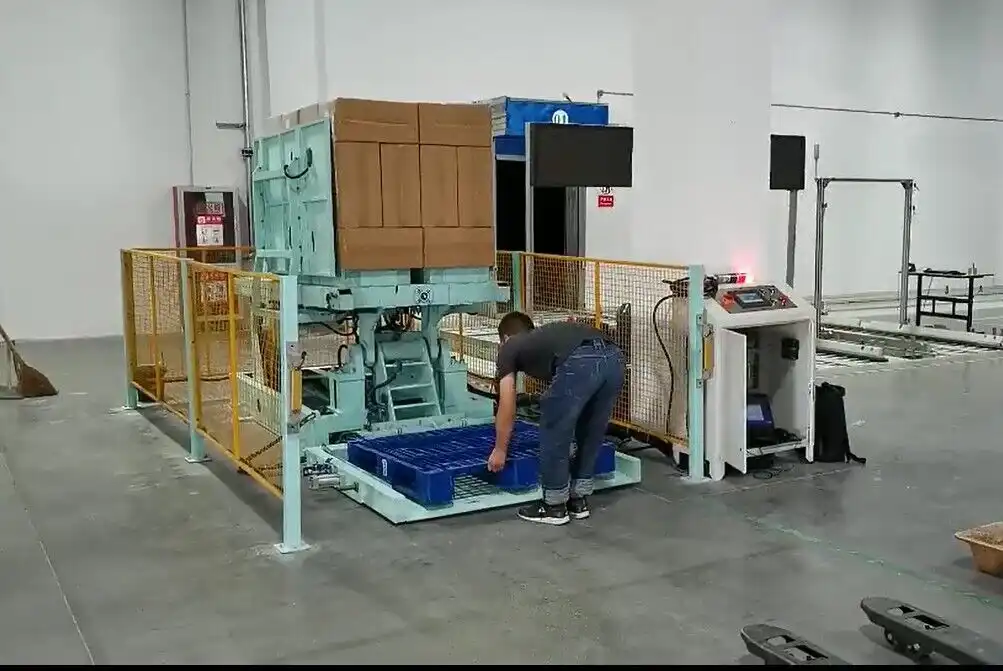
I have seen products damaged by equipment that was “almost” good enough. In the semiconductor world, “almost” is not an option. Every aspect of the machine’s operation must be geared towards preserving the integrity of the valuable contents.
1. Gentle Clamping and Support Systems 轻柔夹紧与支撑系统 👐
The primary point of contact between the pallet inverter and the product (or pallet containing the product) is the clamping mechanism. For delicate semiconductor materials, this contact must be incredibly gentle yet secure. Standard pallet inverters often use rigid, high-pressure clamps that could easily crush or damage sensitive components. Specialized inverters use soft, padded clamps made from non-abrasive, anti-static materials. These pads conform to the shape of the load, distributing pressure evenly. More importantly, the clamping force is precisely adjustable. This allows operators to set the minimum force required to securely hold the load without causing any compression damage. Advanced systems might even use pneumatic or hydraulic pressure sensors to provide real-time feedback and automatically adjust clamping force. Some designs also incorporate a “soft-start” feature for clamping. This means the pressure builds up gradually, preventing sudden impacts. Additionally, the inverter often includes auxiliary support systems, like side guides or bottom plates, that ensure the entire load is supported during rotation, minimizing stress on individual items or the pallet itself. My experience building packing machines taught me that control over force is everything. It is a subtle art to hold something firmly without damaging it.
2. Integrated ESD Protection and Grounding System 集成式ESD保护与接地系统 ⚡
As discussed, ESD is a major threat to semiconductor components. Protecting against it requires more than just using anti-static materials. It demands a fully integrated ESD protection and grounding system throughout the pallet inverter. Every part of the machine that could potentially contact the pallet or product must be made of conductive or static-dissipative materials. These materials are then carefully connected to a common ground point. This ensures that any static charge generated, or present on the incoming pallet, is safely and immediately discharged. The grounding system typically involves dedicated grounding cables, wrist straps for operators interacting with the machine, and regular testing of ground continuity. The machine itself might feature active ionizers. These devices create a balanced field of positive and negative ions. These ions neutralize static charges on surfaces within the immediate vicinity. Furthermore, the control system of the inverter often includes monitoring for static charge levels. If a static event is detected, the machine can pause operations or trigger an alarm. From my perspective, a robust ESD system is like an invisible shield. It is always there, silently protecting against a constant threat.
3. Controlled Acceleration and Deceleration 受控加速与减速 🚀
The movement of the pallet inverter during rotation is another critical area for product protection. Sudden starts, stops, or jerky movements can cause loads to shift, products to topple, or components to experience damaging G-forces. Standard pallet inverters might have simple on-off controls, leading to abrupt movements. Specialized inverters for fabs use sophisticated motion control systems. These systems provide smooth, gradual acceleration and deceleration curves. This minimizes inertia forces acting on the products. The rotation speed is also precisely controllable, allowing operators to select the optimal speed for the specific type of product being handled. For extremely fragile items, a very slow and deliberate rotation might be necessary. The motors and drives used are high-precision, capable of starting and stopping without jolting. Some designs even incorporate advanced feedback loops. These loops monitor the load’s movement and make real-time adjustments to ensure the smoothest possible transition. This level of control is crucial. It is like carefully turning a priceless object; you do not want any sudden movements. My years in this industry taught me that smooth motion is not just about elegance; it is about preventing unseen damage.
4. Sensor-Based Monitoring and Error Detection 基于传感器的监控与错误检测 👁️
Even with the best design, unforeseen issues can arise. That is why specialized pallet inverters incorporate advanced sensor-based monitoring and error detection systems. These systems act as an extra layer of protection, constantly checking for potential problems. Sensors can detect if a pallet is not correctly seated before rotation begins, preventing a dropped load. Load cells can monitor the weight and distribution of the pallet. This ensures it falls within safe operating limits. Proximity sensors can detect if objects or personnel are too close to moving parts, triggering an immediate stop. Vision systems, sometimes with AI, can even inspect product positioning or detect damaged packaging before processing. If an error is detected, the system immediately halts operation. It provides an alert to the operator. This proactive detection prevents damage to the product and ensures operator safety. My experience has shown me that automation is great, but intelligent automation, with built-in checks, is even better. It is about building a system that can think for itself and prevent mistakes before they become problems.
Beyond design, what operational aspects ensure a pallet inverter meets fab standards and boosts efficiency?
A fantastic design is only half the battle. How a pallet inverter is operated and integrated into the overall fab workflow is equally important for meeting strict standards and maximizing efficiency. I have always pushed for a holistic approach. It is not just about selling a machine; it is about providing a solution that truly enhances a customer’s operation. This means considering everything from daily use to long-term maintenance.
Beyond design, operational aspects ensuring a pallet inverter meets fab standards and boosts efficiency include seamless integration with existing WMS/MES, comprehensive automation levels, rigorous preventive maintenance schedules, detailed operator training programs, and robust data logging for traceability and continuous improvement.
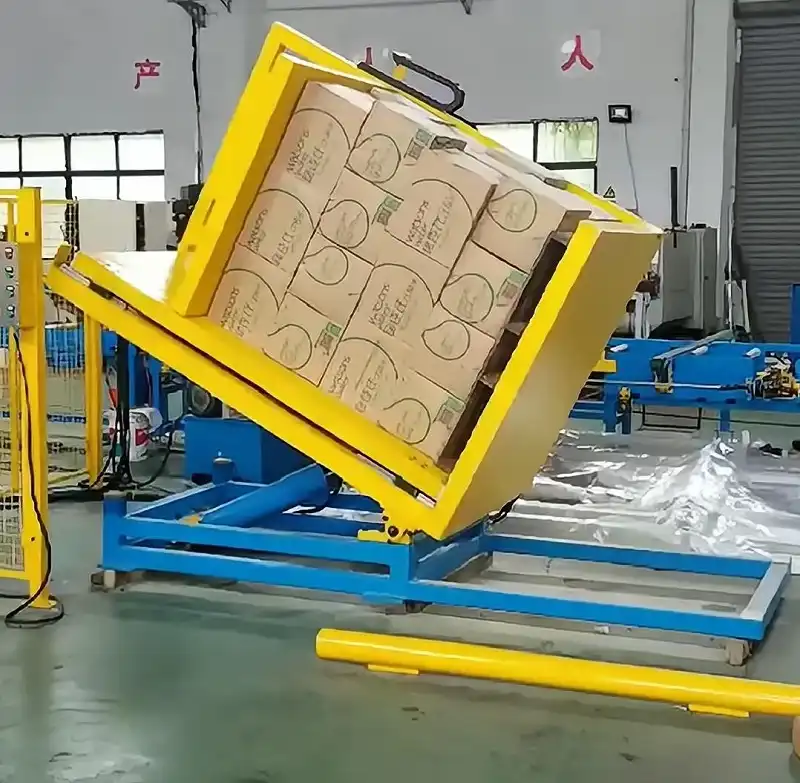
From my early days in the factory, I learned that a machine’s true value comes from how well it performs day in and day out. For semiconductor fabs, this means uptime, precision, and flawless execution.
1. Integration with WMS/MES Systems 与WMS/MES系统集成 🔗
Modern semiconductor fabs rely heavily on sophisticated Warehouse Management Systems (WMS) and Manufacturing Execution Systems (MES). These systems manage everything from inventory tracking to production scheduling. A pallet inverter, particularly an automated one, must integrate seamlessly with these existing IT infrastructures. This integration allows for real-time data exchange. For example, the WMS can tell the pallet inverter which type of pallet conversion is needed for a specific load. The inverter can then report back the status of the operation, including completion times and any error messages. This automated data flow reduces manual data entry, which in turn minimizes human error. It also provides comprehensive traceability for every pallet movement. This is crucial for compliance and audits, as companies can track the exact journey of each batch of components. My experience has shown that well-integrated equipment improves overall operational visibility. It helps managers like Carlos make informed decisions. This leads to better inventory control, optimized material flow, and a more efficient supply chain. The machine becomes a smart part of a larger, intelligent system.
2. Automation Levels and Throughput 自动化水平与吞吐量 ⚙️
The degree of automation in a pallet inverter directly impacts efficiency and safety in a fab. While some fabs might use semi-automatic models, fully automated systems offer the greatest benefits. Automated inverters can operate independently, reducing the need for direct human interaction. This is beneficial for cleanroom environments, as fewer people mean fewer potential particle sources. Automation also ensures consistent operation, eliminating variability that can arise from manual handling. High-throughput demands in fabs mean that pallet inverters must process loads quickly and reliably. An automated system can handle a higher volume of pallets in a shorter time. This prevents bottlenecks in the material handling process. Furthermore, automation can extend to features like automatic pallet dispensing and stacking, or integration with AGVs (Automated Guided Vehicles) and AMRs (Autonomous Mobile Robots). This creates a completely hands-off material transfer process. From my perspective, automation is about more than just speed; it is about precision and reliability. It ensures that every pallet is handled in the exact same, correct way, every single time. This consistency is invaluable in a high-stakes environment like a fab.
3. Preventive Maintenance and Calibration 预防性维护与校准 ⏰
Even the most robustly designed pallet inverter needs regular preventive maintenance to ensure its long-term reliability and compliance. In a semiconductor fab, unexpected downtime is extremely costly. A comprehensive preventive maintenance (PM) schedule is essential. This schedule includes routine inspections, lubrication of moving parts, checking electrical connections, and verifying safety interlocks. All maintenance activities must be performed using cleanroom-compatible tools and procedures. This prevents contamination during servicing. Calibration of sensors, clamping forces, and motion controls is also crucial. It ensures the machine continues to operate within its specified parameters for gentle handling and precise movements. Documentation of all PM activities, including dates, personnel, and findings, is required for audit readiness. My years of running a factory taught me that a well-maintained machine is a productive machine. Neglecting maintenance leads to breakdowns, quality issues, and higher overall costs in the long run. By investing in a strict PM program, fabs protect their investment and ensure continuous, compliant operation.
4. Operator Training and Safety Protocols 操作员培训与安全协议 👷
Even with advanced automation, human operators are still part of the system. Proper training is paramount to ensure safe and efficient operation of the pallet inverter. Operators must understand not only how to run the machine but also the specific cleanroom and ESD protocols. Training should cover loading and unloading procedures, emergency stop protocols, troubleshooting common issues, and daily cleaning routines. They need to understand the importance of product integrity and the potential consequences of mishandling. Additionally, clear safety protocols must be established and strictly followed. This includes lockout/tagout procedures for maintenance, wearing appropriate PPE (Personal Protective Equipment), and adhering to cleanroom gowning requirements. Regular refresher training ensures that all personnel remain up-to-date with best practices. I always tell my team that knowledge empowers. Well-trained operators are safer, more efficient, and contribute to higher product quality. They are the frontline defense against errors, and their competence is a critical operational asset.
Conclusion
Choosing the right pallet inverter for a semiconductor fab means understanding unique demands like cleanroom integrity, ESD protection, and gentle handling. Specialized designs, coupled with smart operational integration, ensure both safety and compliance. It is about a holistic approach, where design meets operational excellence to protect valuable products and enhance efficiency. The right pallet inverter is a critical investment, ensuring flawless material flow in a high-stakes environment.








