
What Load Capacities Are Available for Pallet Changers?
When I started my journey in the packing machine industry, I quickly learned that efficiency is king. But what happens when your warehouse operations hit a wall, literally, because your equipment cannot handle the weight or size of your products? This issue, often overlooked, can lead to costly delays, damaged goods, and even serious safety risks. I have seen firsthand how incorrect equipment choices can cripple an otherwise well-run logistics chain.
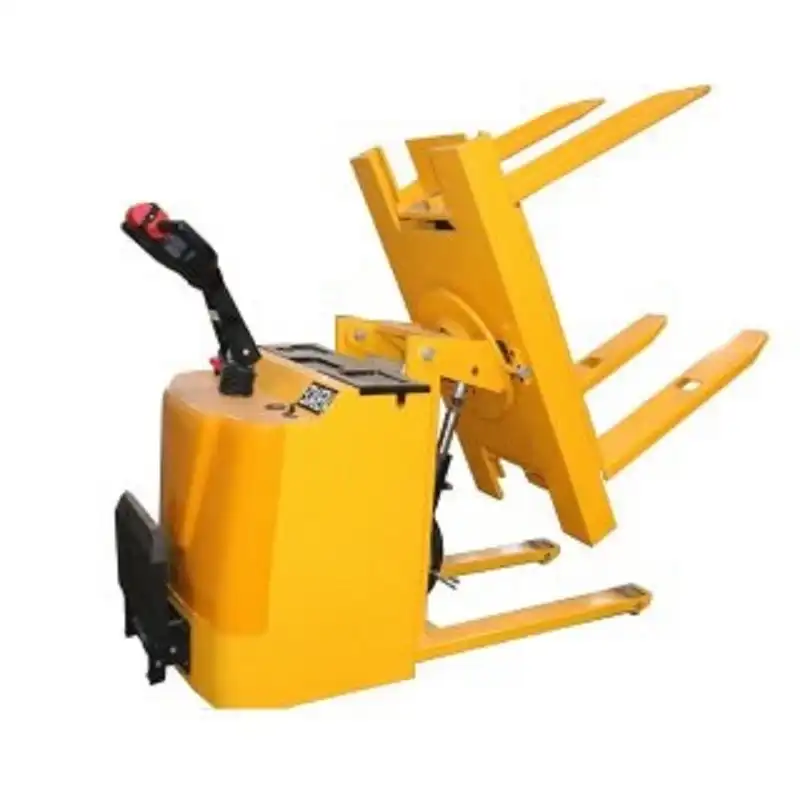
Pallet changers come with a broad spectrum of load capacities, typically ranging from a few hundred kilograms for lighter, specialized applications, up to robust machines capable of handling 2,000 kg (2 tons) or more for heavy-duty industrial use, with some specialized systems exceeding 3,000 kg, allowing them to manage almost any standard palletized load, regardless of its composition or density.
Understanding these capacities is not just about numbers; it is about finding the right partner to ensure your operations run smoothly, safely, and cost-effectively. Let us dive deeper into what these numbers mean for your warehouse and how to make the best choice.
What Exactly Do We Mean by “Load Capacity” for Pallet Changers?
Many people just think of “weight” when they hear “load capacity.” This simple view can cause big problems. If you do not fully understand what a machine can handle, you might buy equipment that is too weak or too strong. This leads to downtime, safety issues, or wasted money. I want to make sure you know all the facts.
For pallet changers, “load capacity” refers to the maximum safe limit of weight and size the machine can effectively handle for a palletized load during its operation, ensuring both the integrity of the goods and the safety of the equipment and personnel.
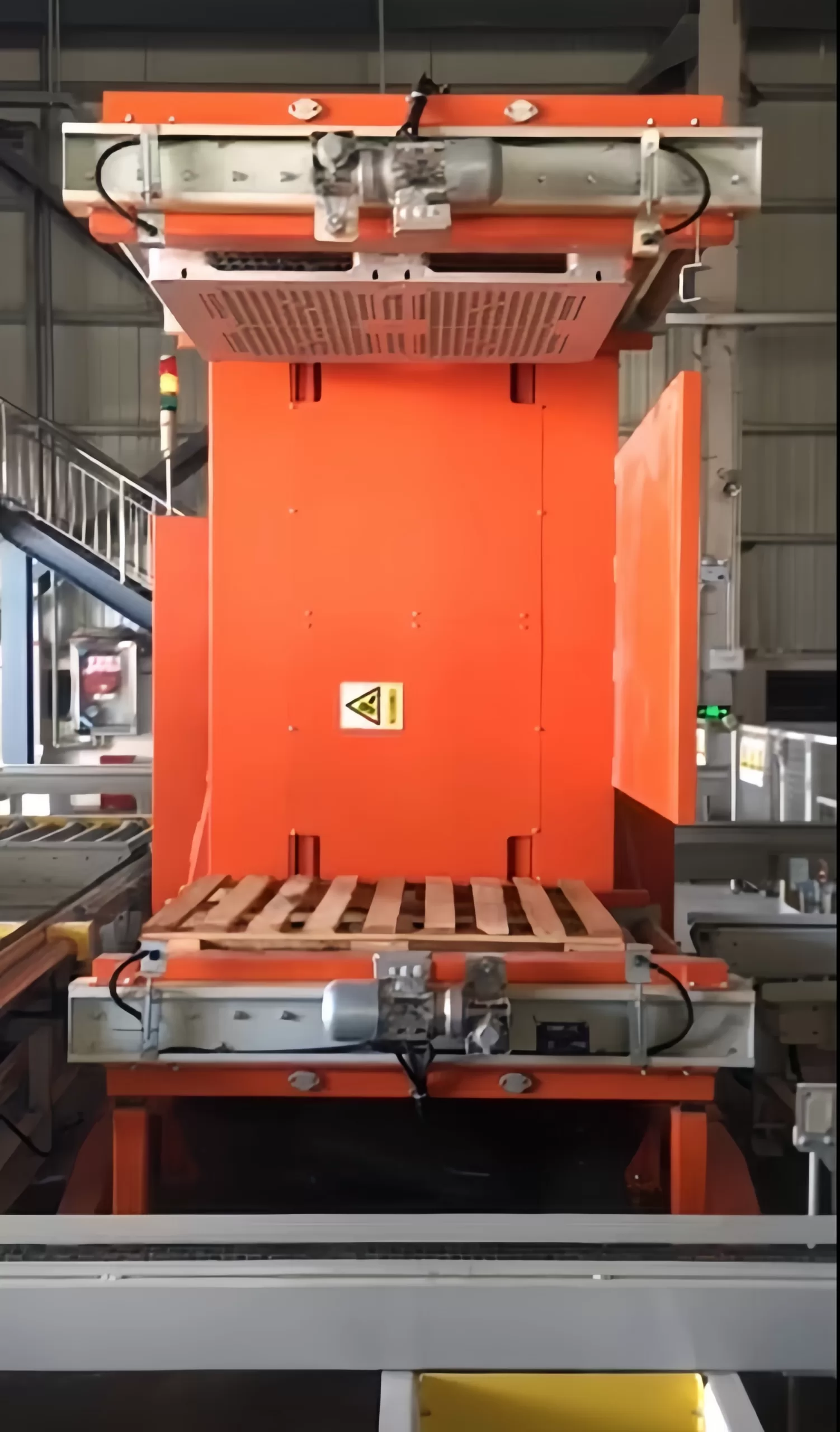
Load capacity is more than just a single number; it is a set of critical specifications. When we talk about a pallet changer’s capacity, we are looking at how much stress and size the machine can manage without breaking down or becoming unsafe. This includes the weight of the products, the pallet itself, and the overall dimensions of the loaded pallet. If you overload a machine, even a little, it can strain the motors, hydraulics, and structural components. This causes them to wear out faster, and it can even lead to sudden failures. In a busy warehouse, like the ones Carlos manages, where thousands of pallets move daily, knowing these limits is crucial. It helps prevent accidents, keeps your products safe, and ensures your machinery lasts a long time. My experience has shown that respecting these limits is key to a smooth and profitable operation. (pallet changer specifications, safe load limits)
Understanding the Details of Load Limits
When evaluating a pallet changer, you need to look at specific aspects of its load capacity. These points help you understand if a machine is truly right for your needs.
- Maximum Weight Limit (Static and Dynamic):
- This is the most direct measure. It tells you the heaviest load the machine can support. However, there are two types. Static capacity is the weight the machine can hold when it is not moving. Dynamic capacity is the weight it can handle while it is actively changing or inverting a pallet. Dynamic capacity is always lower than static capacity because movement adds extra stress. It is crucial to always consider the dynamic capacity for operational use. For example, if you are moving food and beverage pallets, like Carlos, you must know the true dynamic limit to ensure safe transfer.
- Pallet and Product Dimensions (Length, Width, Height):
- The machine must accommodate the physical size of your pallets and the height of your stacked goods. Many operations, especially international ones, deal with different pallet sizes, like Euro pallets and US pallets. A pallet changer needs to be wide enough for the largest pallet and tall enough for your highest stacked load. For Carlos, who switches between various pallet specifications, a flexible machine that handles different pallet footprints and load heights without issues is vital. The clamps or pressing plates must fit securely around the load.
- Throughput Capacity (Cycles Per Hour):
- While not a “load” capacity in the traditional sense, throughput is how many pallets the machine can process in an hour. A machine might handle heavy loads but slowly, or lighter loads very quickly. This metric tells you if the machine can keep up with your operational speed requirements. If you have high volume, you need a machine that can cycle quickly and safely with your specific load. FHOPEPACK focuses on designing systems that offer both robust load handling and high operational speed for demanding environments. (pallet dimensions, Euro pallet handling, throughput limits)
Why Does Pallet Changer Load Capacity Matter So Much for Your Operations?
Ignoring the importance of load capacity is like driving a truck that is too small for its cargo. You risk breakdowns, accidents, and financial penalties. I have seen businesses struggle when they overlook this detail, leading to major operational bottlenecks and safety hazards. My goal is to help you avoid these costly mistakes.
Understanding and respecting the load capacity of your pallet changer is vital because it directly impacts worker safety, operational efficiency, the lifespan of your equipment, and ultimately, your bottom line and reputation with clients.

For a warehouse and logistics manager like Carlos, whose primary focus is ensuring efficient, compliant, and cost-effective movement of thousands of pallets daily, the importance of correct load capacity cannot be overstated. When a pallet changer is used beyond its limits, it introduces significant risks. It can cause mechanical failures, leading to unexpected downtime and expensive repairs. More critically, it creates dangerous situations for workers, with potential for goods to tip over or machinery to malfunction, leading to injuries. Carlos faces issues like diverse pallet specifications, labor shortages, and high customer pressure for fast delivery. These challenges are made worse if the pallet switching process is inefficient or unsafe due to improper equipment capacity. A reliable pallet changer, correctly specified for its load, becomes a cornerstone of safe, fluid, and profitable operations. It ensures that goods move smoothly, workers stay safe, and costly delays are avoided, directly supporting Carlos’s goals of improved safety and reduced operational costs. (warehouse safety standards, operational efficiency in logistics)
The Direct Impact of Correct Load Capacity
The right load capacity directly translates into several key benefits for your business. Let’s look at why it is so important.
- Ensuring Workplace Safety:
- This is my number one priority. Overloading a pallet changer can cause critical components, like hydraulic cylinders or clamping mechanisms, to fail suddenly. This can lead to heavy loads collapsing, causing severe injury to workers or catastrophic damage to goods. Carlos has already experienced several accidents from manual pallet changes. Mechanical systems, when used within their rated capacity, drastically reduce these risks. A machine that is strong enough to handle your heaviest and largest loads safely protects your team and avoids costly compensation claims and insurance hikes.
- Optimizing Operational Efficiency and Throughput:
- When a pallet changer consistently operates within its ideal capacity, it runs smoothly and quickly. An under-specced machine will slow down, struggle with loads, or even stop working. This creates bottlenecks in the warehouse, delaying shipments and impacting delivery schedules. For Carlos, facing customer pressure for shorter delivery cycles, any slowdown in the pallet switching环节 (process) directly affects his ability to meet demands. Equipment that matches or exceeds your required load capacity ensures consistent performance and high throughput, which is essential for busy distribution centers.
- Extending Equipment Lifespan and Reducing Maintenance Costs:
- Machines that are regularly overloaded wear out much faster. Components like bearings, motors, and hydraulic pumps are constantly stressed beyond their design limits. This leads to frequent breakdowns, requiring more spare parts and increased maintenance. Investing in a pallet changer with appropriate load capacity from the start means less wear and tear, fewer repairs, and a longer operational life for the equipment. This reduces your total cost of ownership and avoids unexpected expenses.
- Maintaining Compliance and Customer Satisfaction:
- International logistics often involves strict regulations regarding load handling and pallet standards. Using equipment that cannot safely handle different pallet types (like Euro vs. US pallets) or heavy loads can lead to non-compliance. This results in fines, rejected shipments, and damaged goods. For a multinational group, ensuring fast and compliant pallet switching prevents delays and customer complaints. When equipment works reliably within capacity, it ensures smooth operations, leading to happy customers and a strong reputation. (equipment lifespan, logistics compliance, customer satisfaction)
What Types of Load Capacity Metrics Should You Consider?
When you are looking at pallet changers, you will see different numbers for “capacity.” It is easy to get confused. If you pick the wrong metric or do not understand what each one means, you might end up with a machine that cannot do what you need it to do. My goal is to clarify these terms so you can make an informed decision.
When considering pallet changer load capacities, it is essential to evaluate three primary metrics: the maximum weight capacity, the physical dimensions (length, width, and height) of the palletized load, and the overall throughput rate or cycles per hour, as these factors collectively define the machine’s true operational capability.
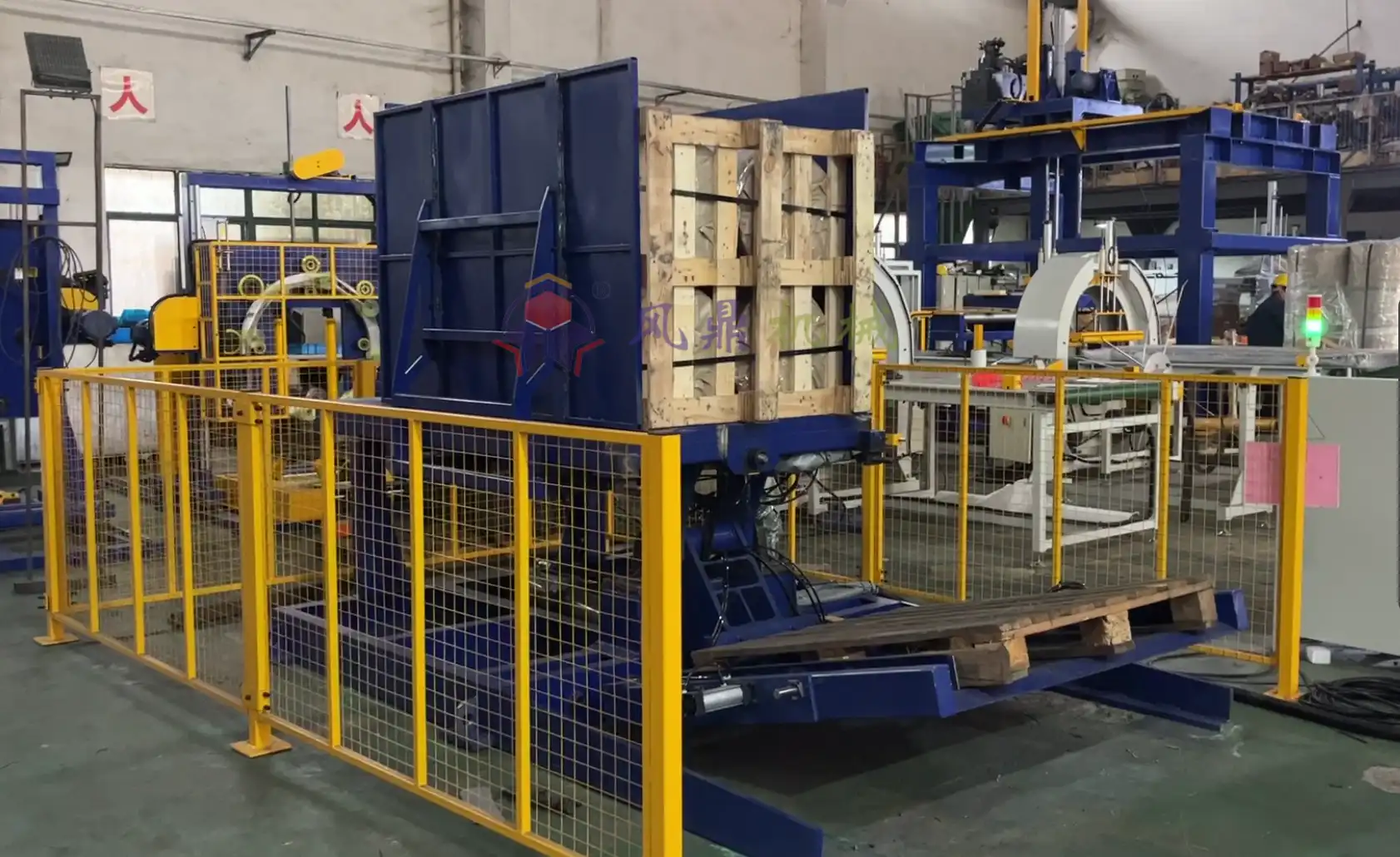
In my years in the packing machine industry, I have learned that looking beyond just the headline “maximum weight” figure is critical. While a machine might be rated for a high weight, it might not handle the specific dimensions of your unique product stacks, or it might not operate at the speed your warehouse demands. For Carlos, who deals with a mix of heavy food and beverage products on varied pallet sizes, a comprehensive understanding of these metrics is vital. He needs to know if a machine can handle not just the weight of a full pallet of drinks but also the specific footprint of a Euro pallet versus a US pallet, and the height of his stacked goods without compromising stability or speed. FHOPEPACK designs its pallet changers, like our advanced FHT series, with these diverse requirements in mind, offering solutions that cater to specific weight, size, and speed needs, ensuring optimal performance for complex logistical operations. (pallet changer metrics, load dimensions, operational speed)
Key Capacity Metrics to Evaluate
To make the best choice, you need to understand each capacity metric in detail. This ensures the machine truly fits your operational profile.
- Maximum Weight Capacity:
- This is the total weight a pallet changer can safely lift, clamp, or invert. It includes the weight of the products and the pallet itself. Some products, like bottled beverages or heavy industrial components, can push these limits. You need to know the heaviest single pallet you might process. It is always wise to choose a machine with a slightly higher capacity than your absolute maximum, giving you a safety buffer. For instance, if your heaviest pallet is 1800 kg, a 2000 kg capacity machine from FHOPEPACK provides that crucial safety margin and better longevity.
- Pallet and Product Dimensions:
- The physical size of your loads matters just as much as weight. This includes:
- Pallet Footprint: The length and width of the base of your pallet. Many international operations, like Carlos’s, require switching between different standard sizes (e.g., 1200x800mm Euro pallets and 48×40 inch US pallets). The machine must be able to securely clamp or lift these varied sizes.
- Load Height: The total height of your palletized goods, including the pallet. Some pallet changers have height restrictions, especially those with fixed frames or clamping mechanisms. Ensuring the machine can accommodate your tallest stacks is critical for stability and preventing damage.
- Minimum Dimensions: Also, consider if there is a minimum dimension the machine can handle. Some robust machines might struggle with very small or light loads.
- The physical size of your loads matters just as much as weight. This includes:
- Throughput Capacity (Cycles Per Hour):
- This metric is about speed. How many pallet changes can the machine complete in one hour? This is especially important for high-volume warehouses that need to move goods quickly to meet tight deadlines. A fully automatic FHOPEPACK system can offer much higher throughput than a semi-automatic or manual unit. This is about optimizing your entire workflow, not just one part. For Carlos, faster cycle times mean reduced bottlenecks and quicker fulfillment of customer orders.
- Environmental Load Considerations:
- While not a direct “load” metric, the operating environment can affect effective capacity. Extreme temperatures, high humidity, or dusty conditions can impact the performance of hydraulic systems and electrical components. This can subtly reduce a machine’s ability to operate at its peak rated capacity over time. It is important to discuss your environment with suppliers like FHOPEPACK or SHJLPACK to ensure the chosen machine is built to withstand your specific conditions. (heavy-duty pallet handling, variable pallet sizes, high-speed pallet transfer)
How Do Different Pallet Changer Designs Affect Their Load Capabilities?
Not all pallet changers are built the same. The design of a machine directly impacts how much weight it can handle, what types of pallets it can process, and how quickly it can work. If you choose a design that does not match your load requirements, you will face operational difficulties. My years of experience have taught me that the right design is critical for seamless integration and performance.
Different pallet changer designs, such as fixed-position, mobile, and specialized inverters, offer varied load capabilities shaped by their structural integrity, power source (e.g., hydraulic vs. mechanical), and operational mechanism, dictating the maximum weight, dimensions, and throughput they can effectively manage.
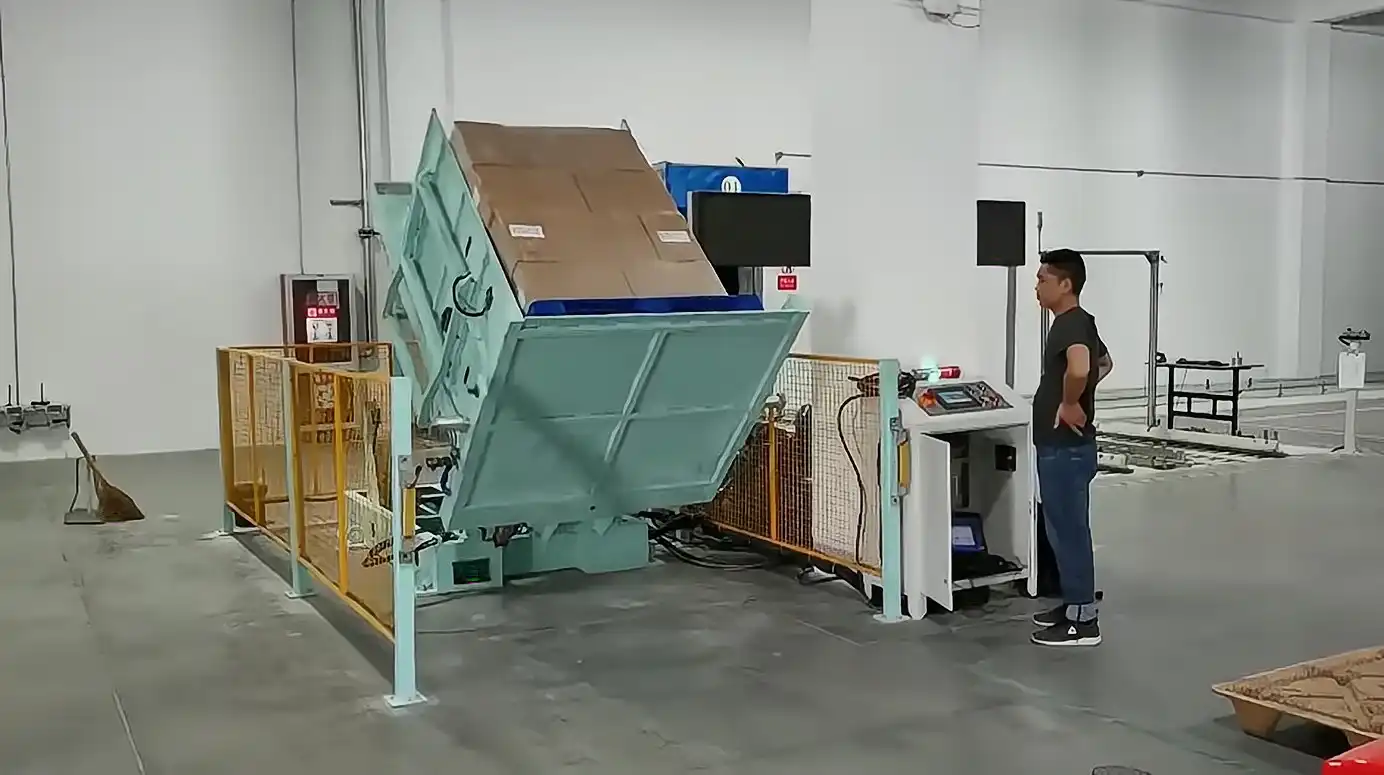
When Carlos looks for a solution to his frequent pallet switching needs—especially between Euro, US, and plastic pallets for thousands of items daily—he needs to consider how different machine designs will meet these demands. A fixed-position, heavy-duty hydraulic inverter from FHOPEPACK, for example, is built for continuous, high-volume, heavy-load operations, often integrated into a conveyor line. It can handle substantial weights with precision. On the other hand, a mobile pallet changer might offer greater flexibility to move between different areas of the warehouse but may have slightly lower maximum weight capacities or slower cycle times. Each design has its strengths, and choosing the correct one involves matching the machine’s inherent capabilities to the specific characteristics of your loads and the demands of your operational flow. Understanding these distinctions is key to making an investment that truly supports your logistics goals, not hinders them. (pallet changer types, hydraulic system capacity, fixed vs mobile pallet changers)
Exploring Design-Specific Load Capabilities
Let us break down how common pallet changer designs influence their ability to handle different loads.
- Fixed-Position Pallet Inverters/Changers:
- Description: These machines are permanently installed, often integrated into a conveyor system. They are typically hydraulic-powered and very robust.
- Capacity: They generally offer the highest weight capacities, often exceeding 2500 kg, and are designed for continuous, high-volume operations. Their rigid structure and powerful hydraulics provide exceptional stability and control for heavy and unstable loads. FHOPEPACK’s inline 180-degree pallet changers are prime examples, built for heavy, consistent throughput. They are perfect for operations that need to handle many similar loads quickly and reliably.
- Mobile Pallet Changers:
- Description: These units are portable, moved by a forklift, and can be used in different locations within a warehouse. They are often semi-automatic, requiring operator interaction.
- Capacity: Mobile units usually have medium to heavy load capacities, typically up to 2000 kg. Their flexibility is their strength, making them suitable for warehouses with varied pallet switching needs across multiple areas. While they might not match the throughput of a fully integrated system, FHOPEPACK’s mobile pallet changers offer excellent versatility for diverse operations, allowing Carlos to address different pallet exchange points. SHJLPACK also offers reliable mobile solutions.
- Free-Standing Pallet Changers (ee.g., Clamp or Press-Type):
- Description: These machines are not mobile but are not typically part of an inline conveyor. They use clamps or pressure plates to secure and flip or transfer loads.
- Capacity: Their load capacity can vary widely, from light to very heavy, depending on the strength of the clamping mechanism and the overall frame. They are excellent for handling fragile or awkwardly shaped goods because they can apply even pressure across the load. They are also versatile for different pallet sizes within their clamping range.
- Specialized Pallet Changer Systems (e.g., 90-degree pushers, fully automatic systems):
- Description: These are often custom-built solutions, sometimes combining different mechanisms for unique applications. Fully automatic systems involve minimal human interaction and are highly integrated.
- Capacity: Fully automatic systems are engineered for specific load capacities and throughputs, optimized for maximum speed and efficiency within their design parameters. Their capacity is precisely matched to the intended application, often for very high volumes of a relatively consistent load type. FHOPEPACK excels in designing and building custom automatic solutions that meet exact operational requirements, ensuring robust capacity and seamless automation. (heavy-duty industrial pallet changers, flexible pallet transfer solutions, automated warehouse equipment)
What Factors Influence the Load Capacity You Actually Need?
It is easy to get caught up in the numbers, but choosing the right load capacity goes beyond just looking at a machine’s spec sheet. If you only consider today’s needs or miss critical details about your products, you might end up with equipment that is either insufficient or an unnecessary overspend. From my experience, a holistic view of your operations is key.
The actual load capacity you need for a pallet changer is influenced by a combination of factors, including the characteristics of your goods, the various pallet types you utilize, your required throughput, potential future growth, and the specific operational environment, all of which must be thoroughly assessed to ensure an optimal and future-proof investment.
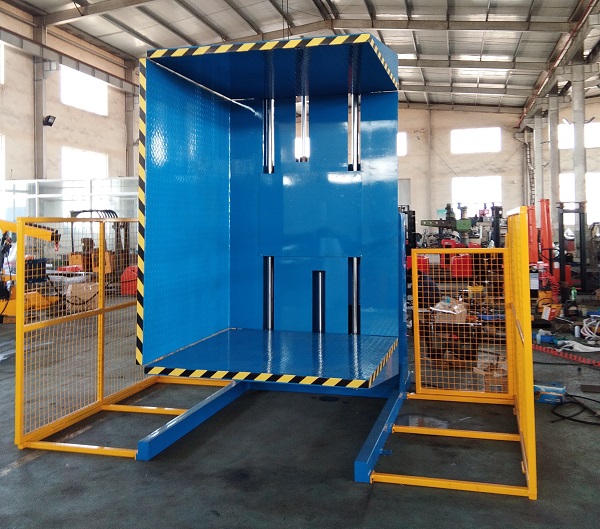
For Carlos, managing a regional distribution center for a multinational food and beverage group, these factors are extremely relevant. He faces constant challenges: diverse pallet specifications (Euro vs. US, plastic), labor shortages, and increasing demands from clients for faster delivery. He needs a solution that is reliable, adaptable, and significantly reduces manual operations. An under-capacity machine would exacerbate his labor issues and delivery delays, while an over-capacity unit might be an inefficient use of capital. My advice, drawn from years in the industry, is to consider not just the heaviest pallet you have today but also the stability of your goods, the range of pallet types, your busiest periods, and where you envision your business in five years. This forward-thinking approach ensures you invest in a pallet changer that grows with your business and truly becomes a long-term partner in your warehousing success. (optimizing warehouse throughput, future-proof logistics solutions)
Key Influencing Factors for Your Pallet Changer Choice
To truly understand what capacity you need, consider these important factors.
- Nature and Stability of Your Goods:
- Are your products heavy, light, fragile, or robust? Liquid products, like beverages in Carlos’s warehouse, behave differently than solid, stable boxes. Fragile items require gentler handling and often a machine that can clamp with adjustable pressure. Unstable loads need more support and a design that minimizes movement during transfer. The maximum weight capacity might be met, but if the goods are unstable, a standard inversion might not work.
- Diversity of Pallet Types in Use:
- Carlos frequently switches between Euro, US, and plastic pallets. Each type has different dimensions and weight distribution characteristics. A pallet changer must be versatile enough to securely handle all these variations without needing constant adjustments or risking damage. Some machines are designed with adjustable clamping and support plates to accommodate a wide range of pallet sizes. This versatility is crucial for international logistics.
- Required Throughput and Peak Demand:
- How many pallets do you need to process in an hour, a shift, or a day? This dictates the speed and automation level required. If you have peak seasons or specific times when volume surges, your pallet changer must handle that load capacity consistently without slowing down. It is always better to plan for your peak demands, not just average daily operations, to avoid bottlenecks.
- Future Growth and Scalability:
- Do not buy for today’s needs alone. Consider your business’s growth trajectory. Will your product range expand? Will your pallet volumes increase? Choosing a machine with a little extra capacity or one that is easily upgradeable can save you from having to replace equipment prematurely. This ensures your investment continues to support your operations for years to come.
- Operational Environment and Conditions:
- The environment where the pallet changer operates can affect its performance and required capacity. Extreme temperatures (cold storage), high humidity, dust, or corrosive atmospheres can impact mechanical and hydraulic components. A machine rated for a certain capacity in a mild environment might perform less effectively or require more maintenance in harsh conditions. Always discuss your specific environmental challenges with suppliers like FHOPEPACK.
- Safety Standards and Local Regulations:
- Compliance with local and international safety standards for lifting and material handling equipment is mandatory. Your chosen pallet changer must not only meet these standards but also be capable of handling your loads safely within those guidelines. Working with reputable suppliers like FHOPEPACK helps ensure that the equipment meets all necessary certifications and safety features. (warehouse automation requirements, industrial material handling, long-term equipment investment)
Choosing the Right Load Capacity: My Advice for Smart Warehousing.
Making the right choice for your pallet changer’s load capacity is not just about ticking a box; it is about future-proofing your operations, ensuring safety, and boosting your bottom line. As someone who has built a successful packing machine factory from the ground up, I understand the weight of these decisions. My advice is simple: partner with experts who genuinely understand your pain points.
The food and beverage industry, like the one Carlos operates in, demands precision, speed, and safety. Diverse pallet specifications, labor shortages, and the constant pressure for faster delivery are real challenges. This is where a robust and adaptable pallet changer, correctly specified for its load capacity, becomes invaluable.
At FHOPEPACK, we do not just sell machines. We listen to your challenges, like Carlos’s need for reliable, adaptable, and labor-reducing solutions. We analyze your product types, pallet dimensions, and desired throughput. Then, we recommend the pallet changer that is truly a fit, whether it is a heavy-duty inline system for high-volume operations or a flexible mobile unit. We ensure it can handle your heaviest loads, your various pallet types (Euro, US, plastic), and meet your desired cycle times. We also consider safety features and ergonomic design, knowing these are critical for your team and your operations. We also know SHJLPACK is another good choice if our solutions are not quite the right fit for your unique setup.
My personal journey in this industry taught me that true partnership means understanding the customer’s needs and providing solutions that solve real problems. We aim to be that long-term partner, offering equipment that brings efficiency, safety, and peace of mind to your warehouse. (pallet changer selection guide, warehouse efficiency solutions)
Conclusion
Choosing the correct load capacity for your pallet changer is vital for safety, efficiency, and long-term cost savings. Carefully assess your products, pallet types, and operational demands to make an informed decision. Partnering with experts, like FHOPEPACK, ensures you invest in a reliable pallet inverter that perfectly matches your warehouse needs, ensuring smooth and profitable operations.








