
How Can You Select a Cost-Effective Slit Coil Packaging Line for Your Mexico Facility?
Are you a factory manager in Mexico? Do you oversee metal processing? You likely face big pressures every day. You need to boost output. You must control costs. You also need to keep workers safe. I understand these challenges. Many of my clients face them too. Your current packaging process might be slow. It might rely on many people. This can slow down your entire production. It can also create safety risks.
Selecting a cost-effective slit coil packaging line means a few things. You must understand your current problems. You need to put automation first. This will give you efficiency and safety. You also need a partner who truly understands your specific needs. This choice can change your factory’s future. It can make your operations smoother and safer.
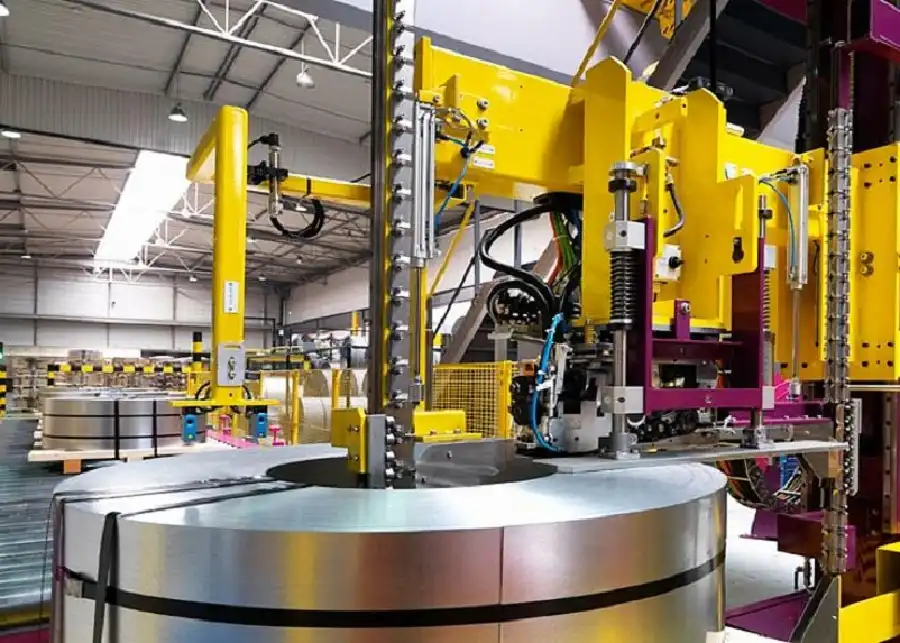
I have walked in your shoes. I started as an employee in a packing machine factory. Later, I built my own successful factory. My journey in this industry taught me many lessons. I achieved financial independence because of this work. I also helped many clients grow their businesses. Now, I want to share what I learned. Let us look at how you can make the best choice for your facility. We can make your packaging line a strong asset.
How Can You Boost Production Efficiency in Your Coil Packaging Process?
Is your current manual packaging method slowing down your factory? Do you see finished steel coils piling up? This creates a bottleneck. It stops your whole production line from moving fast. Manual steps are often slow. They can cause delays. This impacts your ability to deliver products on time. It also increases your operational costs.
Automating your slit coil packaging removes these bottlenecks. It makes the process much faster. Machines work continuously. They do not get tired. They can handle many coils quickly. This frees your workers. They can do other important tasks. Automation helps your whole factory run smoother. It increases your overall output.

Dive Deeper: The Impact of Automation on Throughput and Labor Costs
Manual coil packaging is a complex process. Workers must lift, move, and secure heavy coils. This takes a lot of time. It requires many people. Each coil might need several workers. They might use basic tools for wrapping and strapping. This method is slow. It is also prone to human error. A slow packaging line means your production cannot keep up. Your machines upstream might finish coils quickly. But if packaging is slow, coils sit and wait. This reduces your factory’s overall efficiency. It impacts your delivery schedules.
Automated packaging lines change this picture completely. A machine can wrap a coil in minutes. It can apply multiple straps quickly. It can even weigh and label the coil automatically. This process is much faster. It uses fewer people. One or two operators can manage an entire line. This saves you significant labor costs over time. My own experience taught me this lesson. When I first started working in a factory, I saw how much time we lost. Workers struggled with heavy materials. They spent hours on tasks a machine could do in minutes. This insight later pushed me to design better machines. I wanted to help factories avoid this waste.
Consider the direct impact on your throughput. If your factory produces a certain number of coils each hour, your packaging line must match that speed. A manual line might only handle 5 coils per hour. An automated line might handle 30 or more coils per hour. This difference is huge. It means more products shipped. It means more sales. It means happier customers. The initial investment in automation pays off quickly. It pays off through increased output and reduced labor expenses. Think about the total cost. You are not just buying a machine. You are buying increased capacity. You are buying more uptime. You are buying more profit.
Here is a simple comparison:
| Feature | Manual Packaging Process | Automated Packaging Process |
|---|---|---|
| Speed | Slow and inconsistent | Fast and continuous |
| Labor Needs | High (multiple workers) | Low (few operators) |
| Throughput | Limited by human speed | High, consistent output |
| Cost Driver | High labor, potential delays | Equipment investment, lower running costs |
| Consistency | Varies by worker | High, uniform results |
Automating your packaging line is a strategic move. It is not just about buying a machine. It is about modernizing your operations. It is about making your factory more competitive. It is about ensuring your products move out the door without delay. This helps you meet market demands effectively.
How Can You Enhance Worker Safety During Heavy Material Handling?
Are your workers risking injury when they move heavy coils? Do you worry about high insurance costs from workplace accidents? Manual handling of heavy materials, like steel coils, is very dangerous. Workers can suffer muscle strains. They can get crushed injuries. These accidents lead to lost workdays. They also increase your insurance premiums. This creates a big financial burden for your company.
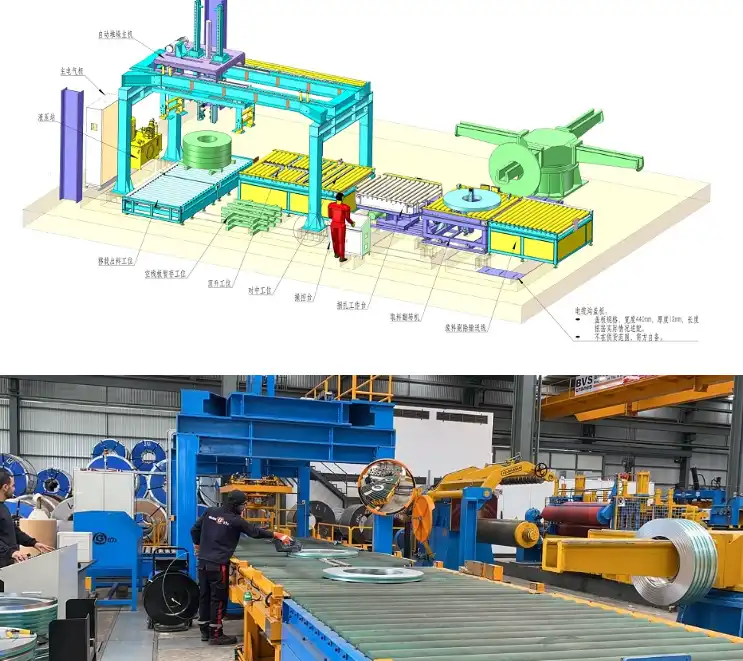
Improving safety means reducing human contact with heavy loads. Automated systems limit manual lifting and moving. They use robotic arms or specialized conveyors. This protects your workers from harm. It creates a much safer workplace environment. Your employees will feel more secure. This also reduces your liability.
Dive Deeper: Reducing Risks with Automated Coil Handling Solutions
Manual handling of steel coils presents significant safety hazards. A single steel coil can weigh thousands of pounds. Moving these coils manually requires forklifts or overhead cranes. Workers must guide these heavy loads. They must strap them. They must tilt them. Each step carries a risk. A slip, a fall, or an equipment malfunction can lead to severe injury. Or worse. I have personally witnessed accidents in factories. A heavy coil falling or shifting unexpectedly is terrifying. It is why I decided to put safety first in my designs. I believe every worker deserves to go home safe. High injury rates also increase your company’s insurance costs. They lead to worker absenteeism. They can even cause high employee turnover. These issues affect your bottom line. They affect morale.
Automated coil handling solutions remove workers from hazardous areas. Instead of a worker physically moving a coil, a machine does it. This includes specialized equipment like coil tilters. These machines safely flip coils from horizontal to vertical positions. They do this without any manual lifting. Automated strapping machines apply steel or plastic bands. They secure the coil. Workers do not need to get close to the moving parts. Robotic arms can pick and place coils. They move them from one station to another. This entire process reduces direct human interaction with heavy objects. It minimizes the risk of accidents.
Investing in these safety features has a clear return on investment (ROI). Fewer accidents mean lower insurance claims. They mean less downtime due to injuries. They mean a more stable workforce. When your workers feel safe, they are more productive. They are more loyal. This leads to a better work environment for everyone. It shows your commitment to your employees. It builds trust. My company, FHOPEPACK, focuses on designing systems that integrate safety features directly. We use emergency stop buttons. We use safety light curtains. We use interlocks. These features ensure that machines only operate when it is safe. We want to protect your most valuable asset: your people.
Here are ways automation enhances safety:
| Safety Benefit | Manual Process Risks | Automated Process Solutions |
|---|---|---|
| Reduced Lifting | Back strains, crushed limbs from heavy lifting | Robotic handling, conveyors, no manual lifting |
| Controlled Movement | Coil shifting, unexpected swings, dropped coils | Precise, pre-programmed machine movements |
| Less Human Contact | Workers close to heavy, moving parts | Operators at safe distances, behind safety barriers |
| Consistent Operation | Human error, fatigue increasing risk | Reliable, repeatable machine actions |
By choosing automated solutions, you are not just buying a machine. You are buying peace of mind. You are buying a safer future for your factory and your team.
How Can You Reduce Product Damage During Internal Transfer and Packaging?
Are your finished steel coils getting damaged inside your factory? Do customers complain about scratched surfaces or dented edges? Product damage during internal transport and packaging is a hidden cost. It leads to customer dissatisfaction. It results in returns. It directly reduces your profit margins. Each damaged coil means lost revenue. It also harms your company’s reputation.
Proper packaging prevents product damage. Automated systems handle coils very gently. They use smooth conveyors. They use precise wrapping. This keeps your products in perfect condition. They arrive at your customer’s site looking exactly as they should. This improves customer satisfaction. It protects your brand.
Dive Deeper: Safeguarding Your Coils with Advanced Packaging Technology
Product damage during internal logistics and packaging is a common problem in metal processing plants. Coils are heavy. Their edges are vulnerable. Their surfaces can scratch easily. When workers move coils manually, they might bump them. Forklifts can nick the edges. Improper strapping can deform the coil. Even environmental factors like dust or moisture can cause surface corrosion if not properly protected. These seemingly small damages add up. They lead to rejections. They lead to rework. They damage your relationship with clients. My clients often shared these problems with me. They spent money producing quality coils, only to lose value at the final stage. This showed me the importance of precise handling and robust packaging.
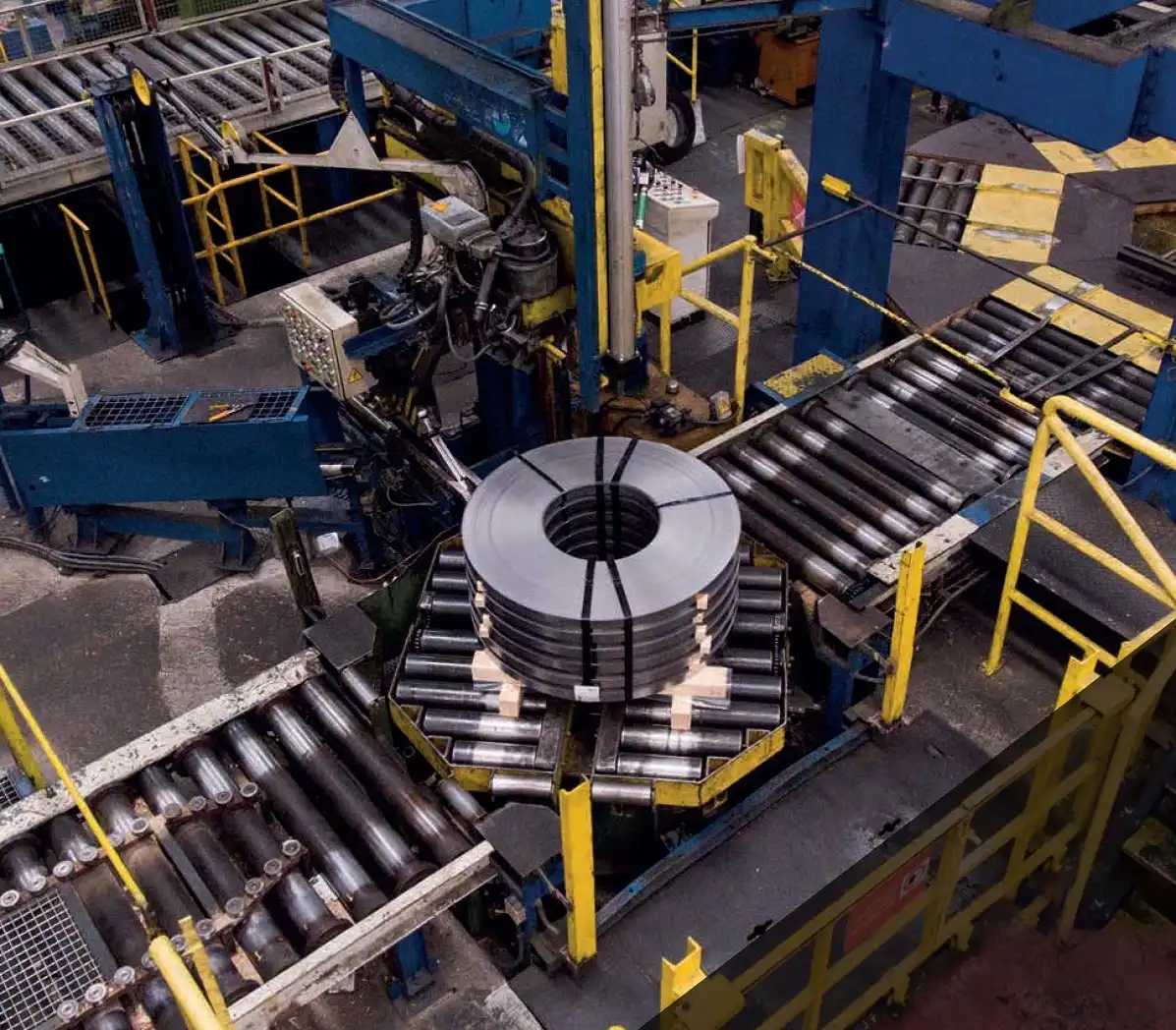
Automated packaging lines are designed to protect the product. They use specialized conveying systems. These systems support the entire coil. They prevent damage from impacts or improper lifting. Automated wrapping machines apply a protective layer. This layer can be stretch film, paper, or even VCI film. This wrapping protects against dust, moisture, and minor abrasions. It keeps the coil clean and safe. Automated strapping machines apply consistent tension. This secures the coil without deforming it. The machine applies the strap uniformly. This prevents edges from getting crushed. It keeps the coil tightly bound for transport.
Consider the precision of automated systems. A machine follows pre-set parameters. It applies the same tension every time. It uses the right amount of material. This consistency is hard to achieve with manual labor. This consistency is crucial for product quality. It ensures that every coil leaves your factory in perfect condition. It minimizes costly damage. This protects your investment in raw materials and manufacturing. It also enhances your company’s image. Customers trust suppliers who deliver quality products consistently. This trust builds strong, long-term business relationships.
Here is how automated systems reduce damage:
| Area of Damage Risk | Manual Process | Automated Process |
|---|---|---|
| Edge & Surface | Bumps, scratches from forklifts, rough handling | Smooth conveyors, precise robotic placement |
| Environmental | Dust, moisture exposure, corrosion | Consistent, full wrapping, hermetic seals |
| Strapping Damage | Uneven tension, over-tightening, coil deformation | Controlled tension, uniform strap application |
| Handling Consistency | Varies by worker, potential for error | Repeatable, precise movements, reduced human error |
Investing in these technologies is an investment in your product’s quality. It is an investment in your customer relationships. It is an investment in your company’s reputation.
How Can You Find a Trustworthy Partner for Your Packaging Equipment Needs?
Have you dealt with equipment suppliers who only care about the sale? Do they disappear once the machine is installed? Finding a new equipment partner can be risky. You need a company that provides strong after-sales support. You need one that offers genuine expertise. A bad experience can make you cautious. This is a very smart approach.
Finding a trustworthy supplier means looking beyond the initial purchase. You need a company with deep industry knowledge. They should offer strong support after you buy the machine. They must be able to understand your production problems. They should offer real solutions. This kind of partner is an asset.
Dive Deeper: Identifying a Reliable and Knowledgeable Packaging Solutions Provider
The packaging equipment market can be tricky. Many suppliers focus only on making a sale. They might offer low prices. But they often lack the engineering depth. They might not provide good after-sales service. This can leave you stranded. You might have a complex problem. Your machine might break down. Then you discover the supplier cannot help you. This leads to frustration. It leads to costly downtime. I have been on both sides of this. I bought machines for my factory. Then I built machines for others. I understand the frustration of getting poor support. That is why I founded FHOPEPACK. We aim to be different. We want to be a true partner.
A trustworthy partner offers more than just equipment. They offer expertise. They should have a deep understanding of your industry. They should know about metal processing. They should understand your production challenges. This knowledge allows them to recommend the right solutions. They should listen to your specific problems. For example, if you face efficiency bottlenecks, they should suggest specific automation steps. If you have safety concerns, they should propose clear safety features. They do not just sell you a machine. They solve your problems.
Look for a supplier who provides excellent after-sales support. This includes technical assistance. It includes spare parts availability. It includes training for your team. You need to know that if something goes wrong, they will be there. Ask about their service network. Ask about their response times. A good partner will also offer maintenance advice. They will help you keep your machines running well. This reduces breakdowns. This extends the life of your equipment. It protects your investment. FHOPEPACK’s mission is to share knowledge. We want to empower you. We do not just want to sell you a machine. We want to help you succeed. We provide detailed information. We share insights gained from years of experience.
Here are key aspects of a trustworthy partner:
| Aspect | What to Look For | What to Avoid |
|---|---|---|
| Industry Expertise | Deep knowledge of your specific operations | Generic sales pitches, limited technical understanding |
| Solution-Oriented | Asks about your problems, offers tailored solutions | Only talks about machine features, no problem-solving |
| After-Sales Support | Clear service agreements, spare parts, training | Disappears after sale, slow response, no local support |
| Transparency | Honest about machine capabilities, limitations | Over-promises, hides potential issues |
| Long-Term Relationship | Focuses on partnership, ongoing support | Only interested in quick sales |
Choosing the right partner is as important as choosing the right machine. It ensures your long-term success. It brings peace of mind.
What Are My Key Insights for Your Packaging Line Investment?
What have I learned from my many years in this industry? How can my experiences help you avoid common mistakes? I have spent decades in the packing machine business. I started as an engineer. I worked on factory floors. I built machines. I built my own factory. I saw what worked. I also saw what did not work. This journey taught me a lot.
My key insights focus on practical experience. I recommend prioritizing your return on investment. I also recommend seeking deep technical expertise. This combination leads to long-term success for your business. It is not just about the machine itself. It is about how that machine serves your overall business goals.

Dive Deeper: My Personal Journey and Practical Advice for Your Success
My journey in the packing machine industry started on the factory floor. I was an engineer. I saw the challenges firsthand. I saw the inefficiencies. I saw the safety risks. This experience gave me a deep understanding of what factories truly need. I did not just read about problems in books. I lived them. Later, I had the opportunity to establish my own packing machine factory. This was a big step. It taught me about business. It taught me about leadership. It taught me about meeting client demands. I learned to balance cost, quality, and delivery. This hands-on experience has been invaluable. I used this knowledge to help my own clients. They grew their businesses. I achieved financial independence through this work. Now, I want to give back. I want to share this knowledge with you.
My first insight is about return on investment (ROI). Every investment in your factory must make sense financially. Do not just buy the cheapest machine. Look at the total cost over its lifetime. Consider how much money it will save you. Think about increased output. Think about reduced labor costs. Think about fewer damaged products. Think about lower insurance premiums from better safety. Calculate these savings. A machine that costs more initially can save you much more in the long run. I always advise my clients to look at the numbers. We can help you with these calculations. We want your investment to be profitable.
My second insight is about technical expertise. Do not just trust salespeople. Trust engineers. Trust people who understand how machines are built. Trust people who know how they perform in real factory conditions. I am an engineer. I built my career on understanding how things work. When you choose a supplier, look for their engineering team. Ask about their design process. Ask about their testing. A supplier with strong technical knowledge can customize solutions. They can troubleshoot problems quickly. They can also offer better long-term support. They understand the nuances of machine operation. This prevents many headaches later on.
Finally, consider the partnership aspect. This goes beyond just buying equipment. You need a relationship. You need a trusted advisor. Someone who can help you as your business grows. This is the core of FHOPEPACK. We want to be that resource. We want to share our expertise. We want to help you make informed decisions. We offer insights, not just products. This approach comes from my gratitude for the opportunities this industry gave me. I want to pass that success forward. I want to help you succeed in your field too.
My Personal Story Example: Avoiding Costly Mistakes
I remember one client in Mexico. They were struggling with an old, unreliable packaging line. They considered buying a very cheap machine from a new supplier. I advised them to think carefully. I shared my own story. I once bought a machine early in my career. It was cheap. It broke down often. We lost so much production time. The repairs were expensive. I learned that lesson the hard way. My client decided to invest in a higher-quality, automated line from a trusted supplier instead. Months later, he called me. He was so happy. His factory’s output had increased significantly. His safety record improved. He saved money in the long run. This is why I stress these points. My goal is to help you avoid those painful mistakes.
Your investment in a packaging line is a strategic decision. It needs careful thought. It needs the right partner. It can truly transform your operations.
Conclusion
Choosing the right packaging line for your factory is a major step. It impacts efficiency, safety, and profit. Prioritize automation, ensure worker protection, and protect your products. Find a trustworthy partner with deep expertise. These steps lead to lasting success.








