
How do pallet inverter solutions compare for flipping heavy frozen meat pallets?
The challenge of moving, stacking, and flipping heavy pallets in a busy warehouse can feel overwhelming. Imagine dealing with thousands of pallets every day, especially when they hold heavy, frozen meat. You need to switch pallets for different shipping standards, like Euro pallets to US pallets. Manual handling is slow, risky, and expensive. It can lead to accidents and major delays. If this sounds like your daily struggle, you are not alone. Many businesses, especially in the food and beverage industry, face these exact problems.
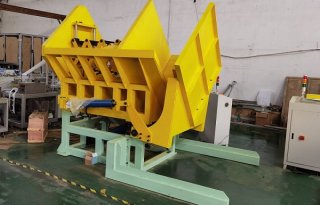
Pallet inverter solutions offer a crucial way to manage heavy frozen meat pallets safely and efficiently. These machines flip or transfer products from one pallet type to another, or turn them over for inspection. For heavy frozen meat, the key is to choose a system that combines robust construction with features for safe handling in cold conditions. Different types, such as fixed 90-degree tippers, 180-degree free-standing inverters, or mobile pallet changers, each offer specific benefits and drawbacks regarding speed, safety, and integration into existing warehouse operations.
I started my journey as a packing machine engineer, then built my own factory. I have seen firsthand how proper equipment can change a business. If you are handling frozen meat, you know how critical it is to move products without damage, keep workers safe, and speed up your logistics. Let’s look deeper into what options are available and how they truly compare.
Why is flipping heavy frozen meat pallets so difficult?
Imagine trying to manually flip a pallet loaded with hundreds of kilograms of frozen meat. It is a back-breaking, dangerous task. Warehouse managers like Carlos in Spain know this problem all too well. He deals with massive volumes and strict deadlines. The weight and temperature of frozen meat add unique layers of complexity to standard pallet handling. This is not just about moving boxes; it is about preserving product integrity, ensuring worker safety, and maintaining a fast flow in the supply chain.
Flipping heavy frozen meat pallets is difficult because of their extreme weight, the cold environment, and the need to protect the product. Manual methods risk severe worker injury, product damage from drops or mishandling, and significant time delays. These challenges are made worse by the constant pressure for faster delivery times and a shortage of willing labor for such intense physical work, making automation a necessary step for efficiency and safety.
From my experience, when I worked on the factory floor and later when I built my own packing machine business, I learned that ignoring these difficulties does not make them go away. It only leads to higher costs, more accidents, and unhappy customers. We need solutions that are strong, reliable, and smart.
Dive deeper into the challenges of heavy frozen meat pallets:
Handling pallets of heavy frozen meat presents specific obstacles that demand robust and precise solutions. The challenges go beyond simple logistics, impacting safety, efficiency, and the bottom line. It is not just about moving something heavy; it is about moving something heavy, frozen, and valuable while under time pressure. These are the main points:
-
Extreme Weight and Size:
- Problem: Frozen meat is very dense. Pallets often hold hundreds or even thousands of kilograms. This makes them extremely difficult and dangerous to move or flip manually. A typical pallet can weigh as much as a small car.
- Impact: Manual handling requires multiple workers or heavy-duty forklifts, which increases labor costs and equipment wear. The risk of crushing injuries, strains, and falls is very high. It is a major safety concern for any warehouse.
- Solution Need: Equipment must be built with a high load capacity and strong structural integrity to handle these weights repeatedly without failure. It needs powerful gripping and turning mechanisms.
-
Cold Environment Operations:
- Problem: Frozen meat is stored in cold rooms or freezers. Equipment operating in these conditions faces specific challenges. Standard hydraulic fluids can become sluggish, and metal parts can become brittle. Electrical components might fail more often.
- Impact: Machines not designed for cold temperatures will break down more often. This leads to costly repairs, unexpected downtime, and disruptions in the supply chain. Maintaining a cold chain is critical for food safety, so equipment failure can have severe consequences.
- Solution Need: Pallet inverters must have components rated for low temperatures. This includes special hydraulic oils, corrosion-resistant materials, and sealed electrical systems. They need to perform reliably even when temperatures drop well below freezing.
-
Product Integrity and Hygiene:
- Problem: Frozen meat, while robust, can still be damaged. If a pallet is dropped, or if the product shifts too violently during a flip, packaging can tear, or the meat itself can become bruised. This leads to product loss. Also, in the food industry, hygiene is paramount. Equipment must be easy to clean.
- Impact: Damaged product means financial loss and potential food safety issues if packaging is compromised. A machine that is hard to clean can become a breeding ground for bacteria, leading to contamination risks.
- Solution Need: Machines should offer a gentle but firm grip to prevent damage during the inversion process. Surfaces should be smooth, made of food-grade materials like stainless steel where possible, and designed for easy wash-down. This helps maintain strict hygiene standards required in food processing.
-
Labor Shortage and Safety Risks:
- Problem: Finding people willing to do heavy, repetitive, and cold work is getting harder. Labor costs are rising, and young workers often do not want these jobs. Manual pallet handling is a leading cause of workplace injuries in warehouses.
- Impact: High labor turnover, increased operating costs, and serious safety incidents. Each injury can result in medical costs, lost work time, and potential legal fees or fines. These problems directly hit the company’s profitability and reputation.
- Solution Need: Automated or semi-automated pallet inverters reduce the need for manual handling, easing the labor burden and significantly lowering the risk of injury. This frees workers for less strenuous, more value-added tasks. It improves overall workplace safety.
These challenges highlight why a well-chosen pallet inverter is not just a convenience but a strategic investment for businesses handling heavy frozen meat. It directly addresses critical operational pain points.
What types of pallet inverters can handle heavy frozen meat?
When you are dealing with heavy frozen meat, you need more than just any pallet inverter. You need robust machines designed for such tough conditions. From my years in the packing machine industry, I have seen a range of solutions. Each has its own strengths. The choice depends on your specific needs, such as the volume of pallets, the space you have, and your budget.
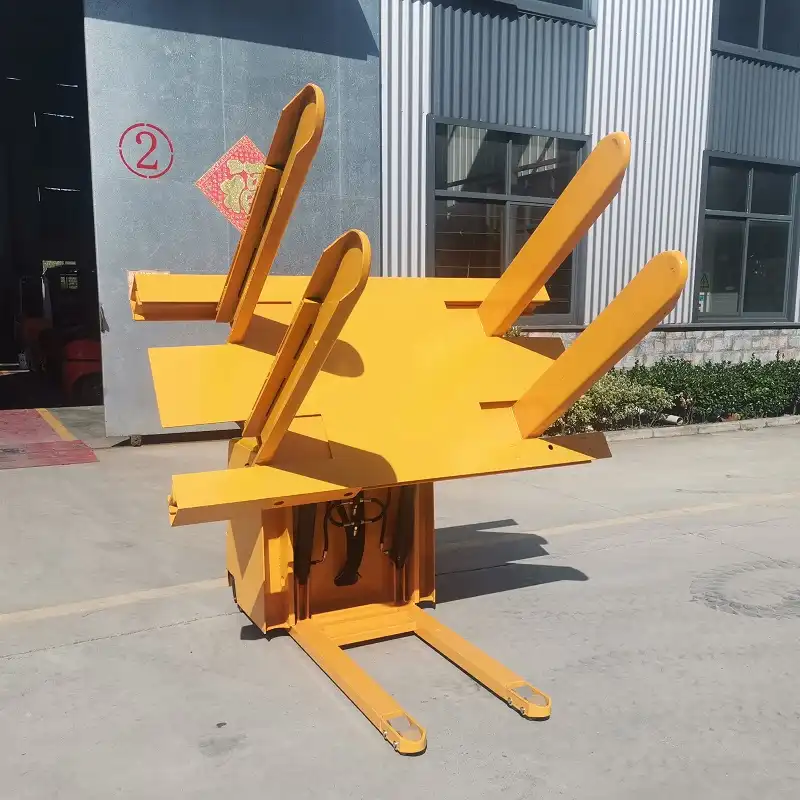
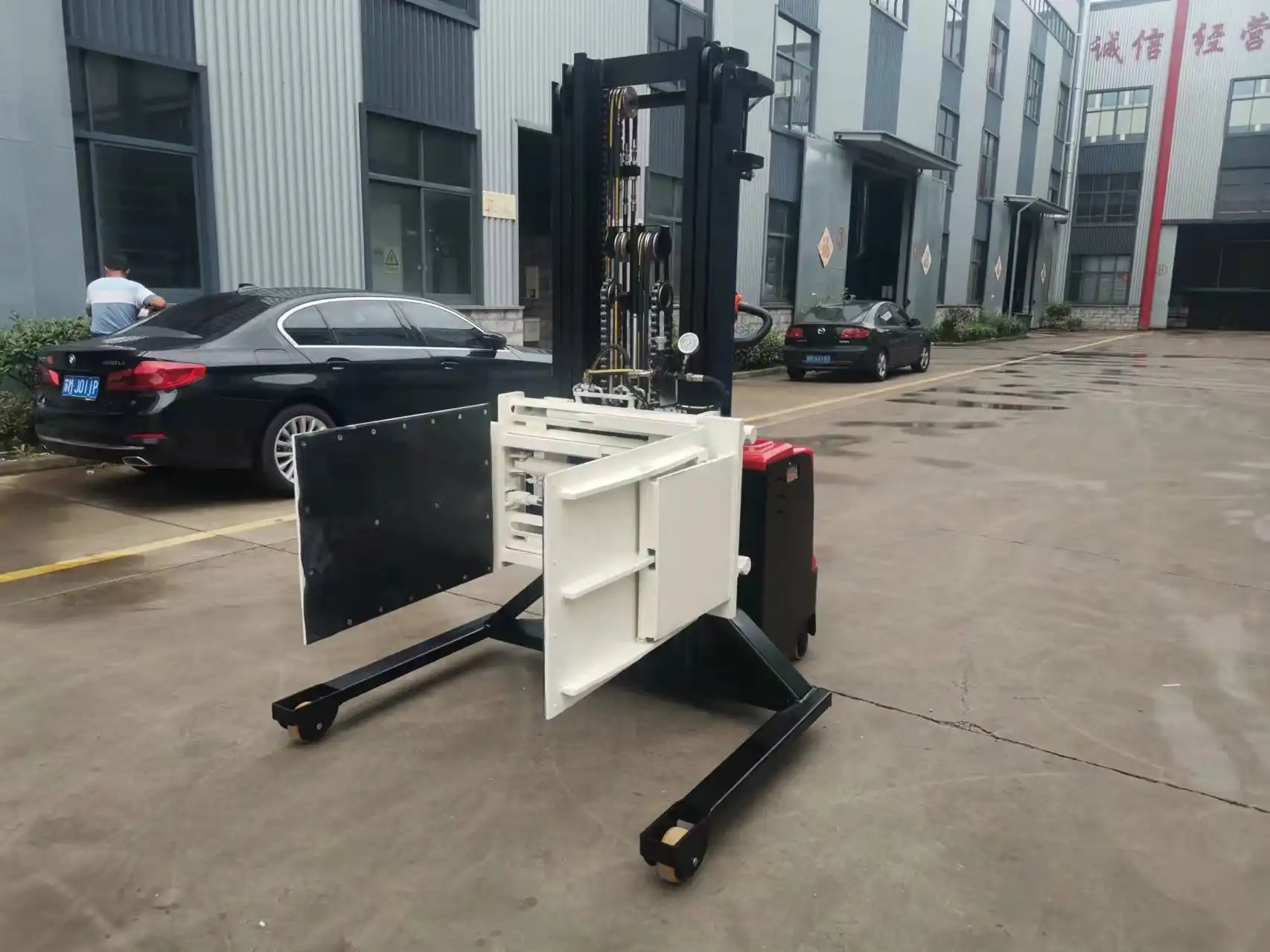
For heavy frozen meat, pallet inverters typically fall into a few main categories: fixed 90-degree tippers, 180-degree free-standing inverters, and mobile pallet changers. Fixed 90-degree tippers are good for changing a single pallet side or for dumping contents. 180-degree inverters completely invert the load, perfect for full pallet swaps or product rotation. Mobile pallet changers offer flexibility, allowing changes to happen anywhere in the warehouse. Each type must have high load capacities and durable construction to withstand the weight and cold.
Carlos, a logistics manager, wants equipment that is reliable and adaptable. He needs solutions that can handle different pallet sizes and reduce manual work. Let us look at the main types and what they bring to the table for heavy frozen meat.
Dive deeper into pallet inverter types for heavy frozen meat:
Choosing the correct pallet inverter is a critical decision. It impacts daily operations, safety records, and overall efficiency. For heavy frozen meat, the selection narrows down to machines that offer both strength and precision. Here are the main types and their suitability:
-
Fixed 90-Degree Pallet Tippers (or Tilters):
- Description: These machines are usually bolted to the floor. They tilt a pallet and its load up to a 90-degree angle. They do not fully invert the pallet. Instead, they position it for easier access to the side or bottom.
- Advantages for Heavy Frozen Meat:
- Stability: Being fixed, they offer excellent stability for very heavy and potentially unstable loads. This is important for frozen meat pallets that might shift.
- Safety: They are enclosed during operation, reducing the risk of accidents from falling goods or moving parts.
- Specific Uses: Ideal for situations where you need to access one side of the pallet. For example, replacing a damaged bottom layer of meat packaging. Or, if you need to transfer products horizontally onto a conveyor.
- Disadvantages:
- Limited Functionality: They do not allow for full pallet-to-pallet transfer if you need to swap the base pallet completely. This means you might need additional handling equipment to finish the job.
- Space: They require a dedicated space in the warehouse. Their fixed nature means they cannot be moved to different areas as needed.
-
Fixed 180-Degree Pallet Inverters (Free-Standing or Built-In):
- Description: These systems fully rotate the pallet and its load by 180 degrees. They can be stand-alone units or integrated into a conveyor line. They use clamps to secure the load and then invert it.
- Advantages for Heavy Frozen Meat:
- Full Pallet Swap: They are perfect for changing a damaged pallet for a new one. Or, for swapping between different pallet standards (like Euro to US pallets), which is a key challenge for Carlos.
- High Throughput: Integrated models can achieve high speeds and continuous operation, ideal for high-volume warehouses.
- Versatility: They can be used for freezing products (flipping them for even freezing), for order picking, or for simple load transfer.
- Disadvantages:
- Cost: Generally more expensive than 90-degree tippers, especially automated versions.
- Complexity: Can be more complex to operate and maintain. Requires careful installation.
- Space: Like 90-degree tippers, fixed units need a permanent space.
-
Mobile Pallet Changers (or Mobile Pallet Inverters):
- Description: These are pallet inverters mounted on a mobile chassis. They can be moved by a forklift or driven by an operator. They often use side clamps and hydraulic power to lift and invert the load.
- Advantages for Heavy Frozen Meat:
- Flexibility: This is their biggest advantage. They can be brought directly to the pallet, wherever it is in the warehouse. This is great for warehouses that need to save space or have changing layout needs.
- Reduced Handling: Eliminates the need to transport pallets to a fixed station, reducing travel time and forklift usage. This can be a huge time saver.
- Versatility for Different Pallet Types: Many mobile units can handle a variety of pallet sizes and types, which is essential for export operations.
- Disadvantages:
- Lower Throughput: They are typically slower than fully automated, fixed systems. Not ideal for very high-volume, continuous operations.
- Operator Dependent: Relies on an operator to move and position the machine, which can introduce human error if not trained well.
- Power Source: Often battery-powered, which means they need recharging. Or they might need to be connected to an external power source.
Each of these types has a place in the food industry. For heavy frozen meat, the overriding factor is always robust construction and reliable performance in cold conditions. I always advise my clients to consider not just the machine’s function but also how it fits into their complete workflow.
How do these pallet inverter solutions measure up for safety and efficiency?
Choosing the right pallet inverter is not just about moving pallets. It is about improving safety and boosting efficiency in the entire warehouse operation. For businesses dealing with heavy frozen meat, these two factors are crucial. A small error or a slow process can lead to big problems. This includes damaged goods, injured workers, or missed delivery deadlines. I have seen many factories struggle with these issues. That is why I always emphasize the right equipment as a cornerstone for growth.
Pallet inverter solutions drastically improve safety by removing manual handling risks, such as strains, crush injuries, and accidents from falling loads. They boost efficiency by speeding up pallet changes, standardizing operations, and reducing labor dependency. Fixed 180-degree inverters offer high throughput for continuous operations. Mobile pallet changers provide flexibility for on-demand changes. Fixed 90-degree tippers offer secure tilting for specific access needs. All types, when properly implemented, lead to fewer accidents and faster, more reliable logistics.
Carlos, in his role as a logistics manager, prioritizes both reliability and ergonomic safety. He needs solutions that cut down on accidents and ensure smooth operations. Let us look at how different pallet inverters compare on these vital points.
Dive deeper into safety and efficiency comparisons:
When investing in a pallet inverter for heavy frozen meat, the primary drivers are always safety and efficiency. These two elements directly impact operational costs, compliance, and employee well-being. A thorough comparison reveals the strengths of each type in addressing these concerns.
-
Safety Performance:
- Fixed 90-Degree Pallet Tippers:
- Pros: Very high safety. The fixed nature and often enclosed design mean minimal human interaction with moving parts. The load is securely clamped before tilting, preventing shifts or drops. Reduces back injuries from manual bending or reaching.
- Cons: Still requires manual unloading/loading after tilting, which can pose a minor risk if not done correctly.
- Fixed 180-Degree Pallet Inverters:
- Pros: Excellent safety. Fully enclosed units provide maximum protection. Automated clamping and rotation remove workers from hazardous areas. Eliminates manual lifting, flipping, or re-stacking, which are common causes of serious injuries.
- Cons: Requires strict safety protocols during maintenance or if a jam occurs, as powerful moving parts are present.
- Mobile Pallet Changers:
- Pros: Greatly reduces direct manual handling of heavy pallets. Lessens risks of strains, sprains, and crush injuries compared to entirely manual methods. Operators can maintain a safe distance during the inversion process.
- Cons: As it is mobile, there is a risk of collision with other warehouse traffic if operators are not careful. Proper training for operators is essential to avoid accidents.
- Fixed 90-Degree Pallet Tippers:
-
Efficiency and Throughput:
- Fixed 90-Degree Pallet Tippers:
- Pros: Fast for single-side access or content dumping. The operation is quick once the pallet is loaded. Can be integrated with conveyors for a semi-automated workflow.
- Cons: The need for secondary handling (e.g., using a forklift to remove the product or manually re-stacking) means the overall process might not be as fast as a full 180-degree swap. Not ideal for high-volume pallet-to-pallet transfers.
- Fixed 180-Degree Pallet Inverters:
- Pros: Highest efficiency and throughput for pallet-to-pallet transfers. Automated versions can process many pallets per hour, making them ideal for high-volume operations like those Carlos faces. Reduces labor needs significantly, as one operator can manage multiple cycles.
- Cons: The initial investment cost can be higher, and installation requires planning. If a machine breaks down, the entire line can stop.
- Mobile Pallet Changers:
- Pros: Very efficient for on-demand, flexible pallet changes. It eliminates the need to transport pallets to a central station, saving forklift time and travel distance. This means a pallet change can happen exactly where it is needed. Good for smaller batches or varied tasks.
- Cons: Slower than fixed 180-degree automated systems for continuous, high-volume operations. Performance depends on operator skill and battery life (if applicable). Overall cycle time per pallet is longer.
- Fixed 90-Degree Pallet Tippers:
From my firsthand experience designing and building packing solutions, the real gains in efficiency come from streamlining the entire workflow. It is not just the speed of the flip itself, but how seamlessly the machine fits into your existing setup. For Carlos, the choice would likely balance high throughput (from fixed 180-degree) with the flexibility (from mobile changers) needed for diverse international shipments and varied warehouse layouts. Both safety and efficiency are dramatically improved compared to manual methods.
Choosing the Right Pallet Inverter: What should food businesses consider?
Making the right choice for a pallet inverter in the food industry, especially for heavy frozen meat, is a big decision. It goes beyond just picking a machine. It means finding a solution that fits your specific needs, boosts your operations, and grows with your business. I learned that the hard way when I started my own factory. The best equipment is often an investment in future growth and long-term peace of mind.
Food businesses considering a pallet inverter for heavy frozen meat must carefully evaluate factors such as load capacity, operating environment (cold rooms), automation level, pallet types, throughput requirements, and available space. It is also crucial to consider the supplier’s reliability, after-sales support, and their ability to act as a long-term partner. Prioritizing robust construction, hygiene features, and safety certifications ensures the chosen solution meets industry standards and supports sustainable operations.

Carlos, our logistics manager from Spain, made it clear that he wants a partner, not just a seller. He needs someone who understands his warehouse pains and can offer flexible solutions. Let us break down the key considerations that will guide food businesses to the best pallet inverter choice.
Dive deeper into choosing the right pallet inverter:
Selecting the optimal pallet inverter requires a holistic view of your operational needs, not just the immediate problem. For a business handling heavy frozen meat, specific considerations become paramount. My journey from an engineer to a factory owner taught me that the best choices come from asking the right questions.
-
Understand Your Specific Needs and Product Characteristics:
- Load Weight and Dimensions: How heavy are your pallets? What are their maximum dimensions? The inverter must exceed these specifications to ensure safe operation. Oversize or under-specified machines lead to breakdowns and safety risks.
- Product Type: Frozen meat is dense and heavy. Does it need a gentle grip to prevent damage, or is it more robust? This influences the type of clamping mechanism.
- Operating Environment: Is the inverter going into a freezer or cold room? It must be built with components that can withstand low temperatures without failing (e.g., special hydraulic oils, stainless steel parts, sealed electricals).
- Pallet Types and Sizes: Do you switch between Euro pallets, US pallets, plastic, or wooden pallets? The inverter must be adaptable to all your required pallet types. Carlos faces this daily.
-
Evaluate Automation Level and Throughput:
- Manual, Semi-Automatic, or Fully Automatic?
- Manual: Cheapest, but still involves significant human effort. Not suitable for heavy frozen meat.
- Semi-Automatic: Requires an operator to load/unload, but the machine does the flipping. A good balance of cost and efficiency for medium volumes.
- Fully Automatic: Integrates into a conveyor system, minimal human input. Best for high-volume operations like those Carlos manages. Highest initial cost but lowest labor cost.
- Required Throughput: How many pallets do you need to process per hour/day? This directly influences whether you need a high-speed fixed inverter or if a mobile unit is sufficient.
- Manual, Semi-Automatic, or Fully Automatic?
-
Space, Layout, and Integration:
- Available Space: Do you have dedicated floor space for a fixed unit, or do you need the flexibility of a mobile pallet changer? Consider not just the machine footprint but also access for forklifts and maintenance.
- Workflow Integration: How will the pallet inverter fit into your existing logistics chain? Can it connect with conveyors, wrappers, or other packing machines? A well-integrated solution minimizes bottlenecks.
- Power and Utilities: What power sources are available? Do you have compressed air if needed?
-
Safety Features and Compliance:
- Worker Safety: Look for safety light curtains, emergency stops, guarded moving parts, and secure clamping mechanisms. The aim is to eliminate human interaction with dangerous areas.
- Hygiene and Food Grade Materials: For food businesses, the machine must be easy to clean. Stainless steel construction, smooth surfaces, and wash-down capabilities are essential to prevent contamination. Ensure it meets relevant food safety standards.
- Certifications: Check for CE marking (for Europe) and other relevant safety and quality certifications.
-
Supplier Support and Partnership:
- Reliability and Reputation: Choose a supplier with a proven track record. Check customer reviews and case studies.
- After-Sales Service: What kind of warranty, maintenance contracts, and spare parts availability do they offer? Downtime is costly, so quick support is crucial.
- Technical Expertise: Does the supplier understand your specific industry challenges, like handling heavy frozen meat in cold environments? Can they offer custom solutions or modifications if needed? Carlos specifically wants a partner who understands his pain points. This is key for long-term success.
By considering these points, food businesses can make an informed decision that leads to a safer, more efficient, and more profitable operation. It is about building a foundation for growth, just as I did with FHOPEPACK, by focusing on robust and intelligent packing solutions.
Conclusion
Choosing the right pallet inverter for heavy frozen meat is a strategic move to boost safety and efficiency. From robust fixed units to flexible mobile solutions, each type offers distinct advantages. By considering specific needs, throughput, and strong supplier partnerships, businesses can overcome challenges like those Carlos faces. This investment in a quality pallet inverter will lead to smoother operations and significant long-term savings.








