
Which pallet inverter is best for reducing labor risks in dangerous goods logistics?
Handling dangerous goods is a serious business. One wrong move can lead to severe consequences, from worker injuries to environmental damage and huge financial penalties. Many companies still rely on manual methods for changing pallets, especially when dealing with different international standards like Euro pallets and US pallets. This manual process becomes a massive problem when the goods are hazardous. It creates unnecessary risks for your team and your entire operation.
The best pallet inverter for dangerous goods logistics is typically a fully automatic, highly secure, and robust system. It often includes features like enclosed operation, no manual handling, and precise control. Stationary 180-degree inverters or specialized 90-degree tippers are often preferred. These systems are designed to minimize human interaction with hazardous materials, directly reducing labor risks and increasing overall safety.
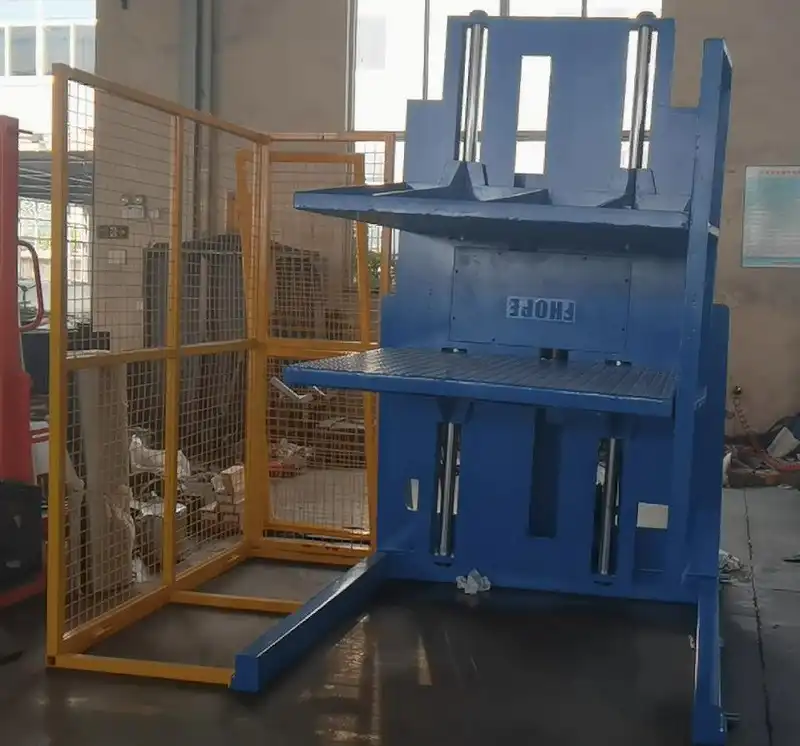
Finding the right machine is not just about moving pallets. It is about protecting your people, your products, and your reputation. As someone who has built a career in the packing machine industry, I understand these challenges deeply. I have seen firsthand how the right equipment can transform a risky process into a safe and efficient one. Let’s explore which pallet inverter truly stands out for these critical applications.
Why is Manual Pallet Changing a Hazard in Dangerous Goods Logistics?
Manual pallet changing in dangerous goods logistics presents many serious problems. Workers face direct exposure risks. They also face the physical strain of heavy lifting and awkward movements. This combination can lead to frequent accidents and long-term health issues. From my years working on factory floors and building my own company, I have seen these dangers firsthand.
Manual pallet changing in dangerous goods logistics is highly hazardous because it directly exposes workers to potential spills, chemical contact, crushing injuries, and repetitive strain. It also increases the risk of errors that can lead to costly accidents, regulatory fines, and supply chain delays, making it an unsafe and inefficient practice for handling hazardous materials.
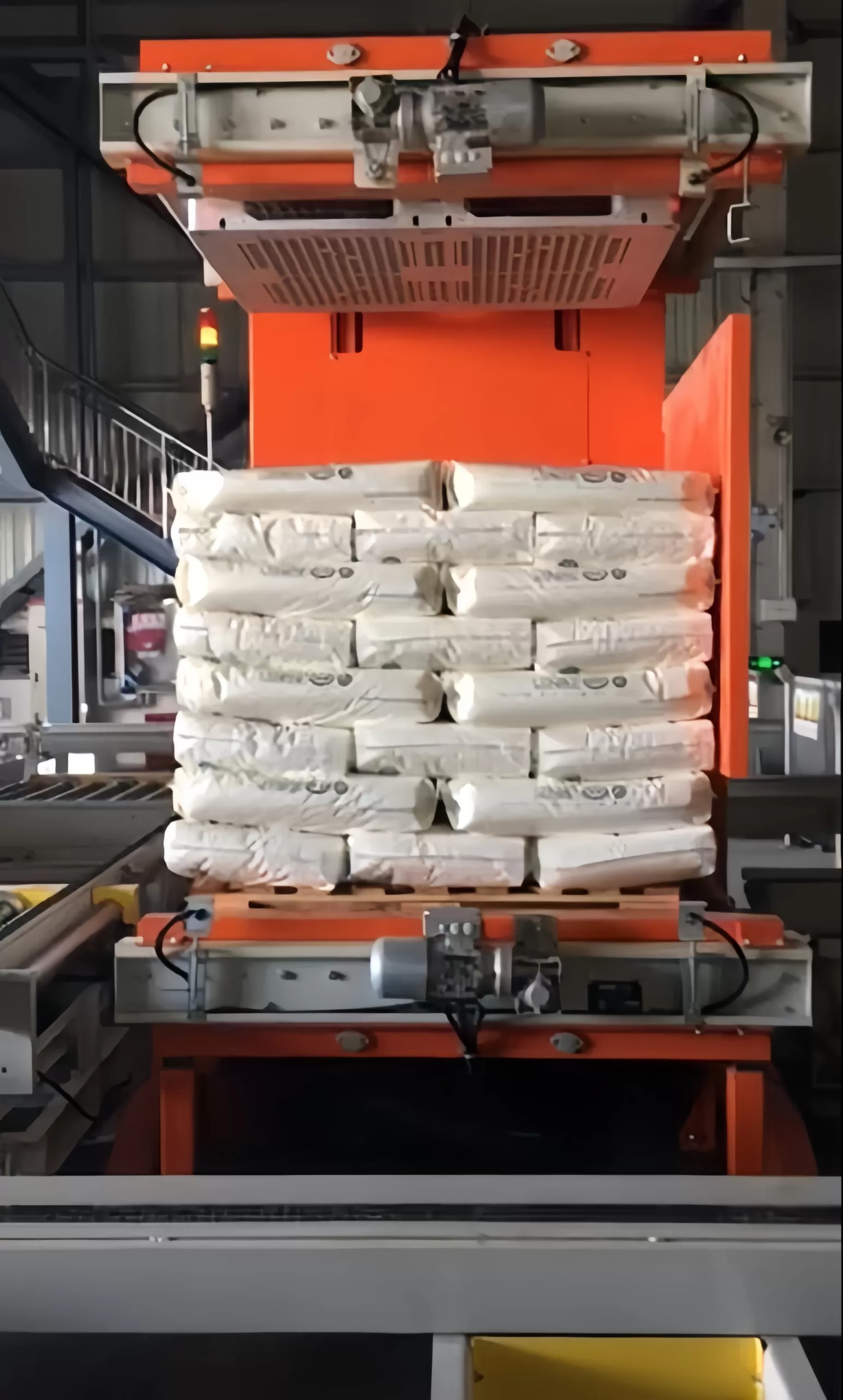
Warehouse managers, especially in sectors like food and beverage or chemicals, understand this struggle. They deal with high volumes of goods that often need pallet transfers for export or internal storage. The reliance on manual methods for dangerous goods creates a constant state of anxiety. It puts employees at risk every single day. Let’s look at the specific challenges and why they are so critical to address.
1. Direct Exposure and Injury Risks
Manual handling of dangerous goods means workers are close to hazardous materials. They might come into contact with chemicals if containers leak. This can cause burns, respiratory problems, or other serious health issues. Also, manual pallet changes involve heavy lifting and awkward positions. This can lead to back injuries, sprains, and even crushing injuries if a pallet or load shifts. I have seen accidents happen where loads tipped over during manual transfers. These incidents not only hurt workers but also damage products. It is a dual problem that affects both safety and operational efficiency. The risk increases when handling different pallet sizes like Euro pallets and US pallets. Workers must adjust their techniques, which can cause mistakes. These mistakes are very costly when dealing with dangerous goods.
2. Labor Shortages and High Costs
Many logistics companies face a big problem: they cannot find enough workers. Young people often do not want to do physically demanding jobs like manual pallet changing. This is especially true when it involves dangerous goods. The labor market is tight. Labor costs are also going up. This means businesses pay more for fewer workers. Manual processes become expensive and unreliable. When there are not enough workers, the existing team must work harder. This increases fatigue. Fatigue leads to more mistakes and more accidents. It creates a difficult cycle. Automating tasks like pallet changing helps solve these labor problems. It reduces the need for constant manual intervention. This frees up workers for less risky and more value-added tasks.
3. Increased Risk of Errors and Non-Compliance
Human error is a big factor in accidents. Manual pallet changing is prone to mistakes, especially when workers are tired or rushed. A wrong move can lead to a dropped load or a damaged container. For dangerous goods, this means spills, contamination, or even explosions. These incidents are not just costly. They also lead to fines from regulatory bodies. Many countries have strict rules for handling dangerous goods. Non-compliance can result in legal action and damage a company’s reputation. Automated pallet inverters ensure consistent handling. They follow precise movements every time. This greatly reduces the chance of human error. It helps companies meet safety standards and avoid penalties. My experience in this industry has shown me that automation is key to both safety and compliance.
What Features Should a Pallet Inverter Have for Dangerous Goods Handling?
Choosing a pallet inverter for dangerous goods is not like buying any other machine. It requires careful thought about safety, reliability, and specific handling needs. I always tell my clients to look beyond the basic function. They must consider how the machine protects people and products. A robust and well-designed inverter can make all the difference.
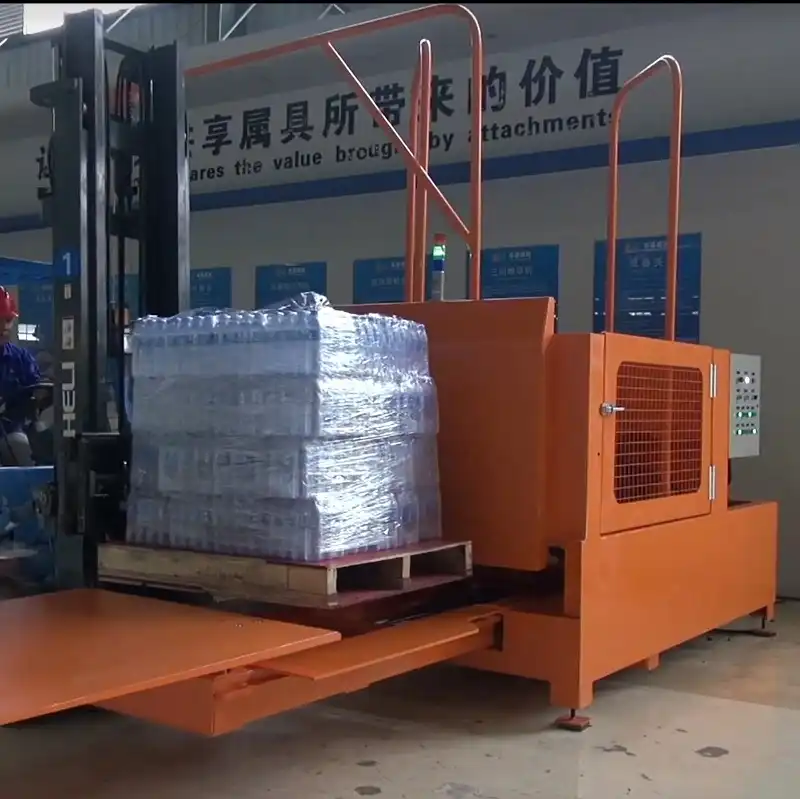
A pallet inverter for dangerous goods handling must prioritize safety through fully enclosed operation, robust construction, and precise, controlled movements. It needs a variable clamping force, easy-to-clean surfaces, and advanced safety sensors. High levels of automation and the ability to handle diverse pallet types (like Euro and US pallets) are also crucial. These features reduce human interaction, minimize spill risks, and ensure reliable operation in challenging environments.
When I founded FHOPEPACK, our goal was to make packing knowledge accessible. This means understanding not just what a machine does, but how it impacts your entire operation. For dangerous goods, the features of a pallet inverter are directly linked to risk mitigation and operational success. Let’s break down the most important ones.
1. Fully Enclosed Operation and Robust Construction
For dangerous goods, an enclosed pallet inverter is very important. This design keeps workers safe from potential spills or fumes during the pallet change. The machine acts as a barrier. If a container leaks, the spill is contained within the inverter. This protects the environment and the workers. Also, the machine must be built strong. Dangerous goods are often heavy. The inverter needs a robust frame and powerful components to handle these loads without failure. Materials should be resistant to corrosion, especially if corrosive chemicals are handled. I have seen how machines that are not sturdy enough fail under pressure. This always leads to dangerous situations. A high-quality, durable construction ensures long-term reliability and safety.
2. Variable Clamping Force and Gentle Handling
Dangerous goods often come in different types of packaging. Some might be in sturdy drums, others in delicate cartons. A good pallet inverter must have a variable clamping force system. This allows operators to adjust the pressure applied to the load. It ensures the load is held securely without crushing or damaging sensitive items. For example, some chemicals might be in glass bottles or other fragile containers. Too much pressure can break them. This could cause a dangerous spill. Too little pressure means the load could shift or fall. The inverter must also move smoothly. Sudden jerks or stops can destabilize the load. A smooth, controlled operation prevents damage and maintains the integrity of the dangerous goods.
3. Advanced Safety Sensors and Emergency Stops
Safety is always number one. A pallet inverter for dangerous goods needs advanced safety features. This includes photoelectric sensors, pressure sensors, and emergency stop buttons placed in easy-to-reach spots. Photoelectric sensors can detect if a person or object is too close to the machine during operation. This triggers an automatic shutdown. Pressure sensors ensure the clamping force is correct. Emergency stops allow workers to halt the machine instantly if something goes wrong. These features prevent accidents. They protect both workers and the goods. From my experience in designing and building packing machines, these safety layers are not optional. They are essential. They create a secure working environment.
4. Easy Maintenance and Cleaning Protocols
Any machine handling dangerous goods will need regular cleaning and maintenance. The pallet inverter must be designed for easy access to its parts for cleaning. This prevents residue buildup from spills. The surfaces should be smooth and non-porous. This makes decontamination simpler. It also prevents cross-contamination between different types of goods. Quick and easy maintenance is crucial for uptime. It also ensures the machine continues to operate safely. If maintenance is difficult, it might be skipped. This leads to machine failures and increased risks. Regular checks and clean surfaces keep the machine running well and safely.
How Do Different Pallet Inverter Types Address Safety and Efficiency Challenges?
Not all pallet inverters are created equal. Different types offer different advantages. Understanding these differences is key to picking the right machine for dangerous goods logistics. Each design addresses safety and efficiency challenges in its own way. As an engineer, I always look at the mechanics and how they serve a specific purpose.
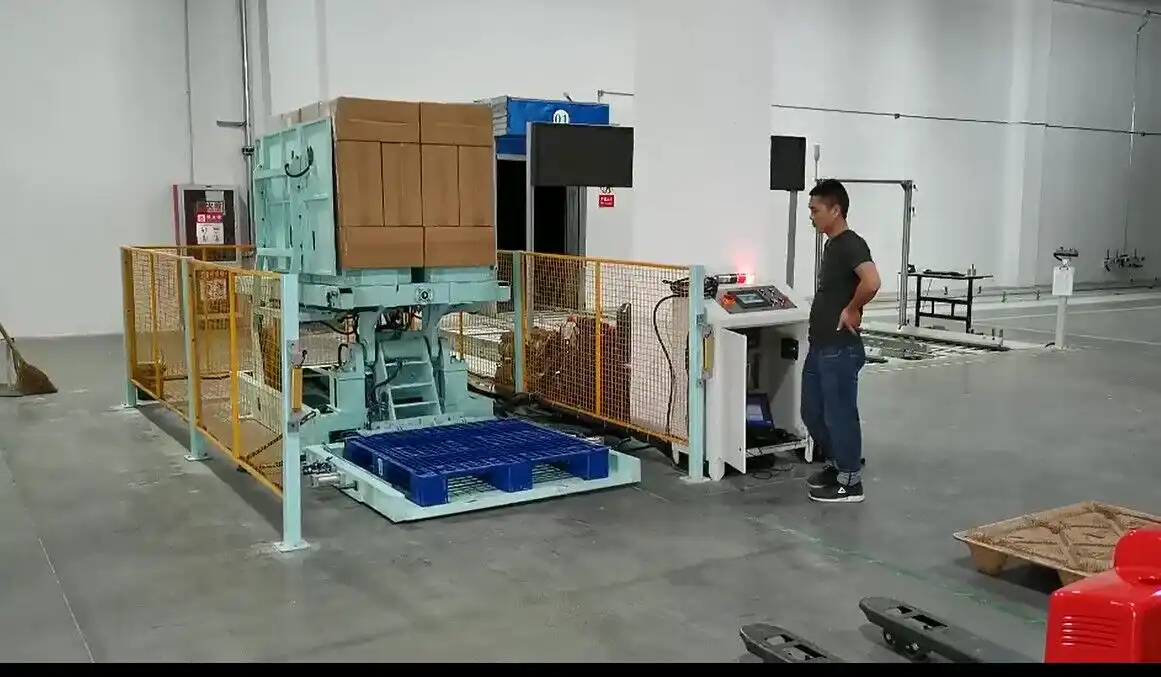
Different pallet inverter types address safety and efficiency challenges in dangerous goods logistics by offering varying levels of automation, load capacity, and footprint. Stationary 180-degree inverters or pallet changers are often best for high-volume, fully enclosed safety. 90-degree tippers suit specific product handling. Mobile units offer flexibility for lower volumes, but stationary systems typically provide higher safety and throughput for hazardous materials due to their fixed, robust nature.
My journey in the packing machine industry taught me that the right tool for the job makes all the difference. When dealing with dangerous goods, the choice of pallet inverter directly impacts how well you can protect your team and streamline your operations. Let’s compare the most common types.
1. Stationary 180-Degree Inverters / Pallet Changers
stationary 180-degree inverters, also known as pallet changers, are very common. They are often fully automatic. This means minimal human interaction. The machine can take a loaded pallet, clamp it, invert it 180 degrees, and then place the load onto a new pallet. These are excellent for high-volume operations where speed and consistent safety are needed. They reduce labor risks significantly because workers do not handle the dangerous goods directly. The entire process happens inside the machine. This contains spills and protects workers from hazardous contact. These units are usually robust. They handle a wide range of load weights. They fit well into automated production lines. Many factories use these for handling various types of goods. From my experience, these are often the go-to choice for maximum safety and efficiency in fixed locations.
2. Stationary 90-Degree Tilters / Inverters
Stationary 90-degree tilters are another type. They gently tilt the load 90 degrees. This allows access to the top or bottom of the pallet or product. They are not designed for a full pallet swap. They are good for specific tasks, like inspecting the bottom of a load or changing only one side of a pallet. For dangerous goods, their benefit comes from controlled movement. They reduce the risk of products falling or shifting. While they do not offer full enclosure for a complete pallet change like a 180-degree inverter, they provide a secure way to access parts of a load. This can be useful for quality control or for very specific packaging requirements where only a partial inversion is needed. They are less suitable for high-volume full pallet swaps. They still offer better safety than manual methods for their specific use.
3. Mobile Pallet Inverters
Mobile pallet inverters offer flexibility. You can move them around the warehouse. This is good for operations with lower volumes or where pallet changing is not always needed in the same spot. They are usually semi-automatic. This means an operator still needs to guide the process. For dangerous goods, this flexibility comes with a trade-off. There is more human interaction compared to fully automatic stationary units. This increases labor risks. While they are better than fully manual handling, they might not offer the same level of contained safety. They can be a good choice for smaller operations. They are also good for warehouses that have varied needs but where safety protocols can be strictly enforced. My advice is always to weigh flexibility against the highest safety standards when dangerous goods are involved.
4. Specialised Pallet Changers (e.g., Push-Pull, Top-and-Bottom Clamp)
There are also specialized pallet changers. These include push-pull systems or those with top-and-bottom clamps. Push-pull systems move products from a pallet to slip sheets or vice-versa. Top-and-bottom clamp inverters hold the load from both sides. This is good for unstable loads or specific product types. For dangerous goods, the top-and-bottom clamp systems are very useful. They offer maximum stability during the transfer. This greatly reduces the risk of the load shifting or falling. This is critical for fragile or unstable containers of hazardous materials. These specialized machines are designed for very specific needs. They often provide unique safety benefits by adapting to the exact shape or stability of the dangerous goods. They ensure the load is completely secure throughout the entire process.
Beyond Safety: How Do Pallet Inverters Boost Compliance and Operational Flow?
The benefits of a pallet inverter for dangerous goods go far beyond just safety. While protecting workers is the primary goal, these machines also bring significant improvements to compliance and operational flow. From my discussions with countless clients, including those in high-stakes logistics, I know that efficiency and legal adherence are just as vital.
Pallet inverters boost compliance by ensuring consistent handling that meets strict regulatory standards for dangerous goods, reducing the risk of fines and legal issues. They enhance operational flow by speeding up pallet changes, minimizing human error, and creating a more automated, predictable warehouse environment. This leads to faster throughput, reduced labor costs, and higher customer satisfaction, making them a strategic asset for modern logistics operations.
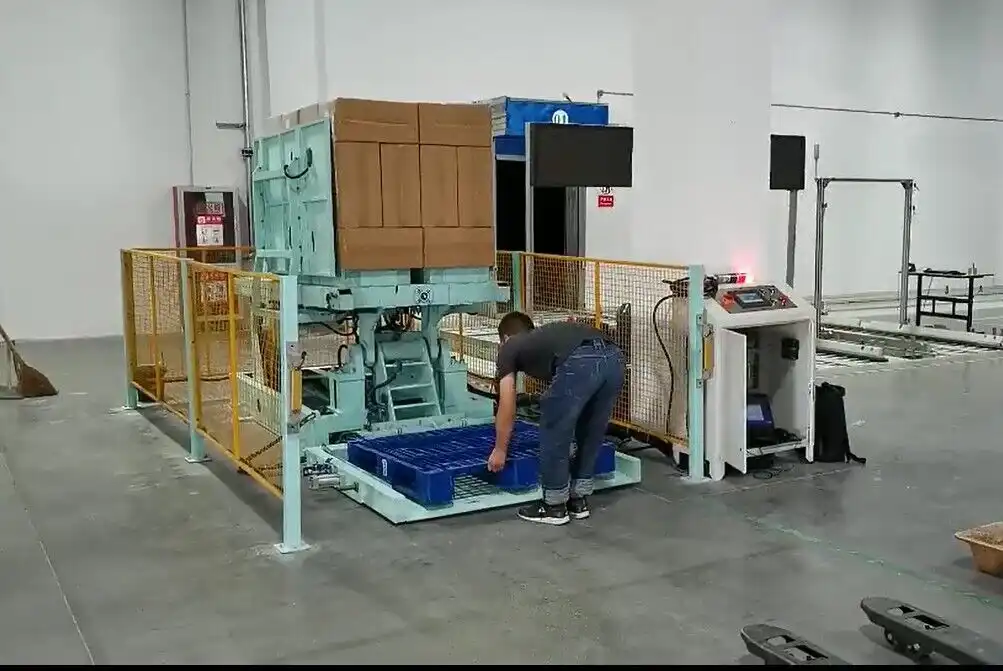
In my experience, financial independence for businesses often comes from making smart investments in their core operations. Investing in a quality pallet inverter is one such decision. It not only protects your team but also drives your business forward. Let’s look at how these machines help achieve these broader goals.
1. Ensuring Regulatory Compliance and Avoiding Fines
Dangerous goods logistics operate under strict rules. These rules cover everything from packaging to handling and transportation. Manual pallet changing increases the risk of mistakes. These mistakes can lead to non-compliance. Non-compliance results in heavy fines, legal issues, and reputation damage. Automated pallet inverters ensure that every pallet change is consistent. It follows predefined steps. This consistency helps meet regulatory standards. For example, if a certain type of dangerous good needs to be transferred to a specific type of pallet (like an export-compliant pallet), the machine does it perfectly every time. This greatly reduces the risk of accidental spills or improper handling. I have worked with companies that faced massive penalties due to human error. Investing in automation is often cheaper than paying those fines.
2. Streamlining Operations and Reducing Lead Times
In today’s fast-paced world, speed matters. Customers want their orders delivered quickly. This is true for all goods, including dangerous ones. Manual pallet changes are slow. They create bottlenecks in the warehouse. An automated pallet inverter significantly speeds up this process. It can handle many pallets in a short time. This improves the overall flow of goods. It also reduces lead times for deliveries. For example, if a warehouse handles thousands of pallets daily, automating this step can save hours. This allows goods to move faster from storage to outbound shipping. This directly translates to more efficient supply chains and happier customers. My own clients have seen big improvements in their delivery times after implementing automated systems.
3. Reducing Labor Costs and Optimizing Workforce Allocation
Labor costs are a major expense for any logistics operation. Manual pallet changing requires multiple workers. It is also physically demanding. As mentioned before, finding people for these jobs is hard. An automated pallet inverter can replace several human workers for this specific task. This saves money on wages, benefits, and training. It also frees up existing workers. They can then be reassigned to less dangerous or more skilled jobs. This optimizes workforce allocation. It makes your team more productive overall. It is not about eliminating jobs. It is about making jobs safer and smarter. I always advise companies to see automation as a way to empower their workforce, not replace them entirely.
4. Enhancing Customer Satisfaction and Business Growth
When operations are safe, compliant, and efficient, customer satisfaction naturally increases. Customers receive their orders on time and without issues. This builds trust. For dangerous goods, reliability is crucial. Any delay or accident can severely impact customer relationships. Automated pallet inverters help avoid these problems. They ensure consistent service. This leads to fewer complaints and more repeat business. A reliable and efficient supply chain also supports business growth. Companies can handle more orders. They can expand into new markets. My experience shows that businesses that invest in smart automation are better positioned to scale. They deliver on promises. This fosters strong client relationships and helps them grow their market share.
Conclusion
Choosing the right pallet inverter for dangerous goods logistics is critical for safety, compliance, and efficiency. Automated, robust, and feature-rich systems minimize human interaction, reduce risks, and boost operational flow. This protects your team and strengthens your business, ultimately making a significant difference in your bottom line. Investing in a reliable pallet inverter is a smart move for any forward-thinking logistics operation.








