
Enhancing Coil Handling Efficiency with Automated Systems
Handling heavy steel coils presents significant challenges, impacting productivity and worker safety. Inefficient manual processes lead to bottlenecks, delays, and increased risks. Automated systems offer a powerful solution, revolutionizing coil handling to boost throughput, improve precision, and create safer working environments in demanding industrial settings.
Automated systems enhance coil handling efficiency by optimizing material flow, providing real-time data, and automating critical tasks like storage, retrieval, and transport. They leverage integrated software, precision controls, and specialized equipment to reduce manual labor, minimize errors, increase throughput, and significantly improve safety in heavy industrial operations.
The journey to optimized coil handling involves more than just lifting; it’s about creating a seamlessly integrated ecosystem where technology and processes work in concert. Let’s delve into the specific automated solutions transforming this critical aspect of modern manufacturing and logistics.
Tailored Technology: Custom Engineered Solutions
Are your traditional methods for moving heavy coils slowing you down and putting workers at risk? Standard lifting equipment often struggles with the sheer weight, size, and specific requirements of coil handling, leading to frustrating inefficiencies and potential hazards. Custom engineered solutions provide the tailored power and precision needed to overcome these limitations.
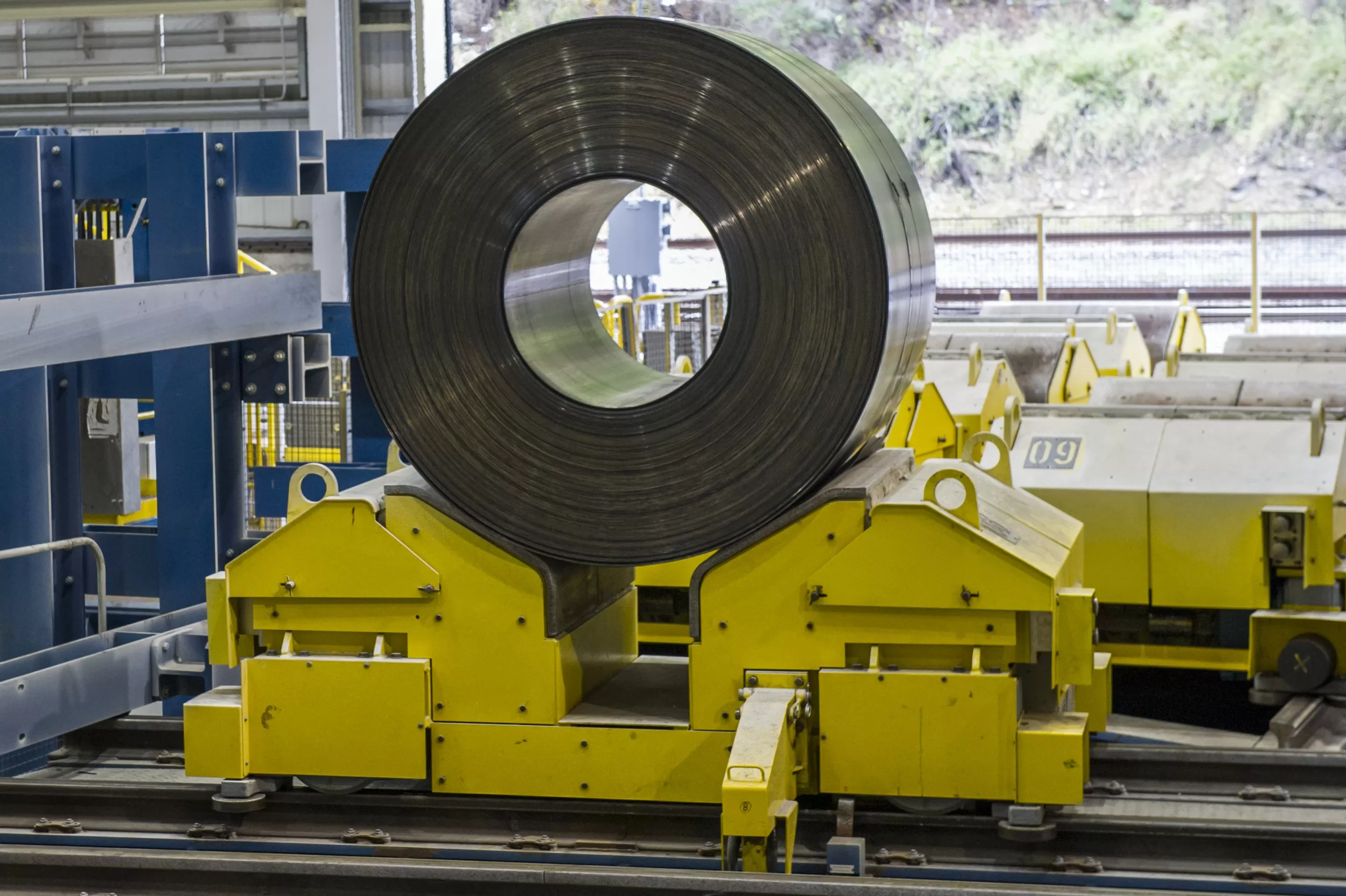
Custom engineered solutions enhance coil handling by deploying specialized equipment like gantry cranes, overhead cranes, coil cars, and automated grabs designed for heavy industrial demands. These systems are customized for specific facility layouts and operational needs, integrating features such as hydraulic rotating hooks, heat shielding, and advanced automation. This tailoring ensures precise movement, maximizes safety by minimizing human interaction with loads, and drastically increases throughput by streamlining the handling process from receiving to processing or shipping. Such solutions are critical in steel mills and service centers where large volumes of heavy coils must be moved reliably and efficiently.

Breaking Down Custom Approaches
The complexities of handling multi-ton steel coils in high-throughput environments demand equipment that goes beyond standard capabilities. Custom engineered solutions are designed from the ground up to meet these unique requirements, integrating specialized features and robust construction tailored to site-specific layouts and operational workflows.
Custom Gantry Cranes: Often seen in coil storage yards or spanning rail lines, custom gantry cranes are engineered for heavy-duty cycles and site adaptation. Rubber-tired models like the Mi-Jack Travelift can operate over existing infrastructure, offering flexibility. Key customizations include specialized attachments such as hydraulic rotating hooks, spreader bars, and C-hooks. These allow operators to precisely orient coils without manual ground rigging, a major safety improvement. Their design considers factors like rail lines, facility height, and traffic flow. High capacity, such as 70 tons, combined with rapid, precise movements allows for dramatic improvements in cycle times, exemplified by loading four steel coils onto a railcar in under 30 minutes.
Custom Overhead Cranes: Inside production facilities or warehouses, overhead cranes are crucial, especially where floor space is limited. For coil handling, customization focuses on durability and precision in harsh environments. Features include heat-shielded electrical components to withstand high temperatures from hot coils, ensuring high uptime (some report 99%). Precision control systems and specialized coil hooks or grabs are designed to securely interface with the coil’s eye or outer diameter for stable lifting and accurate positioning. Automation can be deeply integrated, managing tracking and transport autonomously to speed up repetitious movements and reduce human error.
Specialized Ground-Level Equipment: Efficient coil handling is a chain, and ground-level equipment forms critical links. Coil cars move coils horizontally within facilities or align them with processing lines. Available in different styles (LS-Style, L-Cam, Opposed Cylinder), they are customized for coil weight and track requirements, reducing reliance on forklifts in certain areas and improving safety. Automated vertical coil grabs provide hands-free, precise vertical lifting for tasks like loading coils onto cars or into automated storage systems. Their automated mechanisms and programmable features enhance safety by keeping personnel away from the load and ensure accurate placement for various coil sizes and weights.
| Handling Task | Traditional Method | Custom Automated Solution | Key Advantage |
|---|---|---|---|
| Lifting/Transport | Standard cranes/forklifts | Custom Cranes (Gantry/Overhead) | Increased capacity, speed, site adaptation |
| Load Orientation | Manual rigging/rotation hooks | Hydraulic Rotating Hooks/Grabs | Hands-free, precise, safer orientation |
| Horizontal Movement | Forklifts/manual pushing | Coil Cars | Reduced floor traffic, precise alignment |
| Vertical Placement | Crane with rigger guidance | Automated Grabs/Positioning Systems | Increased accuracy, safety, hands-free lifting |
| Handling Hot Coils | Standard equipment (risk) | Heat-shielded custom cranes | Reduced equipment failure, higher uptime |
By integrating these custom-engineered solutions, facilities can tailor their material handling capabilities precisely to the demands of heavy coil operations, achieving significant gains in performance and safety.
Intelligent Control: The Power of WMS and Automation Software
Is your coil inventory a tangled mess, leading to delays and inefficiencies? Effective coil handling requires more than just powerful hardware; it demands intelligent management and control. Warehouse Management Systems (WMS) and advanced automation software provide the brains behind the brawn, optimizing complex operations.
Automated systems enhance coil handling efficiency through sophisticated software like WMS that manages material flow, optimizes operating times, and provides real-time status updates. These systems automate transport orders, storage, and retrieval sequences, reducing manual intervention and errors. Modules for yard, production, and mobile robot management integrate various handling stages, while simulation and digital twins aid planning and training, ensuring peak operational performance and adaptability.

Integrating Systems for Seamless Operations
At the heart of truly efficient automated coil handling lies a sophisticated control system that orchestrates movements, manages inventory, and optimizes workflows. Warehouse Management Systems (WMS), specifically designed for coil storage, are central to this intelligence. They serve as the nerve center, receiving data from host systems, tracking coils, and directing automated equipment like cranes, coil cars, and mobile robots.
A WMS for coil handling manages transport orders, optimizes routes, and provides real-time information on the status of operations and equipment. This allows for streamlined processes from coil arrival to dispatch. Key functionalities include recording steel coil data, automatically storing and retrieving coils (even managing multi-layer storage and ‘digging out’ buried coils), and prioritizing orders for the most efficient retrieval sequences. Extension modules further enhance capability:
- Yard Management Module (YMM): Controls material flow from trains/trucks to storage, handles registration, quality checks, and can automate loading/unloading based on machine vision and precise position calculation.
- Production Management Module (PMM): Manages production order priorities, output conveying lines, deliveries, and can automatically generate orders and manage coil reordering or replacement. It retrieves requested coils from storage and places them in buffer areas.
- Mobile Robot Management Module (MRMM): Directs the movement of mobile robots outside the main storage area, providing pickup/delivery instructions, monitoring paths for safety, and integrating with the WMS for inventory tracking and routing optimization.
Beyond WMS, crane automation systems like Morgan’s CEPHAS provide a specialized layer of control for automated crane yards. CEPHAS performs inventory tracking, routes every coil deterministically based on rules and priorities, and uses a custom yard map to optimize placement. Integrated with mill production and shipping schedules, it ensures coils are retrieved and staged automatically when needed. This system leverages advanced algorithms and interfaces with crane sensors (thermal cameras for temperature, laser positioning) and control components (PLCs, drives, wireless communication) for precise execution and real-time data collection, enabling continuous performance improvement.
Planning and optimization are also critical aspects supported by intelligent systems. Simulation models analyze capacity, performance, and operational rules before implementation, helping determine the optimal number of cranes, layout, and strategies. Digital twins provide a virtual model of the automated warehouse, allowing operators and engineers to gain insights, identify bottlenecks, optimize configurations, and serve as realistic training tools during the engineering phase, easing the transition to live operations. These software and control technologies transform potential chaos into a highly organized, efficient, and responsive handling process.
Engineered for Extremes: Ensuring Safety and Reliability
Are you constantly worried about the risks associated with handling massive steel coils in harsh industrial environments? The inherent dangers of manipulating multi-ton loads and operating in areas with high temperatures and heavy machinery are a constant concern. Precision-engineered systems with integrated safety features are not just beneficial; they are essential.
Automated systems enhance coil handling safety by significantly reducing human exposure to hazardous areas through autonomous operation. They incorporate integrated safety features like ground-based lockout systems, sidewall sensors to prevent damage, and precise positioning controls to minimize accidents. Robust construction, including heat shielding for electronics and components designed for hostile environments, ensures equipment reliability and high uptime, further enhancing safety by preventing unexpected breakdowns with heavy loads.
Key Design Elements for High-Performance Coil Handling
The demanding nature of steel coil handling necessitates equipment designed not only for brute strength but also for pinpoint accuracy and unwavering reliability, especially under challenging conditions. Several key engineering elements contribute to the enhanced safety and durability of automated systems in this sector.
Precision Engineering: Handling coils accurately prevents damage to the product, surrounding infrastructure, and equipment. Automated systems employ sophisticated positioning controls, often combining laser range finders, encoders, and machine vision, to achieve positioning accuracy within millimeters. Anti-sway control is vital for minimizing load oscillation during movement, requiring control within tight tolerances (e.g., ±0.4℃) to prevent collisions or unstable loads. Self-centering devices on grabs or positioning systems ensure coils are secured and placed perfectly, reducing the risk of rolling or shifting. Automated grabs can also feature programmable movements and precise load positioning capabilities.
Built for Safety: A fundamental benefit of automation is removing personnel from direct contact with moving loads in hazardous zones. Automated coil handling systems incorporate multiple layers of safety. Ground-based safety systems, like lockout devices integrated with the control system and safety gates, prevent human access to areas where cranes or mobile robots are operating until it is safe. Sidewall sensors on cranes prevent contact with stored coils. The reduction in manual rigging or direct physical handling by workers inherently lowers the risk of crush injuries, falls, or strains. Furthermore, robust safety protocols regarding PPE, training on automated systems, and efficient workflow design contribute to the overall safety ecosystem.
Durability in Harsh Environments: Steel mills and coil storage facilities are tough places. Equipment must withstand dust, heavy loads, high temperatures, and continuous operation. Custom-engineered cranes and handling devices are built with heavy-duty components and materials. Crucially, electronics and control systems exposed to heat, such as those on cranes operating over hot mills, require specialized heat shielding and components rated for higher ambient temperatures (like Siemens Siplus). This focus on durability minimizes equipment failures, particularly critical when handling heavy, potentially hot, coils, ensuring consistent, reliable, and safe operation with high uptime percentages reported even under extreme conditions.
| Feature | Description | Benefit to Safety/Reliability |
|---|---|---|
| Precision Positioning | Laser, encoder, vision systems (±10-25mm accuracy) | Reduces risk of collision, product damage, rework |
| Anti-Sway Control | Minimizes load swing during motion | Enhances stability, prevents collisions |
| Heat Shielding | Protects electronics on hot mill cranes | Prevents component failure, increases uptime |
| Ground-Based Safety | Lockouts, safety gates linked to control systems | Prevents personnel access during operation |
| Automated Grabs | Hands-free load securing | Reduces human interaction with heavy loads |
| Robust Components | Heavy-duty mechanical & electrical parts | Withstands harsh environment, reduces breakdowns |
These combined elements of precision, integrated safety, and robust durability are fundamental to the success of automated systems in enhancing both the efficiency and the overall safety profile of heavy steel coil handling operations.
Completing the Loop: Automated Palletizing and Material Flow
Is your coil handling process breaking down at the final stages of packaging or transfer? Efficient material flow extends beyond just lifting and storing coils; it includes critical steps like palletizing and seamless integration with the broader production and logistics chain. Automated solutions are key to optimizing this entire ecosystem.
Automated systems enhance coil handling efficiency throughout the material flow by integrating automated palletizing machines for systematic stacking, optimizing internal transport with coil cars and conveyors, and connecting all processes via WMS and automation software. This comprehensive approach ensures seamless transitions from receiving through storage, processing, and dispatch, reducing manual effort, improving speed, and minimizing damage or errors at every step for maximum overall productivity and safety.
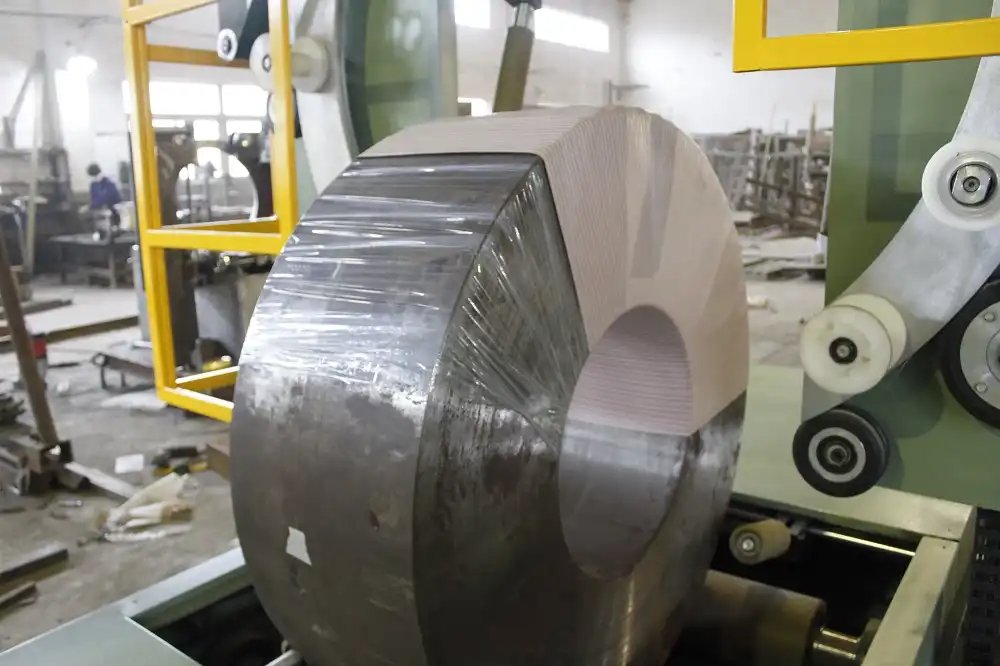
Automated palletizing machines play a crucial role in enhancing the efficiency, safety, and cost-effectiveness of steel coil handling, particularly as coils are prepared for storage, transport, or further processing. Handling heavy coils for stacking or packaging is labor-intensive and risky. Challenges include the sheer weight, maintaining stability during transport, and ensuring consistency in stacking patterns. Automated palletizing machines directly address these issues by automating the precise placement of coils onto pallets or other transport bases. Equipped with sensors and positioning systems, they ensure uniform and repeatable operations, drastically reducing human error and the need for manual handling in this hazardous task. This automation leads to faster processing times, increased throughput, enhanced safety by minimizing human exposure to heavy loads, and reduced labor costs, allowing personnel to focus on higher-value tasks.
Beyond palletizing, optimizing the entire coil handling ecosystem is paramount. This involves viewing all steps – receiving, storage, internal transport (via coil cars, AGVs, conveyors), processing line feeding, and outbound shipping – as interconnected. Automated solutions, guided by intelligent WMS and production management modules, ensure a seamless workflow. Inventory management systems track every coil’s location and status, directing automated equipment efficiently. Workflow design minimizes unnecessary movements and optimizes paths. Automated equipment, including cranes, coil cars, grabs, and palletizers, are strategically positioned at critical transfer points. Supporting practices like rigorous preventive maintenance, product inspection, and strong supplier relationships ensure the reliability of the entire system. This integrated approach minimizes downtime, prevents material damage, and creates a safer, more productive environment from the moment coils arrive to their final dispatch, transforming operations for maximum efficiency and safety in heavy industries like steel manufacturing. Automated solutions are redefining the possibilities in coil handling and material flow.
Conclusion
Enhancing coil handling efficiency with automated systems delivers transformative benefits for heavy industries. By leveraging specialized equipment like custom cranes, coil cars, automated grabs, and palletizers, integrated with intelligent software for management, planning, and control, companies can achieve unprecedented levels of throughput, precision, and safety. This holistic approach optimizes every step of the material flow, significantly reducing risks, minimizing errors, lowering operational costs, and ensuring reliable, high-performance coil handling. Investing in automated solutions for coil handling is a strategic move toward a more efficient, safer, and competitive future.








