
Summary: An automated coil packing line is an integrated system for wrapping, strapping, and protecting metal coils. Achieving 99.9% uptime requires a data-driven maintenance strategy focused on its mechanical, hydraulic, and control modules.
Why 99.9% Uptime Isn’t Just a Number
A stopped packing line at the end of your process doesn’t just pause wrapping—it backs up your entire production. The finished coil from the mill has nowhere to go. This creates a safety hazard, risks coil surface damage from prolonged exposure, and directly hits your bottom line through lost throughput and missed shipments. For a line processing 30 coils per hour, every minute of downtime costs real money in stranded capital and labor.
The most common cause of downtime in coil packaging lines isn’t a sudden catastrophic failure, but the accumulation of minor wear in mechanical joints, gradual hydraulic fluid degradation, and uncalibrated sensors. A system running at 95% efficiency might seem acceptable, but that 5% translates to over 8 hours of unexpected downtime per week, eroding trust and profitability.
🛠️ The Three Pillars of Reliability
A packing line is only as strong as its least reliable component. Uptime is built on three interconnected systems:
- Mechanical Integrity: This is the backbone. It includes wear parts like strapping head feed wheels, film carriage rollers, and upender pivot bearings. Vibration and cyclical loading cause fatigue.
- Hydraulic & Pneumatic Health: The muscle of the system. Slow cylinder movement (e.g., a coil lifter taking >20 seconds instead of 15) often points to internal valve wear or contaminated fluid, leading to inconsistent pressure and force.
- Control System Stability: The nervous system. This encompasses PLC logic, servo motor feedback, and photoelectric sensors. A misaligned sensor detecting a coil edge can cause the wrapper to initiate 50mm too early, resulting in a failed wrap and an automatic line stop.
ROI Insight: Investing $5,000 annually in a structured spare parts kit (seals, sensors, rollers) can prevent a single $40,000 downtime event caused by a failed hydraulic pump waiting for international shipping. The payback is often within one incident.
Building Your Proactive Maintenance Plan
Waiting for a breakdown is the most expensive maintenance strategy. Jose, a plant manager in Monterrey, once told me his team was constantly “fighting fires” on their line. We shifted to a calendar-based and usage-based (cycle-count) plan. Within a quarter, unplanned stops dropped by 70%.
A proactive maintenance plan is a scheduled regimen of inspection, testing, and component replacement based on operational hours or cycle counts, not on failure. It transitions your team from reactive repair technicians to predictive reliability engineers, directly targeting the goal of 99.9% availability.

📅 Calendar-Based vs. Condition-Based Tasks
| Not all tasks are equal. A blended approach is key. | Maintenance Type | Task Example | Frequency / Trigger | Standard Reference |
|---|---|---|---|---|
| Preventive (Time-based) | Replace hydraulic filters, lubricate all guide rails, check electrical connections. | Weekly / Monthly | Manufacturer’s O&M Manual | |
| Predictive (Condition-based) | Analyze hydraulic fluid viscosity and particulate count, check servo motor current draw trends. | Quarterly or based on fluid analysis report | ISO 4406 (Fluid Cleanliness) | |
| Corrective (Run-to-Failure) | Replace a non-critical LED indicator light on the HMI. | As needed | – |
🛡️ The Critical Role of Your Maintenance Log
A detailed log is your system’s medical chart. It should track more than just the “what” and “when.”
- Record: Date, component, symptom (e.g., “Strapping head: strap tension inconsistent, varying between 900-1100 N”).
- Diagnosis: Root cause found (e.g., “Worn tensioner clutch pads”).
- Action: Parts replaced (include part numbers), adjustments made (e.g., “PID loop gain adjusted on tension servo”).
- Verification: Post-repair test result (e.g., “Tension stable at 1000 N ±20 for 10 test cycles”).
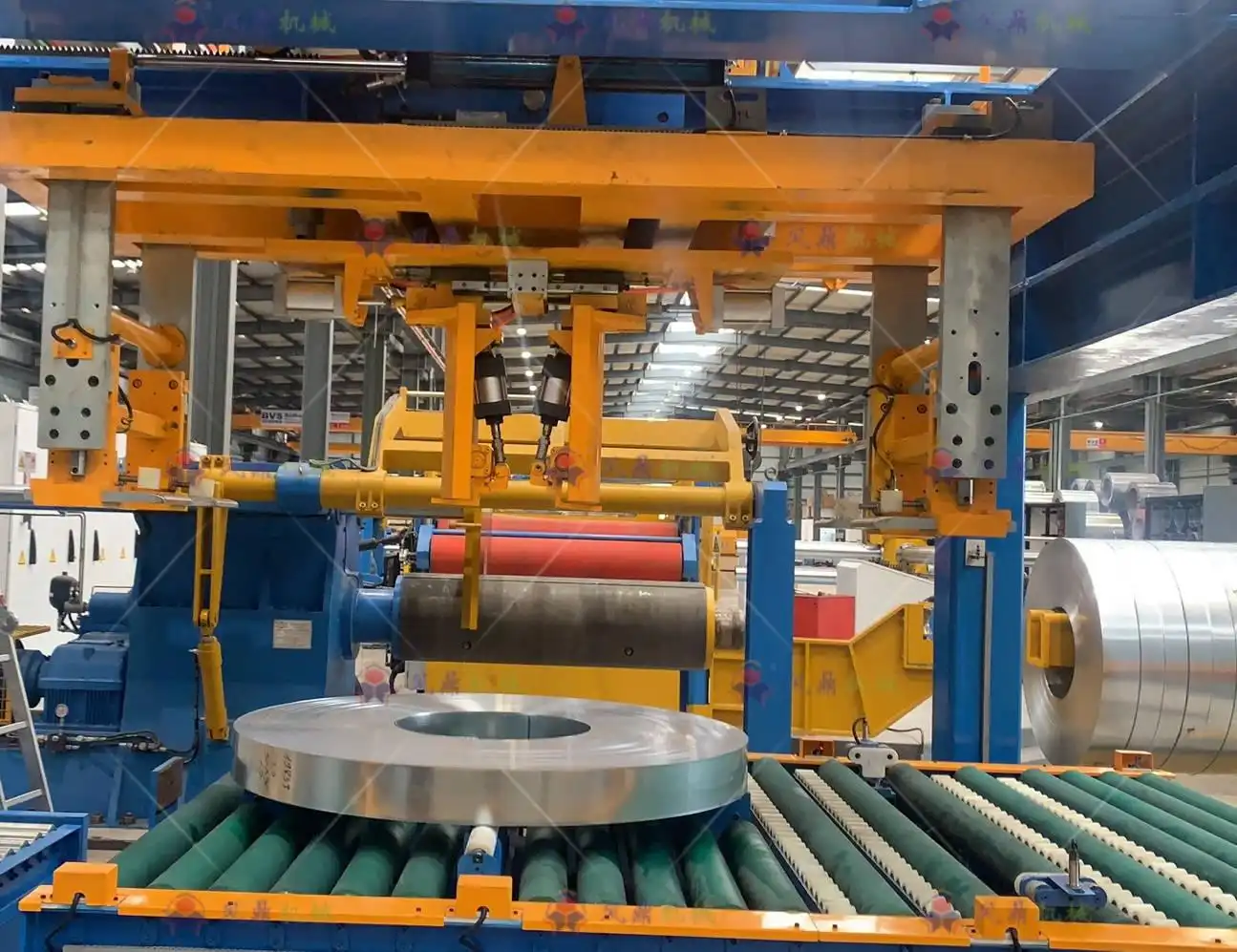
Key Component Maintenance & Troubleshooting Guide
Here is a focused guide for the high-wear components that most frequently impact coil packing line maintenance.
⚙️ The Strapping Head: Precision Under Repetition
The strapping head ties the entire package together. A malfunction here guarantees a rejected coil.
- Symptom: Strap not feeding or sealing.
- Check 1: Strap channel for debris (clean weekly).
- Check 2: Feed wheel wear (measure diameter monthly; replace if under spec).
- Check 3: Seal heater temperature (verify with pyrometer; should be 450-500°C for PP strap).
- Symptom: Inconsistent tension.
- Check 1: Tension clutch assembly (common wear item).
- Check 2: Compressed air supply pressure (must be stable at 6-7 bar).
Expert Pro Tip: Keep a calibrated tension gauge handy. Periodically strap a dummy coil and measure the applied force. A 10% deviation from the setpoint is your signal to inspect the tensioning system before it causes a production stop.
🎯 The Wrapping Carriage: Smooth Movement is Key
A jerky or misaligned carriage creates loose wraps and film waste.
- Symptom: Film wrapping overlap is inconsistent.
- Check 1: Carriage drive belt tension and wear.
- Check 2: Alignment of the carriage rails (check for parallelism with a laser level quarterly).
- Check 3: Feedback from the rotary encoder on the dispenser.
- Symptom: Vibration or unusual noise during travel.
- Check 1: Support rollers and guide wheels for flat spots or damage.
- Check 2: Gearbox lubrication level (per manufacturer’s spec).
🧠 The PLC & Sensor Array: The System’s Logic
Most “electrical” faults are actually input/output issues at the sensor level.
- Symptom: Line stops randomly or fails to auto-cycle.
- Action 1: Access the PLC diagnostic page. It will list the last fault—e.g., “Proximity Sensor S45: No Signal.”
- Action 2: Physically inspect sensor S45 (likely a coil-in-position sensor). Is it misaligned, dirty, or failed?
- Symptom: HMI shows “Servo Drive Fault.”
- Action 1: Note the fault code (e.g., “Overload”).
- Action 2: Check for mechanical binding in the driven component (e.g., a film brake). Manually rotate to feel for resistance.
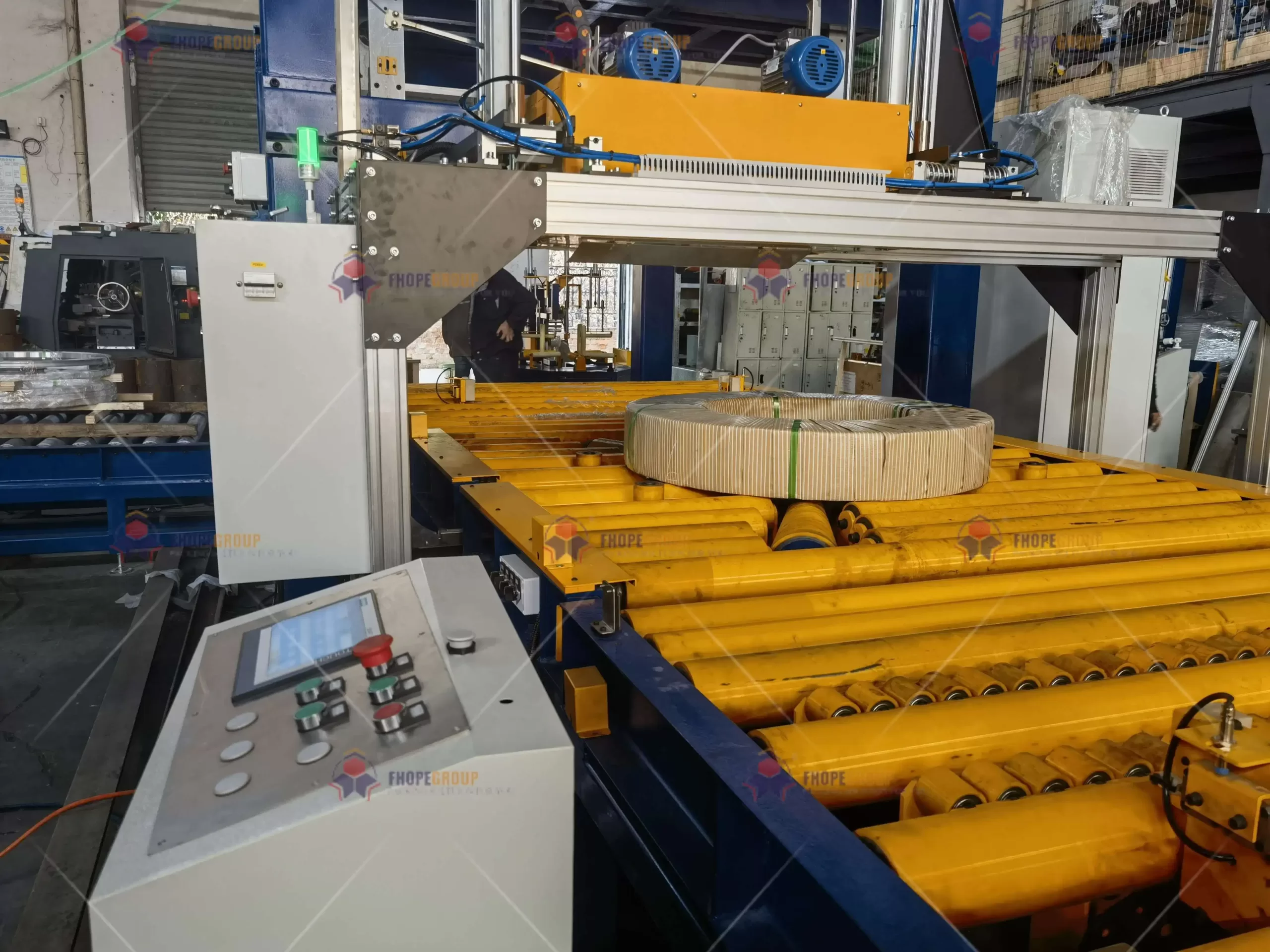
Leveraging Remote Diagnostics for Fast Resolution
Modern systems offer more than just an error code. When a complex fault occurs, remote diagnostics allow a support engineer to securely view real-time PLC data, trend histories, and even perform soft tests to pinpoint issues without waiting for a site visit. This turns a potential 48-hour downtime into a 2-hour resolution.
How a Secure Remote Session Works
- Your team initiates a request via the HMI or a secure gateway.
- A VPN tunnel is established, granting the support engineer view-only or limited-test access.
- Together, you can monitor valve signals, watch sensor states change in real-time, and trace the logic sequence that failed.
- The engineer can guide your technician: “Please check the voltage at terminal X3. The PLC is sending the signal, but we’re not seeing the actuator respond.”
This collaborative approach builds your team’s troubleshooting skills while minimizing downtime.
The Long-Term ROI of a Maintenance Culture
Viewing maintenance as a cost center is a mistake. It is a strategic investment in capacity assurance.
- Extended Asset Life: A well-maintained packing line can exceed its design life by 30-50%, deferring major capital expenditure.
- Lower Cost Per Coil: Consistent performance reduces film and strap waste due to misfeeds or errors. It also keeps energy consumption predictable.
- Safety & Compliance: Documented maintenance is often a core requirement for insurance and safety certifications (like ISO 45001). It proactively addresses hazards like loose guarding or leaking hydraulics.

Lifecycle Support: Beyond the Quick Fix
True partnership extends past the initial sale. It means having access to:
- Ongoing Training: Annual refresher courses for new maintenance staff on advanced diagnostics.
- Obsolete Parts Management: A guarantee from your OEM to provide or redesign spare parts for the machine’s entire operational life.
- Upgrade Paths: Software updates that add new diagnostic features or support new packaging materials without a full system overhaul.
ROI Insight: When evaluating a packaging line supplier, ask for their Mean Time To Repair (MTTR) commitment and their policy on legacy part support. A supplier with a 4-hour remote response guarantee and 15-year part support is investing in your long-term uptime, not just making a sale.
Conclusion: Uptime is a Team Sport
Achieving and sustaining 99.9% uptime for your automated packing system is not about luck. It’s the direct result of a disciplined, proactive strategy that blends scheduled maintenance, skilled troubleshooting, and leveraging expert support. It turns your packaging line from a potential bottleneck into a reliable, predictable pillar of your production flow. Remember, the goal is to protect your product and your profit. By partnering with a manufacturer that designs for serviceability and supports you for the long run, you secure a lasting competitive advantage.
For a system built with maintenance and longevity in mind from the ground up, explore our engineered coil wrapping machine solutions.








