
From Manual to Automatic: A Step-by-Step Guide to Retrofitting Your Old Coil Packing Station
Summary: A practical guide for plant managers to systematically upgrade a manual coil packing station into a semi or fully automatic line, typically increasing throughput by 200-300% and reducing labor requirements from 3-4 operators to 1.
Why Retrofitting Beats a Full Replacement
Picture this: Jose, a plant manager in Monterrey, watches his crew manually wrestling a 6-ton steel coil. They’re using crowbars and chain hoists to position it for wrapping. It’s slow, unsafe, and the final pack looks inconsistent. He knows he needs automation, but a brand-new, turnkey line is a capital expense that’s hard to justify right now.
Retrofitting your existing coil packing station integrates new automation modules with your usable old equipment, cutting project costs by 40-60% and slashing downtime from weeks to days compared to a full rip-and-replace. It’s a targeted upgrade, not an overhaul.
🛠️ Step 1: The Brutally Honest Assessment
You can’t fix what you don’t measure. Start with a full audit.
- Equipment Inventory: List every piece you have. Coil car, tilter, conveyor, wrappers, strappers. Note their age, condition, and control type (manual lever, basic relay).
- Bottleneck Analysis: Time each manual step. Is the longest delay in positioning, wrapping, or securing? Often, the manual application of side pads and top caps consumes over 30% of the total cycle time.
- Space & Utility Mapping: Measure your floor space exactly. Check power (380V/480V, 3-phase), pneumatic air supply (≥ 0.7 MPa, 1000 L/min), and network drop points for new PLCs.
ROI Insight: A retrofit focuses capital on the bottleneck. If manual strapping is your slowest step, automating just that can boost line output by 25% immediately, often with a payback period under 12 months.
Designing Your Upgrade Path: The Three Core Modules
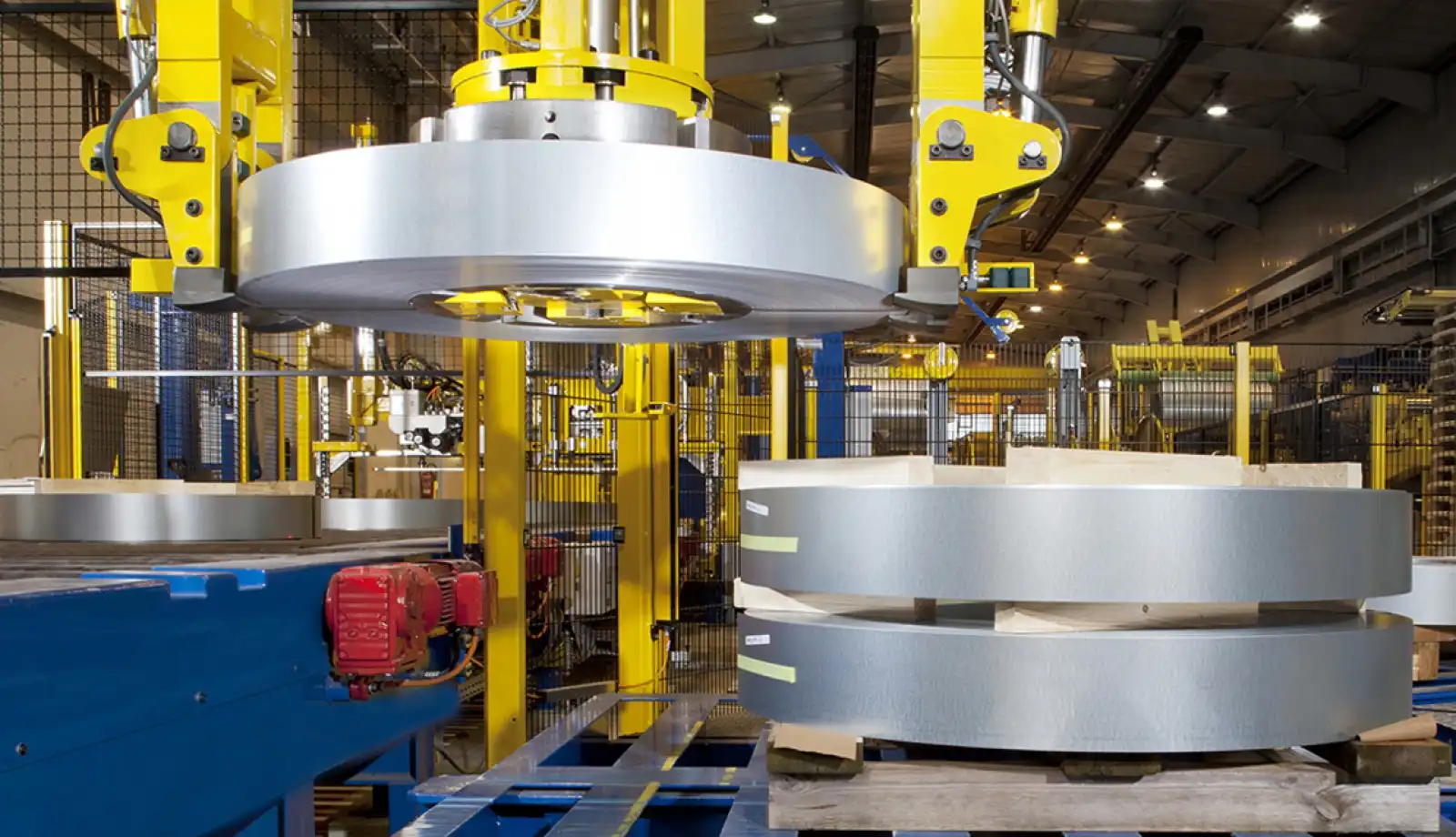
Your old station likely has a solid structural base. The retrofit adds “brains and muscles” to it. The core upgrade typically revolves around three modules.
The key to a successful coil packing line retrofit is a modular approach: first, upgrade material handling for consistent positioning; second, automate the wrapping head for speed and quality; third, integrate end-of-line sealing for a hands-free finish.
⚙️ Module 1: Material Handling & Positioning
Manual coil positioning is the biggest safety risk and time sink. Retrofitting starts here.
- Powered Roller Conveyors: Replace gravity rollers with servo-driven ones. This allows for precise incremental movement (<5mm accuracy) for coil alignment before wrapping.
- Automatic Centering Arms: Install pneumatic or hydraulic arms that self-center the coil on the turntable, eliminating the need for manual adjustment with pry bars.
- Tilter/Upender Integration: If you have a manual tilter, adding a programmable logic controller (PLC) allows it to receive commands from the main line PLC, synchronizing the 90-degree flip cycle (now 15-20 seconds) with the conveyor flow.
🌀 Module 2: The Wrapping Core
This is where packaging aesthetics and consistency are made. The goal is repeatable, tight film application.
- Servo-Driven Carriage: Replace the old manual or oscillating film carriage with a servo-controlled one. This allows for programmable overlap (50%-70%), pre-stretch ratio (up to 300%), and precise film cut-and-clamp.
- Rotary Union & PLC Control: A new rotary union ensures reliable power and signal transmission to the rotating wrapping ring. The new PLC governs the entire wrap cycle—number of layers, top/bottom web turns—based on coil dimensions entered by the operator at the HMI.
Expert Pro Tip: During installation, ensure the new wrapping ring’s rotational plane is perfectly parallel to the turntable. A misalignment of >1° can cause film “bridging” and inconsistent tension on the coil’s faces.
🔗 Module 3: End-of-Line Automation
This final touch transforms a wrapped coil into a shipment-ready product.
- Automatic Strapping Machine: Choose a head that travels on a gantry or a robotic arm. It should apply 2-4 steel or plastic straps with consistent tension (e.g., 5000N for steel straps), programmable based on coil diameter. This replaces 1-2 workers entirely.
- Side Pad & Top Cap Placers: For high-value coils, these are game-changers. A robotic arm or pneumatic manipulator picks and places protective elements in under 30 seconds, a task that takes a manual crew several minutes with heavy lifting.

The Integration Phase: Making Old and New Talk
This is the most critical technical phase. A retrofit fails if the new modules operate as isolated islands.
Effective system upgrade hinges on a master-slave PLC architecture, where a new central PLC issues commands via Profinet or EtherCAT to retrofitted sub-systems, creating a unified cycle time under 3 minutes per average coil.
🧠 Control System Overhaul
Your old relay cabinet needs an upgrade to become the “brain.”
- Main PLC & HMI: Install a new industrial PLC (e.g., Siemens S7-1200/1500 series) as the line master. Add a 10-inch color HMI for operators to select wrapping programs, input coil dimensions (OD, ID, width), and monitor faults.
- Sensor Network: Integrate photoelectric sensors for coil presence, ultrasonic sensors for height detection, and encoders on conveyors for position feedback. This data flow is what enables automation.
- Safety Circuit Compliance: All new components must integrate into a safety relay circuit meeting EN ISO 13849-1 (PL d). This includes emergency stops, light curtains at hazard points, and interlocked guarding.
Budgeting & Justification: The Numbers That Matter
To get approval, you need to move the conversation from cost to investment. Frame it with concrete metrics.
| Metric | Manual Station | Retrofitted Semi-Auto Line | Improvement |
|---|---|---|---|
| Throughput | 4-6 coils/hour | 12-18 coils/hour | +200% |
| Required Operators | 3-4 | 1-2 | 50-70% reduction |
| Typical Cycle Time | 10-15 min/coil | 3.5-5 min/coil | ~65% faster |
| Packaging Consistency | Variable, operator-dependent | Repeatable, programmable | Quality defect reduction |
| Safety Risk | High (manual handling) | Controlled (guarded automation) | Major incident probability lowered |
ROI Insight: Calculate based on labor savings, increased output (more coils sold per shift), and reduced film waste (precise servo control can lower film usage by 10-15%). Most retrofits achieve full payback in 18-24 months through these operational gains.
Implementation & Long-Term Success
Planning the installation is as important as the technical design. The goal is minimal disruption.
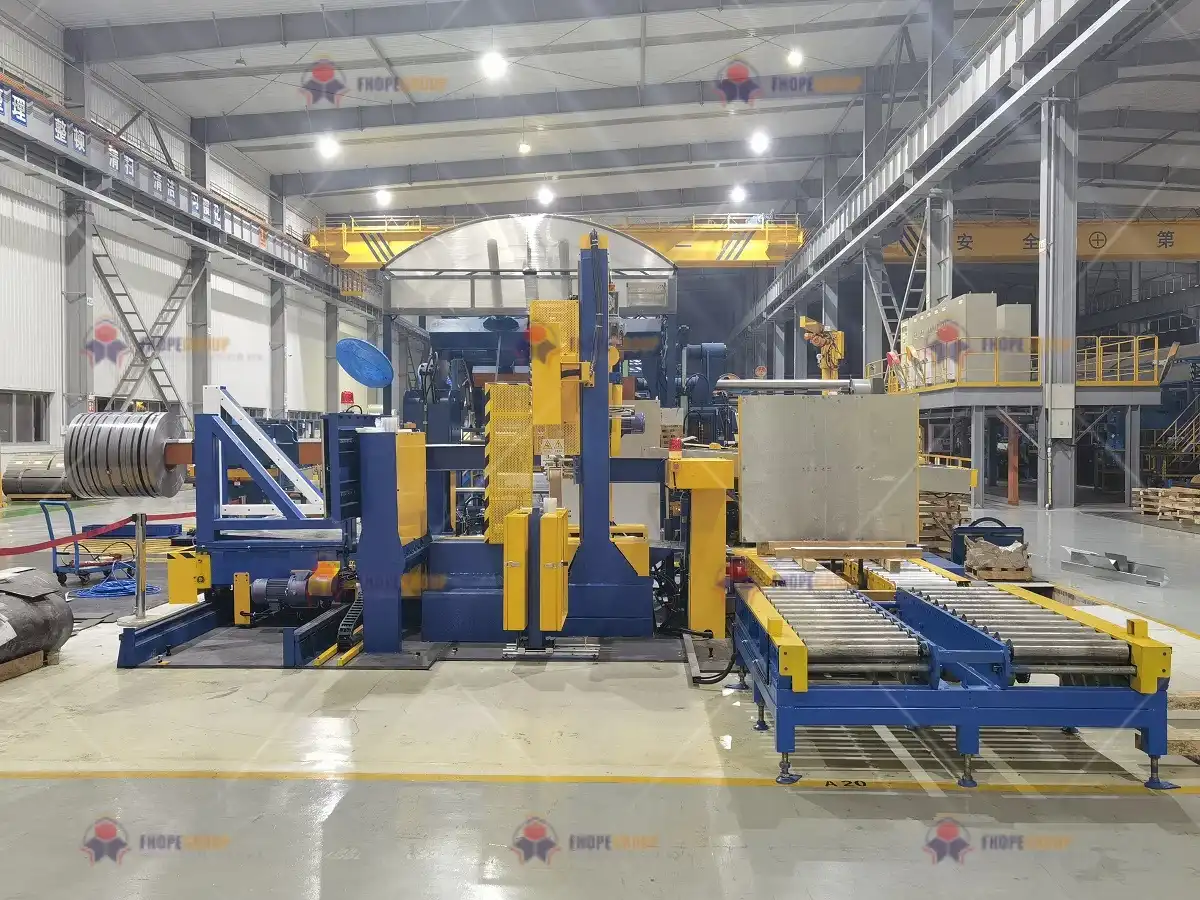
A successful installation follows a staged plan: weekend for mechanical fit-out, followed by 3-5 days for electrical integration and dry-run testing, ensuring production resumes with minimal loss.
🛡️ Post-Installation: Training and Support
The new system is only as good as the people running it.
- Operator Training: Focus on the HMI, daily start-up/shutdown routines, and how to thread film and change strapping wire. Make it hands-on.
- Maintenance Training: Teach your electrician basic fault diagnosis on the new PLC (reading error codes) and preventative maintenance for the servo drives and pneumatic valves.
- Documentation: Insist on receiving updated electrical diagrams, PLC code backup, and a spare parts list for the newly added components. This is non-negotiable for long-term uptime.
Conclusion: Building Your Future-Proof Line
Retrofitting your coil packing station isn’t just about keeping up; it’s about strategically unlocking capacity, safety, and quality that already exists within your four walls. By taking a modular, phased approach, you mitigate risk, control budget, and build a modern line that can serve you for the next decade. It’s a practical engineer’s solution to a common industrial challenge.
For operations ready to move beyond a basic retrofit to a fully optimized, high-speed system, exploring a dedicated coil wrapping machine solution is the logical next step.








